Kirjojen hintavertailu. Mukana 12 459 402 kirjaa ja 12 kauppaa.

Kirjailija

Nicole L Mays

Kirjat ja teokset yhdessä paikassa: 7 kirjaa, julkaisuja vuosilta 2018-2025, suosituimpien joukossa Walter Reeks. Vertaile teosten hintoja ja tarkista saatavuus suomalaisista kirjakaupoista.

7 kirjaa

Kirjojen julkaisuhaarukka 2018-2025.

Walter Reeks

Walter Reeks

Nicole L Mays; David Payne

Nicole Mays
2023
sidottu
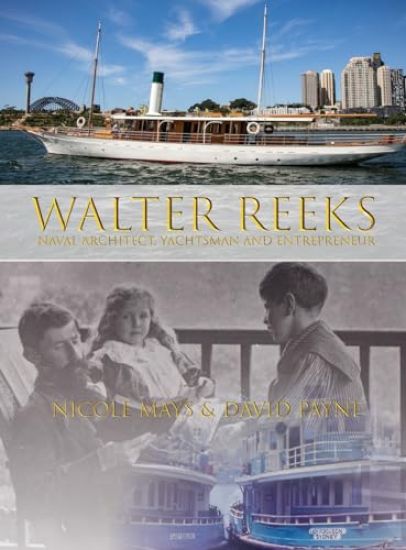
This is the biography of Australia's first naval architect, Walter Reeks (1861 - 1925). A man who produced innovative, sometimes unorthodox designs across a broad range of vessels, from commercial craft to recreational yachts. Best known as the pioneer of the Sydney fleet of ferries, Reeks rose to prominence immediately after his arrival in Sydney from Liverpool in 1885. He went on to design more than 300 vessels up until his death in 1925 at the age of 64. Clients included the well-heeled to those with less resources. Craft were built throughout Australia and New Zealand, many becoming stalwarts of local, regional, state and national trading routes and industries. Others went on to win coveted yachting titles, some with Reeks at the helm. Despite these professional successes and his wide-reaching acclaim, this is also the story of sorrow and tragedy, the death at a young age of his first wife Mary in 1895, and the murder of his son Kent in 1914 casting large, grieving shadows on Reeks' family life. Yet, this is the story of a man who not only achieved so much professionally but was a dedicated supporter and protagonist of maritime pursuits throughout Australia, as well as to engineering, education and volunteering more generally. Reeks was a member of the Royal Sydney Yacht Squadron for over 40 years, being made a life member in 1900, serving as vice-commodore between 1906 and 1910, and notably being its official measurer for an unsurpassed stint of 39 years. During this period, Reeks also designed many of Sydney's leading yachts and investigated the potential for an Australian challenge to the America's Cup, a dream he was still chasing some four decades later. A life of serving, adventure, cutting-edge innovation, risk-taking and saying 'Yes ' are highlights of Reeks' journey. While his achievements, as we reflect back on his career, are immense, their collective weight and worthiness would likely not have been realised by Reeks himself. They were just the next project, the next step forward, the next outcome, the next compromise between the practical and the ideal, between his design parameters and his client's needs. It was definitely a life well lived and one worth telling.
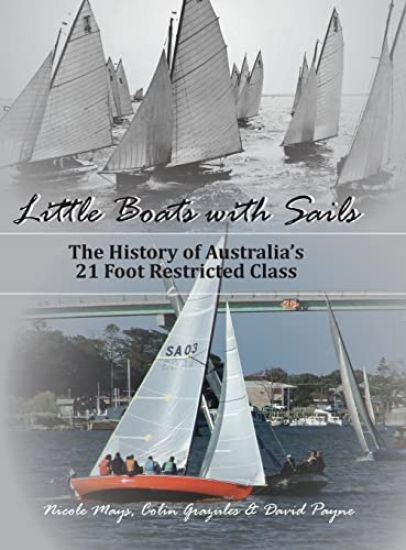
Little Boats with Sails

Little Boats with Sails

Nicole L Mays; Colin Grazules; David Payne

Nicole Mays
2020
sidottu
This book provides a comprehensive history of the 21ft restricted class yachts. It starts with one of its major success stories, Tassie Too, and the Tasmanian domination of the Forster Cup -- a hotly contested and high profile series of interstate races held annually between 1922 and 1955 that saw skippers and crew propelled to near-celebrity status. The book then recognises Lord Forster's (Australia's Governor-General between 1920 and 1925) proactive role in the development of the class, as well as his inspiring personal story. It next details the origins of the 21ft restricted class, and its specifications, as well as provides a history of the Forster Cup series; the outcomes fuelled by close racing, surprising results, interstate rivalry, controversy and protest, massive public support, and the creation of legends, both men and boats. The book also summarises all of the craft built to the class and provides biographies of influential skippers, boat builders and designers, as well as crew lists.Overall, the 21ft restricted class filled an important niche in Australian sailing history, particularly between the Great War and World War II. This book showcases the class, its history and its current status, with the goal of fostering further interest and development in the 21s. Of note, more than 70 yachts built in Australia between 1909 and 2009 form the 21ft restricted class. Of the fleet 20 survive, including the class standout Tassie Too that is now based at the Royal Yacht Club of Tasmania.
Mariners, Marriages and Mansions

Mariners, Marriages and Mansions

Nicole L Mays

Nicole Mays
2025
pokkari
Over a 10-year period three siblings arrived in Van Diemen's Land (now Tasmania) from England: Charles, Bayley and Harriet Bull. Camouflaging their humble roots they adopted the surname of Bayley, their mother's maiden name and one associated with several prominent shipbuilders from coastal Suffolk and Essex where they had been born and raised. The first to arrive was Charles Bayley (1813-1875) who began work as a mariner in his teens. In 1839 at the age of 26 he was appointed captain of the whaling barque Wallaby. Charles spent the next 23 years involved in this industry, in the process becoming one of Hobart Town's wealthy whalers and shipowners. This prosperity transferred to his brother Bayley Bull (1823-1894) who arrived in Hobart Town from London in 1843. Capitalising on his older brother's resources and reputation, and assuming the name of James Bayley, he also became involved in the whaling industry and maritime trade, countering their inherent risks to further the family's success. In 1846 James Bayley returned to London and with his youngest sister Harriet Bull (1828-1878) arrived back in Hobart Town in January 1847. While James resumed his role in the whaling industry, Harriet quickly married Scottish-born shipwright Alexander McGregor who went on to become one of Van Diemen's Lands' industrious shipbuilders, within a few decades also becoming the largest and wealthiest shipowner in the colony. Combined, Charles, James and Harriet Bayley (and her husband Alexander McGregor) were tenacious, persevering and calculated risk-takers, building business empires they would never have dreamed possible had they stayed in England. Despite this affluence they remained unassuming, sagacious and charitable; enduring the loss of spouses, children and each other; taking on various causes and volunteer opportunities; and helping advance their communities. Their only extravagance appears to have been their penchant to travel back to England, and their homes: 'Lenna' at Battery Point and 'Runnymede' at New Town, both stately mansions still in existence. This book profiles the lives of Charles, James and Harriet Bayley: their upbringing, their careers, their spouses and families, their personal losses and grievances, their homes, their good deeds, and their scandals. It is also the story of their legacies and the patrimony that allowed their widows, children and grandchildren to lead privileged yet benevolent lives, championing political, military, social, health and recreational causes and events throughout the greater Hobart area and well beyond.
Anne Frankland

Anne Frankland

Nicole L Mays

Nicole Mays
2025
pokkari
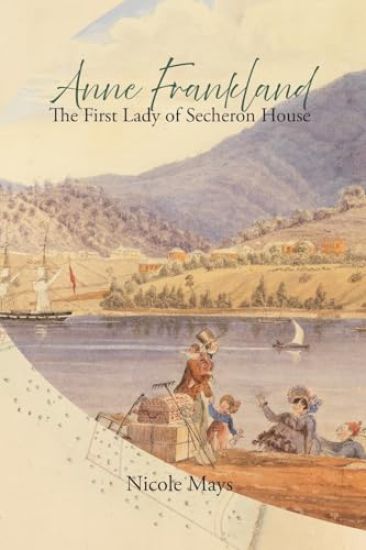
Ocean waves carried Anne Frankland (nee Mason, 1793-1842) around the world. From England to India to South Africa and Australia, and back again several times. The product of an upper-class family with a proud history of well-regarded professional and charitable men, Anne could never have imagined what would become of the nearly destitute 26-year-old spinsteremployed as a governess about to leave London for India in March 1820. Her life evolved in a series of events, circumstances and opportunities. From a daughter, granddaughter and sister, she became a teacher, a friend, a wife, a mother, the mistress of a large estate and a member of the upper echelon of society, all within the bounds of an antipodean English colony that was on the other side of the world.The wife of Van Diemen's Lands' Surveyor General George Frankland (1800-1838), Anne also became the chief supporter of his career progression, the quiet confidante and counsel with regards to his public portrayal within a brutal Hobart Town press, the host of his many balls, dinners and soir es, and the worried partner when George was away in the remote Van Diemen's Land wilderness. And then she lost it all: her home, her husband, her life as it was.Whereas Anne and her three teenage children returned to England a few weeks following her husband's death in late 1838, her legacy remains in the Gothic and Georgian-era sandstone residence, Secheron House, that she and George built in the early 1830s overlooking a small, sheltered bay at Battery Point on the edge of the River Derwent. With this book, her personal legacy is no longer hidden in the shadows of history. A life lived within nineteenth-century class conformities and complexities, of love and loss, of financial gain and hardship, this is Anne Frankland's story.
Spirited, Skilled and Determined

Spirited, Skilled and Determined

Nicole L Mays

Nicole Mays
2024
sidottu
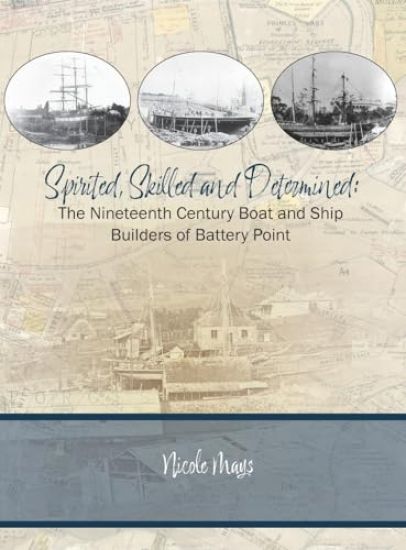
During the nineteenth century upwards of 24 boat and ship builders operated commercial yards at Battery Point, near Hobart. The earliest of this cohort was Irish immigrant Daniel Callaghan who established a boat yard near the Mulgrave Battery in late 1830. It was operational for only a few years before Callaghan sailed to New South Wales in search of new opportunities. Next came two shipbuilders: Scottish immigrant William Williamson and English-born John Watson. The former established a yard in 1834 on the site previously occupied by Callaghan; the latter established a yard along the Napoleon Street corridor in 1839. Other boat and ship builders soon followed, including Peter and Henry Degraves, Joseph Risby and his brothers, Jacob Chandler, James Mackey, John Ross, Charles Miller, George Whitehouse, Lark Macquarie and Robert Inches.These men were all spirited, skilled and determined, successfully using endemic timbers and scant resources to create vessels they adapted to new and emerging trade patterns. Hundreds of Battery Point-built ketches, schooners, barques and brigs traversed local rivers and waterways, the unrelenting waters off Tasmania's coast, the perils of Bass Strait, and beyond. They were employed in local trade, in coastal trade, in intercolonial trade, as well as trade with New Zealand, Europe, Asia, and the Americas. Smaller craft, including whaleboats, lifeboats and dinghies, were constructed for use locally, as well as to supply visiting colonial and international vessels. A plethora of waterman's boats were built for use on the River Derwent for a growing pleasure and passenger trade. Racing craft were also constructed for use by local and visiting crews with often high stakes on offer. Of course there were setbacks, failures and disappointments, both professionally and personally, resulting in careers and personal lives that ebbed and flowed with the tide. Still, these men persevered.This book marks a significant revision to one published by the author in 2014 titled Spirited, Skilled and Determined: the Boat and Ship Builders of Battery Point (1835 - 1935) that is now out of print. In the decade since its publication, additional records have become available detailing the construction of many more vessels at Battery Point, as well as the existence of Battery Point's first commercial boat builder, Daniel Callaghan. As such, this edition now profiles over 24 builders, as well as more than 720 vessels built at this location during the nineteenth century; the latter an increase of over 170 from the previous volume. Updates have also been made to the history of many of the craft included in the first volume as more information has become available.
Those That Survive

Those That Survive

Graeme Broxam; Nicole L Mays

Nicole Mays
2022
sidottu
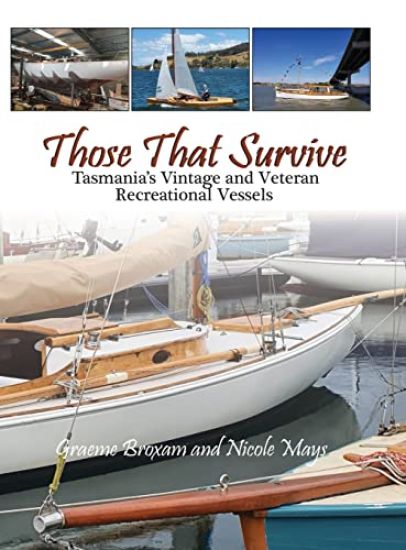
Tasmanians hold a special empathy with the sea and, in particular, their vintage and veteran boats. This book profiles over 460 vintage or veteran recreational vessels built prior to 1970 that are of significance to Australia's small island state across a wide range of types, sizes and locations and in various stages of condition. Categories include steam yachts, yachts, motor boats and launches, as well as small pleasure craft and racing dinghies. The book encompasses craft that are well loved with a secure future to those that are in peril.The large number of vessels highlighted herein is a far cry from the 150 craft profiled in the first edition of Those That Survive, published in 1996, and is indicative of not only the interest that these boats and ships now generate, but also the increased awareness of a specific vessel's history, singularly and as a collective amongst its cohort. In fact, the number of vintage and veteran craft still in existence of relevance to Tasmania has meant that the vessels have been split across two volumes. While this volume purely concerns recreational craft, a companion volume focusses on commercial and government vessels, itself profiling over 300 vessels. Overall, the outcome is a robust summary of craft significant to Tasmania's maritime history.
Industrious, Innovative, Altruistic

Industrious, Innovative, Altruistic

Nicole L Mays

Nicole Mays
2018
sidottu
From Charlie Lucas, Purdon and Featherstone, Percy Coverdale and Taylor Brothers to Jock Muir, Max Creese, Purdon Brothers and Bill Foster, the 20th century saw more than 12 commercial boat building yards in operation along the Napoleon Street corridor of Battery Point near Hobart. Combined, hundreds of men were employed and thousands of vessels were built, of which many remain in existence. This book profiles the 20th century boat builders of Battery Point, their yards and the vessels they built.