Kirjojen hintavertailu. Mukana 12 595 353 kirjaa ja 12 kauppaa.

Kirjailija

Nicoli Nattrass

Kirjat ja teokset yhdessä paikassa: 12 kirjaa, julkaisuja vuosilta 1999-2019, suosituimpien joukossa Denying AIDS. Vertaile teosten hintoja ja tarkista saatavuus suomalaisista kirjakaupoista.

12 kirjaa

Kirjojen julkaisuhaarukka 1999-2019.

Inclusive Dualism

Inclusive Dualism

Nicoli Nattrass; Jeremy Seekings

Oxford University Press
2019
sidottu
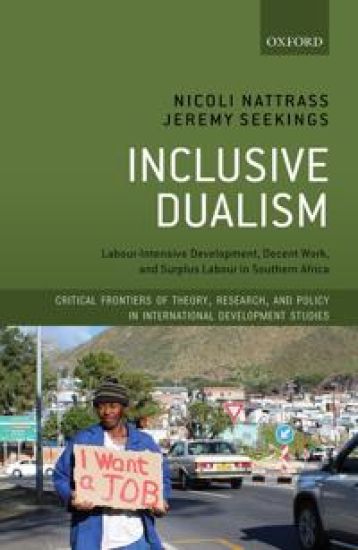
W. Arthur Lewis, the founding father of development economics, proposed a dualist model of economic development in which 'surplus' (predominantly under-employed) labour shifted from lower to higher productivity work. In practice, historically, this meant that labour was initially drawn out of subsistence agriculture into low-wage, labour-intensive manufacturing, including in clothing production, before shifting into higher-wage work. This development strategy has become unfashionable. The International Labour Organisation (ILO) worries that low-wage, labour-intensive industry promises little more than an impoverishing 'race to the bottom'. Inclusive Dualism: Labour-intensive Development, Decent Work, and Surplus Labour in Southern Africa argues that decent work fundamentalism, that is the promotion of higher wages and labour productivity at the cost of lower-wage job destruction, is a utopian vision with potentially dystopic consequences for countries with high open unemployment, many of which are in Southern Africa. Using the South African clothing industry as a case study Inclusive Dualism argues that decent work fundamentalism ignores the inherently differentiated character of industry resulting in the unnecessary destruction of labour-intensive jobs and the bifurcation of society into highly-paid, high-productivity insiders and low-paid or unemployed outsiders. It demonstrates the broader relevance of the South Africa case, examining the growth in surplus labour across Africa. It shows that low- and high-productivity firms can co-exist, and challenges the notion that a race to the bottom is inevitable. Inclusive Dualism instead favours multi-pronged development strategies that prioritise labour-intensive job creation as well as facilitating productivity growth elsewhere without destroying jobs.

Policy, Politics and Poverty in South Africa

Policy, Politics and Poverty in South Africa

Jeremy Seekings; Nicoli Nattrass

Palgrave Macmillan
2015
sidottu
Seekings and Nattrass explain why poverty persisted in South Africa after the transition to democracy in 1994. The book examines how public policies both mitigated and reproduced poverty, and explains how and why these policies were adopted. The analysis offers lessons for the study of poverty elsewhere in the world.
Denying AIDS

Denying AIDS

Seth C. Kalichman; Nicoli Nattrass

Copernicus Books
2014
nidottu
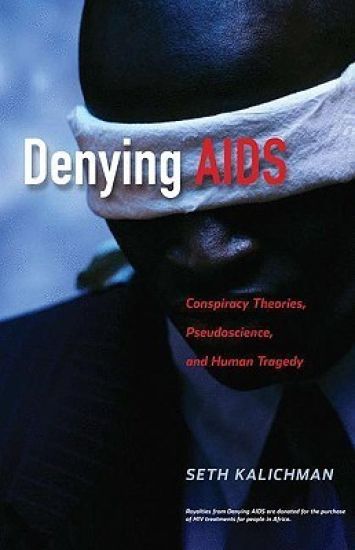
Paralleling the discovery of HIV and the rise of the AIDS pandemic, a flock of naysayers has dedicated itself to replacing genuine knowledge with destructive misinformation—and spreading from the fringe to the mainstream media and the think tank. Now from the editor of the journal AIDS and Behavior comes a bold exposé of the scientific and sociopolitical forces involved in this toxic evasion. Denying AIDS traces the origins of AIDS dissidents disclaimers during the earliest days of the epidemic and delves into the psychology and politics of the current denial movement in its various incarnations. Seth Kalichman focuses not on the “difficult” or doubting patient, but on organized, widespread forms of denial (including the idea that HIV itself is a myth and HIV treatments are poison) and the junk science, faulty logic, conspiracy theories, and larger forces of homophobia and racism that fuel them. The malignant results of AIDS denial can be seen in those individuals who refuse to be tested, ignore their diagnoses, or reject the treatments that could save their lives. Instead of ignoring these currents, asserts Kalichman, science has a duty to counter them. Among the topics covered: Why AIDS denialism endures, and why science must understand it. Pioneer virus HIV researcher Peter Duesberg’s role in AIDS denialism. Flawed immunological, virological, and pharmacological pseudoscience studies that are central to texts of denialism. The social conservative agenda and the politics of AIDS denial, from the courts to the White House. The impact of HIV misinformation on public health in South Africa. Fighting fiction with reality: anti-denialism and the scientific community. For anyone affected by, interested in, or working with researchers in HIV/AIDS, and public health professionals in general, the insight and vision of Denying AIDS will inspire outrage, discussion, and ultimately action. See http://denyingaids.blogspot.com/ for more information.
The AIDS Conspiracy

The AIDS Conspiracy

Nicoli Nattrass

Columbia University Press
2013
pokkari
Since the early days of the AIDS epidemic, many bizarre and dangerous hypotheses have been advanced to explain the origins of the disease. In this compelling book, Nicoli Nattrass explores the social and political factors prolonging the erroneous belief that the American government manufactured the human immunodeficiency virus (HIV) to be used as a biological weapon, as well as the myth's consequences for behavior, especially within African American and black South African communities. Contemporary AIDS denialism, the belief that HIV is harmless and that antiretroviral drugs are the true cause of AIDS, is a more insidious AIDS conspiracy theory. Advocates of this position make a "conspiratorial move" against HIV science by implying its methods cannot be trusted and that untested, alternative therapies are safer than antiretrovirals. These claims are genuinely life-threatening, as tragically demonstrated in South Africa when the delay of antiretroviral treatment resulted in nearly 333,000 AIDS deaths and 180,000 HIV infections-a tragedy of stunning proportions. Nattrass identifies four symbolically powerful figures ensuring the lifespan of AIDS denialism: the hero scientist (dissident scientists who lend credibility to the movement); the cultropreneur (alternative therapists who exploit the conspiratorial move as a marketing mechanism); the living icon (individuals who claim to be living proof of AIDS denialism's legitimacy); and the praise-singer (journalists who broadcast movement messages to the public). Nattrass also describes how pro-science activists have fought back by deploying empirical evidence and political credibility to resist AIDS conspiracy theories, which is part of the crucial project to defend evidence-based medicine.
Psychosocial and Public Health Impacts of New HIV Therapies

Psychosocial and Public Health Impacts of New HIV Therapies

Nicoli Nattrass

Springer-Verlag New York Inc.
2013
nidottu
“AIDS is kind of like life, just speeded up. ” JavonP. ,heroinaddictwithAIDS, Bronx,NewYork, 1988 “Now I’m not so much scared of dying as scared of living. ” Mike D. , heroin addict with AIDS, New Haven, Connecticut, 1998 Within little more than a decade, AIDS has been tranformed from an untreatable, rapidly fatal illness, into a manageable, chronic disease. Most of this tranformation has occurred in the past five years, accelerated by the advent of protease inhibitors and the proven benefits of combination antiretroviral therapy and prophylaxis against opportunistic infections. For people living with HIV/AIDS, these developments have offered unprecedented hope, and also new challenges. As reflected in the quotes above, some of the anxieties and anticipation of premature dying have been replaced by the uncertainties involved in living with a long-term, unpredictable illness. The role of caregivers for people with HIV/AIDS has also changed radically over this time. Earlier in the epidemic, we learned to accompany patients through illness, to bear witness, to advocate, to address issues of death, dying, and - reavement. The arrival of more effective therapy has brought with it new capabi- ties, but also new complexities, raising difficult problems concerning access to care, adherence, and toxicity.
The AIDS Conspiracy

The AIDS Conspiracy

Nicoli Nattrass

Columbia University Press
2012
sidottu
Since the early days of the AIDS epidemic, many bizarre and dangerous hypotheses have been advanced to explain the origins of the disease. In this compelling book, Nicoli Nattrass explores the social and political factors prolonging the erroneous belief that the American government manufactured the human immunodeficiency virus (HIV) to be used as a biological weapon, as well as the myth's consequences for behavior, especially within African American and black South African communities. Contemporary AIDS denialism, the belief that HIV is harmless and that antiretroviral drugs are the true cause of AIDS, is a more insidious AIDS conspiracy theory. Advocates of this position make a "conspiratorial move" against HIV science by implying its methods cannot be trusted and that untested, alternative therapies are safer than antiretrovirals. These claims are genuinely life-threatening, as tragically demonstrated in South Africa when the delay of antiretroviral treatment resulted in nearly 333,000 AIDS deaths and 180,000 HIV infections-a tragedy of stunning proportions. Nattrass identifies four symbolically powerful figures ensuring the lifespan of AIDS denialism: the hero scientist (dissident scientists who lend credibility to the movement); the cultropreneur (alternative therapists who exploit the conspiratorial move as a marketing mechanism); the living icon (individuals who claim to be living proof of AIDS denialism's legitimacy); and the praise-singer (journalists who broadcast movement messages to the public). Nattrass also describes how pro-science activists have fought back by deploying empirical evidence and political credibility to resist AIDS conspiracy theories, which is part of the crucial project to defend evidence-based medicine.
Denying AIDS

Denying AIDS

Seth C. Kalichman; Nicoli Nattrass

Springer-Verlag New York Inc.
2009
sidottu
Paralleling the discovery of HIV and the rise of the AIDS pandemic, a flock of naysayers has dedicated itself to replacing genuine knowledge with destructive misinformation—and spreading from the fringe to the mainstream media and the think tank. Now from the editor of the journal AIDS and Behavior comes a bold exposé of the scientific and sociopolitical forces involved in this toxic evasion. Denying AIDS traces the origins of AIDS dissidents disclaimers during the earliest days of the epidemic and delves into the psychology and politics of the current denial movement in its various incarnations. Seth Kalichman focuses not on the “difficult” or doubting patient, but on organized, widespread forms of denial (including the idea that HIV itself is a myth and HIV treatments are poison) and the junk science, faulty logic, conspiracy theories, and larger forces of homophobia and racism that fuel them. The malignant results of AIDS denial can be seen in those individuals who refuse to be tested, ignore their diagnoses, or reject the treatments that could save their lives. Instead of ignoring these currents, asserts Kalichman, science has a duty to counter them. Among the topics covered: Why AIDS denialism endures, and why science must understand it. Pioneer virus HIV researcher Peter Duesberg’s role in AIDS denialism. Flawed immunological, virological, and pharmacological pseudoscience studies that are central to texts of denialism. The social conservative agenda and the politics of AIDS denial, from the courts to the White House. The impact of HIV misinformation on public health in South Africa. Fighting fiction with reality: anti-denialism and the scientific community. For anyone affected by, interested in, or working with researchers in HIV/AIDS, and public health professionals in general, the insight and vision of Denying AIDS will inspire outrage, discussion, and ultimately action. See http://denyingaids.blogspot.com/ for more information.
Mortal Combat

Mortal Combat

Nicoli Nattrass

University of KwaZulu-Natal Press
2007
nidottu
The AIDS pandemic and ""denialism"" is an international issue and South Africa is a flash point case study. ""Mortal Combat"" is a history of AIDS policy in South Africa. It exposes the strategy and tactics of AIDS denialists and focuses on the struggle for antiretrovirals to prevent mother-to-child transmission of HIV and to extend the lives of people living with AIDS.
Class, Race, and Inequality in South Africa

Class, Race, and Inequality in South Africa

Jeremy Seekings; Nicoli Nattrass

Yale University Press
2006
sidottu
The distribution of incomes in South Africa in 2004, ten years after the transition to democracy, was probably more unequal than it had been under apartheid. In this book, Jeremy Seekings and Nicoli Nattrass explain why this is so, offering a detailed and comprehensive analysis of inequality in South Africa from the midtwentieth century to the early twenty-first century. They show that the basis of inequality shifted in the last decades of the twentieth century from race to class. Formal deracialization of public policy did not reduce the actual disadvantages experienced by the poor nor the advantages of the rich. The fundamental continuity in patterns of advantage and disadvantage resulted from underlying continuities in public policy, or what Seekings and Nattrass call the “distributional regime.” The post-apartheid distributional regime continues to divide South Africans into insiders and outsiders. The insiders, now increasingly multiracial, enjoy good access to well-paid, skilled jobs; the outsiders lack skills and employment.
Proclus: Neo-Platonic Philosophy and Science

Proclus: Neo-Platonic Philosophy and Science

Lucas Siorvanes; Nicoli Nattrass

YALE UNIVERSITY PRESS
2005
sidottu
The distribution of incomes in South Africa in 2004, ten years after the transition to democracy, was probably more unequal than it had been under apartheid. In this book, Jeremy Seekings and Nicoli Nattrass explain why this is so, offering a detailed and comprehensive analysis of inequality in South Africa from the midtwentieth century to the early twenty-first century. They show that the basis of inequality shifted in the last decades of the twentieth century from race to class. Formal deracialization of public policy did not reduce the actual disadvantages experienced by the poor nor the advantages of the rich. The fundamental continuity in patterns of advantage and disadvantage resulted from underlying continuities in public policy, or what Seekings and Nattrass call the "distributional regime." The post-apartheid distributional regime continues to divide South Africans into insiders and outsiders. The insiders, now increasingly multiracial, enjoy good access to well-paid, skilled jobs; the outsiders lack skills and employment.
The Moral Economy of AIDS in South Africa

The Moral Economy of AIDS in South Africa

Nicoli Nattrass

Cambridge University Press
2003
pokkari
Relatively few people have access to antiretroviral treatment in South Africa. The government justifies this on grounds of affordability.Nicoli Nattrass argues that the government's view insulates AIDS policy from social discussion and efforts to fund large-scale intervention. Nattrass addresses South Africa's contentious AIDS policy from both an economic and ethical perspective, presenting: • a history of AIDS policy in South Africa • an expert analysis of the macroeconomic impact of AIDS • a delineation of the relationship between AIDS and poverty and the challenges it poses for development, inequality and social solidarity • an investigation into how a programme preventing mother-to-child transmission would be less expensive than having to treat children with AIDS-related illnesses • an exploration of the relationship between AIDS treatment and risky sexual behaviour • an economic and social case for expanded AIDS prevention and treatment intervention. This relevant and accessible work is a valuable resource for readers with an interest in AIDS policy and the social and economic implications of the pandemic.
Psychosocial and Public Health Impacts of New HIV Therapies

Psychosocial and Public Health Impacts of New HIV Therapies

Nicoli Nattrass

Kluwer Academic/Plenum Publishers
1999
sidottu
“AIDS is kind of like life, just speeded up. ” JavonP. ,heroinaddictwithAIDS, Bronx,NewYork, 1988 “Now I’m not so much scared of dying as scared of living. ” Mike D. , heroin addict with AIDS, New Haven, Connecticut, 1998 Within little more than a decade, AIDS has been tranformed from an untreatable, rapidly fatal illness, into a manageable, chronic disease. Most of this tranformation has occurred in the past five years, accelerated by the advent of protease inhibitors and the proven benefits of combination antiretroviral therapy and prophylaxis against opportunistic infections. For people living with HIV/AIDS, these developments have offered unprecedented hope, and also new challenges. As reflected in the quotes above, some of the anxieties and anticipation of premature dying have been replaced by the uncertainties involved in living with a long-term, unpredictable illness. The role of caregivers for people with HIV/AIDS has also changed radically over this time. Earlier in the epidemic, we learned to accompany patients through illness, to bear witness, to advocate, to address issues of death, dying, and - reavement. The arrival of more effective therapy has brought with it new capabi- ties, but also new complexities, raising difficult problems concerning access to care, adherence, and toxicity.