

Kirjailija
Nidra Poller
Kirjat ja teokset yhdessä paikassa: 7 kirjaa, julkaisuja vuosilta 2003-2020, suosituimpien joukossa Troubled Dawn of the 21st Century. Vertaile teosten hintoja ja tarkista saatavuus suomalaisista kirjakaupoista.
7 kirjaa
Kirjojen julkaisuhaarukka 2003-2020.
madonna madonna est un roman par plaisir, le plaisir d' crire et de vivre, la joie et la jouissance, les moments privil gi s o l'univers m me semble combl . Et si on r unissait ces perfections, en repoussant vers l'arri re l'autre face de la r alit , ce serait une pleine lune de splendeur. madonna madonna est un roman au plaisir extrait de la vie dans toute sa complexit de d ceptions, de faux pas et de peut pas, de peurs dompt es et de la honte d pass e. C'est un texte-femme, grandeur nature, d'une pr sence sensuelle, lumineuse, chaleureuse. Exigeant de par sa nouveaut , r confortant dans sa maternit , elle puise la douce beaut du fond de la tristesse. Ecrit d'un seul trait, comme une lettre, comme la parole vivante, le geste, la vie qui se d roule, allant vers le toujours inconnu. C'est cela, l' lan vital. Notre pr sence dans un espace-temps qui nous chappe. La vie c'est l'impossibilit de revenir en arri re et de remanier le v cu. madonna madonna est crit la main sur des feuilles doubles dans un temps tr s court, trois mois plus une semaine, sans rature. C'est une criture gestuelle, une composition tr s labor e, qui fonctionne de fa on physiologique, sans l'imposition d'une volont intellectuelle. Comment faire parler le faire l'amour ? Sans pr cisions anatomiques dignes d'un manuel scolaire, sans artifices du fantasme, sans mise en sc ne observ e par le trou de la serrure. Comment exprimer la libert d brid e sans violer l'intimit ? Le langage sait faire si on le laisse parler.Il ne s'agit pas de relier l' rotique et la maternit , ils sont intimement li s dans le corps de la femme. Accepter cette liaison, chapper au choix binaire maman-putain, vivre sa singularit , le corps de la femme a plus de m moire ... madonna, la m re de la fille, madonna, la fille devenue m re, ce lien tir depuis le d but des temps et tendant vers l'infini. madonna madonna, c'est l'infini de ce roman, la minuscule matrice de la fille cuv e dans la matrice de sa m re, la fille qui devient m re, l'amour de la m re pour sa fille, de la f minit de sa fille, du matin de la vie de sa fille en l'apr s-midi de la sienne, cette f minit qui tourne sur l'axe de l'homme en vague sur vague de joie. Et parfois du chagrin.C'est un roman intime, pas introspectif. La pens e est labor e l'int rieur, mais la femme volue dans un monde ouvert, fascinant, dr le et fulgurant, opulent, o on a envie de danser. La femme maternelle retrouve dans des lieux lointains une vie de famille, la femme fatale y d couvre l'amour recompos , on est toujours au premier rang du spectacle du monde qui s'invente chemin allant, les souvenirs jouent de nouveaux r les, a donne envie.Je brouille les pistes. Ce n'est pas un caprice. C'est l'essence m me de madonna madonna. Le texte n'est pas sur la femme, elle est femme. Elle a cette qualit rotique d'une femme qui vit dans un monde nouvellement cr , sans carte sans guide. Elle est toujours l' tranger chez elle. Elle a cette capacit f minine d'embrasser le corps tranger, l'enfant dans son ventre, d'assimiler des langues trang res, le langage du nourrisson. Elle accepte la d pendance de son amour de l'homme, la reddition incandescente de la jouissance qui n'a rien de tyrannique. madonna madonna, compos en fran ais par une trang re qui donne naissance des enfants m tis qui jouent all grement des libert s d'innovation h rit es d'une superbe tradition litt raire en langue anglaise. madonna madonna, d vergond e, ose embarquer sur cette langue emprunt e vie et l'emmener loin de ses circuits connus. Un peu badin un peu gamin elle prend par la main cette langue engonc e dans le corset du discours, elle l'invite batifoler dans des champs de fleurs sauvages et lui tend les fruits rouges d'un roman sans discours aucun, enti rement parl , un tissage de voix entrelac es,
En l'espace de deux jours, du 28 au 30 septembre 2000, le tissu de ma vie en France s'est d chir . Romanci re, n e aux Etats-Unis de parents d'origine mittleurop enne, juive et amoureuse de la vie, chez moi Paris, en Afrique, au Japon, en Italie, litt raire du matin au soir et dans mes r ves, j' tais brutalement mise devant le fait d'un antis mitisme fulgurant qui tordait les esprits et l chait les fauves. La visite provocatrice au Mont du Temple d'Ariel Sharon, alors chef de l'opposition, suivie deux jours plus tard par un blood libel plan taire-la mise en sc ne de la mort en direct du palestinien Mohamed al Dura-ont lib r des torrents de haine retenue depuis la Shoah. Abandonnant un projet de roman construit sur l'axe du rapport entre une grand-m re et sa petite-fille qui ne parlent pas la m me langue, je me suis appliqu e transcrire le roman qui se d roulait devant mes yeux. C'est le Cahier d'une honn te citoyenne pr sent ici, augment des articles r dig s et publi s en fran ais, car c'est bel et bien dans cette langue que j'ai parl au pays o j'avais choisi en toute innocence de vivre. Je m'adressais aux amis et coll gues la presse, aux autorit s, en honn te citoyenne, sp cialiste de rien. Si, sp cialiste de l'art du roman, de la parole singuli re, libre et assum e, de la force litt raire de dire le r el. Alors que je m'exprimais en fran ais, des coll gues francophones me priaient de traduire leurs textes en anglais pour qu'ils deviennent, par un aller-retour transatlantique, audibles. J'ai fini par reprendre ma langue maternelle, ouvrant la voie la publication dans des m dias prestigieux et d'autres moins connus qui m'offrent la pr cieuse libert de m'exprimer sans entrave: Commentary, Wall St. Journal Europe, NY Sun, National Review Online, New English Review, Family Security Matters...
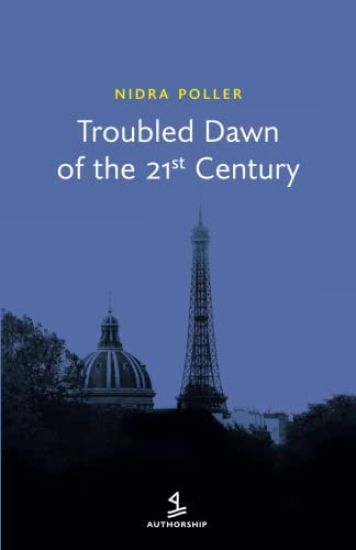
Nidra Poller Troubled Dawn of the 21st Century authorship intl 360 pages Troubled Dawn of the 21st Century began as a writer's notebook and led to my transition from the art of the novel to a novelist's singular style of journalism. At the end of September 2000 I was mentally constructing my next novel that would expand from the mother-daughter axis of the previous work, Madonna Madonna, to the third generation, from mother to daughter to grandchild. The challenge I had set for myself was abruptly replaced by the existential conflict that has occupied me ever since. The alleged provocation of Ariel Sharon's visit to the Temple Mount, followed two days later by the al Dura blood libel, jolted the course of contemporary history. I recognized immediately that a real life novel was unfolding before my eyes. And I began to grasp it in terms that only a novelist could perceive and elaborate. Since the late 1970s I had been writing almost exclusively in French. Including the novel referred to above. Neither assimilated nor integrated nor expatriated, I lived harmoniously with my share of France. Like a bird, briefly pausing on a branch. I felt no need for roots. Immigration was my homeland. From Mittleuropa to the United States to Western Europe, why not? But the tree that supported that branch began to shake violently and sent me flying into emergency mode. I responded, naturally, in French. Cahier d'une honn te citoyenne notes from a simple citizen] was addressed to the society in which I lived, the media, old and soon to be lost friends, new friends and allies, political leaders, younger generations, my native land, and my newfound Zionist rebirthplace. Like so many cosmopolitan Jews that did not wear that identity on their lapels or on a fine gold chain, I was thrust into a virtual ghetto, a frenzy of meetings, lectures, broadsides, facts & figures sustained by newly formed groups and revitalized institutions. In that atmosphere of heightened awareness and concrete danger-violent anti-Semitic acts were counted by the hundreds, adding up to thousands-I used every skill and talent with which I am endowed to observe, analyze, and express the momentous transformation of contemporary reality. The Metula News Agency publication in 2002 of "Un Sac de billes" followed by the English version "A Bag of Marbles"] launched my "journalistic career." The chronicle published here is a unique document composed in a fertile geopolitical crescent -France, Israel, the US-in a historical period of radical transformation. No retrospective account could ever capture the full force of that living breathing reality. The point being missed is that a new world order is taking shape before our eyes, and we are responsible for the shape it takes. Will it be a world faithful to democratic values in all their imperfection and largely huddled under the umbrella of American military might, or a world delivered up to the logic of blackmail: we can do this to you because you don't know how much we suffer and it's all your fault, and you can't hit back at us because if you do we'll send the whole world down the tubes. What is happening to Israelis today will happen to every one of us tomorrow. It all comes down to a five year-old girl shot in cold blood as she hid under her bed. And Israeli troops going into Hebron and killing the man who sent the man who killed that child. Troubled Dawn, April 2002
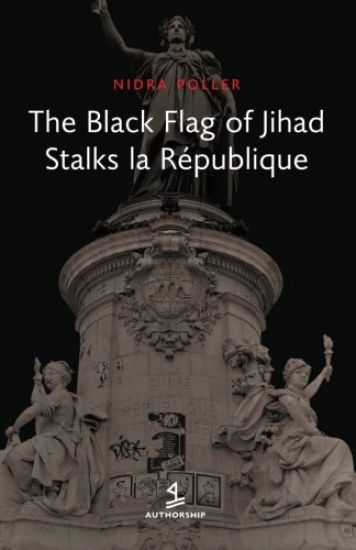
July 13, 2014, the storming of the Bastille was "re-enacted" by enraged mobs shouting Death to the Jews. Trampling the protest march tradition, they stomped down boulevard Beaumarchais, fanned out into the Marais, and massed in front of synagogues, armed with baseball bats, iron bars, rocks, and blood-curdling screams of Slaughter the Jews. They clashed with Jews defending the synagogue on rue de la Roquette and fought with the police that finally arrived to restore order. Six days later, the mobs occupied Place de la R publique in defiance of a ban against their demonstration. They climbed onto the pedestal of the Marianne statue, symbol of the French Republic and made a mockery of revolutionary iconography. "Pro-Palestinians" proclaimed love for Gaza and unconditional support for la R sistance, burned the Israeli flag, and waved the black flag of jihad. Israel was fighting back against a constant barrage of rockets launched from Gaza, one more episode in a genocidal war disguised as a national liberation movement. Hamas r sistance, Jihad r sistance-that's the program chanted in the heart of the French Republic in the summer of 2014. Demonstrations, banned or authorized, exploded in violence against Jewish shops, synagogues, citizens, and the French police, duty-bound to protect them. Public opinion was modeled to perceive this unbridled rage as solidarity with civilians in Gaza, victims of "excessive force" and dying in unfair numbers compared to the Jews of Israel protected by an efficient civil defense system. Who thought to warn them of the ominous portent of the jihad flag brandished at the feet of Marianne? Five months later, in January 2015, the word "jihad" finally took its rightful place in the vocabulary of current events. Jihadis decimated the staff of Charlie Hebdo, executed policemen, assassinated Jews in a kosher grocery store. In Syria and Iraq, jihadis, more exactly mujahidin, raging under that black flag behead journalists, conquer territory, destroy treasures of humanity, persecute Christians, enslave Yazidi women. "Moderate" rebels armed and trained by Western forces defect to the Islamic State or other jihad factions. European Muslims join the ranks of Daesh, learn the skills of decapitation and plot against the lands of their birth. And the free world snuggles up to the Islamic Republic of Iran. The democracies fight their sworn enemies by pouring oil on the fire. Payback comes in the shape of millions of "refugees" poured into Europe, pounding on its borders, flooding its institutions. Paris, November 13, 2015. Jihad attacks kill 129, maim or wound 352. It takes the skills of a scrupulous journalist combined with the eloquence of an inspired novelist to capture the ongoing narrative in the fullness of its living dimensions.
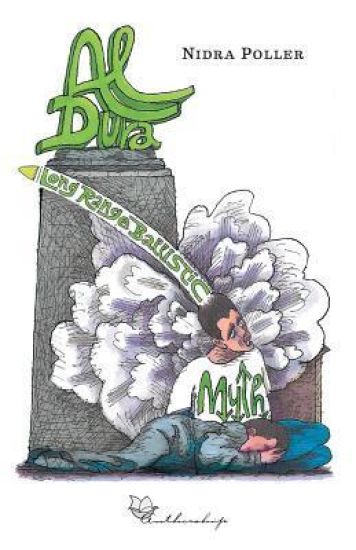
September 30, 2000, Netzarim Junction in the Gaza Strip. State-owned France 2 TV channel reports the shooting of a Palestinian youth, Mohamed Al Dura and the wounding of his father Jamal, "targets of gunfire from the Israeli position." Jerusalem bureau chief Charles Enderlin intones, "the child is dead, his father critically wounded." The accusation enflames the news stream, ignites a wave of Jew hatred unlike anything known since the Shoah. Blood libel. Israelis are branded as child-killers. A war of atrocities, the "Al Aqsa Intifada," is unleashed against Israeli civilians, Jews by the thousands are attacked in France and throughout Europe. Is the "death of Mohamed al Dura" a news broadcast? Or is it a staged scene, the creation of a myth, a lethal narrative launched in a war of conquest disguised as the pathetic cries of helpless victims. How did a crudely fabricated video leap into Western media from a Palestinian source and circulate without encountering a critical eye? Astute observers did in fact notice incongruities in the fleeting images of the alleged incident. They have investigated, analyzed, reported on their findings. But it takes something more than rational expos s to counter an explosive myth.

Emmanuel Levinas (1906-95) placed ethics at the foundation of philosophy; during his life, which spanned almost the entire twentieth century, he witnessed devastating events that could not have been more demanding of that philosophical stance. Unforeseen History covers the years 1929-92, providing a wide overview of Levinas's work-–especially his views on aesthetics and Judaism--offering examples of his precise thinking at work in small essays, long essays, and interviews. The earliest essays in Unforeseen History discuss phenomenology, a subject Levinas introduced to a great many French thinkers, including Jean-Paul Sartre. In his prescient 1934 essay "Some Thoughts on the Philosophy of Hitlerism," moreover, he confronted a philosophy that had yet to manifest itself fully in cataclysm.