Kirjojen hintavertailu. Mukana 12 390 323 kirjaa ja 12 kauppaa.

Kirjailija

Nigel C. Gibson

Kirjat ja teokset yhdessä paikassa: 11 kirjaa, julkaisuja vuosilta 2002-2024, suosituimpien joukossa Fanon And The Rationality Of Revolt. Vertaile teosten hintoja ja tarkista saatavuus suomalaisista kirjakaupoista.

Mukana myös kirjoitusasut: Nigel C Gibson

11 kirjaa

Kirjojen julkaisuhaarukka 2002-2024.

Frantz Fanon

Frantz Fanon

Nigel C. Gibson

JOHN WILEY AND SONS LTD
2024
sidottu
Revolutionary humanist and radical psychiatrist Frantz Fanon was one of the greatest Black thinkers of the twentieth century. Born in Martinique and known for his involvement in the Algerian liberation movement, his seminal books Black Skin, White Masks and The Wretched of the Earth are widely considered to be cornerstones of anti-colonial and anti-racist thought.In this essential introduction to Fanon’s remarkable life and philosophy, Nigel C. Gibson argues that Fanon’s oeuvre is essential to thinking about race today. Connecting Fanon’s writing, psychiatric practice, and lived experience in the Caribbean, France, and Africa, Gibson reveals (with startling clarity) his philosophical commitments and the vision of revolution that he stood for. Despite his untimely death, the revolutionary pulse of Fanon’s ideas has continued to beat ever more strongly in the consciousness of successive revolutionary generations, from the Black Panthers and the Black Power to Black Lives Matter.As Fanon’s thought comes alive to new activists thinking about their mission to “humanize the world,” Gibson reminds us that that Fanon’s revolutionary humanism is fundamental to all forms of anti-colonial struggle, including our own.

Frantz Fanon

Frantz Fanon

Nigel C. Gibson

JOHN WILEY AND SONS LTD
2024
nidottu
Revolutionary humanist and radical psychiatrist Frantz Fanon was one of the greatest Black thinkers of the twentieth century. Born in Martinique and known for his involvement in the Algerian liberation movement, his seminal books Black Skin, White Masks and The Wretched of the Earth are widely considered to be cornerstones of anti-colonial and anti-racist thought.In this essential introduction to Fanon’s remarkable life and philosophy, Nigel C. Gibson argues that Fanon’s oeuvre is essential to thinking about race today. Connecting Fanon’s writing, psychiatric practice, and lived experience in the Caribbean, France, and Africa, Gibson reveals (with startling clarity) his philosophical commitments and the vision of revolution that he stood for. Despite his untimely death, the revolutionary pulse of Fanon’s ideas has continued to beat ever more strongly in the consciousness of successive revolutionary generations, from the Black Panthers and the Black Power to Black Lives Matter.As Fanon’s thought comes alive to new activists thinking about their mission to “humanize the world,” Gibson reminds us that that Fanon’s revolutionary humanism is fundamental to all forms of anti-colonial struggle, including our own.
Rethinking Fanon

Rethinking Fanon

Nigel C. Gibson

BLOOMSBURY PUBLISHING PLC
2022
nidottu
Over sixty years after his death, the social philosopher and psychiatrist Frantz Fanon (1925-1961) remains a towering intellectual figure. Born in Martinique and trained as a psychiatrist in France, Fanon rejected his French citizenship to join the Algerian liberation movement in the 1950s. In the short decade from 1952 to 1961 this brilliant and engaged intellectual composed three books Black Skin, White Masks, A Dying Colonialism, and The Wretched of the Earth, which continue to spur intellectual awakenings across the world. The rebirth of Fanonism today in universities and the English-speaking world is a testament to his relevance. Edited by distinguished Fanon scholar Nigel C. Gibson, Rethinking Fanon: The Continuing Dialogue, first published in 1999, has become a classic, grounding new discussions of Fanon and cultural, postcolonial, Africana and gender studies with earlier African and African American dialogues. The book opens with an authoritative biography by the Ghanaian political scientist Emmanuel Hansen, which corrects fallacious assertions about Fanon's life, situating him in Marxism, Negritude, Pan-Africanism, and the historical context of postwar decolonization, specifically the Algerian revolution. Section one is highlighted by extended discussions of Fanon's theories on revolution and "true liberation," including Fanon’s revolutionary psychiatry by Hussein A. Bulhan, now the President of the Frantz Fanon University, and discussions of Fanon’s dialectic of liberation by African American theorist Tony Martin, and Marxist-Humanists, John Alan and Lou Turner. The next section examines Fanon's re-emergence in postcolonial studies in British and American universities with now classic chapters by Homi K. Bhabha, Henry Louis Gates Jr., Edward W. Said and Benita Parry. The third section, “Fanon, Gender, and National Consciousness” includes chapters by Anne McClintock, Diana Fuss and T. Denean Sharpley-Whiting remain important to the ongoing debates about identity and agency. This excellent collection reflects the continuing impact of Fanon's thought on Africana studies, feminism and sexuality studies, postcolonialism, decolonial, and cultural studies.
Fanon And The Rationality Of Revolt

Fanon And The Rationality Of Revolt

Nigel C. Gibson

Daraja Press
2020
nidottu
We inhabit extraordinary times: times in which we are acutely aware of the intensity of what revolutionary thinker Frantz Fanon called "the glare of history's floodlights." The velocity and scale at which the revolt against police murder that began in Minnesota after the death of George Floyd on May 25th and moved throughout the US, and then other parts of the world, was astonishing. It was impossible to predict, but then, in retrospect, it is George Floyd's death becomes a nodal point: calling for action as well as rethinking and self-clarification. Thinking about this moment with the world revolutionary Frantz Fanon, we need to be aware of continuities and discontinuities - or, as he puts it, opacities - between the ages, his and ours. Fanon is always speaking to us, but often in ways we cannot hear. We have to work to listen to him and to understand the new contexts and meanings in relative opacity. It is this constant dialogue that helps illuminate the present and enable ongoing fidelity to Fanon's call in the conclusion of The Wretched of the Earth the necessity to work out new concepts to confront one of Fanon's greatest concerns, the betrayal of the revolutionary movement. In this pamphlet we consider how Fanon's idea of liberation is connected with "the rationality of revolt." The practice of engaging Fanon not only with revolt but with the reason or rationality of revolt connects with Fanon's idea of how this liberated humanity is a product of a new consciousness of collectivity open to rethink everything.
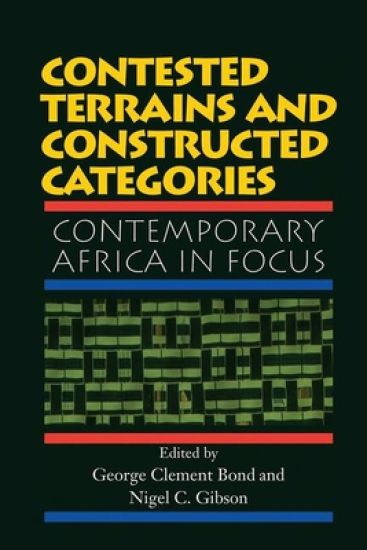
Contested Terrains And Constructed Categories

Contested Terrains And Constructed Categories

George Clement Bond; Nigel C. Gibson

Routledge
2019
sidottu
Contested Terrains and Constructed Categories brings together intellectuals from a variety of fields, backgrounds, generations, and continents to deepen and reinvigorate the theoretical and intellectual integrity of African studies. Building on recent debate within African studies that has revolved about the role of Africanists in the Unit
Frantz Fanon, Psychiatry and Politics

Frantz Fanon, Psychiatry and Politics

Nigel C. Gibson; Roberto Beneduce

Rowman Littlefield
2019
nidottu
The revolutionary and psychiatrist Frantz Fanon was a foundational figure in postcolonial and decolonial thought and practice, yet his psychiatric work still has only been studied peripherally. That is in part because most of his psychiatric writings have remained untranslated. With a focus on Fanon’s key psychiatry texts, Frantz Fanon: Psychiatry and Politics considers Fanon’s psychiatic writings as materials anticipating as well as accompanying Fanon’s better known work, written between 1952 and 1961 (Black Skin, White Masks, A Dying Colonialism, Toward the African Revolution, The Wretched of the Earth). Both clinical and political, they draw on another notion of psychiatry that intersects history, ethnology, philosophy, and psychoanalysis. The authors argue that Fanon’s work inaugurates a critical ethnopsychiatry based on a new concept of culture (anchored to historical events, particular situations, and lived experience) and on the relationship between the psychological and the cultural. Thus, Gibson and Beneduce contend that Fanon’s psychiatric writings also express Fanon’s wish, as he puts it in The Wretched of the Earth, to “develop a new way of thinking, not only for us but for humanity.”
Frantz Fanon, Psychiatry and Politics

Frantz Fanon, Psychiatry and Politics

Nigel C. Gibson; Roberto Beneduce

Rowman Littlefield
2017
sidottu
The revolutionary and psychiatrist Frantz Fanon was a foundational figure in postcolonial and decolonial thought and practice, yet his psychiatric work still has only been studied peripherally. That is in part because most of his psychiatric writings have remained untranslated. With a focus on Fanon’s key psychiatry texts, Frantz Fanon: Psychiatry and Politics considers Fanon’s psychiatic writings as materials anticipating as well as accompanying Fanon’s better known work, written between 1952 and 1961 (Black Skin, White Masks, A Dying Colonialism, Toward the African Revolution, The Wretched of the Earth). Both clinical and political, they draw on another notion of psychiatry that intersects history, ethnology, philosophy, and psychoanalysis. The authors argue that Fanon’s work inaugurates a critical ethnopsychiatry based on a new concept of culture (anchored to historical events, particular situations, and lived experience) and on the relationship between the psychological and the cultural. Thus, Gibson and Beneduce contend that Fanon’s psychiatric writings also express Fanon’s wish, as he puts it in The Wretched of the Earth, to “develop a new way of thinking, not only for us but for humanity.”
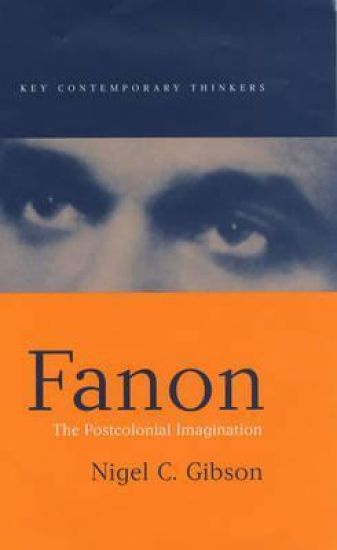
Fanon

Fanon

Nigel C. Gibson

Polity Press
2003
sidottu
Frantz Fanon was a French psychiatrist turned Algerian revolutionary of Martinican origin, and one of the most important and controversial thinkers of the postwar period. A veritable “intellect on fire,” Fanon was a radical thinker with original theories on race, revolution, violence, identity and agency. This book is an excellent introduction to the ideas and legacy of Fanon. Gibson explores him as a truly complex character in the context of his time and beyond. He argues that for Fanon, theory has a practical task to help change the world. Thus Fanon’s “untidy dialectic,” Gibson contends, is a philosophy of liberation that includes cultural and historical issues and visions of a future society. In a profoundly political sense, Gibson asks us to reevaluate Fanon’s contribution as a critic of modernity and reassess in a new light notions of consciousness, humanism, and social change. This is a fascinating study that will interest undergraduates and above in postcolonial studies, literary theory, cultural studies, sociology, politics, and social and political theory, as well as general readers.
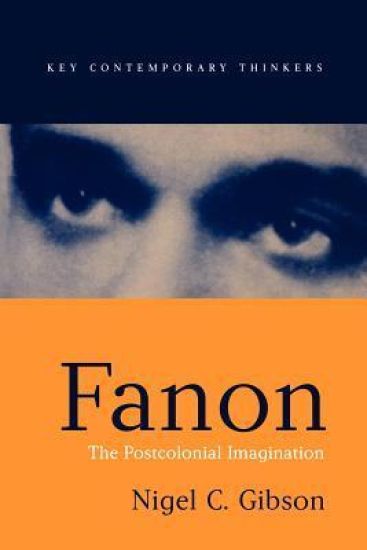
Fanon

Fanon

Nigel C. Gibson

Polity Press
2003
nidottu
Franz Fanon was a French psychiatrist turned Algerian revolutionary of Martiniquan origin, and one of the most important and controversial thinkers of the post-war period. This is an introduction to the ideas and legacy of a truly complex character in the context of his time and beyond.
Contested Terrains And Constructed Categories

Contested Terrains And Constructed Categories

George Clement Bond; Nigel C. Gibson

Westview Press Inc
2002
nidottu
Contested Terrains and Constructed Categories brings together intellectuals from a variety of fields, backgrounds, generations, and continents to deepen and reinvigo-rate the theoretical and intellectual integrity of African studies. Building on recent debate within African studies that has revolved around the role of Africanists in the United States as “gatekeepers” of knowledge about Africa and Africans, this volume of interdisciplinary essays focuses on the contested character of the production of knowledge itself. In every chapter, case studies and ethnographic materials, drawn from such regions as South Africa, Mozambique, Zimbabwe, the Malagasy Republic, Angola, Ghana, and Senegal, demonstrate the application of theory to concrete situations.