Kirjailija
Nigel G Wright
Kirjat ja teokset yhdessä paikassa: 19 kirjaa, julkaisuja vuosilta 2007-2018, suosituimpien joukossa A Trinitarian Theology of Law. Vertaile teosten hintoja ja tarkista saatavuus suomalaisista kirjakaupoista.
Mukana myös kirjoitusasut: Nigel G. Wright
19 kirjaa
Kirjojen julkaisuhaarukka 2007-2018.
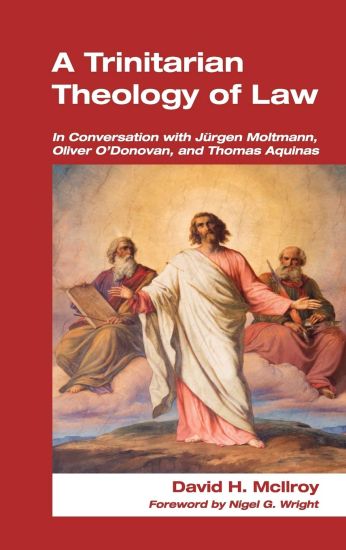
This book explores the neglected significance of the doctrine of the Trinity for the understanding of human law. Through interaction with the thought of Jurgen Moltmann, Oliver O'Donovan and Thomas Aquinas, it argues that human law is called to play a positive but limited role in maintaining ""shallow justice"" and relative peace. Human law is overshadowed by the work of the Son, included in the purposes of the Father, and used as an instrument by the Holy Spirit. However, the Spirit works in those who are in Christ to effect ""deep justice,"" a work of sanctification which culminates in glorification--the experience of perfect, free, willing obedience in heaven. Thinking about law in the light of the Trinity enables us to understand its role, its purposes, and its limits.
This timely book sets out what is involved in being a church minister--its joys and challenges, its privileges and responsibilities. It discusses the call to and the work of ministry, the breadth and nature of the task. It will enable you to understand your calling more fully and inform your practice. It will stimulate careful and biblical reflection. is relevant across a wide spectrum of church traditions, both for those already in ministry and for those contemplating the vocation. It is set to be a seminal volume on the subject.
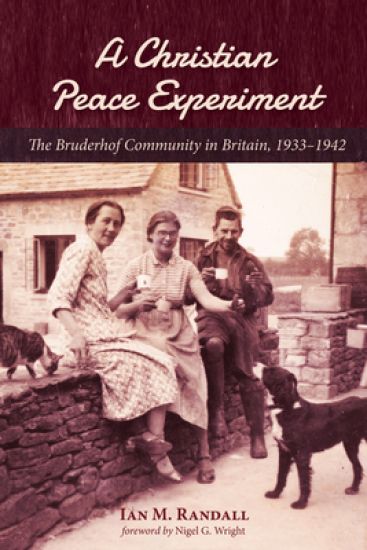
This book examines part of the development of the Bruderhof community, which emerged in Germany in 1920. Community members sought to model their life on the New Testament. This included sharing goods. The community became part of the Hutterite movement, with its origins in sixteenth-century Anabaptism. After the rise to power of the Nazi regime, the Bruderhof became a target and the community was forcibly dissolved. Members who escaped from Germany and travelled to England were welcomed as refugees from persecution and a community was established in the Cotswolds. In the period 1933 to 1942, when the Bruderhof's witness was advancing in Britain, its members were in touch with many individuals and movements. This book covers the Bruderhof's connections with (among others) the Fellowship of Reconciliation, Dietrich Bonhoeffer, the Peace Pledge Union, the social work of Muriel and Doris Lester in East London, Jewish refugee groups, and artistic pioneers like Eric Gill. As significant numbers of British people joined the Bruderhof, its farming, publishing and arts and crafts activities extended considerably. But with the outbreak of the Second World War, German members came to be regarded with suspicion and British members became unpopular locally because they were pacifists. Although the Bruderhof was defended in Parliament, notably by Lady Astor, it seemed that German members would be interned as enemy aliens. The consequence was that by 1942 over 300 community members had left England. With Mennonite assistance, they began to forge a new life in South America. This book traces a remarkable Christian peace experiment being undertaken in a time of great political upheaval. ""The Bruderhof was a community of Christians who tried to live a simple life dedicated to the ideal of peace. Their visionary German founder Eberhard Arnold had started the movement in the wake of the disasters that enveloped Germany after the First World War. . . Ian Randall has written a full, evocative, and appealing account of a group who in troubled times 'wanted to follow Jesus and do his will.'"" --David Bebbington, Professor of History, University of Stirling, Scotland ""This detailed narrative fills a longstanding gap in Bruderhof historiography--the story of the Cotswold Bruderhof in England, particularly during the formative years as it took shape between the Nazi confiscation of the Rhoen community in 1937 and the Bruderhof's transition to Paraguay in 1940 . . . As images of refugees, racial violence, and warfare once again dominate the news media, the Cotswold story is powerful and timely testimony to an alternative vision for humanity."" --John D. Roth, Professor of History, Goshen College ""This absorbing book is an important contribution to the history of the Anabaptist movement. Based on thorough research and drawing on a wide variety of sources, it charts the early years of the Bruderhof in Germany and England during a turbulent period of their history and explores the remarkable commitment of the founders and community members to peace witness, shared lifestyle, and mission. Through this sympathetic historical study, Ian Randall highlights issues which remain relevant today."" --Linda Wilson, Research Fellow, Bristol Baptist College ""Christians from many traditions have been learning from the Anabaptists in recent years. The Bruderhof communities embody a distinctive and enduring witness to principles and practices inspired by the Anabaptist vision. Ian Randall's detailed study tells the story of the Bruderhof in a crucial early phase of their life in England, inviting us to learn from their faithfulness in the midst of struggles."" --Stuart Murray Williams, Anabaptist Network, Chair, Mennonite Trust, United Kingdom ""In A Christian Peace Experiment, Ian Randall offers a scholarly and approachable case study of the Bruderhof, a significant Christian movement, at an important stage in its development and growth when it moved from
""How can we oppose evil without creating new evils and being made evil ourselves?"" --Walter Wink What we think and don't think about evil is important. Nigel Wright provides us with a thorough biblical and theological study of the nature of evil, Christ's victory over it, and our participation in that victory as we await its consummation. In this revision and updating of the Fair Face of Evil: Putting the Power of Darkness in Its Place, Wright sorts through the options to develop a thoroughly Christian understanding of the danger of the enemies of both God and humanity. Getting our thinking right will help us get our ways of living and acting right as well.
'Disavowing Constantine' draws upon the work of two highly influential modern theologians, Jurgen Moltmann and John Howard Yoder, to develop an independent and constructive understanding of the relation of the church to the state. Its aim is to restate for modern understanding the insights of the Believers Church tradition and to work out their implications for Christian participation in the civil order. In this complex realm, positive insights are located in traditions usually regarded as incompatible, but the thesis of the book concerns disavowing Constantine, renouncing the reliance of the church upon coercive power to further its mission in order to rediscover how a faithful church might nonetheless participate as a witness within the power structures of human society.