Kirjojen hintavertailu. Mukana 12 390 323 kirjaa ja 12 kauppaa.

Kirjailija

Nigel Saul

Kirjat ja teokset yhdessä paikassa: 10 kirjaa, julkaisuja vuosilta 1981-2017, suosituimpien joukossa Chivalry in Medieval England. Vertaile teosten hintoja ja tarkista saatavuus suomalaisista kirjakaupoista.

10 kirjaa

Kirjojen julkaisuhaarukka 1981-2017.

Lordship and Faith

Lordship and Faith

Nigel Saul

Oxford University Press
2017
sidottu
Lordship and Faith takes as its subject the many hundreds of parish churches built in England in the Middle Ages by the gentry, the knights and esquires, and the lords of country manors. Nigel Saul uses lordly engagement with the parish church as a way of opening up the piety and sociability of the gentry, focusing on the gentry as founders and builders of churches, worshippers in them, holders of church advowsons, and patrons and sponsors of parish communities. Saul also looks at how the gentry's interest in the parish church sat alongside their patronage of the monks and friars, and their use of private chapels in their manor houses. Lordship and Faith seeks to weave together themes in social, religious, and architectural history, examining in all its richness a subject that has hitherto been considered only in journal articles. Written in an accessible way, this volume makes a significant contribution not only to the history of the English gentry but also to the history of the rural parish church, an institution now in the forefront of medieval historical studies.
For Honour and Fame

For Honour and Fame

Nigel Saul

Vintage Publishing
2012
pokkari
Or did they instead help regulate the conduct of war and moderate its violent excesses?Nigel Saul charts the introduction of chivalry by the Normans, the rise of the knightly class as a social elite, the fusion of chivalry with kingship in the fourteenth century and the influence of chivalry on literature, religion and architecture.
Chivalry in Medieval England

Chivalry in Medieval England

Nigel Saul

HARVARD UNIVERSITY PRESS
2011
sidottu
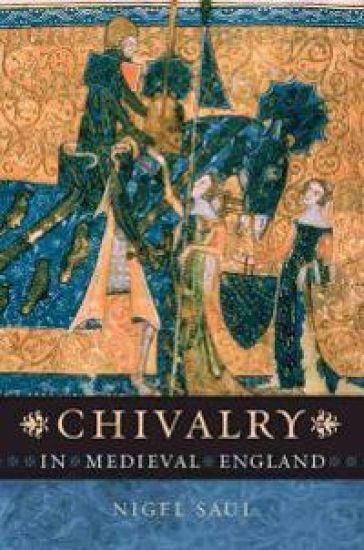
Popular views of medieval chivalry--knights in shining armor, fair ladies, banners fluttering from battlements--were inherited from the nineteenth-century Romantics. This is the first book to explore chivalry's place within a wider history of medieval England, from the Norman Conquest to the aftermath of Henry VII's triumph at Bosworth in the Wars of the Roses. Saul invites us to view the world of castles and cathedrals, tournaments and round tables, with fresh eyes. Chivalry in Medieval England charts the introduction of chivalry by the Normans, the rise of the knightly class as a social elite, the fusion of chivalry with kingship in the fourteenth century, and the influence of chivalry on literature, religion, and architecture. Richard the Lionheart and the Crusades, the Black Death and the Battle of Crecy, the Magna Carta and the cult of King Arthur--all emerge from the mists of time and legend in this vivid, authoritative account.
English Church Monuments in the Middle Ages

English Church Monuments in the Middle Ages

Nigel Saul

Oxford University Press
2011
nidottu
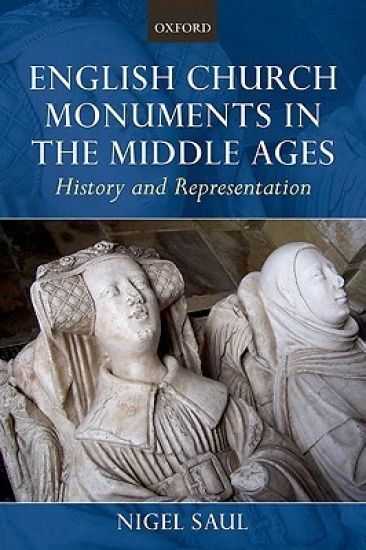
English Church Monuments in the Middle Ages offers a comprehensive survey of English church monuments from the pre-Conquest period to the early sixteenth century. Ground-breaking in its treatment of the subject in an historical context, it explores medieval monuments both in terms of their social meaning and the role that they played in the religious strategies of the commemorated. Attention is given to the production of monuments, the pattern of their geographical distribution, the evolution of monument types, and the role of design in communicating the monument's message. A major theme is the self-representation of the commemorated as reflected in the main classes of effigy-those of the clergy, the knights and esquires, and the lesser landowner or burgess class, while the effigial monuments of women are examined from the perspective of the construction of gender. While seeking to use monuments as windows onto the experiences and lives of the commemorated, it also exploits documentary sources to show what they can tell us about the influences that helped shape the monuments. An innovative chapter looks at the construction of identity in inscriptions, showing how the liturgical role of the monument limited the opportunities for expressions of self. Nigel Saul seeks to place monuments at the very centre of medieval studies, highlighting their importance not only for the history of sculpture and design, but also for social and religious history more generally.
The Three Richards

The Three Richards

Nigel Saul

Hambledon Continuum
2006
nidottu
The three Richards who ruled England in the Middle Ages were among the most controversial and celebrated of its rulers. Richard I ('Coeur de Lion', 1189-99) was a great crusading hero; Richard II (1377-99) was an authoritarian aesthete deposed by his cousin, Henry IV, and murdered; while Richard III (1483-85), as the murderer of his nephews, The Princes in the Tower, was the most notorious villain in English history. This highly readable joint biography shows how much the three kings had in common, apart from their names. All were younger sons, not expected to come to the throne; all failed to leave a legitimate heir, causing instability on their deaths; all were cultured and pious; and all died violently. All have attracted accusations but also fascination. In comparing them, Nigel Saul tells three gripping stories and shows what it took to be a medieval king.
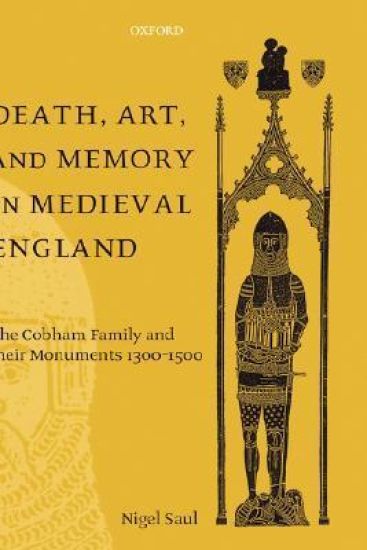
Death, Art, and Memory in Medieval England

Death, Art, and Memory in Medieval England

Nigel Saul

Oxford University Press
2001
sidottu
In this innovative and compelling book Nigel Saul approaches the world of the medieval gentry through the monuments they left behind them. The Cobham family left the largest and most spectacular collection of brasses in Britain in their church at Cobham, and other magnificent brasses in Lingfield, and elsewhere. Medieval brasses have hitherto been studied chiefly from an antiquarian or technical perspective; Nigel Saul for the first time shows how they served as a link between the living and the dead. Commemoration was inseparable from the wider dynamics of society. Through the brasses and through family history he takes us to the heart of gentry aspirations and fears, successes and disappointments. This extensively illustrated study offers a new paradigm for the study of medieval church monuments and makes a major contribution to our understanding of gentry culture.
A Companion to Medieval England 1066-1485

A Companion to Medieval England 1066-1485

Nigel Saul

The History Press Ltd
2000
nidottu
Nigel Saul's A-Z of life in the Middle Ages is essential reading for anyone interested in the turbulent years between the arrival of William the Conqueror and the accession of Henry Tudor in 1485. Here in one volume is a mine of information on all the major aspects of medieval society and culture, giving a comprehensive picture of a world at once alien and familiar, whose way of life has long vanished, but whose visible remains survive all around us.
Richard II

Richard II

Nigel Saul

Yale University Press
1999
pokkari
Richard II is one of the most enigmatic of English kings. Shakespeare depicted him as a tragic figure, an irresponsible, cruel monarch who nevertheless rose in stature as the substance of power slipped from him. By later writers he has been variously portrayed as a half-crazed autocrat or a conventional ruler whose principal errors were the mismanagement of his nobility and disregard for the political conventions of his age. This book—the first full-length biography of Richard in more than fifty years—offers a radical reinterpretation of the king.Nigel Saul paints a picture of Richard as a highly assertive and determined ruler, one whose key aim was to exalt and dignify the crown. In Richard's view, the crown was threatened by the factiousness of the nobility and the assertiveness of the common people. The king met these challenges by exacting obedience, encouraging lofty new forms of address, and constructing an elaborate system of rule by bonds and oaths. Saul traces the sources of Richard's political ideas and finds that he was influenced by a deeply felt orthodox piety and by the ideas of the civil lawyers. He shows that, although Richard's kingship resembled that of other rulers of the period, unlike theirs, his reign ended in failure because of tactical errors and contradictions in his policies. For all that he promoted the image of a distant, all-powerful monarch, Richard II's rule was in practice characterized by faction and feud. The king was obsessed by the search for personal security: in his subjects, however, he bred only insecurity and fear.A revealing portrait of a complex and fascinating figure, the book is essential reading for anyone with an interest in the politics and culture of the English middle ages.