Kirjojen hintavertailu. Mukana 12 595 353 kirjaa ja 12 kauppaa.

Kirjailija

Nigel Shadbolt

Kirjat ja teokset yhdessä paikassa: 7 kirjaa, julkaisuja vuosilta 2006-2025, suosituimpien joukossa Digital Ape. Vertaile teosten hintoja ja tarkista saatavuus suomalaisista kirjakaupoista.

7 kirjaa

Kirjojen julkaisuhaarukka 2006-2025.

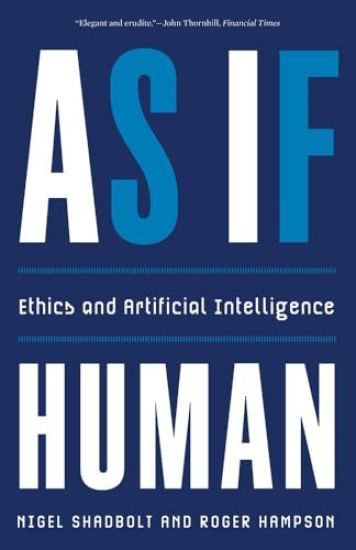
As If Human

As If Human

Nigel Shadbolt; Roger Hampson

YALE UNIVERSITY PRESS
2025
pokkari
A new approach to the challenges surrounding artificial intelligence that argues for assessing AI actions as if they came from a human being “Elegant and erudite.”—John Thornhill, Financial Times Intelligent machines present us every day with urgent ethical challenges. Is the facial recognition software used by an agency fair? When algorithms determine questions of justice, finance, health, and defense, are the decisions proportionate, equitable, transparent, and accountable? How do we harness this extraordinary technology to empower rather than oppress? Despite increasingly sophisticated programming, artificial intelligences share none of our essential human characteristics—sentience, physical sensation, emotional responsiveness, versatile general intelligence. However, Nigel Shadbolt and Roger Hampson argue, if we assess AI decisions, products, and calls for action as if they came from a human being, we can avert a disastrous and amoral future. The authors go beyond the headlines about rampant robots to apply established moral principles in shaping our AI future. Their new framework constitutes a how-to for building a more ethical machine intelligence.
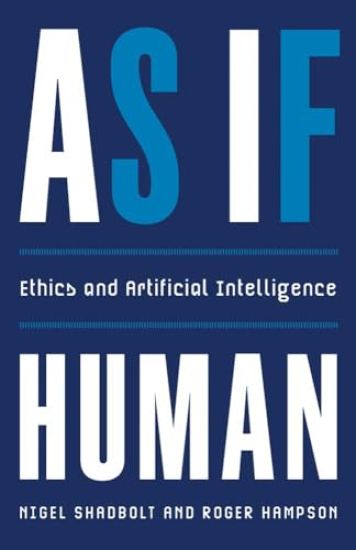
As If Human

As If Human

Nigel Shadbolt; Roger Hampson

YALE UNIVERSITY PRESS
2024
sidottu
A new approach to the challenges surrounding artificial intelligence that argues for assessing AI actions as if they came from a human being “Elegant and erudite.”—John Thornhill, Financial Times Intelligent machines present us every day with urgent ethical challenges. Is the facial recognition software used by an agency fair? When algorithms determine questions of justice, finance, health, and defense, are the decisions proportionate, equitable, transparent, and accountable? How do we harness this extraordinary technology to empower rather than oppress? Despite increasingly sophisticated programming, artificial intelligences share none of our essential human characteristics—sentience, physical sensation, emotional responsiveness, versatile general intelligence. However, Nigel Shadbolt and Roger Hampson argue, if we assess AI decisions, products, and calls for action as if they came from a human being, we can avert a disastrous and amoral future. The authors go beyond the headlines about rampant robots to apply established moral principles in shaping our AI future. Their new framework constitutes a how-to for building a more ethical machine intelligence.

The Digital Ape

The Digital Ape

Nigel Shadbolt; Roger Hampson

Oxford University Press Inc
2019
nidottu
The smart-machines revolution is reshaping our lives and our societies. Here, Sir Nigel Shadbolt, one of the world's leading authorities on artificial intelligence, and Roger Hampson dispel terror, confusion, and misconception. We are not about to be elbowed aside by a rebel army of super-intelligent robots of our own creation. We were using tools before we became Homo sapiens, and will continue to build and master them, no matter how complicated they become. How we exercise that control—in our private lives, in employment, in politics—and make the best of the wonderful opportunities, will determine our collective future well-being. Chapter by chapter, The Digital Ape outline how our choices and the use and adaptation of the tools we've created can lead to opportunities for the environment (both built and natural), health, and our security. Shadbolt and Hampson are uniquely well-suited to draw on historical precedent and technical know-how to offer a vision of the future that is exciting, rather than nerve-wracking, to contemplate.
Digital Ape

Digital Ape

Nigel Shadbolt; Roger Hampson

Scribe
2019
pokkari
How smart machines are transforming us all - and what we should do about it. The smart-machines revolution is re-shaping our lives and our societies. Here, Nigel Shadbolt (one of Britain's leading authorities on artificial intelligence) and Roger Hampson dispel terror, confusion, and misconception. We are not about to be elbowed aside by a rebel army of super-intelligent robots of our own creation. We were using tools before we became Homo sapiens, and will continue to control them. How we exercise that control - in our private lives, in employment, in politics - and make the best of the wonderful opportunities, will determine our collective future well-being. Lucid, well-informed, and deeply human, The Digital Ape offers a unique approach. The authors prefer to add augmented wisdom to artificial intelligence.
The Theory and Practice of Social Machines

The Theory and Practice of Social Machines

Nigel Shadbolt; Kieron O’Hara; David De Roure; Wendy Hall

Springer Nature Switzerland AG
2019
sidottu
Social machines are a type of network connected by interactive digital devices made possible by the ubiquitous adoption of technologies such as the Internet, the smartphone, social media and the read/write World Wide Web, connecting people at scale to document situations, cooperate on tasks, exchange information, or even simply to play. Existing social processes may be scaled up, and new social processes enabled, to solve problems, augment reality, create new sources of value, and disrupt existing practice.This book considers what talents one would need to understand or build a social machine, describes the state of the art, and speculates on the future, from the perspective of the EPSRC project SOCIAM – The Theory and Practice of Social Machines. The aim is to develop a set of tools and techniques for investigating, constructing and facilitating social machines, to enable us to narrow down pragmatically what is becoming a wide space, by asking ‘when willit be valuable to use these methods on a sociotechnical system?’ The systems for which the use of these methods adds value are social machines in which there is rich person-to-person communication, and where a large proportion of the machine’s behaviour is constituted by human interaction.
The Spy in the Coffee Machine

The Spy in the Coffee Machine

Kieron O'Hara; Nigel Shadbolt

Oneworld Publications
2008
nidottu
We are entering a new state of global hypersurveillance. As we increasingly resort to technology for our work and play, our electronic activity leaves behind digital footprints that can be used to track our movements. In our cars, telephones, even our coffee machines, tiny computers communicating wirelessly via the Internet can serve as miniature witnesses, forming powerful networks whose emergent behaviour can be very complex, intelligent, and invasive. The question is: how much of an infringement on privacy are they? Exposing the invasion of our privacy from CCTVs to blogs, The Spy in the Coffee Machine explores what—if anything—we can do to prevent it from disappearing forever in the digital age, and provides readers with a much needed wake-up call to the benefits and dangers of this new technology.
A Framework for Web Science

A Framework for Web Science

Tim Berners-Lee; Wendy Hall; James A. Hendler; Kieron Hara; Nigel Shadbolt; Daniel J. Weitzner

now publishers Inc
2006
nidottu
A Framework for Web Science sets out a series of approaches to the analysis and synthesis of the World Wide Web, and other web-like information structures. A comprehensive set of research questions is outlined, together with a sub-disciplinary breakdown, emphasising the multi-faceted nature of the Web, and the multi-disciplinary nature of its study and development. These questions and approaches together set out an agenda for Web Science, the science of decentralised information systems. Web Science is required both as a way to understand the Web, and as a way to focus its development on key communicational and representational requirements.The authors survey central engineering issues, such as the development of the Semantic Web, Web services and P2P. Analytic approaches to discover the Web's topology, or its graph-like structures, are examined. Finally, the Web as a technology is essentially socially embedded; therefore various issues and requirements for Web use and governance are also reviewed. It is aimed primarily at researchers and developers in the area of Web-based knowledge management and information retrieval. It will also be an invaluable reference for students in computer science at the postgraduate level, academics and industrial practitioners.