Kirjojen hintavertailu. Mukana 12 595 353 kirjaa ja 12 kauppaa.

Kirjailija

Nigel Sharp

Kirjat ja teokset yhdessä paikassa: 6 kirjaa, julkaisuja vuosilta 2015-2025, suosituimpien joukossa Classic Boats. Vertaile teosten hintoja ja tarkista saatavuus suomalaisista kirjakaupoista.

6 kirjaa

Kirjojen julkaisuhaarukka 2015-2025.

Boats and Business

Boats and Business

Nigel Sharp

TROUBADOR PUBLISHING
2025
sidottu
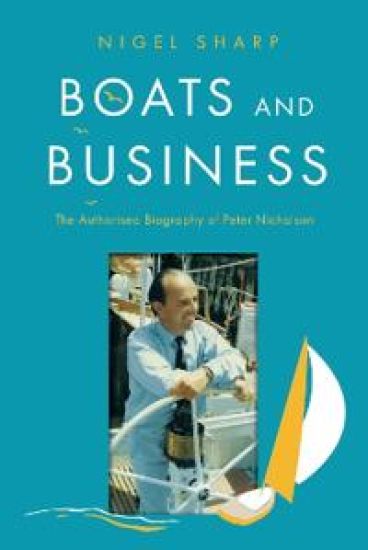
Peter Nicholson is an extraordinarily accomplished man. As one of the last generations to be called up for National Service, he joined the Fleet Air Arm and learned to land aircraft on an aircraft carrier. He was the fourth generation of the Nicholson family to run the world-famous boatbuilding company Camper & Nicholsons. Nicholson has been a highly successful racing sailor, often in boats to whose design he contributed. Amongst several other maritime administration positions, he was Commodore of the Royal Yacht Squadron and Chairman of the Royal National Lifeboat Institution, overseeing various innovative projects in both cases. After his involvement with Camper & Nicholsons ended in the early 1980s, Nicholson successfully branched out into a number of other businesses, including housing development, local radio, banking, shipping, finance, jewellery retail, building tennis courts and swimming pools, and the production of heat pumps, spectacles and electrical components. He has enjoyed several sports other than sailing, and has been a proficient golfer and skier, still tackling black runs at the age of 91. This is his story.
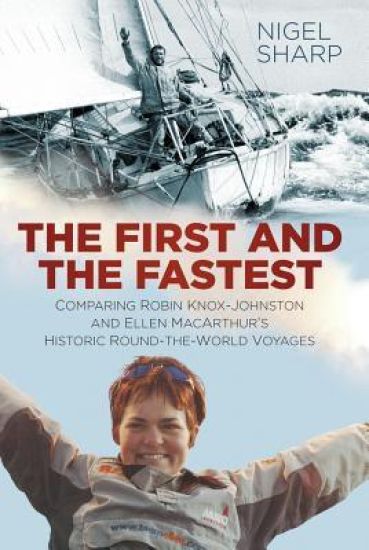
The First and the Fastest

The First and the Fastest

Nigel Sharp

The History Press Ltd
2018
sidottu
This is the story of two single-handed non-stop round-the-world voyages: Robin Knox-Johnston’s in 1968/69 and Ellen MacArthur’s in 2004/05. Although there were similarities – both voyages started and finished in Falmouth, for instance, and neither sailor was in a conventional race – the story is mainly one of contrasts, mostly as a consequence of thirty-six years of technological developments. These gave MacArthur the opportunity for a considerably faster voyage, but that didn’t necessarily make things any easier for her. When Knox-Johnston set sail in Suhaili, no one knew if it was possible for a human being or a boat to survive such a voyage; and when MacArthur commissioned her boat B&Q, many considered that a high-performance trimaran of that size could not be safely sailed around the world by one person. Whatever comparisons are made, the question as to which was the greater achievement is futile: both voyages were utterly remarkable. MacArthur is no longer 'the fastest', of course – her time has since been beaten by three Frenchmen – but she is still the fastest British solo circumnavigator, while Knox-Johnston’s record as 'the first' will be there for all time.
Classic Boats

Classic Boats

Nigel Sharp

Amberley Publishing
2017
nidottu
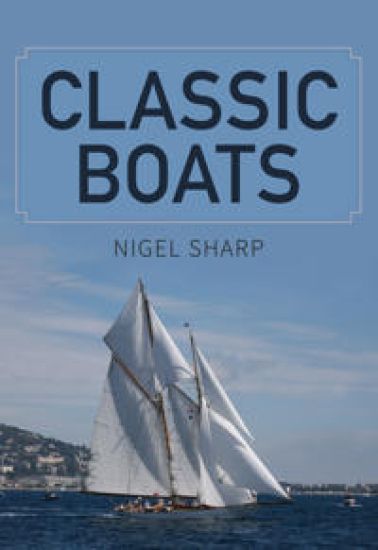
Featuring 180 wonderful images, Classic Boats offers an accessible, beautifully illustrated guide to some of the stunning craft that can be seen around the shores of Europe today. Covering a wide range of vessels – some dating back to the nineteenth century and extensively restored, while others are just a few years old – Nigel Sharp’s writing and photographs truly bring the subject to life. Classic boat regattas continue to grow in number and popularity throughout the world, and the breathtaking range of boats shown in this lavishly illustrated volume offers some explanation as to why they continue to captivate the hearts and minds of boating enthusiasts and the general public alike.
A History of St Mawes Sailing Club

A History of St Mawes Sailing Club

Nigel Sharp

Amberley Publishing
2016
nidottu
St Mawes Sailing Club was founded in 1920 and has functioned without interruption from that date, with the exception of the war years. Today it is a vibrant club with around 1,800 members. Every year it provides numerous sailing opportunities – both for local people and for holiday visitors – including around sixty club races; championship events for at least half a dozen classes, both traditional and modern; several cruises-in-company to other local ports; and formal instruction and races for hundreds of children. Its magnificent clubhouse, which has stunning views of the start line and St Mawes Harbour, provides a comfortable and lively setting in which members and guests can meet socially. Using a wonderful collection of photographs, Nigel Sharp tells the story of this remarkable club.
Troubled Waters

Troubled Waters

Nigel Sharp

Amberley Publishing
2015
nidottu
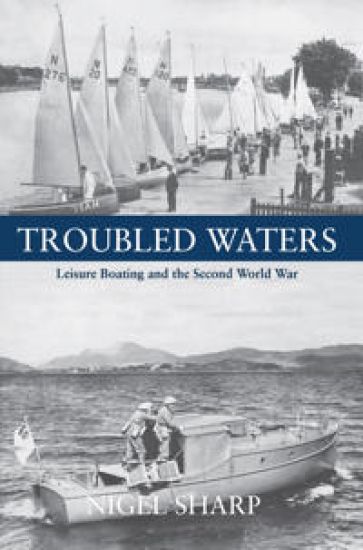
This is the story of how the Second World War affected leisure boating: of the people who managed to overcome huge difficulties to go sailing during the war itself and the difficulties of re-establishing the sport in post-war years; of the sailing and yacht clubs which survived bombings, requisitioning, shortages and a host of other problems, and still thrive today. Its comprehensive account includes the yachting magazines which managed to continue to publish throughout the war; the large numbers of leisure sailors whose skills helped them to make huge contributions to the war effort, and their extreme wartime experiences which gave them the confidence to undertake more adventurous post-war leisure voyages. It tells of the boatbuilding companies that produced huge numbers of essential military vessels, many suffering bomb damage in the process, and their difficulties in returning to leisure work after the war. Lastly, it is the story of the extraordinary number of privately owned boats that were requisitioned for war service, for the Dunkirk evacuation and countless other roles, their disposal along with large numbers of military craft at the end of the war, and the war prizes that would become known as the Windfall Yachts. In this detailed history, Nigel Sharp considers leisure boating as a whole during this tumultuous period, and explores an oft-overlooked aspect of the Second World War.
Dunkirk Little Ships

Dunkirk Little Ships

Nigel Sharp

Amberley Publishing
2015
nidottu
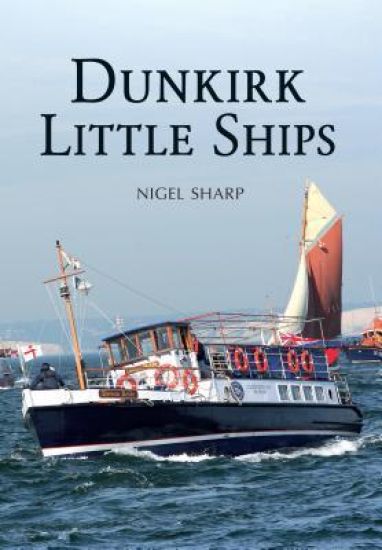
In May 1940, following the rapid advance of German troops through Holland, Belgium and France, the British Expeditionary Force and French army retreated to Dunkirk. Operation Dynamo was instigated in an attempt to rescue as many of them as possible. With the harbour at Dunkirk severely damaged, much of the evacuation would have to take place from the beaches; only small, shallow-draught boats could do this. After appealing to boatyards, yacht clubs and yachtsmen throughout the South East of England, the Admiralty managed to round up around 700 small craft which, along with 200 military vessels, were able to rescue an astonishing 338,226 troops over nine days. In 1965, forty-three vessels which had taken part in the evacuation commemorated the twenty-fifth anniversary by crossing from Ramsgate to Dunkirk, and the Association of Dunkirk Little Ships was formed soon afterwards. More than fifty years on, over 120 Little Ships are still in commission and it is thought that hundreds of others may still survive. This is their story.