Kirjailija
Nigel West
Kirjat ja teokset yhdessä paikassa: 48 kirjaa, julkaisuja vuosilta 1982-2026, suosituimpien joukossa The Guy Liddell Diaries, Volume I: 1939-1942. Vertaile teosten hintoja ja tarkista saatavuus suomalaisista kirjakaupoista.
48 kirjaa
Kirjojen julkaisuhaarukka 1982-2026.
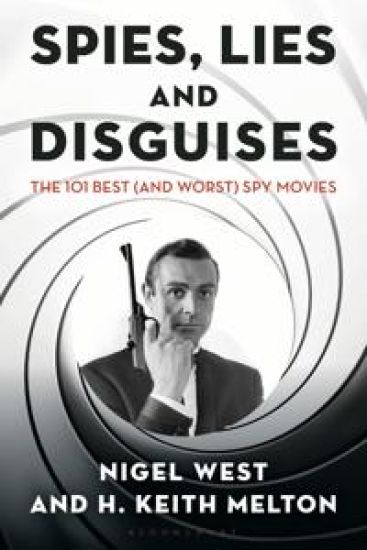
Spies, Lies and Disguises: The 101 Best (and Worst) Spy Movies is a definitive guide to the fascinating world of espionage cinema. This expertly curated collection explores 101 of the most impactful spy movies, dissecting their historical context, authenticity, and influence on the genre. Divided into thematic sections—ranging from prewar intelligence and World War II espionage to Cold War thrillers, contemporary spy films, and the iconic James Bond phenomenon. It offers a comprehensive analysis of each film’s plot, production, and connection to real-world clandestine operations. From the gritty realism of The Spy Who Came in from the Cold to the high-octane adventures of Mission Impossible, and the cultural significance of Austin Powers, this book covers a broad spectrum of spy films. Nigel West and H. Keith Melton provide fascinating insights, such as the portrayal of authentic tradecraft and the creative liberties filmmakers take. With additional chapters on comedic spoofs and less successful attempts in the genre, the book is an engaging and richly detailed homage to spy movies.
SRA Investigations is a comprehensive step-by-step guide to the law and practice relating to investigations by the SRA. From the initial decision to commence an investigation through to the conclusion to close the investigation or take disciplinary or regulatory action, this book outlines what to expect and provides guidance in this specialist area.Key areas covered include:Details of the SRA's various powersStep-by-step guide to the procedure in an investigationSummary of the possible disciplinary and regulatory actionPractical insight into what the SRA can and cannot do during their investigationApplication of the fixed financial penalty regimeThe SRA's review and appeal procedure
The Solicitor's Handbook 2024
KC Treverton-Jones; Nigel West; Susanna Heley; Robert Forman
THE LAW SOCIETY
2024
nidottu
The Solicitor's Handbook is a comprehensive and user-friendly guide to the common law and regulations governing the conduct of solicitors. The 2024 edition has been updated to take account of all the key developments which have taken place since the publication of the 2022 edition. The chapters dealing with the SRA Codes of Conduct have been extensively rewritten to ensure that the relevant provisions are easy to access. Key changes covered in this new edition include: * a new chapter on Economic Crime * updated guidance on the SRA's new fining regime and powers of investigation * updated guidance on when firms can take payment for their costs * the Supreme Court's decision in Flynn Pharma * the SDT's decision in Bretherton * revisions to the Legal Ombudsman Scheme Rules. The book also contains guidance on the regulatory system in practice, SRA enforcement, the Solicitors Disciplinary Tribunal, the regulation of alternative business structures (ABSs), money laundering and data protection.
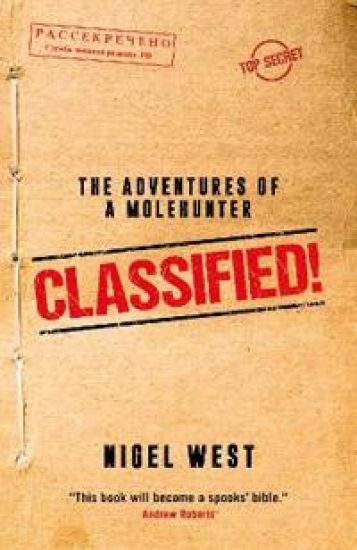
Over the past fifty years, Nigel West has been involved in almost every espionage-related investigation, breakthrough or revelation that you can think of. His molehunts have led to the unmasking of spies within MI5, MI6 and the CIA and the identification of numerous others - some of whom were crucial to the Allied victory in the Second World War and would have died without any public recognition if not for him. His first encounter with the intelligence community was a lecture given at his school by John le Carre, the guest of a Benedictine monk who had recently retired from MI6. Later, West worked as a researcher for SOE agent Ronnie Seth, who was sentenced to death by the Nazis after being captured during Operation blunderhead, and exposed two of the Cambridge spies recruited by Anthony Blunt. For the fortieth anniversary of the D-Day landings, West traced the double agent codenamed garbo and brought him to London so he could be decorated at Buckingham Palace. As action-packed as the lives of the spies he has written about, this is the story of the most enthralling and significant post-war intelligence revelations as told by Britain's most authoritative writer on espionage and the secret services.
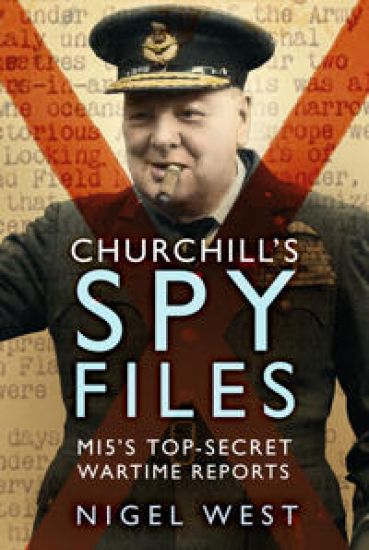
The Second World War saw the role of espionage, secret agents and spy services increase exponentially as the world was thrown into a conflict unlike any that had gone before it.At this time, no one in government was really aware of what MI5 and its brethren did. But with Churchill at the country’s helm, it was decided to let him in on the secret, providing him with a weekly report of the spy activities. These reports were so classified that he was handed each report personally and copies were never allowed to be made, nor was he allowed to keep hold of them. Even now, the documents only exist as physical copies deep in the archives, many pages annotated by hand by ‘W.S.C.’ himself.In Churchill’s Spy Files intelligence expert Nigel West unravels the tales of hitherto unknown spy missions, using this groundbreaking research to paint a fresh picture of the worldwide intelligence scene of the Second World War.

Josh Thistlethwaite, is typical of many youngsters, he hates rules and being told what to do. One afternoon, he somehow finds himself in a strange town, where there are no rules, or people just ignore them. Through a series of weird adventures, Josh discovers for himself why rules and organisation are necessary in society. He becomes desperate to return home, and a normal life.. Even this isn't easy, but a flying train helps him out. Was this all a dream, or did it all really happen? Decide for yourself.
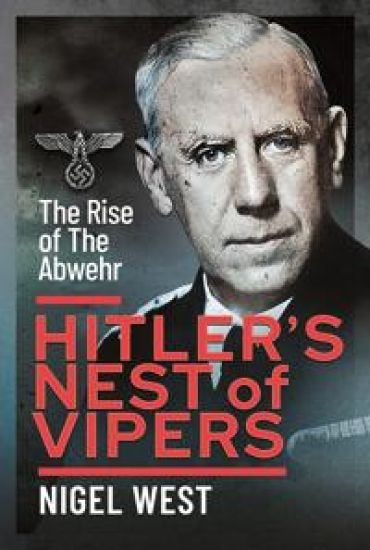
Modern historians have consistently condemned the Abwehr, Germany's military intelligence service, and its SS equivalent, the Sicherheitsdienst (SD), as incompetent and even corrupt organizations. However, newly declassified MI5, CIA and US Counterintelligence Corps files shed a very different light on the structure, control and capabilities of the German intelligence machine in Europe, South America, the Mediterranean and the Middle East. It is usually stated that, under Admiral Canaris, the Abwehr neglected its main functions, its attention being focused more on trying to bring down Hitler. Yet Canaris greatly expanded the Abwehr from 150 personnel into a vast world-wide organisation which achieved many notable successes against the Allies. Equally, the SD's tentacles spread across the Occupied territories as the German forces invaded country after country across Europe. In this in-depth study of the Abwehr's rise to power, 1935 to 1943, its activities in Russia, the Baltic States, Ukraine, Japan, China, Manchuko and Mongolia are examined, as well as those in Thailand, French Indo-China, the Dutch East Indies, the Philippines, Iran, Turkey, Afghanistan, and the Arab nations. In this period, the Abwehr built a complex network of individual agents with transmitters operating from commercial, diplomatic and consular premises. Before, and in the early stages of the war, it later became apparent, the Abwehr was controlling a number of agents in Britain. Indeed, it was only after the war that the scale of the Abwehr's activities became known, the organisation having of around 20,000 members. For the first time, the Abwehr's development and the true extent of its operations have been laid bare, through official files and even of restored documents previously redacted. The long list of operations and activities of the Abwehr around the world includes the efforts of an agent in the USA who was arrested after a bizarre attempt to obtain a quantity of blank American passports by impersonating a senior State Department official, Edward Weston, an Under-Secretary of State. Also, former U.S. Marine, Kurt Jahnke, who was recruited to collect information about the American munitions production and send it on to Germany. These are just two of the numerous and absorbing accounts in this all-embracing study.
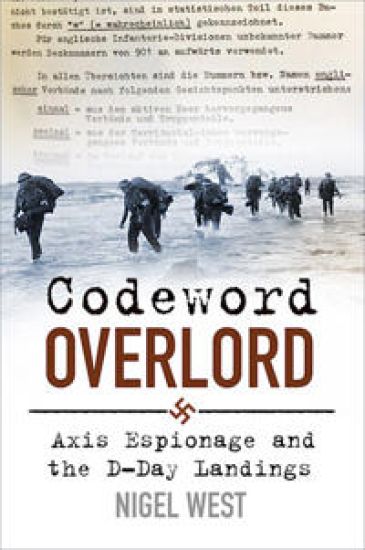
It was inevitable that the Allies would invade France in the summer of 1944: the Nazis just had to figure out where and when. This job fell to the Abwehr and several other German intelligence services. Between them they put over 30,000 personnel to work studying British and American signals traffic, and achieved considerable success in intercepting and decrypting enemy messages. They also sent agents to England – but they weren’t to know that none of them would be successful.Until now, the Nazi intelligence community has been disparaged by historians as incompetent and corrupt, but newly released declassified documents suggest this wasn’t the case – and that they had a highly sophisticated system that concentrated on the threat of an Allied invasion. Written by acclaimed espionage historian Nigel West, Codeword Overlord is a vital reassessment of Axis behaviour in one of the most dramatic episodes of the twentieth century.
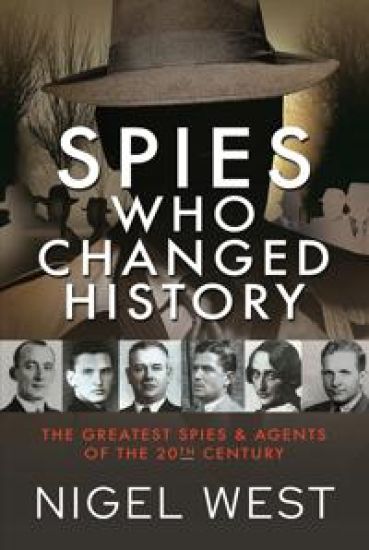
Spies have made an extraordinary impact on the history of the 20th Century, but fourteen in particular can be said to have been demonstrably important. As one might expect, few are household names, and it is only with the benefit of recently declassified files that we can now fully appreciate the nature of their contribution. The criteria for selection have been the degree to which each can now be seen to have had a very definite influence on a specific course of events, either directly, by passing vital classified material, or indirectly, by organizing or managing a group of spies. Those selected were active in the First World War, the inter-war period, the Second World War, the Cold War and even the post-Cold War era. These include Walther Dew who formed a spy ring in German-occupied Belgium during the First World War. This train-watching network, known as White Lady', reported on German troop deployments and possible weaknesses in the German defences. Extending its operations into northern France, the ring provided 75 per cent of the information received by GHQ, British Expeditionary Force. By the time of the Armistice in 1918, Dew 's group had a staggering 1,300 members. Olga Gray, the 27-year-old daughter of a Daily Mail journalist, was employed as a secretary by the Communist Party of Great Britain. In 1931 she undertook a mission for MI5 to penetrate the organization and discover its secret channel of communication with Moscow. Gray learned that the Party's cipher was based on Treasure Island and this breakthrough enabled the Party's messages to be read by Whitehall cryptographers. Renato Levi, an Italian playboy, was the longest-serving British agent of the Second World War and is credited with creating the concept of strategic deception. While operating in Cairo as a double agent working for the Abwehr and the British he was instrumental in misleading the Axis about Allied strength across the Middle East and helped Montgomery achieve his victory over Rommel's Afrika Korps at El Alamein. So successful was Levi in this and other deceptions, he was employed to persuade the Germans that the D-Day landings in Normandy were a diversionary feint, in anticipation of an invasion in the Pas-de-Calais. These, and other surprising stories, are revealed in this fascinating insight into a secret world inhabited by mysterious and shadowy characters, all of whom, though larger than life, really did exist.
This book provides a unique step-by-step guide to the law and practice of the SDT, from the issue of proceedings through to appeal. Its practical approach will help anyone who wishes to avoid the common pitfalls faced by unfamiliar users of the Tribunal.

The Cold War was a sophisticated conflict fought by the west, principally the United States, Great Britain, Canada, Australia and New Zealand, with support from NATO, CENTO and SEATO, to confront the Kremlin and its Warsaw Pact satellites. The battlegrounds extended from Latvia, Lithuania, Estonia, Byelorussia and Albania to Czechoslovakia, Poland and Hungary, and resulted in conventional, proxy wars fought in Vietnam, Egypt and Korea. Only now, thirty years after the fall of the Berlin Wall, can these issues be examined through the prism of the secret files generated by the intelligence agencies on both sides which have been declassified.This Historical Dictionary of Cold War Intelligence contains a chronology, an introduction, and an extensive bibliography. The dictionary section has hundreds of cross-referenced dictionary entries on crucial operations spies, defectors, moles, double and triple agents, and the tradecraft they apply. This book is an excellent resource for students, researchers, and anyone wanting to know more about intelligence during the Cold War.
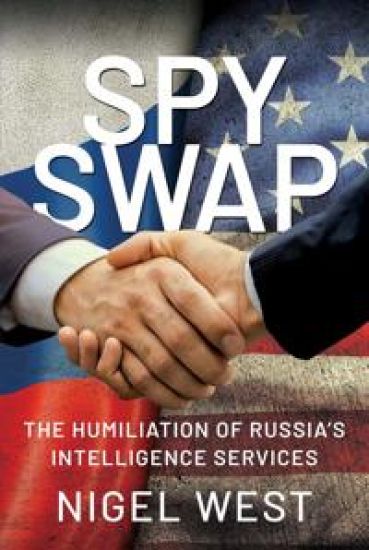
On Monday, 4 March 2019, Sergei Skripal and his 33-year-old daughter Yulia collapsed in the centre of Salisbury in Wiltshire. Both were suffering the effects of A-234, a third-generation Russian-manufactured military grade Novichok nerve agent. As three suspects, all GRU officers, were quickly identified, it was also established that the door handle to the Skripals' suburban home had been contaminated with the toxin. Whilst the Skripals had lived in the cathedral city for the past seven years, what Sergei's neighbours did not know was that he had once been a colonel in the Russian Federation's military intelligence service. Back in July 1996, he had been posted under diplomatic cover to Madrid where he was subsequently cultivated by Pablo Miller, an MI6 officer operating as a businessman under the alias Antonio Alvares de Idalgo. Sergei's recruitment by Miller was one of many successes achieved by Western agencies following the collapse of the Soviet Bloc. These counter-intelligence triumphs had their origins in a joint FBI/CIA project codenamed COURTSHIP which was based on the rather risky tactic of making an approach to almost any identified KGB or GRU officer, in almost any environment - a technique known as a 'cold pitch'. It soon yielded results; within five years COURTSHIP had netted about twenty assets. Codenamed FORTHWITH, Sergei was betrayed in December 2001\. Arrested in 2004, he was convicted of high treason in Russia, but was subsequently included in a prisoner swap in July 2010 and brought to the UK. The journey to the attempt on his life had begun. The Vienna spy swap was the culmination of a CIA plan to free a specific individual, Gennadi Vasilenko, who had been the Agency's key mole inside the KGB since March 1979\. To acquire the necessary leverage, the FBI swooped on a large network in the United States, bringing to an end a surveillance operation, codenamed GHOST STORIES, that lasted ten years. Anxious to avoid further embarrassment over the arrests, Vladimir Putin personally authorised an exchange, unaware of Vasilenko's true status. It was only after the transaction had been completed, and two further Russian spies were exfiltrated from Moscow, that the Kremlin learned of Vasilenko's value, and the scale of the deception. For the very first time, a Russian government had been persuaded to release four traitors and send them to the West. The humiliation was complete. As _Spy Swap_ reveals, Putin's retribution would manifest itself in a quiet Wiltshire market town.
Historical Dictionary of Chinese Intelligence
I. C. Smith; Nigel West
Rowman Littlefield
2021
sidottu
The second edition of Historical Dictionary of Chinese Intelligence covers the history of Chinese Intelligence from 400 B.C. to modern times. The dictionary section has over 400 cross-referenced entries on the agencies and agents, the operations and equipment, the tradecraft and jargon, and many of the countries involved.
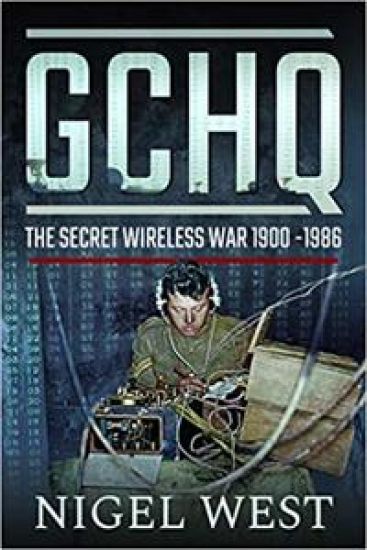
Signal intelligence is the most secret, and most misunderstood, weapon in the modern espionage arsenal. As a reliable source of information, it is unequalled, which is why Government Communications Headquarters, almost universally known as GCHQ, is several times larger than the two smaller, but more familiar, organisations, MI5 and MI6. Because of its extreme sensitivity, and the ease with which its methods can be compromised, GCHQ's activities remain cloaked in secrecy. In GCHQ: The Secret Wireless War, the renowned expert Nigel West traces GCHQ's origins back to the early days of wireless and gives a detailed account of its development since that time. From the moment that Marconi succeeded in transmitting a radio signal across the Channel, Britain has been engaged in a secret wireless war, first against the Kaiser, then Hitler and the Soviet Union. Following painstaking research, Nigel West is able to describe all GCHQ's disciplines, including direction-finding, interception and traffic analysis, and code-breaking. Also explained is the work of several lesser known units such as the wartime Special Wireless Groups and the top-secret Radio Security Service. Laced with some truly remarkable anecdotes, this edition of this important book will intrigue historians, intelligence professionals and general readers alike.
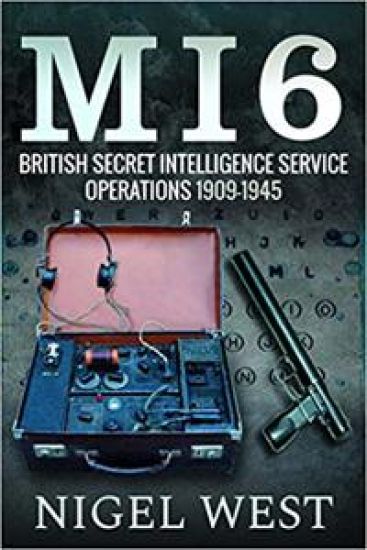
MI6: British Secret Intelligence Service Operations, 1909-1945
Nigel West
Frontline Books
2019
sidottu
Written by the renowned expert Nigel West, this book exposes the operations of Britain's overseas intelligence-gathering organisation, the famed Secret Intelligence Service, MI6, and traces its origins back to its inception in 1909. In this meticulously researched account, its activities and structure are described in detail, using original secret service documents. The main body of the book concerns MI6's operations during the Second World War, and includes some remarkable successes and failures, including how MI6 financed a glamorous confidant of the German secret service; how a suspected French traitor was murdered by mistake; how Franco's military advisors were bribed to keep Spain out of the war; how members of the Swedish secret police were blackmailed into helping the British war effort; how a sabotage operation in neutral Tangiers enabled the Allied landings in North Africa to proceed undetected; and how Britain's generals ignored the first ULTRA decrypts because MI6 said that the information had come from a well-placed source called BONIFACE'. In this new edition, operations undertaken by almost all of MI6's overseas stations are recounted in extraordinary detail. They will fascinate both the professional intelligence officer and the general reader. The book includes organisational charts to illustrate MI6's internal structure and its wartime network of overseas stations. Backed by numerous interviews with intelligence officers and their agents, this engaging inside story throws light on many wartime incidents that had previously remained unexplained.
As part of the infamous Double Cross operation, Jewish double agent Renato Levi proved to be one of the Allies' most devastating weapons in the Second World War. ln 1941, with the help of Ml6, Levi built an extensive spy ring in North Africa and the Middle East. But, most remarkably, it was entirely fictitious. This network of imagined informants peddled dangerously false information to Levi's unwitting German handlers. His efforts would distort any enemy estimates of Allied battle plans for the remainder of the war. His communications were infused with just enough truth to be palatable, and just enough imagination to make them irresistible. ln a vacuum of seemingly trustworthy sources, Levi's enemies not only believed in the CHEESE network, as it was codenamed, but they came to depend upon it. And, by the war's conclusion, he could boast of having helped the Allies thwart Rommel in North Africa, as well as diverting whole armies from the D-Day landing sites. He wielded great influence and, as a double agent, he was unrivalled. Until now, Levi's devilish deceptions and feats of derring-do have remained completely hidden. Using recently declassified files, Double Cross in Cairo uncovers the heroic exploits of one of the Second World War's most closely guarded secrets.

MI5 is arguably the most secret and misunderstood of all the British government departments. Its enigmatic title - much more than its proper name, the Security Service - stands in the public mind for the dark world of the secret services in general. In reality it has a very specific brief: counter-intelligence. Its object is to combat espionage and subversion directed against the UK. Nigel West's book traces the history of MI5 clearly and accurately from its modest beginnings in 1909 until 1945, with the main part of the book focussing upon the important role which MI5 played in the Second World War. This includes the story of the sixteen enemy agents who were rounded up in Britain who were either hanged or shot; the manipulation of the Axis espionage networks by the use of turned' Abwehr agents (the famous Double Cross System), and the all-important check on its success provided by the intercepted German signals so brilliantly decoded at Bletchley; and the various deceptions practised on the German High Command. The book, which is laced with true anecdotes as bizarre and compulsively readable as any novel, is the fruit of years of painstaking research in the course of which Nigel West has traced and interviewed more than a hundred people who figure prominently in the story: German and Soviet agents, counter-intelligence officers and, most remarkably, more than a dozen of the double agents. In this new and revised edition, Nigel West details the organisational charts which show the structure of the wartime security apparatus, in what is regarded as the most accurate and informative account ever written of MI5 before and during the Second World War.
Early in the morning of 18 May 1942, three Dutchmen were captured in the North Sea and taken to MI5. It soon became clear that one in particular, Johannes Marinus Dronkers, was no mere refugee escaping the Nazi occupation. He had a hidden agenda: to betray secrets about the state of Britain’s war preparedness to the German Abwehr. It was to be an intriguing episode in the cat-and-mouse game played between German and British intelligence. But was Dronkers guilty, or was he made an example of by the British authorities, his fate pre-determined by the climate of war-torn Britain? And why wasn’t he turned, as MI5 had done and would do to many other enemy spies? The Dronkers case raises important questions about the process of dealing with wartime spies and the punishments meted out by British authorities. Using newly available official files and other sources, this book examines the details of Dronkers’ recruitment, capture and interrogation by MI5, as well as his trial at the Old Bailey. David Tremain compares the Dronkers case with that of other wartime spies, reveals the Abwehr’s lost recipe for secret ink, and exposes exactly what made a Dutchman escape to England in 1942 betray his country. This unsettling story has remained a little-known episode of the Second World War until now.