Kirjailija
Nikolai Bukharin
Kirjat ja teokset yhdessä paikassa: 20 kirjaa, julkaisuja vuosilta 1929-2026, suosituimpien joukossa The Economic Theory of the Leisure Class. Vertaile teosten hintoja ja tarkista saatavuus suomalaisista kirjakaupoista.
20 kirjaa
Kirjojen julkaisuhaarukka 1929-2026.

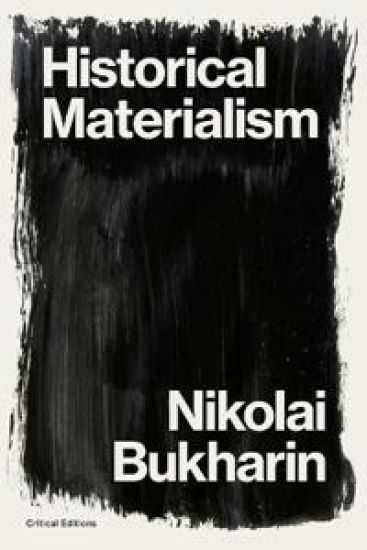
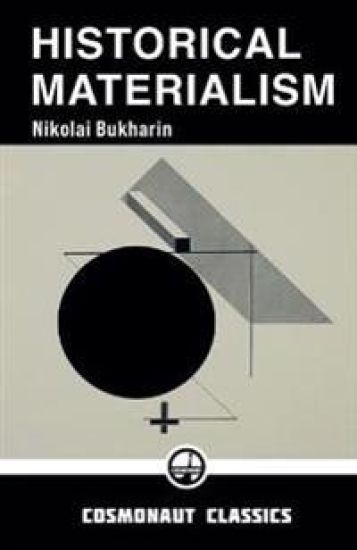

This book has been considered by academicians and scholars of great significance and value to literature. This forms a part of the knowledge base for future generations. We have represented this book in the same form as it was first published. Hence any marks seen are left intentionally to preserve its true nature.
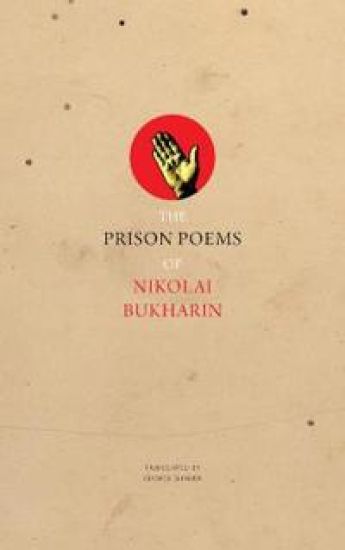
Nikolai Bukharin (1888–1938), an original Bolshevik leader and a founder of the Soviet state, spent the last year of his life imprisoned by Stalin, awaiting a trial and eventual execution. Remarkably during that time, from March 1937 to March 1938, Bukharin wrote four book-length manuscripts by hand in his prison cell. Seventy years later, The Prison Poems is the last of the four prison manuscripts, which include How It All Began: The Prison Novel and Socialism and Its Culture, to be published, allowing readers to grasp Bukharin’s vision in its full extent.Bukharin organized the nearly 180 poems in this volume, written from June to November 1937, into several series. One dealing with forerunners to the 1917 Russian Revolution and another focusing on the Russian Civil War contain commentary not found in the other prison manuscripts. The same is true of the “Lyrical Intermezzo” poems for and about Anna Larina, his young wife, from whom he was separated by his imprisonment.This first English translation of Bukharin’s Prison Poems is a compelling read, evidencing the powerful intersection of politics and art.
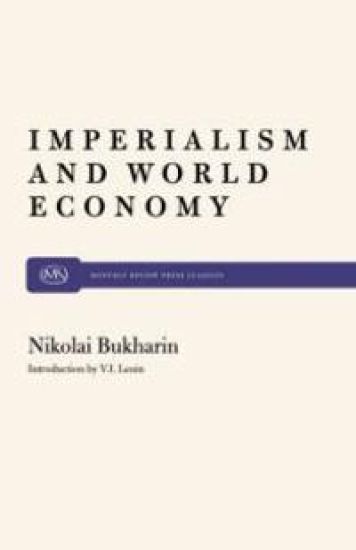
For many years a neglected figure, Nikolai Bukharin has recently been the subject of renewed interest in the West. Now regarded as a leading Marxist theorist, Bukharin's work has wide appeal to those interested in Soviet history and Marxist economics as well as to those concerned with theories of development and socialist economies.
Imperialism and World Economy
Nikolai Bukharin
Createspace Independent Publishing Platform
2015
nidottu

First published in English in 1926, this work by Nikolai Bukharin, a highly influential Marxist and Soviet Politician who would later become one of the most famous victims of Stalin’s show trials, expands upon Karl Marx’s theory of historical materialism. Offering a Marxist interpretation of sociology, this reissue is important not only from a sociological and economic perspective, but is also extremely valuable as a socio-historical document of contemporary thought in the Soviet Union in the years following the Bolshevik revolution.
The Theory of Permanent Revolution
Nikolai Bukharin
Createspace Independent Publishing Platform
2011
nidottu
First published in English in 1926, this work by Nikolai Bukharin, a highly influential Marxist and Soviet Politician who would later become one of the most famous victims of Stalin’s show trials, expands upon Karl Marx’s theory of historical materialism. Offering a Marxist interpretation of sociology, this reissue is important not only from a sociological and economic perspective, but is also extremely valuable as a socio-historical document of contemporary thought in the Soviet Union in the years following the Bolshevik revolution.
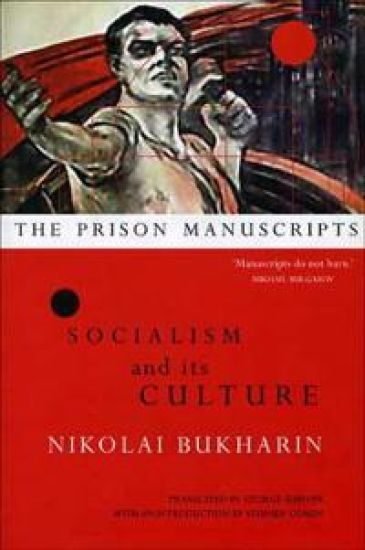
The Prison Manuscripts – Socialism and its Culture
Nikolai Bukharin; George Shriver
Seagull Books London Ltd
2007
nidottu
Bukharin's "Prison Manuscripts" were written in Moscow's Lubyanka prison during 1937-1938 while awaiting his inevitable liquidation. As with Gramsci's "Prison Notebooks", Bukharin's "Manuscripts" focus on culture, ideology and philosophy in the context of building an alternative vision of socialism. A socialism to set against capitalism, fascism and the kind of socialism practised in the Soviet Union after Lenin's death. The book brings together Bukharin's key writings on socialism and its culture from the Manuscripts. Here Bukharin explores the realization of the concept of total man, the problems of freedom, equality and hierarchy, the style of socialist culture, the nature of progress, diversities in capitalism and socialism, the role of the Party, and the dictatorship of the proletariat in the cultural revolution. Its publication will be a major event for anyone interested in cultural and political history, philosophy, and ethics.

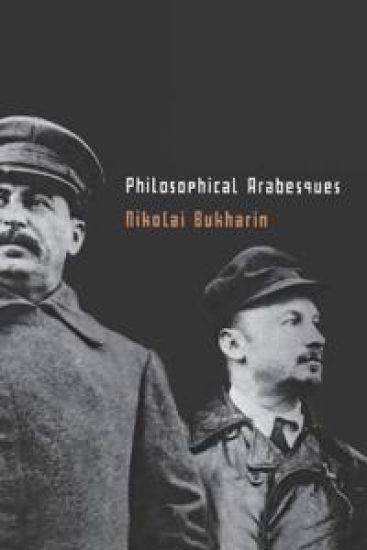
Bukharin's Philosophical Arabesques was written while he was imprisoned in the Lubyanka Prison in Moscow, facing trial on charges of treason, and later awaiting execution after he was found guilty. After the death of Lenin, Bukharin cooperated with Stalin for a time. Once Stalin's supremacy was assured he began eliminating all potential rivals. For Bukharin, the process was to end with his confession before the Soviet court, facing the threat that his young family would be killed along with him if he did not.While awaiting his death, Bukharin wrote prolifically. He considered Philosophical Arabesques as the most important of his prison writings. In its pages, he covers the full range of issues in Marxist philosophy--the sources of knowledge, the nature of truth, freedom and necessity, the relationship of Hegelian and Marxist dialectic. The project constitutes a defense of the genuine legacy of Lenin's Marxism against the use of his memory to legitimate totalitarian power. Consigned to the Kremlin archives for a half-century after Bukharin's execution, this work is now being published for the first time in English. It will be an essential reference work for scholars of Marxism and the Russian revolution and a landmark in the history of prison writing.
For many years a neglected figure, Nikolai Bukharin has recently been the subject of renewed interest in the West. Now regarded as a leading Marxist theorist, Bukharin's work has wide appeal to those interested in Soviet history and Marxist economics as well as to those concerned with theories of development and socialist economies.

Here at last in English is Nikolai Bukharin's autobiographical novel and final work. Many dissident texts of the Stalin era were saved by chance, by bravery, or by cunning; others were systematically destroyed. Bukharin's work, however, was simultaneously preserved and suppressed within Stalin's personal archives. At once novel, memoir, political apology, and historical document, How It All Began, known in Russia as "the prison novel," adds deeply to our understanding of this vital intellectual and maligned historical figure. The panoramic story, composed under the worst of circumstances, traces the transformation of a sensitive young man into a fiery agitator, and presents a revealing new perspective on the background and causes of the revolution that transformed the face of the twentieth century. Among the millions of victims of the reign of terror in the Soviet Union of the 1930's, Bukharin stands out as a special case. Not yet 30 when the Bolsheviks took power, he was one of the youngest, most popular, and most intellectual members of the Communist Party. In the 1920's and 30's, he defended Lenin's liberal New Economic Policy, claiming that Stalin's policies of forced industrialization constituted a "military-feudal exploitation" of the masses. He also warned of the approaching tide of European fascism and its threat to the new Bolshevik revolution. For his opposition, Bukharin paid with his freedom and his life. He was arrested and spent a year in prison. In what was one of the most infamous "show trials" of the time, Bukharin confessed to being a "counterrevolutionary" while denying any particular crime and was executed in his prison cell on March 15, 1938. While in prison, Bukharin wrote four books, of which this unfinished novel was the last. It traces the development of Nikolai "Kolya" Petrov (closely modeled on Nikolai "Kolya" Bukharin) from his early childhood though to age fifteen. In lyrical and poetic terms it paints a picture of Nikolai's growing political consciousness and ends with his activism on the eve of the failed 1905 revolution. The novel is presented here along with the only surviving letter from Bukharin to his wife during his time in prison, an epistle filled with fear, longing, and hope for his family and his nation. The introduction by Stephen F. Cohen articulates Bukharin's significance in Soviet history and reveals the troubled journey of this novel from Stalin's archives into the light of day.
Here at last in English is Nikolai Bukharin's autobiographical novel and final work. Many dissident texts of the Stalin era were saved by chance, by bravery, or by cunning; others were systematically destroyed. Bukharin's work, however, was simultaneously preserved and suppressed within Stalin's personal archives. At once novel, memoir, political apology, and historical document, How It All Began, known in Russia as "the prison novel," adds deeply to our understanding of this vital intellectual and maligned historical figure. The panoramic story, composed under the worst of circumstances, traces the transformation of a sensitive young man into a fiery agitator, and presents a revealing new perspective on the background and causes of the revolution that transformed the face of the twentieth century. Among the millions of victims of the reign of terror in the Soviet Union of the 1930's, Bukharin stands out as a special case. Not yet 30 when the Bolsheviks took power, he was one of the youngest, most popular, and most intellectual members of the Communist Party. In the 1920's and 30's, he defended Lenin's liberal New Economic Policy, claiming that Stalin's policies of forced industrialization constituted a "military-feudal exploitation" of the masses. He also warned of the approaching tide of European fascism and its threat to the new Bolshevik revolution. For his opposition, Bukharin paid with his freedom and his life. He was arrested and spent a year in prison. In what was one of the most infamous "show trials" of the time, Bukharin confessed to being a "counterrevolutionary" while denying any particular crime and was executed in his prison cell on March 15, 1938. While in prison, Bukharin wrote four books, of which this unfinished novel was the last. It traces the development of Nikolai "Kolya" Petrov (closely modeled on Nikolai "Kolya" Bukharin) from his early childhood though to age fifteen. In lyrical and poetic terms it paints a picture of Nikolai's growing political consciousness and ends with his activism on the eve of the failed 1905 revolution. The novel is presented here along with the only surviving letter from Bukharin to his wife during his time in prison, an epistle filled with fear, longing, and hope for his family and his nation. The introduction by Stephen F. Cohen articulates Bukharin's significance in Soviet history and reveals the troubled journey of this novel from Stalin's archives into the light of day.