Kirjojen hintavertailu. Mukana 12 390 323 kirjaa ja 12 kauppaa.

Kirjailija

Nikolas Coupland

Kirjat ja teokset yhdessä paikassa: 10 kirjaa, julkaisuja vuosilta 1988-2016, suosituimpien joukossa Language, Society and the Elderly. Vertaile teosten hintoja ja tarkista saatavuus suomalaisista kirjakaupoista.

10 kirjaa

Kirjojen julkaisuhaarukka 1988-2016.

Sociolinguistics and Social Theory

Sociolinguistics and Social Theory

Nikolas Coupland; Srikant Sarangi; Christopher N. Candlin

Routledge
2016
sidottu
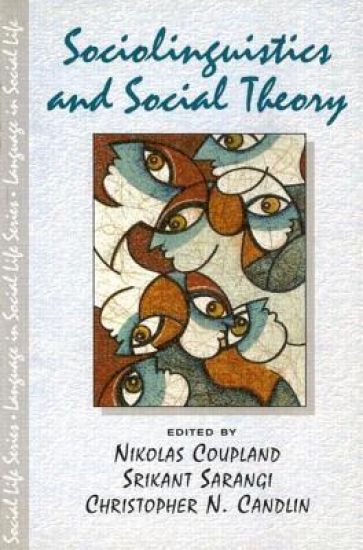
The empirical and descriptive strengths of sociolinguistics, developed over more than 40 years of research, have not been matched by an active engagement with theory. Yet, over this time, social theorising has taken important new turns, linked in many ways to linguistic and discursive concerns. Sociolinguistics and Social Theory is the first book to explore the interface between sociolinguistic analysis and modern social theory. The book sets out to reunite sociolinguistics with the concepts and perspectives of several of the most influential modern theorists of society and social action, including Bakhtin, Foucault, Habermas, Sacks, Goffman, Bourdieu and Giddens. In eleven newly commissioned chapters, leading sociolinguists reappraise the theoretical framing of their research, reaching out beyond conventional limits. The authors propose significant new orientations to key sociolinguistic themes, including- - social motivations for language variation and change- language, power and authority- language and ageing- language, race and class- language planningIn substantial introductory and concluding chapters, the editors and invited discussants reassess the boundaries of sociolinguistic theory and the priorities of sociolinguistic methods. Sociolinguistics and Social Theory encourages students and researchers of sociolinguistics to be more reflexively aware and critical of the social bases of their analyses and invites a reasessment of the place sociolinguistics occupies in the social sciences generally.

Sociolinguistics from the Periphery

Sociolinguistics from the Periphery

Sari Pietikäinen; Alexandra Jaffe; Helen Kelly-Holmes; Nikolas Coupland

Cambridge University Press
2016
sidottu
This leading team of scholars presents a fascinating book about change: shifting political, economic and cultural conditions; ephemeral, sometimes even seasonal, multilingualism; and altered imaginaries for minority and indigenous languages and their users. The authors refer to this network of interlinked changes as the new conditions surrounding small languages (Sámi, Corsican, Irish and Welsh) in peripheral sites. Starting from the conviction that peripheral sites can and should inform the sociolinguistics of globalisation, the book explores how new modes of reflexivity, more transactional frames for authenticity, commodification of peripheral resources, and boundary-transgression with humour, all carry forward change. These types of change articulate a blurring of binary oppositions between centre and periphery, old and new, and standard and non-standard. Such research is particularly urgent in multilingual small language contexts, where different conceptualisations of language(s), boundaries, and speakers impact on individuals' social, cultural, and economic capital, and opportunities.
Language, Identity and Performance

Language, Identity and Performance

Nikolas Coupland

University of Wales Press
2009
sidottu
This book makes available a selection of the author's research on understanding Wales from a sociolinguistic perspective. Challenging some establishment views about the link between the Welsh language and Welsh social identities, the book covers a range of subjects such as language, identity, style, bilingualism, language policy, language change and globalization with respect to Wales, the Welsh global diaspora, Welshness and Welsh English.
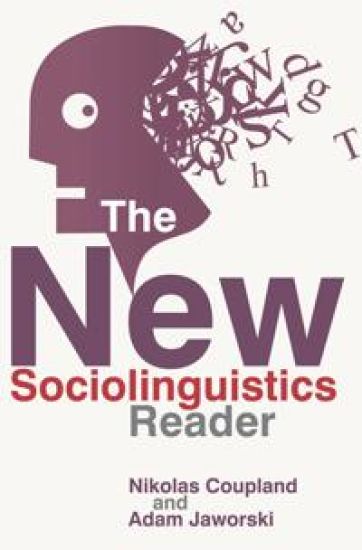
The New Sociolinguistics Reader

The New Sociolinguistics Reader

Nikolas Coupland; Adam Jaworski

Red Globe Press
2009
nidottu
Fully updated and expanded for the second edition, this core textbook provides rigorous coverage of the key themes and debates at the cutting edge of sociolinguistics research and brings together many of the most influential scholars in the field. Comprising six distinctive parts and almost fifty individual chapters, it introduces students to a wealth of issues in sociolinguistics, including refashioning linguistic identities, code-switching, language rights and the social functions of small talk. Chapters are richly illustrated with examples and informed by the latest scholarly debates. This is an essential companion for all undergraduates and postgraduates involved in the study of sociolinguistics. It will be an ideal resource for lecturers teaching modules on topics such as language variation, language and gender, language attitudes and multilingualism.
The New Sociolinguistics Reader

The New Sociolinguistics Reader

Nikolas Coupland; Adam Jaworski

Red Globe Press
2009
sidottu
Fully updated and expanded for the second edition, this core textbook provides rigorous coverage of the key themes and debates at the cutting edge of sociolinguistics research and brings together many of the most influential scholars in the field. Comprising six distinctive parts and almost fifty individual chapters, it introduces students to a wealth of issues in sociolinguistics, including refashioning linguistic identities, code-switching, language rights and the social functions of small talk. Chapters are richly illustrated with examples and informed by the latest scholarly debates. This is an essential companion for all undergraduates and postgraduates involved in the study of sociolinguistics. It will be an ideal resource for lecturers teaching modules on topics such as language variation, language and gender, language attitudes and multilingualism.
Style

Style

Nikolas Coupland

Cambridge University Press
2007
pokkari
Style refers to ways of speaking - how speakers use the resource of language variation to make meaning in social encounters. This 2007 book develops a coherent theoretical approach to style in sociolinguistics, illustrated with copious examples. It explains how speakers project different social identities and create different social relationships through their style choices, and how speech-style and social context inter-relate. Style therefore refers to the wide range of strategic actions and performances that speakers engage in, to construct themselves and their social lives. Coupland draws on and integrates a wide variety of contemporary sociolinguistic research as well as his own extensive research in this field. The emphasis is on how social meanings are made locally, in specific relationships, genres, groups and cultures, and on studying language variation as part of the analysis of spoken discourse.
Style

Style

Nikolas Coupland

Cambridge University Press
2007
sidottu
Style refers to ways of speaking - how speakers use the resource of language variation to make meaning in social encounters. This 2007 book develops a coherent theoretical approach to style in sociolinguistics, illustrated with copious examples. It explains how speakers project different social identities and create different social relationships through their style choices, and how speech-style and social context inter-relate. Style therefore refers to the wide range of strategic actions and performances that speakers engage in, to construct themselves and their social lives. Coupland draws on and integrates a wide variety of contemporary sociolinguistic research as well as his own extensive research in this field. The emphasis is on how social meanings are made locally, in specific relationships, genres, groups and cultures, and on studying language variation as part of the analysis of spoken discourse.
Sociolinguistics and Social Theory

Sociolinguistics and Social Theory

Nikolas Coupland; Sarangi Srikant; Candlin Christopher N.

Routledge
2001
nidottu
The empirical and descriptive strengths of sociolinguistics, developed over more than 40 years of research, have not been matched by an active engagement with theory. Yet, over this time, social theorising has taken important new turns, linked in many ways to linguistic and discursive concerns. Sociolinguistics and Social Theory is the first book to explore the interface between sociolinguistic analysis and modern social theory. The book sets out to reunite sociolinguistics with the concepts and perspectives of several of the most influential modern theorists of society and social action, including Bakhtin, Foucault, Habermas, Sacks, Goffman, Bourdieu and Giddens. In eleven newly commissioned chapters, leading sociolinguists reappraise the theoretical framing of their research, reaching out beyond conventional limits. The authors propose significant new orientations to key sociolinguistic themes, including- - social motivations for language variation and change- language, power and authority- language and ageing- language, race and class- language planningIn substantial introductory and concluding chapters, the editors and invited discussants reassess the boundaries of sociolinguistic theory and the priorities of sociolinguistic methods. Sociolinguistics and Social Theory encourages students and researchers of sociolinguistics to be more reflexively aware and critical of the social bases of their analyses and invites a reasessment of the place sociolinguistics occupies in the social sciences generally.
Language, Society and the Elderly

Language, Society and the Elderly

Nikolas Coupland; Justine Coupland; Howard Giles

Blackwell Publishers
1991
nidottu
Language, Society and the Elderly is the first concerted attempt to give a social account of language and interaction in later life. The book gives a detailed critique of the cognitive bias of existing studies of elderly people's language. In its place, the authors propose a socially-based approach which explains how older people's life circumstances, concerns, goals and beliefs influence their styles of interaction. But social stereotypes of old age and a generally ageist social climate limit the roles available to elderly people. In detailed analyses of talk between elderly people and younger adults, the authors show how age and health identifies are negotiated. They look particularly at sequences of troubles-telling and moments of painful self-disclosure by elderly people, examining how even "supportive" talk to the elderly can threaten identity and reinforce social divisions. "Language, Society and the Elderly" opens up an entirely new field for sociolinguistics. It also shows how studies of language and interaction can contribute to theory in social gerontology, and to policy and practice in medical and caring contexts.