Kirjojen hintavertailu. Mukana 12 390 323 kirjaa ja 12 kauppaa.
Kirjailija
Nikolaus Pevsner
Kirjat ja teokset yhdessä paikassa: 63 kirjaa, julkaisuja vuosilta 1968-2024, suosituimpien joukossa Somerset: South and West. Vertaile teosten hintoja ja tarkista saatavuus suomalaisista kirjakaupoista.
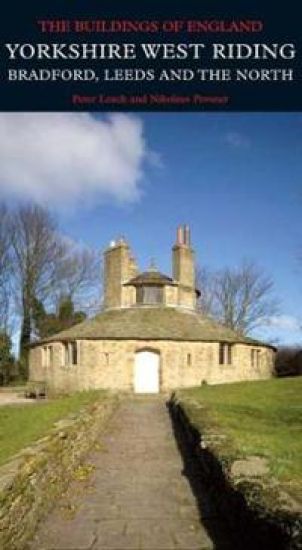
The West Riding of Yorkshire was the largest of England’s historic counties. This volume, the first of two for the area, covers the northern half of the territory from the outskirts of York to the edge of the Lake District. It is full of contrasts, from the urbanised landscape of the cities of Leeds, with its proud civic buildings by Cuthbert Brodrick, and Bradford, possessor of one of the finest collections of commercial warehouses in the country, to their hinterland of tight-knit mill-towns and villages pushing into the Pennines. There can be found the highly distinctive houses of the seventeenth-century minor gentry, and the substantial yeoman farmers and clothiers. To the north-west are the still sparsely populated Yorkshire Dales – Ruskin’s ‘truly wonderful country’, its beauties and curiosities admired by tourists since the eighteenth century. On the gentler eastern edge of the Pennines are the major survivals of the Cistercian Order: Fountains Abbey and Studley Royal, the nearby cathedral town of Ripon and spa town of Harrogate, and the opulently agricultural ‘broad acres’ beyond, forming part of the Vale of York, counting among its monuments the magnificent designed landscape of Bramham Park.
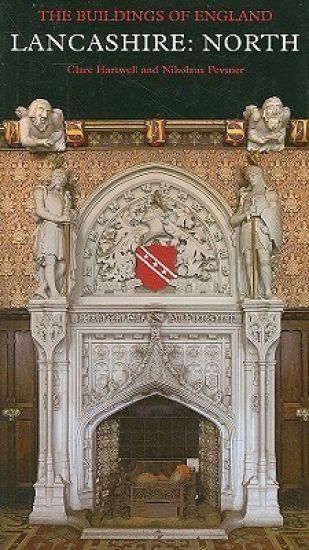
The landscapes of Lancashire range from the shores of Morecambe Bay and the wild Forest of Bowland in the north to the coastal flatlands and Pennine mill towns in the south. Lancaster, the historic county town, boasts some of the finest Georgian buildings in northern England, while Blackpool is unrivaled anywhere for spectacular seaside architecture. Lancashire treats each city, town, and village in the county in a detailed gazetteer. An expert general introduction provides a historical and artistic overview. Numerous maps and plans, over a hundred new color photographs, full indexes, and an illustrated glossary help to make this book invaluable as both reference work and guide.
This expanded and updated guide to the buildings of Worcestershire encompasses the entire county, from the dramatic Malvern Hills through the Severn Valley to the fringes of the Cotswolds. Medieval Worcestershire is represented by the fine Gothic cathedral of Worcester, the splendid remains of the abbeys and priories, and the many parish churches with their rich inheritance of Norman work. Timber-framed houses are abundant. But Worcestershire is also a county of red brick and sandstone, with such fine country houses as Jacobean Westwood, Hanbury Hall, Hagley Hall, and Witley Court. Among the towns are Stourport, the only English town created by the canals, the genteel spa resort at Great Malvern, and the leafy New Town at Redditch.
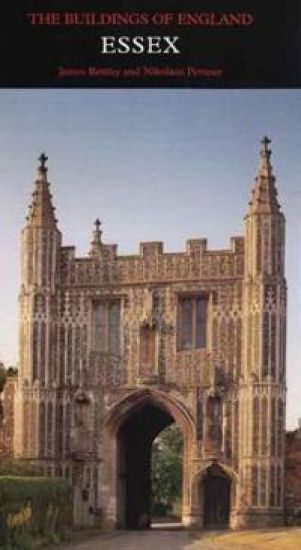
Essex, one the largest counties of England, stretches from the suburban fringes of East London to the fishing and sailing ports of Harwich and Maldon and the famous seaside resorts of Clacton, Frinton, and Southend. Its buildings encompass rich Roman survivals, powerful Norman architecture, and the remains of major Tudor and Jacobean country houses. Essex is first and foremost a county famed for its timber buildings, from the eleventh-century church at Greensted to the early and mighty barns at Cressing Temple, and a wealth of timber-framed medieval houses. Later periods have also made their contribution, from Georgian town houses to Victorian and Edwardian industrial and civic buildings, and from important exemplars of early Modern Movement architecture to the major monument of High Tech at Stansted Airport.
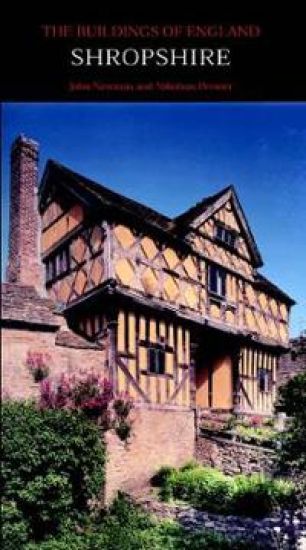
This fully-illustrated guide to Shropshire treats each city, town, and village in a detailed gazetteer and includes a variety of helpful maps, plans, and indexes along with an illustrated glossary. The book is an invaluable reference work on the appealing and unspoiled county of Shropshire, where many historic towns, including Shrewsbury and Ludlow, are especially plentiful in Georgian and timber-framed buildings. Shropshire boasts the Cistercian abbey of Buildwas and many important country houses, including the 13th-century fortified mansions at Acton Burnell and Stokesay; John Nash's Italianate villa at Cronkhill; and Norman Shaw's splendid Late Victorian mansion at Adcote. Shropshire is also home to numerous prehistoric hill-forts and the Roman town at Wroxeter as well as Coalbrookdale’s spectacular bridge, the first in the world to be built of iron.The unspoiled county of Shropshire is among the most appealing in England for lovers of architecture. The county's many historic towns, of which Shrewsbury and Ludlow are the largest, are especially plentiful in Georgian and timber-framed buildings. Shropshire's villages, intriguingly varied in plan and building materials, reflect the diverse landscape of plains, hills and moorland and the rich and complex underlying geology. The Cistercian abbey of Buildwas is the finest of several notable monastic ruins, and outstanding medieval parish churches and castles are also numerous. Many of the country houses have a central place in the story of English architecture: the fortified mansions at Acton Burnell and Stokesay, thirteenth-century design at its most sophisticated; the vigorous Baroque houses of John Prince and Francis Smith; John Nash's Italianate villa at Cronkhill, looking like something in a Claude painting; Norman Shaw's splendid Late Victorian mansion at Adcote. Shropshire is also unrivalled for its early industrial remains, including the spectacular bridge at Coalbrookdale, the first in the world to be built of iron. More ancient cultures are represented by the numerous prehistoric hill-forts and the celebrated Roman town at Wroxeter.Each city, town or village is treated in a detailed gazetteer. A general introduction provides a historical and artistic overview. Numerous maps and plans, over a hundred new colour photographs, full indexes and an illustrated glossary help to make this book invaluable as both reference work and guide.
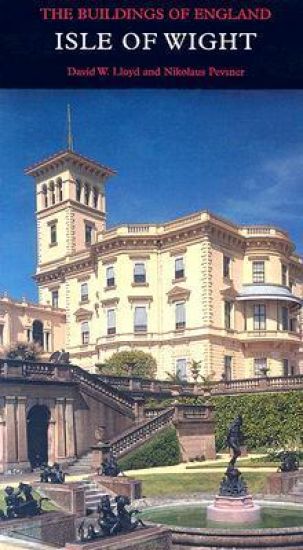
This comprehensive and generously illustrated guide explores the beguiling buildings of the Isle of Wight. The island’s many towns, villages, and resorts are included in a detailed gazetteer, as are the charming villas and cottages ornes dotted around the spectacular coasts. Among the grand architecture found on the island are the powerful fortress of Carisbrooke Castle; the rich Baroque mansion of Appuldurcombe; Victoria and Albert’s Osborne House; and the extraordinary Quarr Abbey, a masterpiece of Expressionist brick. Other attractions include Roman villas, sturdy manor houses, powerful coastal defenses built for Henry VIII (and reinforced under Queen Victoria), and the retreats of Tennyson and other Victorian notables, not to mention a well-established tradition of innovative modern design.
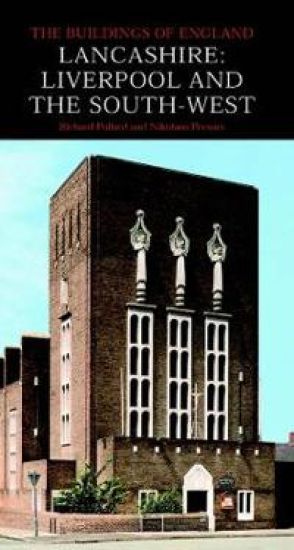
This comprehensive guide to the buildings of South-West Lancashire treats each city, town, and village in a detailed gazetteer. The great port city of Liverpool dominates, with its cathedrals, mighty commercial buildings and warehouses, and Georgian inner city. Full accounts are also given of the suburbs and industrial towns beyond. But most of the area remains rural, and in this distinctive landscape are found such memorable buildings as Sefton church, Speke Hall, and the Georgian country houses of Knowsley, ancestral seat of the Earls of Derby, and Ince Blundell, with its extraordinary Neoclassical sculpture gallery. Numerous maps and plans, color photographs, indexes, and an illustrated glossary complete this volume.
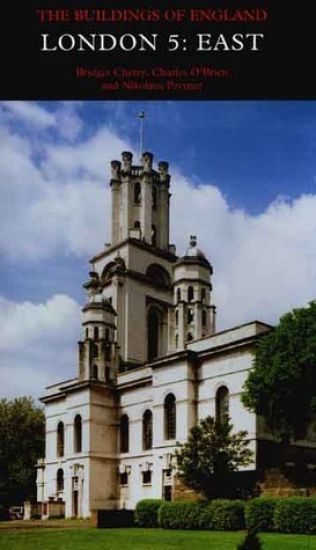
Publication of this book, one of six devoted to the buildings of London, marks the completion of the long-awaited revision of the original Pevsner guides and brings the account of the capital’s buildings entirely up to date.This fascinating volume provides a historical introduction to a uniquely diverse area as well as a detailed gazetteer of individual buildings. Along the Thames, relics of a powerful industrial and maritime past remain, and in the East End, Hawksmoor’s Baroque churches still tower over Georgian houses. The contributions of generations of immigrants are reflected in places of worship and cultural centers, while a century of social housing has produced architecture now of historic interest. Further out, medieval churches and country mansions stand among the suburban streets and proud civic buildings.
This complete guide to the buildings of South-East Lancashire features the proud municipal buildings and pioneering mills and transport structures at the heart of the great industrial city of Manchester. The book also offers full accounts of the suburbs, the city of Salford, and the industrial towns of Bolton, Bury, Rochdale, and Oldham, each with its own tradition of civic buildings and its own crop of talented local architects.A general introduction to the volume provides a historical and artistic overview of South-East Lancashire's architecture, and each city, town, or village is treated in a detailed gazetteer. Numerous maps and plans, over 100 new color photographs, full indexes, and an illustrated glossary complete this invaluable guide.
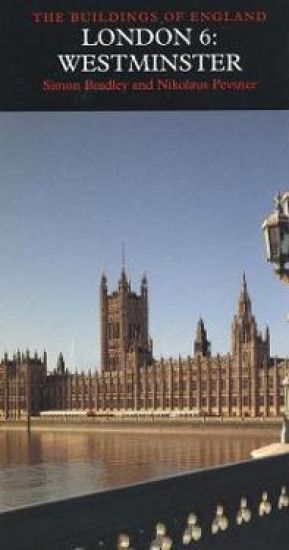
This essential guide opens up the treasures of London’s most alluring quarter. At its core are Westminster Abbey, Parliament, and the palatial Government buildings of Whitehall, together with the great band of Royal Parks stretching westward toward Kensington. It also includes London’s West End (Covent Garden, Soho, Mayfair, and St. James’s) and the less well-known Belgravia and Pimlico.For each area there is a detailed gazetteer and brief introduction. A general introduction provides a historical and artistic overview. Numerous maps and plans, over 100 new color photographs, full indexes, and an illustrated glossary help to make this book invaluable as both reference work and guide.This is the fifth of six Pevsner Architectural Guides volumes on London available in cloth.
Need a handbook to your architect’s business or studies? Struggling with your latest DIY project? Interested in the art of architecture? This classic work, now in its fifth edition, covers every aspect of architecture and landscape architecture. Ranging from ancient times to contemporary trends, it adopts a truly international perspective, focussing on countries and cultures such as Coptic, Tibet and De Stijl. Without doubt, this is the standard work in the field. As reflected by its new title, 'The Penguin Dictionary of Architecture and Landscape Architecture' has now been expanded to include recent developments in the field of landscape architecture. Full account has been taken, too, of the huge range of building traditions around the world. The text has been completely reset and all the illustrations redrawn. 'Immensely useful, succinct and judicious...this is a book rich in fact and accumulated wisdom.' The Times Literary Supplement
This second volume on Norfolk provides a comprehensive survey from prehistoric times to the present day. The 17th- and 18th-century treasures of King's Lynn are explored, as well as the market towns of Swaffham and Wymondham. Castle remains and medieval churches are also explored.
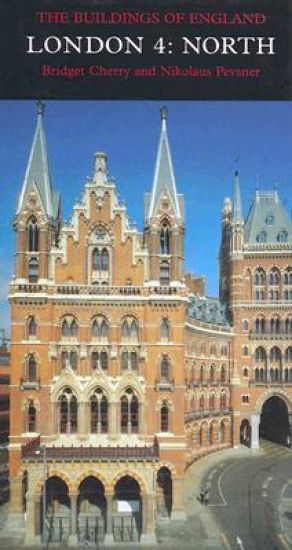
This volume on London architecture covers the boroughs of Barnet, Camden, Enfield, Hackney, Haringey and Islington. It gives a view of London's expansion northward from formal Georgian squares, to the hill towns of Hampstead and Highgate.
The City of London encompasses architecture of unsurpassed richness and variety, from the Tower of London to Richard Roger's iconoclastic Lloyd's building. This guide unlocks the city's treasures and investigates its growth.
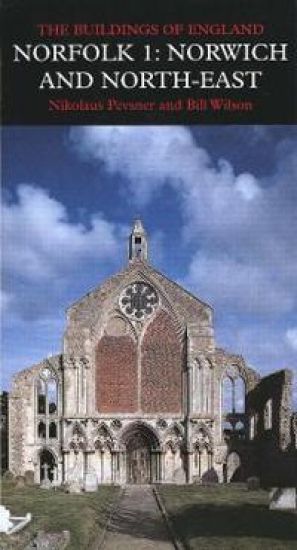
Norfolk 1: Norwich and North-East and its companion, Norfolk 2: North-West and South, aim to provide a lively and uniquely comprehensive survey of the architectural treasures of Norfolk. Extensively revised and expanded, these new editions of Sir Nikolaus Pevsner's original volumes bring together the latest research on a county which has some of the most attractive buildings in England. The gazetteer is enhanced by an introduction which provides a perceptive overview of the region's architectural inheritance, and is illustrated by numerous text figures, maps and 130 photographs (many specially commissioned). Pre-eminent in this volume is the city of Norwich, rich in major buildings of outstanding quality, from Norman cathedral and castle to twentieth-century city hall and university. Supreme among the ports described in this volume is the medieval walled town of Great Yarmouth, whose highly individual history and buildings are here examined in detail for the first time. There are also full descriptions of many appealing market towns, whilst the rest of the county is revealed through succinct accounts of its parish churches and less well-known buildings. Abbey ruins, brick eighteenth-century farmhouses and estate cottages in quiet inland villages contrast with coastal fishing settlements and resorts. Great barns testify to the significance of agriculture. Country houses range from the magnificent Jacobean Blickling Hall to seaside extravaganzas by Lutyens. Detailed indexes make this not only an essential reference book, but also a guide book for anyone interested in the rich region of Norfolk.
This volume sheds light on the pride of the region - the great medieval churches of York Minster, the Minster and St Mary at Beverley, and Holy Trinity, Hull but also on less well known architectural pleasures of town and county. Outstanding Victorian village churches, including masterpieces by Street & Pearson, are as rewarding as the major country houses of Burton Agnes, Burton Constable and Sledmere. The countryside offes a wide range of monuments, from the beautifully sited ruins of Kirkham Priory to the spectacular Humber Bridge. Farmhouses and cottages of the Wolds, picturesque estate villages and chapels, and industrial structures are all brought into focus. A large section is devoted to York and includes a survey of the historic buildings of the city centre from the Roman period onwards. This is complemented by a detailed exploration of York's eighteenth and nineteenth-century suburbs. Equal care has been applied to the descriptions of Beverley, with its attractive townscape, and the port of Hull, where unexpected highlights include seventeenth-century merchant houses, Georgian almshouses, ornate Victorian pubs, and grand Edwardian public buildings.
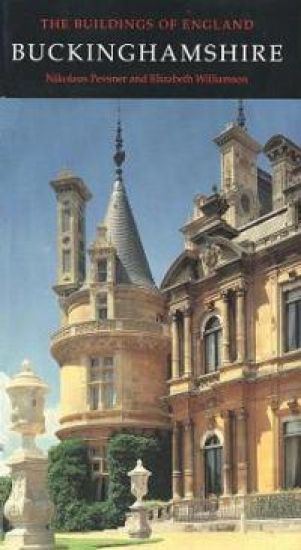
This completely new edition reveals a county of contrasts. The semi-rural suburbia of outer-Outer London, with its important early Modern Movement houses, is counterbalanced by magnificent mansions and parks, like idyllic Stowe and the Rothschilds' extravaganza at Waddesdon. The Saxon Church at Wing, the exquisite seventeenth-century Winslow Hall, and Slough's twentieth-century factories all contribute to Buckinghamshire's rich inheritance. In this new edition, the unspoilt centres of small towns, like Amersham and Buckingham, are revisited and Milton Keynes, Britain's last and most ambitious New Town, is explained and explored. The rich diversity of rural buildings, built of stone, brick, timber, and even earth, is investigated with scholarship and discrimination. This accessible and comprehensive guide is prefaced by an illuminating introduction and has many excellent illustrations, plans and maps.
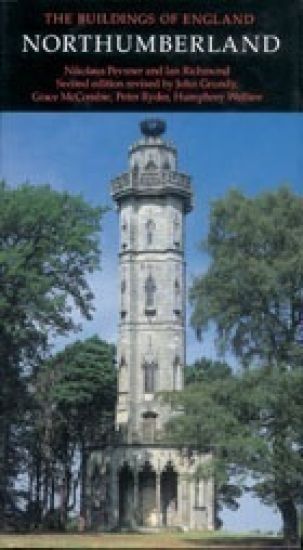
The county's remarkable and richly varied military architecutre, from Hadrian's Wall to Warkworth, contrasts with monastic ruins buried deep in the valleys of the Coquet and the Aln or standing proudly by the sea at Holy Island and Tynemouth. Newcastle upon Tyne has the most elegant nineteenth-century city centre in England. Elsewhere the distinctive smaller towns include Alnwick, dominated by its castle, Hexham with its priory, brick-built Morpeth, and Berwick-upon-Tweed, ringed with exceptional sixteenth-century fortifications. Great country houses range from Vanbrugh's theatrical Seaton Delaval to Sir Charles Monck's austere Belsay and Norman Shaw's romantic Cragside. Monuments of a great industrial past, as well as a wealth of smaller buildings, such as bastle houses (peelhouses or stronghouses unique to the Border country), are all vividly described in this revised guide to Northumberland's architectural pleasures.
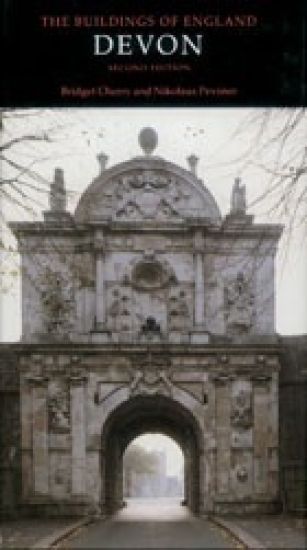
Exeter Cathedral is but the crowning glory of Devon's wealth of medieval churches, replete with sumptuous fittings and monuments. The county's peak of prosperity from the late Middle Ages to the seventeenth-century is reflected too in its castles, its secluded manor houses, and its scores of sturdily built farmhouses. The delights of Devon's well loved seaside and country towns are explored from the distinctive merchants' houses of Totnes and Topsham to the elegant Regency crescents of Teignmouth and Sidmouth. The picture is completed by accounts of the creation of the docks at Plymouth, industrial relics, and the substantial but little known store of Devon's Victorian churches.
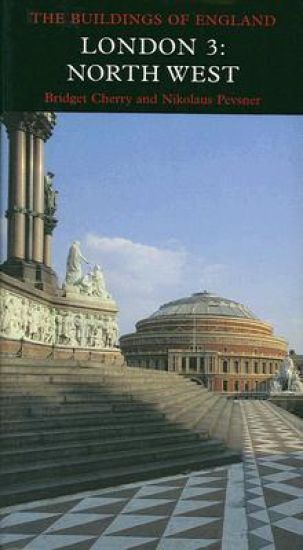
A comprehensive architectural guide encompassing three centuries of metropolitan growth spanning an area from Georgian St Marylebone and the riverside terraces of Chelsea and Chiswick to Heathrow Airport and the outer fringes of Middlesex.