Kirjojen hintavertailu. Mukana 12 246 870 kirjaa ja 12 kauppaa.

Kirjailija

Nils Brunsson

Kirjat ja teokset yhdessä paikassa: 18 kirjaa, julkaisuja vuosilta 2000-2019, suosituimpien joukossa Från sanningssökande till styrmedel - Moderna utvärderingar i offentlig sek. Vertaile teosten hintoja ja tarkista saatavuus suomalaisista kirjakaupoista.

18 kirjaa

Kirjojen julkaisuhaarukka 2000-2019.

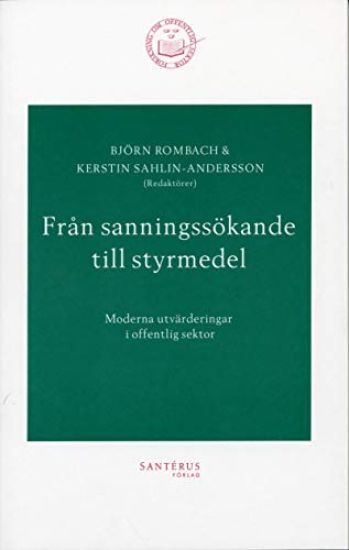
Från sanningssökande till styrmedel - Moderna utvärderingar i offentlig sek

Från sanningssökande till styrmedel - Moderna utvärderingar i offentlig sek

Björn Rombach; Kerstin Sahlin; Nils Brunsson; Lars Engwall; Rolf A. Lundin; Sten Pettersson; Annika Rabo; Elisabeth Sundin; Anders Söderholm; Evert Vedung; Erik Wallin

Santérus Förlag
2002
nidottu
Det talas mycket om utvärdering i den offentliga sektorns organisationer. Många dras in i de allt synligare, vanligare och komplexare utvärderingsprocesserna. Denna bok handlar om hur utvärderingar görs, hur de används och om de kan möta alla förväntningar som ställs på dem. Kan man t.ex. styra med hjälp av utvärderingar? Vad kan man lära av dem? Vilka effekter får de? Utvärderandets legitimitet, rituella aspekter och negativa sidor lyfts fram. Roller och relationer diskuteras. Boken vänder sig till alla som kommer i kontakt med utvärderingar i sitt arbete eller av ren nyfikenhet. Den manar till eftertanke inför framväxande och alltmer spridda utvärderingsideal. Björn Rombach är professor i företagsekonomi vid Förvaltningshögskolan, Göteborgs universitet. Han har givit ut ett flertal böcker om ledning, organisation och styrning av primärkommuner och landsting. Kerstin Sahlin-Andersson är professor i företagsekonomi vid Uppsala universitet. Hon har skrivit flera böcker om beslutsfattande och samarbete i stora projekt
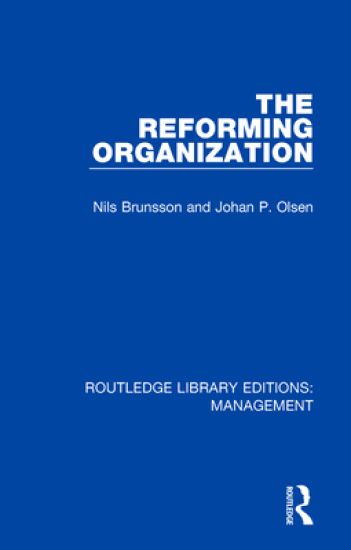
The Reforming Organization

The Reforming Organization

Nils Brunsson; Johan P. Olsen

CRC Press Inc
2019
nidottu
Originally published in 1993. Organizations have become larger, more professionalized, more differentiated, and wealthier. At the same time, they are often subject to large-scale changes: either as a result of mergers and acquisitions, or simply in response to changed market conditions or new technologies. In this climate the people who run organizations frequently find themselves acting as "reformers". The central concern of this study is to analyze the reforming process within organizations and assess its impact. The authors define reform as the process by which individuals seek to achieve desired goals by changing the structure of their organization: the administrative procedures, chains of command and lines of communication. Drawing on empirical case studies from a range of different sectors, The Reforming Organization questions the relationship between the changes that can be seen occurring in organizations all the time and these conscious internal attempts at reform. This is a different approach to some of the central concerns in organizational theory. The relationship between individuals and structures and the "learning" capacity of organizations. This title will be of interest to students of Business Studies and Management.
Organization of Hypocrisy

Organization of Hypocrisy

Nils Brunsson

COPENHAGEN BUSINESS SCHOOL PRESS
2019
pokkari
Contemporary organizations are increasingly the object of a large number of demands – often conflicting demands. They are expected to be efficient and profitable, to provide good working conditions, to protect nature, and more. “Corporate social responsibility” is a catchword of the day. In this pioneering, now classic, and still highly relevant book, Nils Brunsson analyses the way organizations handle a complex environment by including conflicting demands in their structures and by compensating for their actions with contradictory decisions, and vice versa. Since the original publication of The Organization of Hypocrisy, many instances of organizational hypocrisy have been studied, and hypocrisy continues to be a common phenomenon, salient for social scientists and others to be aware of and understand.
The Reforming Organization

The Reforming Organization

Nils Brunsson; Johan P. Olsen

CRC Press Inc
2018
sidottu
Originally published in 1993. Organizations have become larger, more professionalized, more differentiated, and wealthier. At the same time, they are often subject to large-scale changes: either as a result of mergers and acquisitions, or simply in response to changed market conditions or new technologies. In this climate the people who run organizations frequently find themselves acting as "reformers". The central concern of this study is to analyze the reforming process within organizations and assess its impact. The authors define reform as the process by which individuals seek to achieve desired goals by changing the structure of their organization: the administrative procedures, chains of command and lines of communication. Drawing on empirical case studies from a range of different sectors, The Reforming Organization questions the relationship between the changes that can be seen occurring in organizations all the time and these conscious internal attempts at reform. This is a different approach to some of the central concerns in organizational theory. The relationship between individuals and structures and the "learning" capacity of organizations. This title will be of interest to students of Business Studies and Management.
Organizing and Reorganizing Markets

Organizing and Reorganizing Markets

Nils Brunsson; Mats Jutterstrom

Oxford University Press
2018
sidottu
Organizing and Reorganizing Markets brings organization theory to the study of markets. The difference between markets and organizations is often exaggerated. Organizing exists in addition to other processes and phenomena that form markets: the mutual adaption among sellers and buyers as described in mainstream economics, and the institutions described in institutional economics and economic sociology. Market organization can be analysed with the same type of theories used for analysing organization within formal organizations. Through the use of many empirical examples, the book demonstrates how this can be done. The authors argue that the way a certain market is organized can be understood as the (intermediate) result of previous organizing processes. Questions discussed include: 'What drives market organizing and reorganizing processes? What makes various organizations intervene as market organizers? And, how are the specific contents of market organization determined?' The answers to these questions help to analyse similarities and differences among organizing processes in formal organizations and those in markets. Arguments are illustrated by in-depth studies of many types of markets. The book will open up markets as a field of study for scholars of organization.
Decisions

Decisions

Karin Brunsson; Nils Brunsson

Edward Elgar Publishing Ltd
2017
nidottu
Decision-making is an activity in which everyone is engaged on a more or less daily basis. In this book, Karin Brunsson and Nils Brunsson explore the intricacies of decision-making for individuals and organizations. When, how and why do they make decisions? The authors identify four distinct ways of reasoning that decision-makers use. The consequences of decisions vary: some promote action, others impede it, and some produce more responsibility than others. With in-depth discussions of rationality, justifications and hypocrisy, the authors show how organizational and political decision processes become over-complicated and difficult for both decision makers and external observers to understand. Decisions is a concise and easy-to-read introduction to a highly significant and intriguing topic. Based on research from several fields, it provides useful reading and essential knowledge for scholars and students throughout the social sciences and for everyone who wants to understand their own decisions and those of others.
Decisions

Decisions

Karin Brunsson; Nils Brunsson

Edward Elgar Publishing Ltd
2017
sidottu
Decision-making is an activity in which everyone is engaged on a more or less daily basis. In this book, Karin Brunsson and Nils Brunsson explore the intricacies of decision-making for individuals and organizations. When, how and why do they make decisions? The authors identify four distinct ways of reasoning that decision-makers use. The consequences of decisions vary: some promote action, others impede it, and some produce more responsibility than others. With in-depth discussions of rationality, justifications and hypocrisy, the authors show how organizational and political decision processes become over-complicated and difficult for both decision makers and external observers to understand. Decisions is a concise and easy-to-read introduction to a highly significant and intriguing topic. Based on research from several fields, it provides useful reading and essential knowledge for scholars and students throughout the social sciences and for everyone who wants to understand their own decisions and those of others.
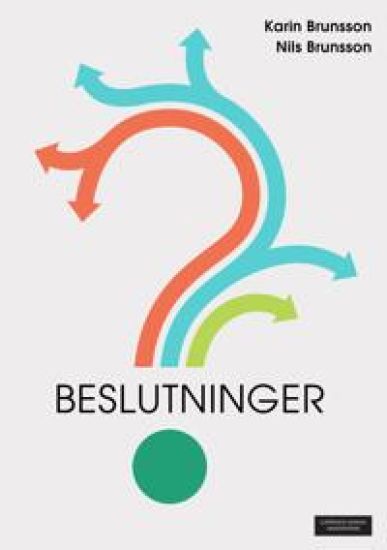
Beslutninger

Beslutninger

Karin Brunsson; Nils Brunsson

Cappelen Damm akademisk
2015
nidottu
Å ta beslutninger er en sentral aktivitet i organisasjoner. Ikke minst i politiske sammenhenger tillegges beslutninger stor betydning. Men å ta beslutninger er også en hverdagslig aktivitet som alle mennesker er engasjert i. I denne boka behandler Karin og Nils Brunsson begrepet beslutninger. De beskriver hva som skjer når enkeltindivider og organisasjoner tar avgjørelser, hvilke konsekvenser beslutningene får, og hvor vanskelig beslutningstaking kan være.
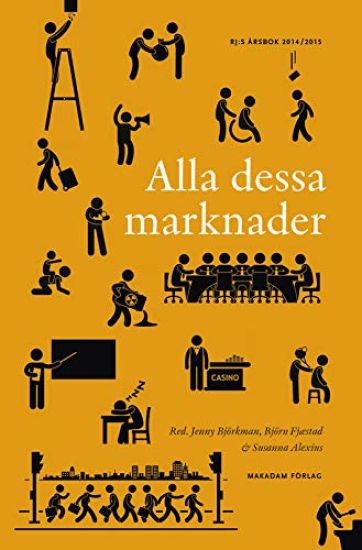
Alla dessa marknader

Alla dessa marknader

Jenny Björkman; Björn Fjæstad; Susanna Alexius; Catrin Andersson; Nils Brunsson; Magnus Erlandsson; Staffan Furusten; Christina Garsten; Ingrid Gustafsson; Martin Gustavsson; Kristina Tamm Hallström; Mats Jutterström; Lotta Björklund Larsen; Johan Laserna; kristoffer Strandqvist; Göran Sundström; Marta Szebehely; Adrienne Sörbom; Olga Yttermyr

Makadam förlag
2014
sidottu
Vinster i välfärden, slagsmål i taxiköerna och friskolor som går i konkurs - den så kallade marknaden tycks inte klara sig utan gränssättning och organisering. Utblickar av forskare i företagsekonomi, statsvetenskap och socialt arbete. Med en färsk opinionsundersökning. Riksbankens Jubileumsfonds årsbok 2014/2015.
Beslut

Beslut

Karin Brunsson; Nils Brunsson

Liber
2014
nidottu
Beslut är en central aktivitet i organisationer. Inte minst i politiska sammanhang tillmäts beslut stor betydelse. Men att fatta beslut är också en vardaglig aktivitet, som alla människor är engagerade i. I den här boken reder Karin Brunsson och Nils Brunsson ut begreppet beslut. De beskriver hur det går till när individer och organisationer fattar beslut, vad beslut får för konsekvenser och hur komplicerat beslutsfattande kan bli.Om författarnaKarin Brunsson är docent i företagsekonomi och arbetar vid Uppsala universitet och Internationella Handelshögskolan i Jönköping. Hennes senaste bok är "Läran om management – föreställningar i ett organisationssamhälle." Nils Brunsson är professor i företagsekonomi vid Uppsala universitet. Han har publicerat ett tjugotal böcker och ett stort antal artiklar om organisationer.
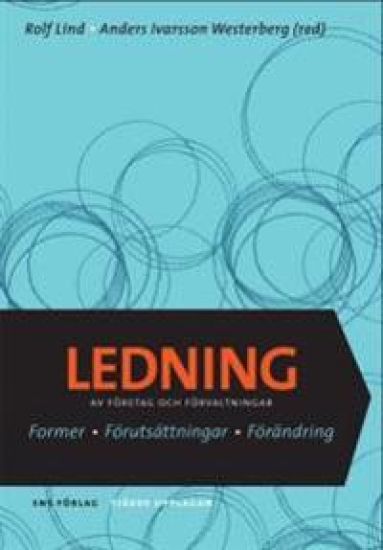
Ledning av företag och förvaltningar - former, förutsättningar, förändring

Ledning av företag och förvaltningar - former, förutsättningar, förändring

Roland Almqvist; Mats Alvesson; Per Olof Berg; Nils Brunsson; Matilda Dahl; Yvonne Due Billing; Maria Grafström; Pauline Göthberg; Pär Larsson; Jan Lindvall; Jan Löwstedt; Maria Mårtensson Hansson; Stefan Sveningsson; Karolina Windell

Studentlitteratur AB
2011
nidottu
En bred och forskningsbaserad översikt av frågor som rör ledning av företag och förvaltningar, lämplig för kurser i företagsekonomi, statsvetenskap och sociologi liksom i ledarutbildningar och vidareutbildningskurser. Denna titel har tidigare givits ut av SNS förlag men ingår numera i Studentlitteraturs sortiment.
Meta-organizations

Meta-organizations

Göran Ahrne; Nils Brunsson

Edward Elgar Publishing Ltd
2011
nidottu
A growing number of organizations are meta-organizations; rather than individuals they have other organizations as their members. This comprehensive book explains, in-depth, the unique way in which meta-organizations function, how they differ from organizations with individual membership, and how they are crucial agents in the process of globalization. The book opens a whole new area for organizational research. It will be essential reading for researchers and postgraduate students interested in organization theory, globalization, politics and organizations, or international organizations.
Företagsekonomins frågor

Företagsekonomins frågor

Nils Brunsson; Johan Alvehus; Mats Alvesson; Björn Axelsson; Erik Bjurström; Bino Catasús; Karin Holmblad Brunsson; Håkan Håkansson; Anders Ivarsson Westerberg; Bengt Jacobsson; Bengt Johannisson; Sten Jönsson; Dan Kärreman; Johnny Lind; Maria Mårtensson; Olov Olson; Lars Strannegård; Elisabeth Sundin; Stefan Tengblad; Andreas Werr

SNS Förlag
2010
nidottu
Företagsekonomins frågor kan användas som introduktion till företagsekonomistudierna, men den vänder sig också till alla andra som vill få en lättläst inblick i vad modern företagsekonomi handlar om. Denna titel har tidigare givits ut av SNS förlag men ingår numera i Studentlitteraturs sortiment.
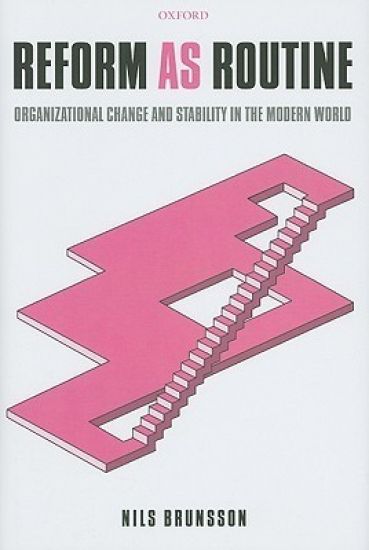
Reform as Routine

Reform as Routine

Nils Brunsson

Oxford University Press
2009
sidottu
Large contemporary organizations seem to be in an almost continual state of change. Whether in public or private organizations, managers are trying to implement new organizational forms, introduce new procedures or systems, or change the attitudes of employees. Such reforms often yield disappointing results, and so new reforms are deemed necessary. In this book, Nils Brunsson considers why reform takes place. He looks at why reforms occur when they do, why they propagate certain ideas to the exclusion of others, and what their consequences are. He emphasizes the role of social institutions, fashions, and hope. He argues that reform represents not only change but also stability, and that a failure to implement reforms is sometimes a solution rather than a problem for organizations. Nils Brunsson has long been one of the most probing analysts of organizational life, often taking unorthodox approaches. He draws on both European and American traditions to develop a distinctive voice and stance of his own. Based on extensive empirical studies in private and public organizations, Brunsson's new book will be of interest to academics and advanced students of organizational change, organizational theory, and public management.
Meta-organizations

Meta-organizations

Göran Ahrne; Nils Brunsson

Edward Elgar Publishing Ltd
2008
sidottu
A growing number of organizations are meta-organizations; rather than individuals they have other organizations as their members. This comprehensive book explains, in-depth, the unique way in which meta-organizations function, how they differ from organizations with individual membership, and how they are crucial agents in the process of globalization. The book opens a whole new area for organizational research. It will be essential reading for researchers and postgraduate students interested in organization theory, globalization, politics and organizations, or international organizations.
The Consequences of Decision-Making

The Consequences of Decision-Making

Nils Brunsson

Oxford University Press
2007
sidottu
Nils Brunsson is one of the leading European organization theorists who has written and researched decision-making in organizations. He has often questioned the rationality of decision-making, and argued that it is as important to understand other consequences of decision-making apart from choice - such things as mobilizing action, allocating responsibility, and legitimizing organizations. These consequences of decisions can influence decision-making and the assumptions about feasible norms that provide their context. Decisions often run counter to actions and are part of what Brunsson calls organizational hypocrisy. Decisions can substitute for action, or decrease the probability of the action they call for. The norm of rationality is far from obvious: sometimes decision-makers can recommend systematic irrationality. This book collects together a wide-range of Nils Brunsson's most important writing on decision-making, brought together in one volume for the first time, with an introduction from the author.
A World of Standards

A World of Standards

Nils Brunsson; Bengt Jacobsson

Oxford University Press
2002
nidottu
In the modern world there is no shortage of people who know what is best for others. Self-appointed experts, consultants, and organizations try to convince states, corporations, and individuals that they would be better off if they only followed some specific rules about what to do. These rules are presented as being voluntary and advisory. They are standards, not mandatory directives, and in modern life standards abound. Standards may concern what characteristics a telephone should have, how a company should report its financial transactions, how organizations should be managed, how states should treat their citizens, how children should be raised, and so forth. Even organizations as powerful as states and large corporations follow standards on how to organize, which policies to pursue, what kinds of services to provide, or how their products should be designed. Standards enable a higher degree of global order in the modern world than would exist without them. They facilitate coordination and cooperation even among people and organizations that are far apart. The authors believe that standardization is a much neglected area of social science -- an area that has by no means received the attention it deserves in view of its importance to society. This book seeks to redress the balance by providing an in-depth examination of a number of aspects of standardization, how it is formed, and what effects it has on the world in which we live.
A World of Standards

A World of Standards

Nils Brunsson; Bengt Jacobsson

Oxford University Press
2000
sidottu
In the modern world there is no shortage of people who know what is best for others. Self-appointed experts, consultants, and organizations try to convince states, corporations, and individuals that they would be better off if they only followed some specific rules about what to do. There are 'experts' in almost every field of human activity, from the management of companies to the management of our own health. Even organizations as powerful as states and large corporations follow rules provided by others on how to organize, which policies to pursue, what kinds of services to provide, or how their products should be designed. These rules are presented as being voluntary and advisory. They are standards, not mandatory directives, and in modern life standards abound. They may concern what characteristics a telephone should have, how a company should report its financial transactions, how contracts should be worded, what structure an organization should have, how children should be brought up and educated, how to play tennis, and so forth. This book discusses standards and standardization as a form of regulation. The authors argue that standards enable a higher degree of global order in the modern world than would exist without them. They facilitate coordination and cooperation on a global scale, creating similarities and homogeneity even among peoples and organizations that are quite different. The author believe that standardization is a much neglected area of social science - an area that has by no means received the attention it deserves in view of its importance to society. This book seeks to redress the balance by providing an in-depth examination of a number of aspects of standardization, how it is formed, and what effects it has on the world in which we live.