Kirjojen hintavertailu. Mukana 12 657 676 kirjaa ja 12 kauppaa.
Kirjailija
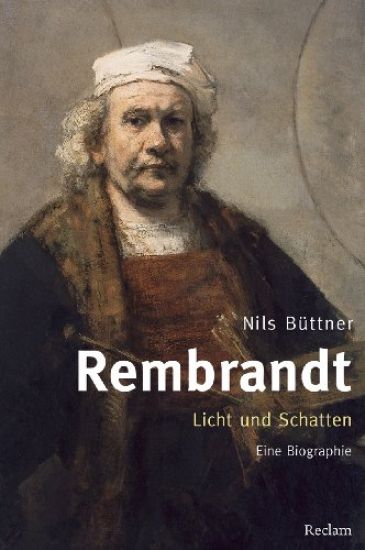
Nils Buttner
Kirjat ja teokset yhdessä paikassa: 14 kirjaa, julkaisuja vuosilta 2014-2026, suosituimpien joukossa Drawings Unrelated to Known Compositions. Vertaile teosten hintoja ja tarkista saatavuus suomalaisista kirjakaupoista.
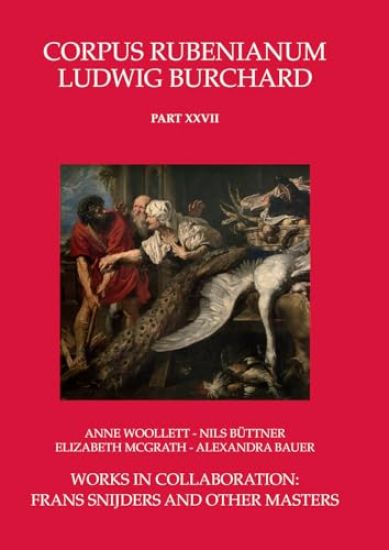
Peter Paul Rubens already had assistants working for him in his studio when he first gained admission to the Antwerp Guild of St Luke in 1598. At this period too he began to co-operate with other masters, such as Jan Brueghel the Elder; a separate volume, dedicated to that collaboration, was published in 2016 (Corpus Rubenianum Ludwig Burchard, XXVII (1): Jan Brueghel I & II). On his return from Italy in 1609, not only did Rubens's studio assistants increase in number, so too did the co-operative projects that the artist undertook. Rubens continued to work with Jan Brueghel the Elder until 1621. When Brueghel died in 1625, his son Jan continued the partnership with Rubens until the latter's death in 1640.
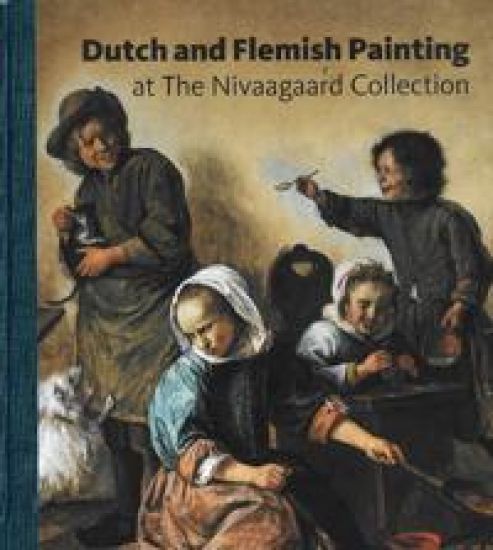
Samlingskataloget er på engelsk. Mesterværker af berømte hollandske og flamske malere – Pieter Brueghel II, Rembrandt, Jan Steen, Meindert Hobbema og Cornelis de Vos m.fl. – udgør en væsentlig del af museets faste samling. For første gang i over et århundrede er disse 57 værker blevet grundigt undersøgt, hvilket har resulteret i det rigt illustrerede samlingskatalog 'Dutch and Flemish Painting at The Nivaagaard Collection'. Heri præsenteres resultatet af en omfattende kunsthistorisk og teknisk forskning, der byder på nye tilskrivninger og forbindelser, reviderede dateringer og en dybere indsigt i maleriernes tilblivelse, bevaring og position indenfor hollandsk og flamsk kunsts bredere historie. Derudover giver to essays en dybdegående udforskning af Johannes Hages (1842-1923) passionerede erhvervelse af disse værker og deres bemærkelsesværdige bevaringshistorie. Den smukt designede publikation er således en uvurderlig fremtidig ressource for både specialister og kunstelskere.
The decoration of the Luxembourg Palace galleries was the largest commission Rubens ever received. On Saturday 26 February 1622, Rubens signed two contracts at the Louvre with the agreement of 'parfaire et peindre de sa propre main touttes et chacunnes des figures des tableaux' ('to make and paint with his own hand all and every figures of the paintings') which would decorate the two parallel galleries of the palace that the Queen Mother, Maria de' Medici (1573-1642), had begun to have built on the left bank of the Seine (see Appendix I). According the first contract (Appendix I.1), the western gallery had already been finished by that time ('l'une des galleries qui est desja faicte') and Rubens 'sera tenu et s'oblige de desseigner et peindre de sa propre main vingt quatre tableaux dans lesquels seront repntez les histoires de la vie tres illustre & gestes heroiques'('was committed and obliged to design and to paint with his own hand twenty-four paintings depicting the history of the very illustrious life and heroic exploits') of the Queen Mother, conforming to an incomplete memoir, of which he had received a copy. Rubens arrived in Paris to put the final touches on these twenty-four large canvases glorifying the life of Maria de' Medici at the beginning of February 1625. But by then the eastern gallery, planned to decorate with the 'battles' of King Henri IV (1553-1610), Maria's late husband, was still under construction. The Henri IV Gallery became finally an unfinished masterpiece of Rubens: after a temporary suspension of the work in 1630, the project was definitive abandoned in 1631. Alexis Merle du Bourg's in-depth study about the Henri IV Series was published as Part XIV.2 of the Corpus Rubenianum Ludwig Burchard in 2017. The volume presented here thus precedes that story.
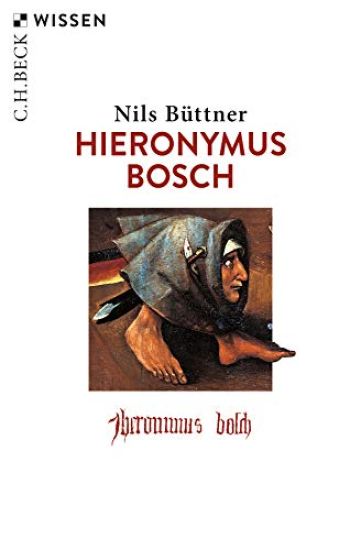
In his lifetime Hieronymus Bosch was already famous for his fantastic, unearthly creations. Today his name has become synonymous with the eerie, infernal and macabre. Bosch’s enigmatic paintings have resulted in numerous interpretations; some tried to understand his visual worlds through esoteric means, while others attempted to decode them through psychology and psychoanalysis. Now in paperback, Hieronymus Bosch: Visions and Nightmares traces the career of a painter who worked for the highest aristocratic and courtly circles, and explains Bosch’s paintings against the background of contemporary culture and society.
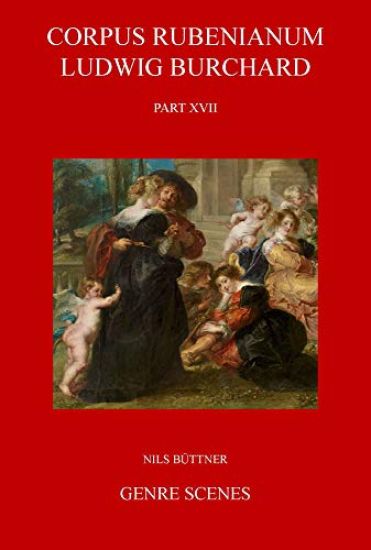
This volume catalogues the paintings and drawings that Ludwig Burchard (1886-1960) gathered under the heading 'Genre Scenes' when planning his catalogue raisonne of Rubens's oeuvre. Not that Rubens has ever been thought of as a genre painter in the conventional sense of the term. Besides, even the individual works assembled here do not accord with the customary definitions of genre painting, a category of subject-matter that was introduced relatively late in the history of art. The famous Garden of Love in the Prado, for example, with its fluttering amoretti, is more accurately described as an allegory. Even the picture in the Louvre frequently referred to as the Kermesse clearly does not reproduce an actual kermis or any other such event as witnessed by the artist, but is a fictional construct in which precisely observed details are designed to convey a message that is more symbolic than realistic in content. Yet no history of genre painting can fail to include Rubens. His pictures occupy a firm place in the relevant section of any imaginary museum of European art, whatever strictures the guides to that museum may apply. The works discussed in this volume belong to the most famous creations of the painter. They are also among the most personal of his inventions. Most of them were never sold by Rubens, but remained in his possession, a circumstance that suggests they should be viewed as a particular artistic legacy. That is not to say that they did not offer contemporaries a wide range of possible interpretations unconnected with the artist's own life. For a historically appropriate interpretation it is essential to examine closely not only the artistic process of creation, but also the former contexts of the pictures. Establishing the most complete provenance possible not only for the primary version of a composition but for all the various copies plays an important part in this process.
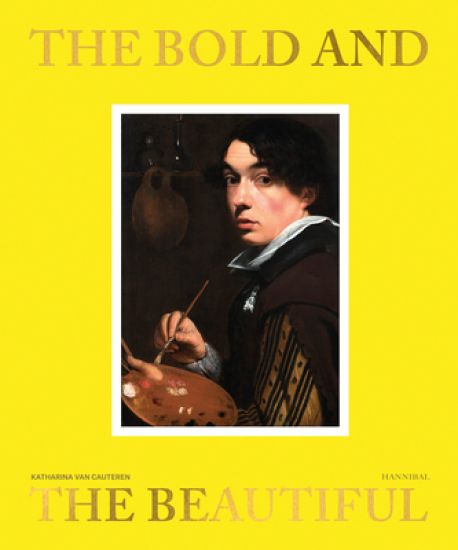
Men in stately black, women with huge ruffs, children with golden rattles, old women with wizened faces, and self-satisfied artists... These are the main players in just about every portrait ever painted in the Southern Netherlands. From the15th to the 17th centuries, the tract of land that we today call Flanders was the economic, cultural, intellectual and financial heart of Europe. And money flows - with everyone who could afford it investing in a portrait. Today, these cherished status symbols of the past have largely lost their original significance. But beyond their functional and emotional aspects, these portraits turn their subjects into gateways to the past. This book takes masterpieces from the collection of The Phoebus Foundation and outlines the broad context in which they came into being, peeling back levels of meaning like the layers of an onion. Whether captured in an impressive Rubens or Van Dyck, or an intimate portrait by a forgotten artist, the persons portrayed were once flesh and blood, each with their own peculiarities, hidden agendas and ambitions. Some portraits are very personal and hyper-individual. Others are a little dusty, the ladies and gentleman being children of their time. In most cases, however, their dreams and aspirations are surprisingly timeless and soberingly recognisable. The Bold and the Beautiful is an appointment with history: a meeting through portraiture with men and women from bygone centuries. But for those willing to look closely, the border between the present and the past is paper-thin. Published on the occasion of the exhibition Blind Date. Portretten met blikken en blozen, Autumn 2020, in Snijders&Rockoxhuis Antwerp, curated by Dr. Katharina Van Cauteren & Hildegard Van de Velde with a scenography by Walter Van Beirendonck.
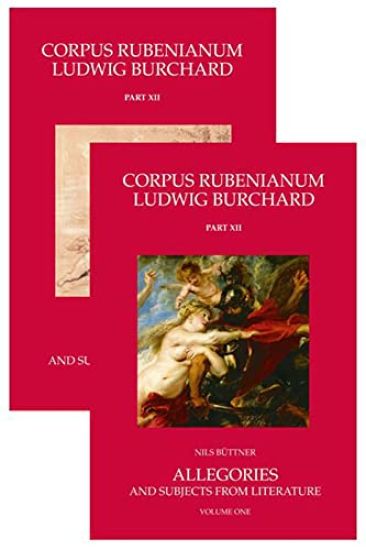
Rubens had a profound impact on the visual culture of his age. He was admired not only as a painter but also for his learning, for the knowledge of classical literature and imagery which he exploited so brilliantly in arresting and powerful pictures. Rubens was particularly drawn to allegory, to the use of personified figures, sometimes in combination with the gods of the ancient pantheon and certain humans (historical individuals), to express concepts, ideals and even political messages. A contemporary praised him for using in his allegorical compositions 'only symbols of Antiquity, thus popularising the coins and other monuments of the ancient world', but Rubens adapted ancient symbolism to new effect, with the aim of creating pictures whose essential meaning would be the more accessible for it. This volume presents works that Ludwig Burchard (1886-1960) planned to include in his catalogue raisonne under the heading 'Allegories and Subjects from Literature'. It features some of the artist's most celebrated paintings, as well as some lesser-known or recently discovered items. The themes range from nature's abundance to the dangers of excess, from human love to political expediency, triumph and the celebration of religion. It includes masterpieces as diverse in tone as the Shivering Venus (Antwerp, Koninklijk Museum voor Schone Kunsten) and the Horrors of War (Florence, Palazzo Pitti), memorably described by a great historian as 'the immortal and unforgettable frontispiece to the Thirty Years' War'. As well as an introduction to the subject, the catalogue provides extensive analyses of each work, revealing Rubens' literary and visual references. The circumstances surrounding the making and display of every item are investigated and considered alongside the artist's own creative process, since knowledge of the intended context and the early viewing conditions of Rubens' works is so important to the understanding of their significance. Thus particular attention is paid to provenance, not only for the works themselves, but for the copies made after them.
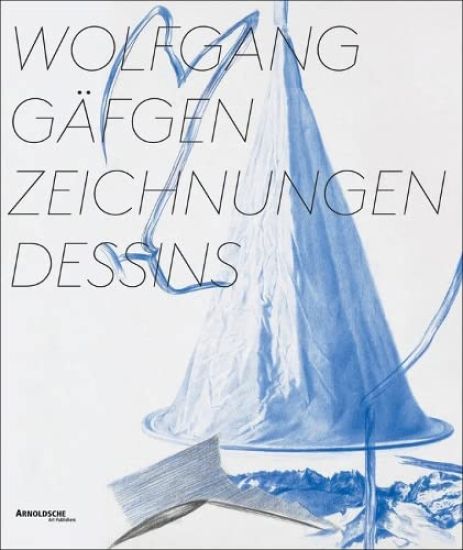
The graphic work by Wolfgang Gäfgen (born 1936 in Hamburg) encompasses more than fifty years. From the very beginning it combined the meticulous observation skills of his contemporaries with a virtuosity in drawing, something exemplary in contemporary art and still rarely seen today. His interest in superficies transforms quite unremarkable everyday things into exquisite precious items, which have set aside their original functional purpose to develop a defiantly ironic life of their own. Here, Gäfgen's drawings, along with his printed graphics and photography, which form the core of his artistic oeuvre, will be extensively acknowledged for the very first time. After studying in Hamburg and Stuttgart (1956-1961) Wolfgang Gäfgen moved to Paris. In 1977 he participated with a block of drawings in documenta 6. From 1983 to 2002 he held a professorship at the State Academy of Art and Design in Stuttgart. Text in German and French.
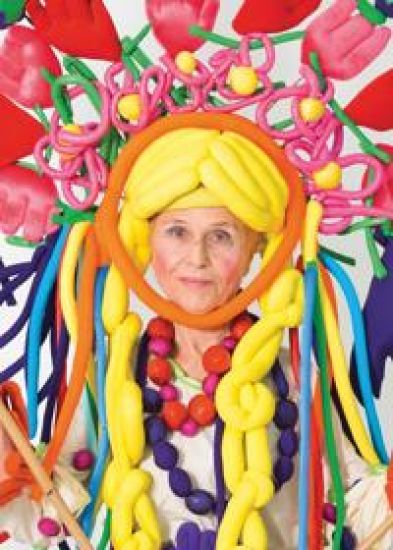
Justyna Koeke transforms children's fantasies into wearable sculptures, morphs fashion shows into performances. As a child the artist, together with her sisters, painted her heroes "princesses and saints" which she now translates into reality as a collection of vibrantly colourful outfits full of whimsical detail. These tailored fantasies are brought to life on the bodies of ladies of advanced years. The publication presents the entire project: from the child-like naive drawings, via photographs of the dressed-up models before the sterile backdrop of their retirement home, to fun-loving fashion shows - an equally humorous and critical approach to the correlation of childhood dreams and the reality of getting older, in which the unsolved issues of an increasingly ageing society invariably resonate. The art project, which fluctuates between sculpture, performance and allusions to the fashion world, was presented, among other places, at the Alternative Berlin Fashion Week. Text in English and German.