Kirjojen hintavertailu. Mukana 12 595 353 kirjaa ja 12 kauppaa.

Kirjailija

Nils Ringe

Kirjat ja teokset yhdessä paikassa: 4 kirjaa, julkaisuja vuosilta 2009-2022, suosituimpien joukossa Who Decides, and How?. Vertaile teosten hintoja ja tarkista saatavuus suomalaisista kirjakaupoista.

4 kirjaa

Kirjojen julkaisuhaarukka 2009-2022.

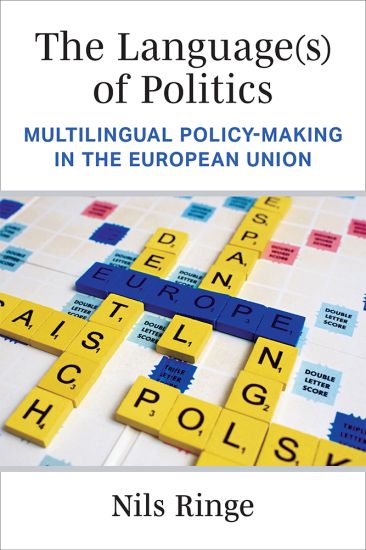
The Language(s) of Politics

The Language(s) of Politics

Nils Ringe

The University of Michigan Press
2022
sidottu
Multilingualism is an ever-present feature in political contexts around the world, including multilingual states and international organizations. Increasingly, consequential political decisions are negotiated between politicians who do not share a common native language. Nils Ringe uses the European Union to investigate how politicians’ reliance on shared foreign languages and translation services affects politics and policy-making. Ringe's research illustrates how multilingualism is an inherent and consequential feature of EU politics—that it depoliticizes policy-making by reducing its political nature and potential for conflict. An atmosphere with both foreign language use and a reliance on translation leads to communication that is simple, utilitarian, neutralized, and involves commonly shared phrases and expressions. Policymakers tend to disregard politically charged language and they are constrained in their ability to use vague or ambiguous language to gloss over disagreements by the need for consistency across languages.
The Language(s) of Politics

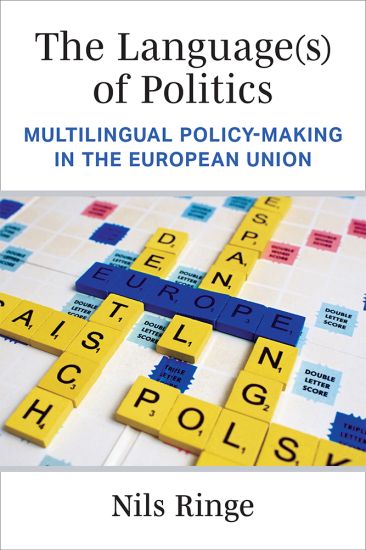
The Language(s) of Politics

Nils Ringe

THE UNIVERSITY OF MICHIGAN PRESS
2022
nidottu
Multilingualism is an ever-present feature in political contexts around the world, including multilingual states and international organizations. Increasingly, consequential political decisions are negotiated between politicians who do not share a common native language. Nils Ringe uses the European Union to investigate how politicians’ reliance on shared foreign languages and translation services affects politics and policy-making. Ringe's research illustrates how multilingualism is an inherent and consequential feature of EU politics—that it depoliticizes policy-making by reducing its political nature and potential for conflict. An atmosphere with both foreign language use and a reliance on translation leads to communication that is simple, utilitarian, neutralized, and involves commonly shared phrases and expressions. Policymakers tend to disregard politically charged language and they are constrained in their ability to use vague or ambiguous language to gloss over disagreements by the need for consistency across languages.
Bridging the Information Gap

Bridging the Information Gap

Jennifer Nicoll Victor; Nils Ringe; Christopher Jan Carman

The University of Michigan Press
2013
sidottu
Legislative member organizations (LMOs)—such as caucuses in the U.S. Congress and intergroups in the European Parliament—exist in lawmaking bodies around the world. Unlike parties and committees, LMOs play no obvious, predefined role in the legislative process. They provide legislators with opportunities to establish social networks with colleagues who share common interests. In turn, such networks offer valuable opportunities for the efficient exchange of policy-relevant—and sometimes otherwise unattainable—information between legislative offices. Building on classic insights from the study of social networks, the authors provide a comparative overview of LMOs across advanced, liberal democracies. In two nuanced case studies of LMOs in the European Parliament and the U.S. Congress, the authors rely on a mix of social network analysis, sophisticated statistical methods, and careful qualitative analysis of a large number of in-depth interviews.
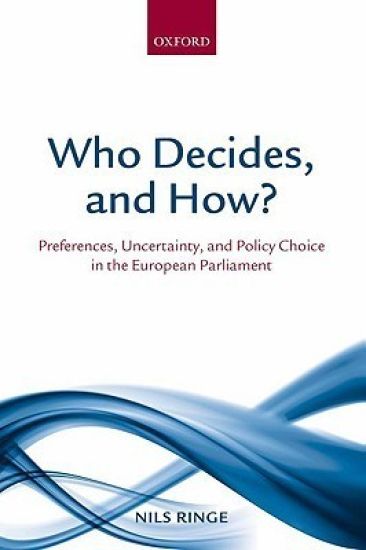
Who Decides, and How?

Who Decides, and How?

Nils Ringe

Oxford University Press
2009
sidottu
How do individual legislators in the European Parliament (EP) make decisions on the wide variety of policy proposals they routinely confront? Despite a flourishing literature on the European Union's only directly elected institution, we know surprisingly little about the micro-foundations of EP politics. Who Decides, and How? seeks to address this shortcoming by examining how individual legislators make policy choices, how these choices are aggregated, and what role parties and committees play in this process. It argues that members of the EP lack adequate resources to make equally informed decisions across policy areas. Therefore, when faced with policy choices in policy areas outside their realms of expertise, members make decisions on the basis of perceived preference coherence: they adopt the positions of their expert colleagues in the responsible EP committee whose preferences over policy outcomes they believe to most closely match their own. These preferences are difficult to determine, however, which is why legislators rely on a shared party label as a stand-in for common preferences. This results in cohesive parties, despite the inability of EP parties to discipline their members. Who Decides, and How? relies on the respective strengths of quantitative and qualitative data to shed new light on the inner workings of the EP. It illustrates how legislators make broadly representative decisions under conditions of resource scarcity, informational uncertainty, and problematic policy preferences, and how structurally weak EP parties can act in an internally cohesive and externally competitive manner when carrying out their policy commitments to Europe's citizens.