Kirjojen hintavertailu. Mukana 12 459 402 kirjaa ja 12 kauppaa.

Kirjailija

Nina Caputo

Kirjat ja teokset yhdessä paikassa: 2 kirjaa, julkaisuja vuosilta 2008-2016, suosituimpien joukossa Debating Truth. Vertaile teosten hintoja ja tarkista saatavuus suomalaisista kirjakaupoista.

2 kirjaa

Kirjojen julkaisuhaarukka 2008-2016.

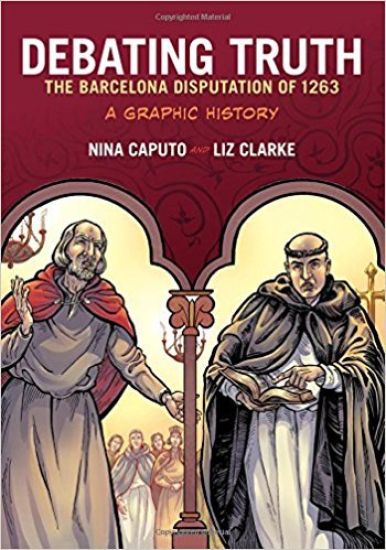
Debating Truth

Debating Truth

Nina Caputo

Oxford University Press Inc
2016
nidottu
In the summer of 1263, Nahmanides (Rabbi Moses ben Nahman, ca 1195-1270), who was Aragon (1213-1276) to debate with a Dominican Friar named Paul about specific claims concerning the Messiah in Judaism and Christianity. Friar Paul had converted from Judaism to Christianity as an adult, so he brought with him some knowledge of rabbinic texts, which he used to challenge the faith of Jews in Provence and northern Spain. His strategy was entirely innovative. Using passages from the Talmud, a foundation of Jewish life in the diaspora claimed that Jewish leaders recognized that Jesus was the messiah. The Barcelona dispuation was an officially sanctioned opportunity for Friar Paul to perform this kind of argument. it was conducted in a public forum at the roayal palace before an audience of Jewish and Christian dignitaries The two disputants, each thoroughly convinced of the indisputable truth of his own religious faith and theological interpretations, argued for his position before a panel of judges headed by James I himself. Nina Caputo's new graphic history tells the story of the Barcelona Disputation from Nahmanides' perspective. By combining the visual power of graphics with primary sources, contextualizing essays, historiography, and study questions, Debating Truth explores issues of the nature of truth, interfaith relations, and the complicated dynamics between Christians, Jews and Muslims in the medieval Mediterranean.
Nahmanides in Medieval Catalonia

Nahmanides in Medieval Catalonia

Nina Caputo

University of Notre Dame Press
2008
nidottu
In this detailed study, Nina Caputo examines conceptions of history and messianic redemption in the writings of the Catalonian rabbi and brilliant Talmudic scholar Nahmanides (1195–1270). An early exponent of kabbalah, Nahmanides was also a shrewd intermediary between the Jewish communities and the royal administration of Aragon. Most intellectual histories focus on Nahmanides in the fairly insular context of Jewish community dynamics, but this volume explores the largely unexamined history of encounters between Jewish and Christian interpretations of history and redemption, as well as the significant role played by Jews in the expansion of the Crown of Aragon during the thirteenth century. Caputo explains Nahmanides' distinctive understanding of the shape and meaning of historical time and change and reveals how his discourse frequently confronted Christian views of history and scripture, sometimes embracing Christians forms, but at other times directly refuting them. Nina Caputo's book is the first to situate Nahmanides in the full intellectual and religious context of thirteenth-century Catalonia. It makes an important contribution to the fields of Jewish studies as well as medieval and early modern history.