
Kirjailija
Noël Burch
Kirjat ja teokset yhdessä paikassa: 14 kirjaa, julkaisuja vuosilta 1990-2025, suosituimpien joukossa Le Cinema Au Prisme Des Rapports de Sexe. Vertaile teosten hintoja ja tarkista saatavuus suomalaisista kirjakaupoista.
Mukana myös kirjoitusasut: Noel Burch
14 kirjaa
Kirjojen julkaisuhaarukka 1990-2025.




La drôle de guerre des sexes du cinéma français (1930-1956)
Noël Burch; Geneviève Sellier
Champs visuels
2020
nidottu


This classic in film theory, presents a systematic study of the techniques of the film medium and of their potential uses for creating formal structures in individual films such as Dovzhenko's Earth, Antonioni's La Notte, Bresson's Au Hasard Balthazar, Renoir's Nana, and Godard's Pierrot le Fou. Originally published in 1981. The Princeton Legacy Library uses the latest print-on-demand technology to again make available previously out-of-print books from the distinguished backlist of Princeton University Press. These editions preserve the original texts of these important books while presenting them in durable paperback and hardcover editions. The goal of the Princeton Legacy Library is to vastly increase access to the rich scholarly heritage found in the thousands of books published by Princeton University Press since its founding in 1905.
This classic in film theory, presents a systematic study of the techniques of the film medium and of their potential uses for creating formal structures in individual films such as Dovzhenko's Earth, Antonioni's La Notte, Bresson's Au Hasard Balthazar, Renoir's Nana, and Godard's Pierrot le Fou. Originally published in 1981. The Princeton Legacy Library uses the latest print-on-demand technology to again make available previously out-of-print books from the distinguished backlist of Princeton University Press. These editions preserve the original texts of these important books while presenting them in durable paperback and hardcover editions. The goal of the Princeton Legacy Library is to vastly increase access to the rich scholarly heritage found in the thousands of books published by Princeton University Press since its founding in 1905.
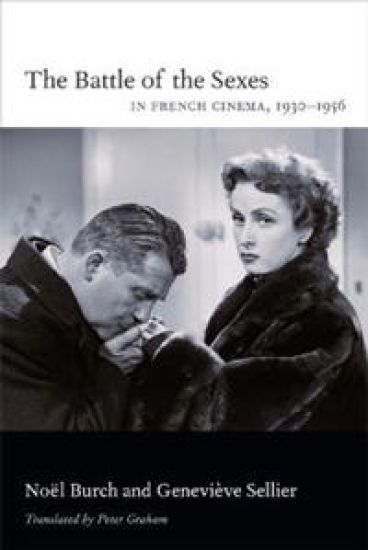
The Battle of the Sexes in French Cinema, 1930–1956
Noël Burch; Geneviève Sellier
Duke University Press
2013
pokkari
In The Battle of the Sexes in French Cinema, 1930–1956, NoËl Burch and GeneviÈve Sellier adopt a sociocultural approach to films made in France before, during, and after World War II, paying particular attention to the Occupation years (1940–44). The authors contend that the films produced from the 1930s until 1956-when the state began to subsidize the movie industry, facilitating the emergence of an "auteur cinema"-are important, both as historical texts and as sources of entertainment.Citing more than 300 films and providing many in-depth interpretations, Burch and Sellier argue that films made in France between 1930 and 1956 created a national imaginary that equated masculinity with French identity. They track the changing representations of masculinity, explaining how the strong patriarch who saved fallen or troubled women from themselves in prewar films gave way to the impotent, unworthy, or incapable father figure of the Occupation. After the Liberation, the patriarch reemerged as protector and provider alongside assertive women who figured as threats not only to themselves but to society as a whole.

The Battle of the Sexes in French Cinema, 1930–1956
Noël Burch; Geneviève Sellier
Duke University Press
2013
sidottu
In The Battle of the Sexes in French Cinema, 1930–1956, NoËl Burch and GeneviÈve Sellier adopt a sociocultural approach to films made in France before, during, and after World War II, paying particular attention to the Occupation years (1940–44). The authors contend that the films produced from the 1930s until 1956-when the state began to subsidize the movie industry, facilitating the emergence of an "auteur cinema"-are important, both as historical texts and as sources of entertainment.Citing more than 300 films and providing many in-depth interpretations, Burch and Sellier argue that films made in France between 1930 and 1956 created a national imaginary that equated masculinity with French identity. They track the changing representations of masculinity, explaining how the strong patriarch who saved fallen or troubled women from themselves in prewar films gave way to the impotent, unworthy, or incapable father figure of the Occupation. After the Liberation, the patriarch reemerged as protector and provider alongside assertive women who figured as threats not only to themselves but to society as a whole.
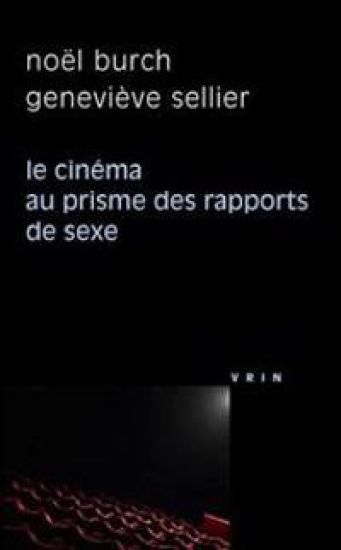
Le Cinema Au Prisme Des Rapports de Sexe
Noel Burch; Genevieve Sellier
Librarie Philosophique J. Vrin
2009
nidottu
Le cinema participe a la construction des normes sexuees - il fabrique le genre. En France, cependant, l'etude des films en fonction des representations qu'ils offrent des rapports sociaux de sexe est mal comprise et mal acceptee. On lui prefere l'approche cinephilique auteuriste . Or les films sont des productions culturelles, par definition ambivalentes, non des discours univoques qu'on pourrait analyser a partir des intentions de l'auteur-e. Le sens ne preexiste pas aux pratiques sociales qui font exister les films. Pour le montrer, et pour analyser les representations filmiques en tant qu'elles legitiment souvent la domination masculine, ce livre s'attache a des objets communs comme le cinema de genre, les magazines populaires ou les stars.
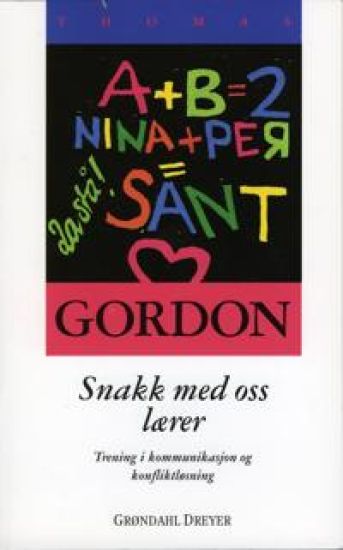
Snakk med oss lærer er av mange ansett som en av de fremste og mest konkrete hjelpemidler for å møte skolens problemer og bedre forholdet mellom læreren og elevene. Snakk med oss lærer er en hjelp til å bedre kontakten mellom læreren og elevene, fremme demokratiske holdninger og metoder i skolen, og minske maktbruk og krangel i klasserommet slik at det blir mer tid til undervisning og læring.
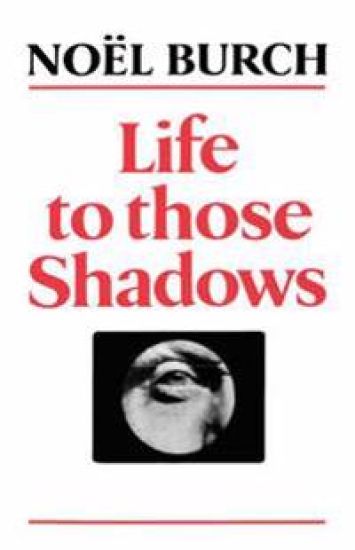
Noel Burch's singularly perceptive view of film and its origins will interest all who care about film theory and history. "Life to Those Shadows" presents a critique of 'classical' approaches to film: the assumptions that what we call the language of film was a natural, organic development, and that it lay latent from the outset in the basic technology of the camera, waiting for the prescient pioneers to bring it into being. The view that film language was a universal, neutral medium, innocent of any social or historical meaning in itself, is also challenged here. Burch's major thesis is that, on the contrary, film language has a social and economic history, that it evolved in the way it did because of when and where it was constructed - in the capitalist and imperialist West between 1892 and 1929. From this perspective, the book examines the emergence of what it defines as cinema's Institutional Mode of Representation and the sociohistorical circumstances in which it took place.Central to the Institutional Mode are the principles of visualization - camera placement and movement, lighting, editing, mise-en-scene - that filmmakers and audiences came to internalize over the first three decades. Special emphasis is laid on the all-important change that occurred in the placing of the spectator, from a position of exteriority to the film image - implicit in both film-form and viewing conditions during the primitive era (pre-1909) - to the imaginary centering of the spectator-subject - completed only with the generalization of lip-synch sound after 1929. Burch contends that this imaginary centering of a sensorially isolated spectator is the keystone of the cinematic illusion of reality, still achieved today by the same means as it was sixty years ago.