Kirjojen hintavertailu. Mukana 12 657 676 kirjaa ja 12 kauppaa.
Kirjailija
Nora Bensahel
Kirjat ja teokset yhdessä paikassa: 10 kirjaa, julkaisuja vuosilta 2003-2020, suosituimpien joukossa Aid During Conflict. Vertaile teosten hintoja ja tarkista saatavuus suomalaisista kirjakaupoista.
In an analysis grounded in the observation that although Iranian power projection is marked by strengths, it also has serious liabilities and limitations, this report surveys the nature of both in four critical areas and offers a new U.S. policy paradigm that seeks to manage the challenges Iran presents through the exploitation of regional barriers to its power and sources of caution in the regime's strategic calculus.
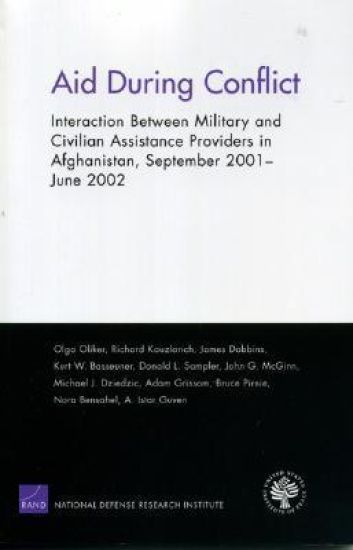
Olga Oliker; Richard Kauzlarich; James Dobbins; Kurt W. Basseuner; Donald L. Sampler; John G. McGinn; Michael J. Dziedzic; Adam Grissom; Bruce R. Pirnie; Nora Bensahel; A.Istar Guven
An assessment of humanitarian-assistance efforts by and interaction between civilian and military providers in the early phases of Operation Enduring Freedom in Afghanistan Description and evaluation of relief, reconstruction, humanitarian, and humanitarian-type aid efforts in Afghanistan during the most intense phase of military operations, from September 2001 to June 2002. The efforts were generally successful, but there were serious coordination problems among the various civilian and military aid providers. Critical issues, both positive and negative, are identified, and a list of recommendations is provided for policymakers, implementers, and aid providers, based on lessons learned.
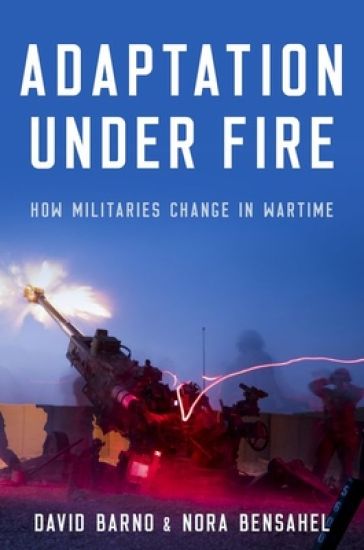
A critical look into how and why the U.S. military needs to become more adaptable. Every military must prepare for future wars despite not really knowing the shape such wars will ultimately take. As former U.S. Secretary of Defense Robert Gates once noted: "We have a perfect record in predicting the next war. We have never once gotten it right." In the face of such great uncertainty, militaries must be able to adapt rapidly in order to win. Adaptation under Fire identifies the characteristics that make militaries more adaptable, illustrated through historical examples and the recent wars in Iraq and Afghanistan. Authors David Barno and Nora Bensahel argue that militaries facing unknown future conflicts must nevertheless make choices about the type of doctrine that their units will use, the weapons and equipment they will purchase, and the kind of leaders they will select and develop to guide the force to victory. Yet after a war begins, many of these choices will prove flawed in the unpredictable crucible of the battlefield. For a U.S. military facing diverse global threats, its ability to adapt quickly and effectively to those unforeseen circumstances may spell the difference between victory and defeat. Barno and Bensahel start by providing a framework for understanding adaptation and include historical cases of success and failure. Next, they examine U.S. military adaptation during the nation's recent wars, and explain why certain forms of adaptation have proven problematic. In the final section, Barno and Bensahel conclude that the U.S. military must become much more adaptable in order to address the fast-changing security challenges of the future, and they offer recommendations on how to do so before it is too late.
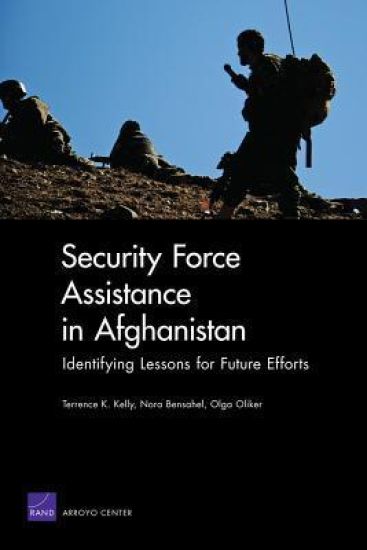
Security force assistance (SFA) is a central pillar of the counterinsurgency campaign being waged by U.S. and coalition forces in Afghanistan. This monograph analyzes SFA efforts in Afghanistan over time, documents U.S. and international approaches to building the Afghan force from 2001 to 2009, and provides observations and recommendations that emerged from extensive fieldwork in Afghanistan in 2009 and their implications for the U.S. Army. This title analyzes security force assistance efforts in Afghanistan, focusing on lessons and themes that emerged from extensive fieldwork in Afghanistan in 2009 and their implications for the U.S. Army.
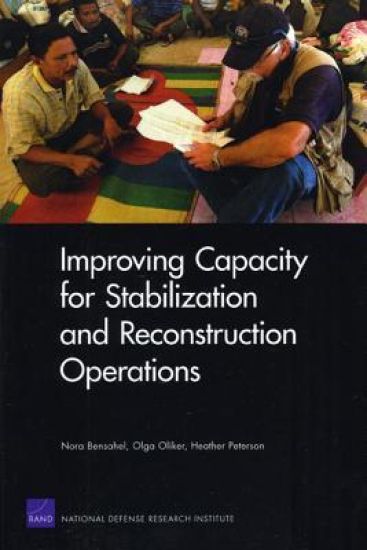
U.S. experiences in Iraq and Afghanistan have demonstrated that improving U.S. capacity for stabilization and reconstruction operations is critical to national security. The authors recommend building civilian rather than military capacity, realigning and reforming existing agencies, and funding promising programs. They also suggest improvements to deployable police capacity, crisis-management processes, and guidance and funding.
This guidebook is designed to help U.S. Army personnel more effectively use economic assistance to support economic and infrastructure development. It should help tactical commanders choose and implement more effective programs and projects in their areas of responsibility and better understand the economic context of their efforts. It also provides suggestions on what to and what not to do, with examples from current and past operations.
This monograph examines prewar planning efforts for the reconstruction of postwar Iraq. It then examines the role of U.S. military forces after major combat officially ended on May 1, 2003, through June 2004. Finally, it examines civilian efforts at reconstruction, focusing on the activities of the Coalition Provisional Authority and its efforts to rebuild structures of governance, security forces, economic policy, and essential services.
James Dobbins; Seth G. Jones; Keith Crane; Christopher S. Chivvis; Andrew Radin; F. Stephen Larrabee; Nora Bensahel; Brooke K. Stearns; Benjamin W. Goldsmith
Peace is the most essential product of nation-building. Without peace, neither economic growth nor democratization is possible. The authors of "Europe's Role in Nation-Building" investigate the use of armed force as part of broader nation-building efforts led by European powers and its success at achieving the objective of transforming a society emerging from conflict into one at peace with itself and its neighbours. They then evaluate Europe's performance against the U.S. and United Nations records in past nation-building operations.The authors focus on factors that can be influenced by outside powers, making valuable recommendations that address the pitfalls of and lessons learned from past operations. They emphasize the need for multilateral operations and the involvement of crucial actors like the European Union and NATO. The success of nation-building activities depends on the wisdom with which all resources are employed."The RAND Nation-Building" series is just this kind of resource, having drawn from a total of 22 European, U.N. and U.S. led nation-building operations since World War II.Other volumes in the series examine the involvement of the United States and the UN in nation-building efforts. In this new addition to the series, the authors take an in-depth look at six European cases (Macedonia, Bosnia, Cote d'Ivoire, Albania, the Democratic Republic of Congo, and Sierra Leone) and one Australian-led operation (the Solomon Islands) to complete a comprehensive history of best practices in nation-building. This series serves as an indispensable reference for the planning of successful future interventions.
A key question in the counterterror campaign is the extent to which cooperation should be pursued through European states. This study argues that the US should adopt a nuanced strategy, and pursue military and intelligence cooperation on a bilateral basis.