Kirjojen hintavertailu. Mukana 12 334 934 kirjaa ja 12 kauppaa.

Kirjailija

Nora Goldschmidt

Kirjat ja teokset yhdessä paikassa: 4 kirjaa, julkaisuja vuosilta 2013-2024, suosituimpien joukossa Afterlives of the Roman Poets. Vertaile teosten hintoja ja tarkista saatavuus suomalaisista kirjakaupoista.

4 kirjaa

Kirjojen julkaisuhaarukka 2013-2024.

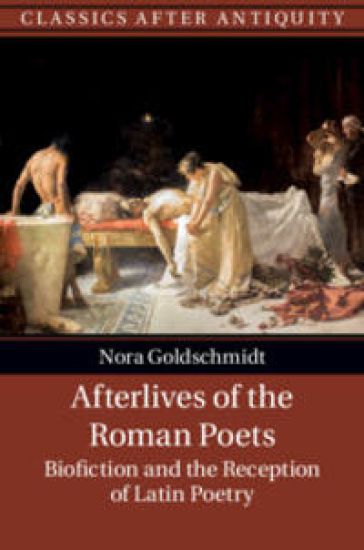
Afterlives of the Roman Poets

Afterlives of the Roman Poets

Nora Goldschmidt

Cambridge University Press
2024
pokkari
Conscious of ancient modes of reading poetry 'for the life', Roman poets encoded versions of their lives into their texts. The result is a body of literature that cries out to be read in terms of lives in reception. Afterlives of the Roman Poets shows how the fictional biographies (or 'biofictions') of its authors have shaped the reception of Latin poetry. From medieval biographies of Ovid inscribed in the margins of his texts to republican readings of Lucan's death in periods of revolution to the 'death of the author' in Hermann Broch's Der Tod des Vergil, the book tells a cultural history of the reception of ancient literature as imagined through the lens of poets' lives. Putting modern life-writing studies and ancient poetry into dialogue, it brings biofictional reception to debates in classics, and puts antiquity and its reception onto the map of modern studies in life-writing.
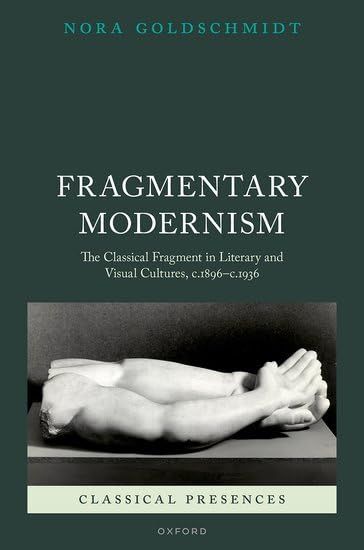
Fragmentary Modernism

Fragmentary Modernism

Nora Goldschmidt

Oxford University Press
2023
sidottu
Fragmentary Modernism begins from a simple observation: what has been called the 'apotheosis of the fragment' in the art and writing of modernism emerged hand in hand with a series of paradigm-shifting developments in classical scholarship, which brought an unprecedented number of fragmentary texts and objects from classical antiquity to light in modernity. Focusing primarily on the writers who came to define the Anglophone modernist canon -- Ezra Pound, T.S. Eliot, Hilda Doolittle (H.D.), and Richard Aldington, and the artists like Jacob Epstein and Henri Gaudier-Brzeska with whom they were associated -- the book plots the multiple networks of interaction between modernist practices of the fragment and the disciplines of classical scholarship. Some of the most radical writers and artists of the period can be shown to have engaged intensively with the fragments of Greek and Roman antiquity and their mediations by classical scholars. But the direction of influence also worked the other way: the modernist aesthetic of gaps, absence, and fracture came to shape how classical scholars and museum curators themselves interpreted and presented the fragments of the past to audiences in the present. From papyrology to philology, from epigraphy to archaeology, the 'classical fragment', as we still often see it today, emerged as the joint cultural production of classical scholarship and the literary and visual cultures of modernism.
Afterlives of the Roman Poets

Afterlives of the Roman Poets

Nora Goldschmidt

Cambridge University Press
2019
sidottu
Conscious of ancient modes of reading poetry 'for the life', Roman poets encoded versions of their lives into their texts. The result is a body of literature that cries out to be read in terms of lives in reception. Afterlives of the Roman Poets shows how the fictional biographies (or 'biofictions') of its authors have shaped the reception of Latin poetry. From medieval biographies of Ovid inscribed in the margins of his texts to republican readings of Lucan's death in periods of revolution to the 'death of the author' in Hermann Broch's Der Tod des Vergil, the book tells a cultural history of the reception of ancient literature as imagined through the lens of poets' lives. Putting modern life-writing studies and ancient poetry into dialogue, it brings biofictional reception to debates in classics, and puts antiquity and its reception onto the map of modern studies in life-writing.
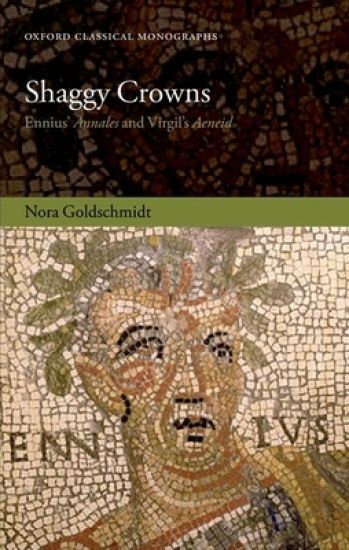
Shaggy Crowns

Shaggy Crowns

Nora Goldschmidt

Oxford University Press
2013
sidottu
Shaggy Crowns is the first book-length study in almost a hundred years of the relationship between Rome's two great epic poems. Quintus Ennius was once the monumental epic poet of Republican Rome, 'the father of Roman poetry'. However, around one hundred and fifty years after his epic Annales first appeared, it was replaced decisively by Virgil's Aeneid, and now survives only in fragments. Looking at the intersections between intertextuality and the appropriations of cultural memory, Goldschmidt considers the relationship between Rome's two great canonical epics. She focuses on how - in the use of archaism, the presentation of landscape, embedded memories of the Punic Wars, and fragments of exempla - Virgil's poem appropriates and re-writes the myths and memories which Ennius had enshrined in Roman epic. Goldschmidt argues that Virgil was not just a slicker 'new poet', but constructed himself as an older 'archaic poet' of the deepest memories of the Roman past, ultimately competing for the 'shaggy crown' of Ennius.