

Kirjailija
Norbert Elias
Kirjat ja teokset yhdessä paikassa: 46 kirjaa, julkaisuja vuosilta 1976-2025, suosituimpien joukossa The Society of Individuals. Vertaile teosten hintoja ja tarkista saatavuus suomalaisista kirjakaupoista.
46 kirjaa
Kirjojen julkaisuhaarukka 1976-2025.

Sozialer Kanon, soziale Existenz und das Problem der Sinngebung. Ein soziologischer Essay
Norbert Elias; Hans-Peter Waldhoff
Springer Fachmedien Wiesbaden
2022
nidottu
Dieser Text aus dem Nachlass von Norbert Elias offenbart die Fruchtbarkeit der soziologischen Auseinandersetzung mit Lebensthemen und ihrer zivilisationstheoretischen Verarbeitung. Er thematisiert die Probleme der menschlichen Sinngebung, Sinnerfüllung und Sinnentleerung – vor allem angesichts unserer weltweit von Kriegerkanons durchtränkten Orientierungsmittel. Die Manuskriptversionen wurden behutsam bearbeitet und um eine Einleitung von Hans-Peter Waldhoff sowie ein editorisches Nachwort von Christoph Egen ergänzt.

Le sport occupe une part croissante de nos loisirs. Comment expliquer son r le? A-t-il pour fonction de lib rer les tensions que cr ent les contraintes de la soci t ? Pourquoi le football, le rugby ou encore la boxe, apparus en Angleterre, ont-ils t adopt s dans le monde entier, alors que le cricket ne s'est r pandu que dans les pays du Commonwealth? A quoi correspondent les violences des supporters et des houligans?Norbert Elias voit dans le sport un laboratoire privil gi pour r fl chir sur les rapports sociaux et leur volution. Inscrivant le sport dans la th orie du processus de civilisation, il montre avec Eric Dunning que le sport moderne n'a plus grand-chose voir avec les affrontements guerriers et rituels de l'Antiquit ou du Moyen Age. Aujourd'hui, l' galit des chances entre joueurs est cens e annuler leurs diff rences sociales. De plus, le code des comportements, la sensibilit ont chang , imposant une diminution de la violence autoris e. Autre diff rence majeure: le plaisir de la pratique, ou du spectacle sportif, tient l'excitation que procurent des affrontements corporels qui ne sont qu'un simulacre; visant carter les risques excessifs, ne pas mettre la vie en p ril, ils permettent chaque individu de rel cher le contr le de ses motions. Dans un match de football, ce n'est pas seulement la victoire de son quipe qui donne du plaisir, mais la comp tition en elle-m me.Fondamentalement, l'histoire de chaque sport est donc li e l'apparition de r glements de plus en plus rigoureux qui ont uniformis les pratiques sportives dans le but de ma triser le d ploiement ou le spectacle de la violence.

In diesem auf Deutsch bislang unveröffentlichten Buch untersucht Norbert Elias die Laufbahn von Marineoffizieren im England des 17. Jahrhunderts und legt die Gründe für die Entstehung dieses neuen Berufes dar. Die Mannschaft der Kriegsschiffe bestand lange Zeit aus gentlemen soldiers, die das Kriegshandwerk beherrschten, und den Schiffsleuten, den Tarpaulins, die wussten, wie man ein Schiff segelt und manövriert. Aus der Kooperation und der Konkurrenz dieser beiden Gruppen mit sehr unterschiedlicher sozialer Herkunft, entstand schließlich der Beruf des Marinesoldaten und eine Hierarchie von Marineämtern, die Funktion und Methoden der Ausbildung beider Gruppen miteinander verband. Zusätzlich zeigt ein kurzer Vergleich mit der Frühphase der Entwicklung des Marineberufes in Frankreich und Spanien die Wechselwirkungen, die zwischen einigen Merkmalen der jeweiligen Marineberufe und den Ländern, zu denen sie gehören, bestanden.
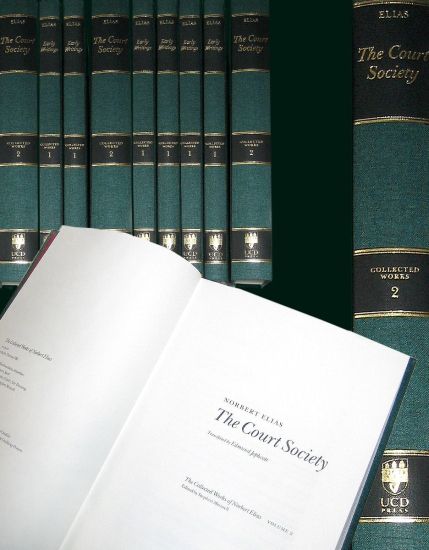
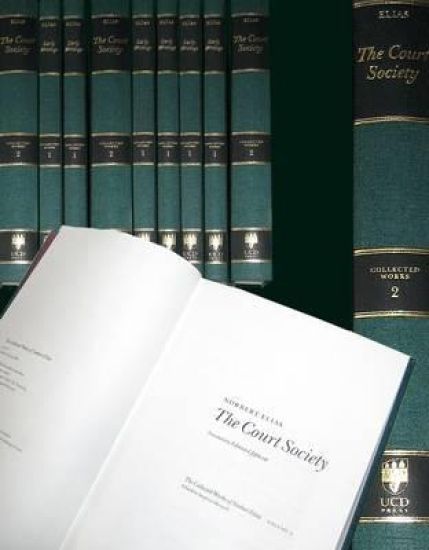
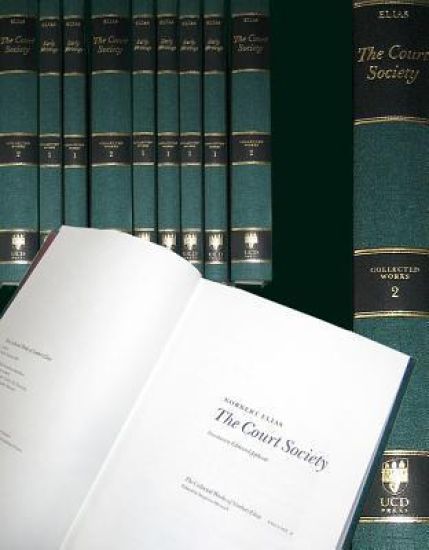
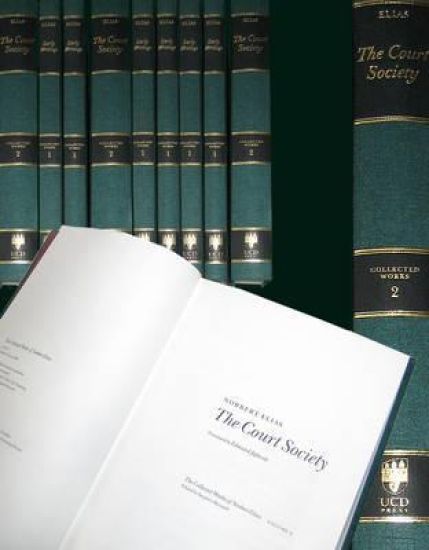
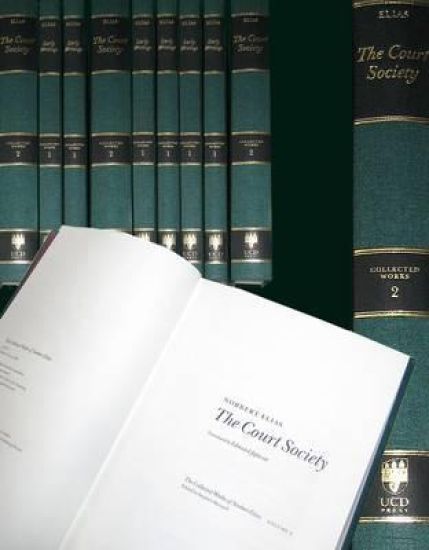
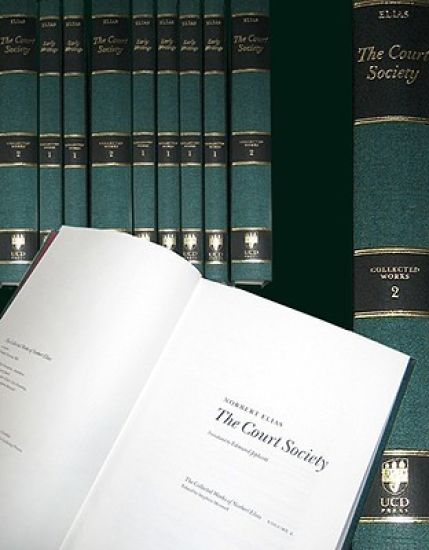
The complete edition of 18 volumes of the Collected Works of Norbert Elias in English. Elias wrote in both English and German, and in all his work runs to 14 books and around 90 other essays, along with poems and numerous interviews. The 18 volumes of the Collected Works contain many writings not previously published in English, and a small number never published before. All of the texts have been thoroughly checked and revised, by editors who have a deep knowledge of Elias' thinking; they have inserted many clarifications, cross-references and explanatory notes. The scholarly editions of the Collected Works replace all earlier editions of Elias' work, and are indispensable for everyone who makes reference to his writings. The complete set of 18 titles consists of: 9781904558392 Vol. 1 Early Writings; 9781904558408 Vol. 2 The Court Society; 9781906359041 Vol. 3 On the Process of Civilisation; 9781904558927 Vol. 4 The Established and the Outsiders; 9781906359058 Vol. 5 What is Sociology?; 9781906359065 Vol. 6 Loneliness of the Dying & Humana Condition; 9781904558439 Vol. 7 Quest for Excitement; 9781904558422 Vol. 8 Involvement and Detachment; 9781904558415 Vol. 9 An Essay on Time; 9781906359072 Vol. 10 The Society of Individuals; 9781906359089 Vol. 11 Studies on the Germans; 9781906359096 Vol. 12 Mozart & Other Essays on Courtly Art; 9781906359102 Vol. 13 The Symbol Theory; 9781906359010 Vol. 14 Essays I: On the Sociology of Knowledge and the Sciences; 9781906359027 Vol. 15 Essays II: On Civilising Processes, State Formation and National Identity; and, 9781906359034 Vol. 16 Essays III: On Sociology & the Humanities. It also includes: 9781906359119 Vol. 17 Interviews & Autobiographical Reflections; and, 9781906359126 Vol. 18 Supplements & Index to Collected. Works

Supplements and Index to the Collected Works
Norbert Elias
University College Dublin Press
2014
sidottu
Vol. 18 of the Collected Works, besides including the consolidated index to the Collected Works as a whole, contains two substantial supplements: a long and important critique on Freud written in the last weeks of Elias' life, not previously published in English; and an essay, not previously published in any language, on the anthropologist-philosopher Lucien Levy-Bruhl and the problem of 'the logical unity of humankind'. Both essays fill important gaps in Elias' work, and deal with common criticisms of his thought.

Interviews and Autobiographical Reflections
Norbert Elias
University College Dublin Press
2013
sidottu
Vol. 17 of the Collected Works can serve as an excellent introduction to Elias's thinking overall. In the last decade of his life, Elias gave many interviews in which he discussed aspects of his work, rebutting many common misunderstandings of his thinking and further developing ideas sketched out in his writings. Besides a selection of these 'academic' interviews (many of them not previously published in English, or not published at all), the book contains his essay in intellectual autobiography and a long interview in which he talks about his own life.

Studies on the Germans, Volume 11 of the Collected Works, was first published in German in 1989, exactly 50 years after Elias' most famous work, On the Process of Civilisation. The essays in the book were written independently of each other over three decades. In this new edition, Elias' original English text of the extremely important essay 'The breakdown of civilisation' is published for the first time. Other essays include those on duelling and its wider social significance, as well as on nationalism, civilisation and violence, and post-war terrorism in the Federal Republic of Germany. All the essays have been newly annotated by the editors, especially to make clear many historical references that Elias, unrealistically, assumed his readers would understand without further explanation.
Translated by Grace Morrissey, Stephen Mennell and Edmund Jephcott, volume 5 of the "Collected Works of Norbert Elias" contains Elias' broadest statement of the fundamentals of sociology, in important respects very different from the discipline as it is institutionalised today. In his vision, sociology is concerned with the whole course of the development of human society. Especially important are the 'game models', which demonstrate the connections between power ratios, unintended consequences, unplanned long-term processes and the way people perceive and conceptualise the social processes in which they are caught up in interdependence with each other. This edition contains two extra chapters previously unpublished in English, one of them a substantial discussion of the legacy of Marx.
This is Volume 3 in the "Collected Works of Norbert Elias", translated by Edmund Jephcott. Recognised as one of the most important works of sociology in the last century, "On the Process of Civilisation" has been influential and widely discussed across the whole range of the humanities and social sciences. This sumptuous new edition, completely revised with many corrections and clarifications, includes colour plates of all the 13 drawings from "Das Mittelaterliche Hausbuch" to which Elias refers in his famous discussion of 'Scenes from the life of a knight'. Beginning with his celebrated study of the changing standards of behaviour of the secular upper classes in Western Europe since the Middle Ages, Elias demonstrates how 'psychological' changes in habitus and emotion management were linked to wider transformations in power relations, especially the monopolisation of violence and taxation by more increasingly effective state apparatuses.

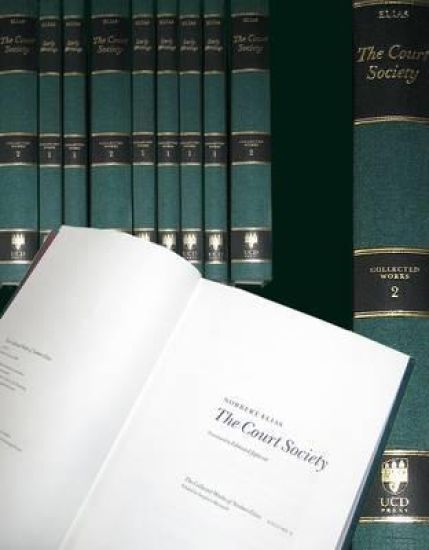
"The Symbol Theory, volume 13 in "The Collected Works of Norbert Elias", situates the human capacity for forming symbols in the long-term biological evolution of Homo sapiens, showing how it is linked through communication and orientation to group survival. Elias proceeds to recast the question of the ontological status of knowledge, moving beyond the old philosophical dualisms of idealism/materialism and subject/object. He readjusts the boundary between the 'social' and the 'natural' by interweaving evolutionary biology and the social sciences. "The Symbol Theory" provides nothing less than a new image of the human condition as an accidental outcome of the blind flux of an indifferent cosmos. Elias' Introduction now includes previously unpublished passages written in the days before he died.

Vad sker i ett vanligt bostadsområde i en engelsk industristad när en grupp nyinflyttade arbetare från London försöker anpassa sig till stadsdelen? Följden blir en konflikt och maktkamp mellan "etablerade", de gamla familjerna, och de nyinflyttade, "outsiders", om hur man ska bete sig för att bli accepterad. Den etablerade gruppen utövar sin makt genom förtal och skvaller. Genom att brännmärka en stökig minoritet i outsidergruppen blir hela gruppen moraliskt stigmatiserad som mindre värd. Norbert Elias (1897--1990) var en av 1900-talets mest betydande sociologer. Han visar på ett fascinerande sätt hur moralisk stigmatisering är en allmänt förekommande maktteknik varhelst det finns en konflikt mellan en etablerad och dominerande grupp och en underordnad, dominerad grupp; mellan bofasta och invandrare, vita och svarta i USA, högkastiga och kastlösa indier, män och kvinnor, välbeställda och fattiga. I en efterskrift till denna andra, utvidgade upplaga återfinns Elias sista bidrag till Etablerade och outsiders. Det är en skarpsinnig analys av maktförhållandet mellan vita och svarta i USA, utifrån Harper Lees roman Dödssynden från 1960. Gunnar Olofsson presenterar i ett förord Norbert Elias och klarlägger hur teorin om etablerade och outsiders kan användas för att förstå dagens värld och konflikter.

Philosophers and social scientists have for decades - centuries even - tied themselves in knots over the supposed problem of 'individual' versus 'society', and its offshoots such as 'agency' and 'structure'. Elias shows the falsity of problem, which ought to be easily resolved by thinking in terms of processes extending over the generations - though in practice the baleful influence of philosophy leads to its constant resurrection. "The Society of Individuals" consists of three essays, the first written in 1939, the second dating from the 1940s and 1950s, and the third a final reflection composed in 1987 only three years before Elias' death. In each, Elias takes the discussion to a new level, demonstrating that individualisation is an inherent component of the personal socialisation process and of inter-generational civilising processes, exploding the myth of the 'We-less ego', and introducing important conceptual innovations, including 'I-identity' versus 'We-identity' and the 'We-I balance'.

Like his father Leopold, Wolfgang Amadeus Mozart was dependent on a court aristocracy in whose eyes he was little more than a domestic servant. Unlike his father, however, his personal makeup was already that of the freelance artist who sought to follow the flow of his own artistic conscience and imagination rather than the courtly conventions and standards of the day. In "Mozart: the Sociology of a Genius", Elias paints a portrait of this extraordinarily gifted artist born into a society that did not yet possess either the concept of 'genius' or (at least in music) that of freelance artist. The apparent contradictions of his character - the refined elegance of his compositions and the coarseness of his lavatorial humour - reflect his uncomfortable and eventually tragic straddling of two social worlds. The volume also includes two major essays on cognate topics, previously unpublished in English: on the courtly painter Watteau's "Embarkation for Cythera", and on 'The fate of German Baroque poetry: between the traditions of court and middle class'.
The Loneliness of the Dying and Humana Conditio
Norbert Elias
University College Dublin Press
2010
sidottu
This volume contains two of Elias' shorter books. "The Loneliness of the Dying" is one of his most admired works - drawing on a range of literary and historical sources, it is sensitive and even moving in its discussion of the changing social context of death and dying over the centuries. Today, when death is less familiar to most people in everyday life, the dying frequently experience the loneliness of social isolation. "Humana Conditio", written in 1985 to mark the fortieth anniversary of the end of the Second World War, has never before been published in English. 'Human beings', writes Elias, 'have made the reciprocal murdering of people a permanent institution. Wars are part of a fixed tradition of humanity. They are anchored in its social institutions and in the social habitus of people, even the most peace-loving'. Elias' meditation on the human lot ranges over the whole of human history, to international relations and the future of humanity.

stw 158-159
Essays I: On the Sociology of Knowledge and the Sciences
Norbert Elias
University College Dublin Press
2009
sidottu
Between the end of the Second World War and his death in 1990, Elias published almost 60 articles on a wide range of topics. About a third of them have not previously appeared in English, and many of the rest were widely scattered and difficult to obtain. They are being published in three thematic volumes, all edited by Richard Kilminster and Stephen Mennell. In this volume, Elias develops his sociological theory of knowledge and the sciences - in the plural - to counter what he sees as the inadequacies of traditional philosophical theories. Included are savage attacks on the philosophy of Karl Popper and its damaging influence, a brilliant essay on scientific establishments, and essays on Thomas More and the social uses of utopias.