Kirjojen hintavertailu. Mukana 12 390 323 kirjaa ja 12 kauppaa.
Kirjailija
Norbert Pachler
Kirjat ja teokset yhdessä paikassa: 9 kirjaa, julkaisuja vuosilta 2007-2016, suosituimpien joukossa Language, Autonomy and the New Learning Environments. Vertaile teosten hintoja ja tarkista saatavuus suomalaisista kirjakaupoista.
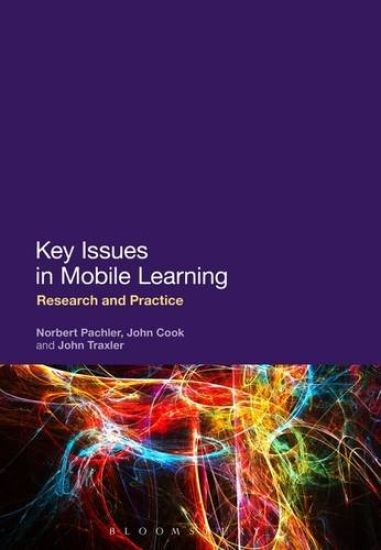
Mobile learning is an emerging, and rapidly expanding field of educational research and practice across schools, colleges and universities as well as in the work place and in the community. It is starting to attract the interest and imagination of practitioners in all phases of education as well as of researchers and a number of national and international annual conferences have been established to share growing insights into attendant theories and practices. Key Issues in Mobile Learning offers a topography of the current debates and issues surrounding mobile learning and structures them in such a way as to provide an overview for practitioners, researchers, students and policy makers of the pertinent issues in mobile learning as well as a jump-off point for further work or practice in the field.

Praise for previous editions:- ‘A wealth of theory, research, practical advice, case studies and tasks in one volume…Indispensable for both HEI tutors and mentors, and an important book to recommend to all MFL students.' – Language Learning Journal‘Presenting clear, straightforward, factual information on all current issues facing MFL student teachers ... An excellent reference guide during the first years of teaching.' – Mentoring and TutoringLearning to Teach Foreign Languages in the Secondary School has established itself as the leading textbook for student teachers of foreign languages in the UK and internationally. The practical focus is underpinned by a theoretical perspective and backed up by the latest research, encouraging you to develop a personal approach to foreign language teaching. This new, fourth edition, has been comprehensively updated to take account of recent policy and curriculum changes, and now covers a range of relevant statutory frameworks. Fully revised chapters cover the key knowledge and skills essential for becoming a foreign language teacher: What can we learn from research into language teaching and learning? Teaching methods and learning strategies Creating a meaningful learning environment Transition from Primary to Secondary The role of digital technologies Teaching in the target language Receptive skills and productive skills Teaching and learning grammar Planning and reflecting on classroom practice Pupil differences and differentiation Assessment for and of learning It includes many examples of how to analyse practice to ensure pupil learning is maximised, together with activities and tasks to support you as you analyse your own learning and performance. Learning to Teach Foreign Languages in the Secondary School provides practical help and support for many of the situations and potential challenges you are faced with in school. It is an essential purchase for every aspiring secondary foreign languages school teacher.
Enables readers to understand the key issues underpinning e-learning with a view to enabling them to use it effectively in their professional practice. This book offers education practitioners insights that will enable them to improve their professional practices in relation to the conceptualisation, design, implementation, assessment and evaluation of approaches to e-learning. The authors pay attention to the perspectives of both teachers and learners when exploring key questions including: How do online technologies affect pedagogy? How can online technologies best support learning? "Key Issues in e-Learning" avoids simplistic conceptualisations of online teaching and learning. Instead, this text draws on a wide range empirical, conceptual and theoretical evidence and outlines practical approaches to improving practice and research.
This title enables readers to understand the key issues underpinning e-learning with a view to enabling them to use it effectively in their professional practice. This book offers education practitioners with little or no pedagogical grounding in the field of e-learning insights that will enable them to improve their professional practices in relation to the conceptualisation, design, implementation, assessment and evaluation of approaches to e-learning. The authors pay attention to the perspectives of both teachers and learners when exploring key questions including: How does technology affects pedagogy? How can technology best support learning? "Key Issues in e-Learning" avoids simplistic conceptualisations of online teaching and learning. Instead, this text draws on a wide range empirical, conceptual and theoretical evidence, and outlines practical approaches to improving practice and research.
As with television and computers before it, today’s mobile technology challenges educators to respond and ensure their work is relevant to students. What’s changed is that this portable, cross-contextual way of engaging with the world is driving a more proactive approach to learning on the part of young people. The first full-length authored treatment of the relationship between the centrality of technological development in daily life and its potential as a means of education, Mobile Learning charts the rapid emergence of new forms of mass communication and their potential for gathering, shaping, and analyzing information, studying their transformative capability and learning potential in the contexts of school and socio-cultural change. The focus is on mobile/cell phones, PDAs, and to a lesser extent gaming devices and music players, not as "the next new thing" but meaningfully integrated into education, without objectifying the devices or technology itself. And the book fully grounds readers by offering theoretical and conceptual models, an analytical framework for understanding the issues, recommendations for specialized resources, and practical examples of mobile learning in formal as well as informal educational settings, particularly with at-risk students. Among the topics covered: • Core issues in mobile learning • Mobile devices as educational resources • Socioeconomic approaches to mobile learning • Creating situations that promote mobile learning • Ubiquitous mobility and its implications for pedagogy • Bridging the digital divide at the policy level Mobile Learning is a groundbreaking volume, sure to stimulate both discussion and innovation among educational professionals interested in technology in the context of teaching and learning.
Covering the training standards for NQTs and the Induction Standards and also fully exploring issues to do with subject knowledge in learning to teach, this is the essential guide for teachers of foreign languages. Acknowledging that an essential element of a secondary teacher's identity is tied up with their subject taught, the book is divided into three sections: framing the subject teaching the subject modern languages within the professional community.This book aims to provide stimulating assistance to subject specialists by helping them find ways of thinking about their specialism, how to teach with it, and how to enagage with what pupils learn through it. Written with teachers of modern foreign languages in the years of their early professional development in mind, this book is also suitable for those on PGCE courses, those in their induction year, and those in years two and three of their teaching career.
The emergence of new learning environments, technological and institutional, implies a need for language understanding and autonomous learning. What do they mean? Why are they necessary? How do they interrelate? This book looks at these questions. The authors consider mother tongue and second/foreign language education in relation to 'language understanding', which includes formal knowledge and an ability to use language communicatively, and should cover the 'new' literacies. Autonomous language learning has been interpreted in various ways, and setting language understanding as a goal allows some of these (such as 'training' models) to be challenged and others endorsed. Some implications of the information society for education are considered. Learning increasingly takes place outside educational establishments, and the authors examine changes from face-to-face teacher-student interaction to mixed-mode and distance learning. The new environments create new possibilities, such as knowledge construction through computer-mediated interaction and learner autonomy in online networks, and these are explored. Throughout the book, the centrality of the teacher's role is affirmed, as educator and guide on autonomous second/foreign language programmes, and as a moderator of online discussions and a designer of online materials.