Kirjojen hintavertailu. Mukana 12 595 353 kirjaa ja 12 kauppaa.

Kirjailija

Norbert Wolf

Kirjat ja teokset yhdessä paikassa: 42 kirjaa, julkaisuja vuosilta 1996-2025, suosituimpien joukossa Friedrich. Vertaile teosten hintoja ja tarkista saatavuus suomalaisista kirjakaupoista.

42 kirjaa

Kirjojen julkaisuhaarukka 1996-2025.

Holbein

Holbein

Norbert Wolf

Taschen GmbH
2017
sidottu
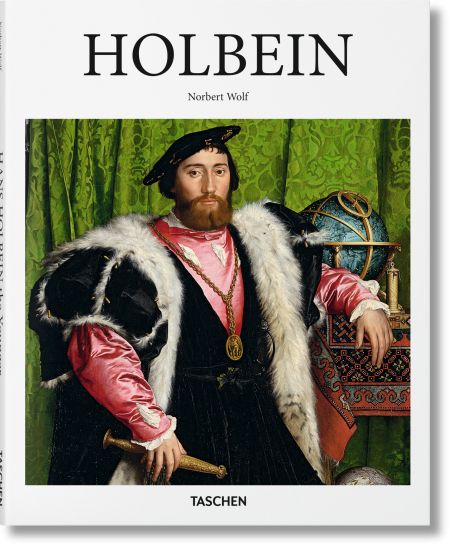
Religion, Renaissance, and Reformation—these three ideologies shaped the world of 16th-century portraitist Hans Holbein the Younger (1497/98–1543), a pivotal figure of the Northern Renaissance, whose skills took him to Switzerland, Belgium, Italy, and England, and garnered patrons and subjects as prestigious as Henry VIII, Thomas More, Anne of Cleves, and Reformation advocate Thomas Cromwell. This book brings together key Holbein paintings to explore his illustrious and international career as well as the courtly drama and radical religious change that informed his work. With rich illustration, we survey the masterful draftsmanship and almost supernatural ability to control details, from the textures of luxurious clothing to the ornament of a room, that secured Holbein’s place as one of the greatest portraitists in Western art history. His probing eye was matched with a draftsman. Along the way, we see how he combined meticulous mimesis with an inspired amalgam of regional painterly traits, from Flemish-style realism to late medieval German composition and Italian formal grandeur. During his time in England, Holbein became official court painter to Henry VIII, producing both reformist propaganda and royalist paintings to bolster Henry’s status as monarch and as the new Supreme Head of the Church following the English Reformation. His portrait of Henry from 1537 is regarded not only as a portraiture pinnacle but also as an iconic record of this transformative monarch and the Tudor dynasty. Through this turbulent period, Holbein also produced anticlerical woodcuts, and sketched and painted Lutheran merchants, visiting ambassadors, and Henry’s notorious succession of wives.
Holbein

Holbein

Norbert Wolf

TASCHEN GMBH
2017
sidottu
Religion, Renaissance, and Reformation—these three ideologies shaped the world of 16th-century portraitist Hans Holbein the Younger (1497/98–1543), a pivotal figure of the Northern Renaissance, whose skills took him to Switzerland, Belgium, Italy, and England, and garnered patrons and subjects as prestigious as Henry VIII, Thomas More, Anne of Cleves, and Reformation advocate Thomas Cromwell. This book brings together key Holbein paintings to explore his illustrious and international career as well as the courtly drama and radical religious change that informed his work. With rich illustration, we survey the masterful draftsmanship and almost supernatural ability to control details, from the textures of luxurious clothing to the ornament of a room, that secured Holbein’s place as one of the greatest portraitists in Western art history. His probing eye was matched with a draftsman. Along the way, we see how he combined meticulous mimesis with an inspired amalgam of regional painterly traits, from Flemish-style realism to late medieval German composition and Italian formal grandeur. During his time in England, Holbein became official court painter to Henry VIII, producing both reformist propaganda and royalist paintings to bolster Henry’s status as monarch and as the new Supreme Head of the Church following the English Reformation. His portrait of Henry from 1537 is regarded not only as a portraiture pinnacle but also as an iconic record of this transformative monarch and the Tudor dynasty. Through this turbulent period, Holbein also produced anticlerical woodcuts, and sketched and painted Lutheran merchants, visiting ambassadors, and Henry’s notorious succession of wives.
Albrecht Dürer

Albrecht Dürer

Norbert Wolf

Prestel
2017
sidottu
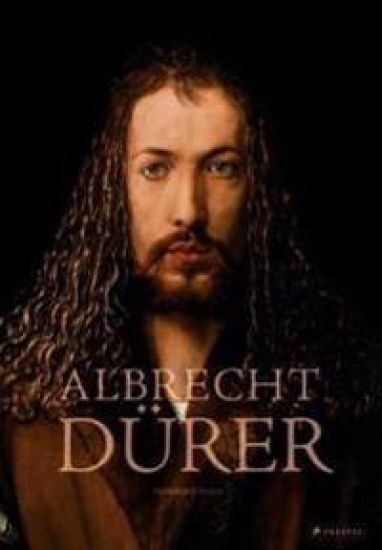
Albrecht Durer's prints and drawings have inspired hundreds of artists, both during his life and after his death. Yet his talent as a painter and colorist, and his enthusiasm for the scientific world have not been widely appreciated. Durer's influence was both international and intergenerational-indeed Picasso claimed to have been inspired by the 16th-century artist. Reproduced in stunning detail and including illustrations of Durer's most famous prints and drawings, a catalog raisonne of his paintings, and biographical research, this book presents a Durer for the 21st century. Producing more self-portraits than any other artist of his day; mass marketing his best-selling prints; even inventing his own monogram logo; Albrecht Du rer was commercially astute long before today's generation of self-promoting and financially-savvy artists. There are 55 extant Durer paintings, of which 17 are in dispute. Using scientific research, this book puts all arguments to bed resulting in the definitive catalog raisonne of the paintings. Drawing on in-depth research, this book reveals the truth behind Durer and his art.
Kirchner

Kirchner

Norbert Wolf

Taschen GmbH
2016
sidottu
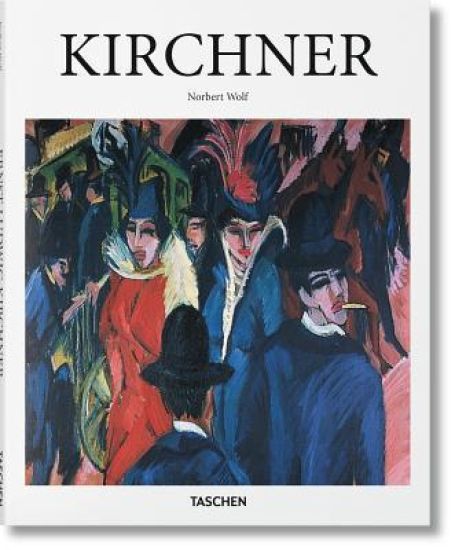
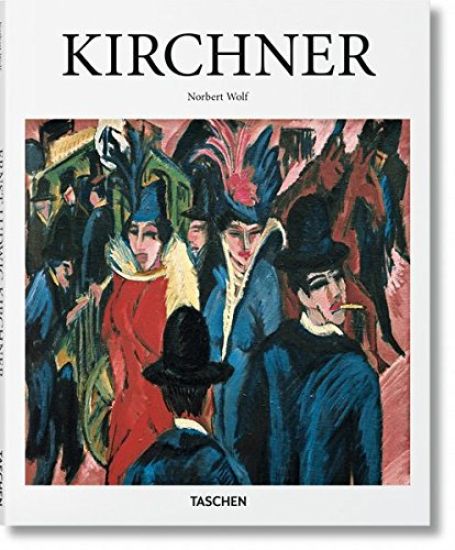
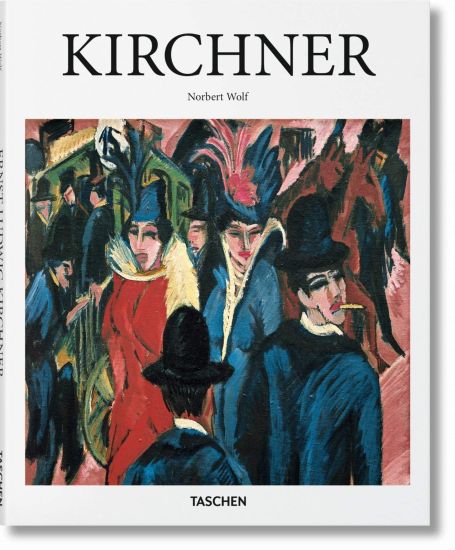
Ernst Ludwig Kirchner (1880–1938) is regarded as one of the key figures in 20th-century European art. A Modernist to his bones, he sent seismic waves through the art world with his hard-edged, intensely colored paintings and disseminated his ideas through Die Brücke art movement and the MUIM-Institut school of modernist painting, both of which he cofounded.Kirchner’s work reconciled past and present through an Expressionist prism, reflecting the latest avant-garde ideas in art, while exploring traditional academic approaches and subjects. His works tackled social, moral, and emotional questions with a fierce intensity. Distorted perspectives, rough lines, and unusual colors were mainstays of his practice, as well as a recurring interest in capturing the human form, whether in frenetic city vistas such as Berlin Street Scene (1913) or in his famously decadent studio.In this introductory book, we explore the stretch of Kirchner’s career through Germany and Switzerland, including his founding of Die Brücke, and his inclusion in the Nazis’ infamous “degenerate art” exhibition in 1937. Along the way, we’ll encounter vivid landscapes, stark nudes, intense urban settings, and, above all, a persistent emphasis on the emotional experience of painter and viewer.About the seriesBorn back in 1985, the Basic Art Series has evolved into the best-selling art book collection ever published. Each book in TASCHEN’s Basic Art series features:a detailed chronological summary of the life and oeuvre of the artist, covering his or her cultural and historical importancea concise biographyapproximately 100 illustrations with explanatory captions
Kirchner

Kirchner

Norbert Wolf

TASCHEN GMBH
2016
sidottu
Ernst Ludwig Kirchner was a German Expressionist pioneer, a prolific painter and printmaker, and cofounder of Die Brücke movement. Through vivid landscapes, stark nudes, and dynamic urban scenes, this introductory book explores his radical painting in preâ??World War I Germany and his leading influence on 20th-century art.
Kirchner

Kirchner

Norbert Wolf

TASCHEN GMBH
2016
sidottu
Ernst Ludwig Kirchner (1880–1938) is regarded as one of the key figures in 20th-century European art. A Modernist to his bones, he sent seismic waves through the art world with his hard-edged, intensely colored paintings and disseminated his ideas through Die Brücke art movement and the MUIM-Institut school of modernist painting, both of which he cofounded. Kirchner’s work reconciled past and present through an Expressionist prism, reflecting the latest avant-garde ideas in art, while exploring traditional academic approaches and subjects. His works tackled social, moral, and emotional questions with a fierce intensity. Distorted perspectives, rough lines, and unusual colors were mainstays of his practice, as well as a recurring interest in capturing the human form, whether in frenetic city vistas such as Berlin Street Scene (1913) or in his famously decadent studio. In this introductory book, we explore the stretch of Kirchner’s career through Germany and Switzerland, including his founding of Die Brücke, and his inclusion in the Nazis’ infamous “degenerate art” exhibition in 1937. Along the way, we’ll encounter vivid landscapes, stark nudes, intense urban settings, and, above all, a persistent emphasis on the emotional experience of painter and viewer.
Dürer

Dürer

Norbert Wolf

TASCHEN GMBH
2016
sidottu
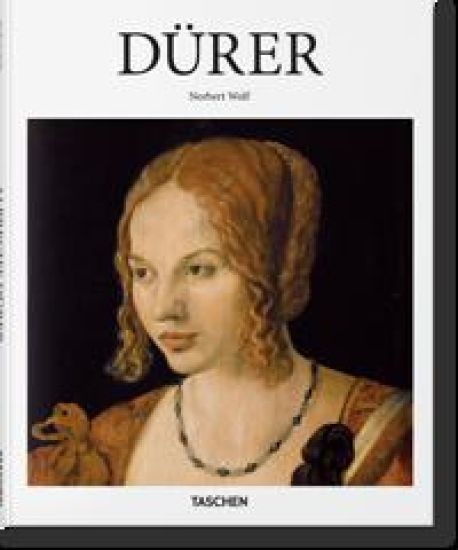
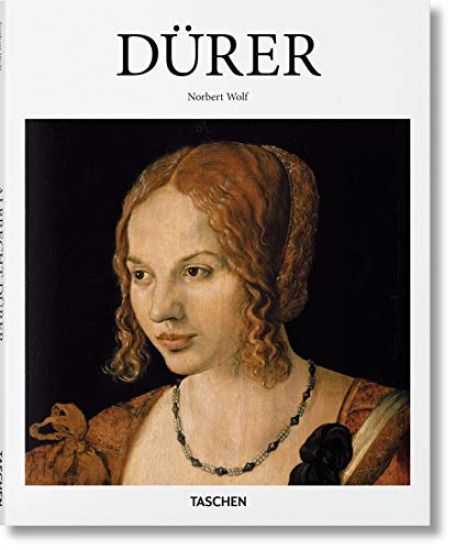
A polymath of the German Renaissance, Albrecht Dürer (1471–1528) was a prolific artist, theorist, and writer whose works explored everything from religion to art theory to philosophy. His vast body of work includes altarpieces, portraits, self-portraits, watercolors, and books, but is most celebrated for its astonishing collection of woodcut prints, which transformed printmaking from an artisan practice into a whole new art form. Dürer’s woodcuts astonish in scale as much as detail. Through works such as Apocalypse and the Triumphal Arch for Emperor Maximilian I, he created dense, meticulous compositions that were much larger, much more finely cut, and far more complex than any earlier woodcut efforts. With an ambitious tonal and dynamic range, he introduced a new level of conceptual, emotional, and spiritual intensity. His two major woodcut series on Christ’s Passion, named The Large Passion and The Small Passion after their size, are particularly remarkable for their vivid human treatment of the Christian narrative. In his copper engraving, Melancholia I, meanwhile, Dürer created a startling vision of emotional ennui, often cited as a defining early image of a depressive or melancholic state. Ever inquisitive, Dürer absorbed ideas not only from masters and fellow artists in Germany but also from Italy, while his own influence extended across Europe for generations to come. In this essential TASCHEN introduction, we explore this pioneering figure’s complex practice, his omnivorous intellect, and the key works which shaped his enduring legacy.
Dürer

Dürer

Norbert Wolf

TASCHEN GMBH
2016
sidottu
A polymath of the German Renaissance, Albrecht Dürer (1471–1528) was a prolific artist, theorist, and writer whose works explored everything from religion to art theory to philosophy. His vast body of work includes altarpieces, portraits, self-portraits, watercolors, and books, but is most celebrated for its astonishing collection of woodcut prints, which transformed printmaking from an artisan practice into a whole new art form. Dürer’s woodcuts astonish in scale as much as detail. Through works such as Apocalypse and the Triumphal Arch for Emperor Maximilian I, he created dense, meticulous compositions that were much larger, much more finely cut, and far more complex than any earlier woodcut efforts. With an ambitious tonal and dynamic range, he introduced a new level of conceptual, emotional, and spiritual intensity. His two major woodcut series on Christ’s Passion, named The Large Passion and The Small Passion after their size, are particularly remarkable for their vivid human treatment of the Christian narrative. In his copper engraving, Melancholia I, meanwhile, Dürer created a startling vision of emotional ennui, often cited as a defining early image of a depressive or melancholic state. Ever inquisitive, Dürer absorbed ideas not only from masters and fellow artists in Germany but also from Italy, while his own influence extended across Europe for generations to come. In this essential TASCHEN introduction, we explore this pioneering figure’s complex practice, his omnivorous intellect, and the key works which shaped his enduring legacy.
Dürer

Dürer

Norbert Wolf

Taschen GmbH
2016
sidottu
A polymath of the German Renaissance, Albrecht Dürer (1471–1528) was a prolific artist, theorist, and writer whose works explored everything from religion to art theory to philosophy. His vast body of work includes altarpieces, portraits, self-portraits, watercolors, and books, but is most celebrated for its astonishing collection of woodcut prints, which transformed printmaking from an artisan practice into a whole new art form. Dürer’s woodcuts astonish in scale as much as detail. Through works such as Apocalypse and the Triumphal Arch for Emperor Maximilian I, he created dense, meticulous compositions that were much larger, much more finely cut, and far more complex than any earlier woodcut efforts. With an ambitious tonal and dynamic range, he introduced a new level of conceptual, emotional, and spiritual intensity. His two major woodcut series on Christ’s Passion, named The Large Passion and The Small Passion after their size, are particularly remarkable for their vivid human treatment of the Christian narrative. In his copper engraving, Melancholia I, meanwhile, Dürer created a startling vision of emotional ennui, often cited as a defining early image of a depressive or melancholic state. Ever inquisitive, Dürer absorbed ideas not only from masters and fellow artists in Germany but also from Italy, while his own influence extended across Europe for generations to come. In this essential TASCHEN introduction, we explore this pioneering figure’s complex practice, his omnivorous intellect, and the key works which shaped his enduring legacy.
Velazquez

Velazquez

Norbert Wolf

TASCHEN GMBH
2016
sidottu
Meet Diego Rodríguez de Silva y Velázquez, the leading light of the Spanish Golden Age and a giant of Western art history. From humble genre scenes to the ever-mysterious Las Meninas, this introductory book charts the compositional expertise, natural figuration, and masterful handling of tone that secured Velázquezâ??s place as â??the greatest painter of all.â?
Velázquez

Velázquez

Norbert Wolf

TASCHEN GMBH
2016
sidottu
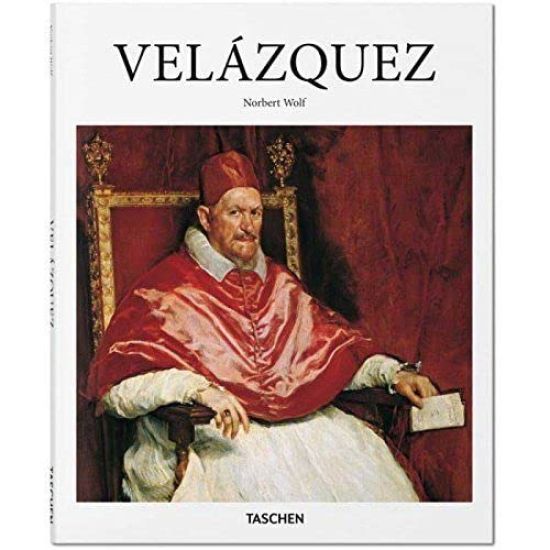
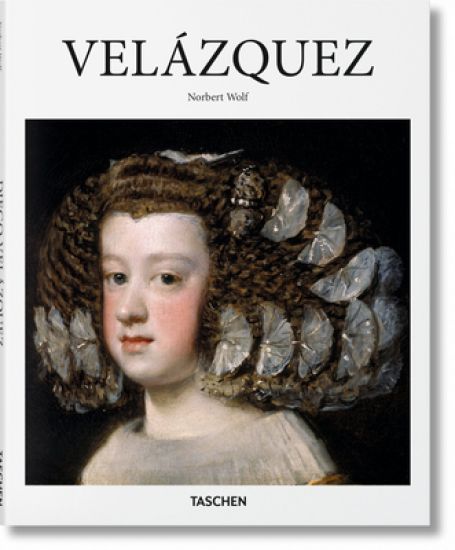
Court painter to King Philip IV of Spain, Diego Rodríguez de Silva y Velázquez (June 1599 – August 6, 1660) is not only a leading light of the Spanish Golden Age, but among the most celebrated masters in all Western art history. Monet and Renoir, Corot and Courbet, Degas and Dalí all hailed his influence. Picasso was so inspired by his masterpiece Las Meninas that he painted 44 variations of it. Velázquez’s importance is found particularly in his naturalist approach, in contrast to the more ubiquitous idealized manner of his age. Early works included numerous “bodegones”, genre scenes of everyday life in early 17th century Spain, in which warm, rich tones and textures set off the most ordinary of subjects and humble of faces, such as Old Woman Frying Eggs. Later, his portraiture for the Royal Court brought the same naturalism to the highest echelons of society, marking a profound shift in the depiction of royalty with softer, more relaxed poses that offered his subjects a human warmth and character as much as a sense of grandeur. Velázquez’s most famous work, Las Meninas, was also painted in the royal court, but in its enigmatic composition raises many broader questions about reality and illusion and the relationship between the painter, painting, and viewer. This fresh TASCHEN Basic Art 2.0 edition introduces Velázquez through key works from throughout his career. From humble genre scenes to the royal portraits, the exquisite Rokeby Venus nude, and the ever-mysterious Las Meninas, we explore his exceptional attention to composition, masterful handling of tone, and his remarkable influence as, in Manet’s words, “the greatest painter of all.”
Velázquez

Velázquez

Norbert Wolf

TASCHEN GMBH
2016
sidottu
Court painter to King Philip IV of Spain, Diego Rodríguez de Silva y Velázquez (June 1599 – August 6, 1660) is not only a leading light of the Spanish Golden Age, but among the most celebrated masters in all Western art history. Monet and Renoir, Corot and Courbet, Degas and Dalí all hailed his influence. Picasso was so inspired by his masterpiece Las Meninas that he painted 44 variations of it. Velázquez’s importance is found particularly in his naturalist approach, in contrast to the more ubiquitous idealized manner of his age. Early works included numerous “bodegones”, genre scenes of everyday life in early 17th century Spain, in which warm, rich tones and textures set off the most ordinary of subjects and humble of faces, such as Old Woman Frying Eggs. Later, his portraiture for the Royal Court brought the same naturalism to the highest echelons of society, marking a profound shift in the depiction of royalty with softer, more relaxed poses that offered his subjects a human warmth and character as much as a sense of grandeur. Velázquez’s most famous work, Las Meninas, was also painted in the royal court, but in its enigmatic composition raises many broader questions about reality and illusion and the relationship between the painter, painting, and viewer. This fresh TASCHEN Basic Art 2.0 edition introduces Velázquez through key works from throughout his career. From humble genre scenes to the royal portraits, the exquisite Rokeby Venus nude, and the ever-mysterious Las Meninas, we explore his exceptional attention to composition, masterful handling of tone, and his remarkable influence as, in Manet’s words, “the greatest painter of all.”
Velázquez

Velázquez

Norbert Wolf

TASCHEN GMBH
2016
sidottu
Court painter to King Philip IV of Spain, Diego Rodríguez de Silva y Velázquez (June 1599 – August 6, 1660) is not only a leading light of the Spanish Golden Age, but among the most celebrated masters in all Western art history. Monet and Renoir, Corot and Courbet, Degas and Dalí all hailed his influence. Picasso was so inspired by his masterpiece Las Meninas that he painted 44 variations of it. Velázquez’s importance is found particularly in his naturalist approach, in contrast to the more ubiquitous idealized manner of his age. Early works included numerous “bodegones”, genre scenes of everyday life in early 17th century Spain, in which warm, rich tones and textures set off the most ordinary of subjects and humble of faces, such as Old Woman Frying Eggs. Later, his portraiture for the Royal Court brought the same naturalism to the highest echelons of society, marking a profound shift in the depiction of royalty with softer, more relaxed poses that offered his subjects a human warmth and character as much as a sense of grandeur. Velázquez’s most famous work, Las Meninas, was also painted in the royal court, but in its enigmatic composition raises many broader questions about reality and illusion and the relationship between the painter, painting, and viewer. This fresh TASCHEN Basic Art 2.0 edition introduces Velázquez through key works from throughout his career. From humble genre scenes to the royal portraits, the exquisite Rokeby Venus nude, and the ever-mysterious Las Meninas, we explore his exceptional attention to composition, masterful handling of tone, and his remarkable influence as, in Manet’s words, “the greatest painter of all.”
Art Deco

Art Deco

Norbert Wolf

Prestel
2016
sidottu
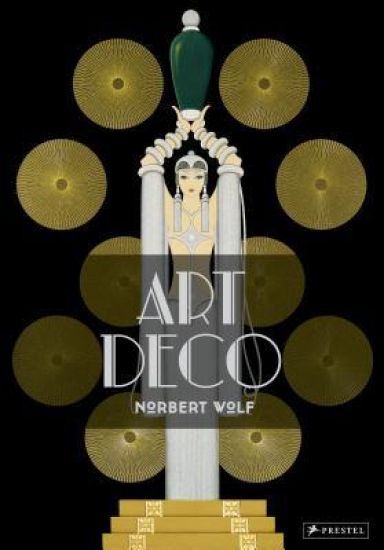
The Art Deco style is so recognisable and widespread that its original impact on the culture in which it emerged has been all but lost in the clutter of imitation. This book draws our attention back to the birth of Art Deco—a period between two devastating world wars when industrialisation was flourishing, interest in archaeology was peaking and movements such as Cubism, Constructivism, Futurism and Modernism were turning the art world on its head. Brilliantly designed to reflect the style it celebrates, Art Deco is filled with hundreds of examples of painting, architecture, interiors, jewelry, crafts, furniture and fashion. Author Norbert Wolf traces the chronology of the Art Deco style by looking at the politics and culture of Europe in the 1920s and early 30s and the artistic movements that paralleled its popularity. He follows Art Deco’s influence in Europe and its spread to the Americas and Asia. Most importantly, this wide-ranging volume looks beyond the era of Art Deco’s origination to the present day. Pointing to the numerous revivals and contemporary echoes in painting and even literature, this beautiful volume demonstrates the style’s lasting importance.
Expressionismus

Expressionismus

Norbert Wolf

TASCHEN GMBH
2015
sidottu
Through panoramas of mood, ideas, and emotions, Expressionism stands as one of the most reactionary and influential movements of the early twentieth century. This introduction assesses the groupâ??s stylistic tendencies, influences, and pursuit of authenticity.
Expressionism

Expressionism

Norbert Wolf

Taschen GmbH
2015
sidottu
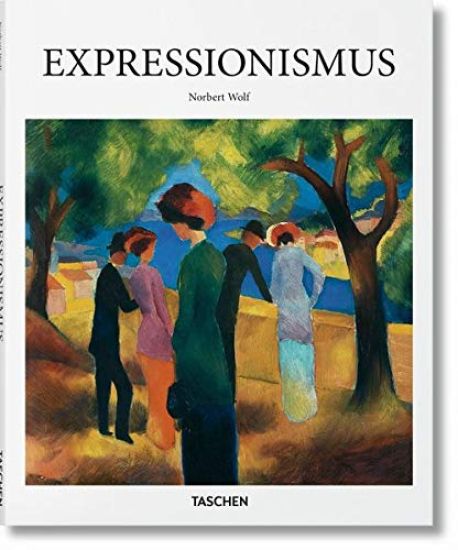
Sharp angles, strange forms, lurid colors, and distorted perspectives are classic hallmarks of Expressionism, the twentieth century movement that prioritized emotion over objective reality. Though particularly present in Germany and Austria, the movement’s approach flourished internationally and is today hailed as one of the most influential shifts in art history. With leading groups Die Brücke (The Bridge) and Der Blaue Reiter (The Blue Rider), and key players such as Wassily Kandinsky, Egon Schiele,and Emil Nolde, the Expressionists disowned Impressionism, which they regarded as “man lowered to the position of a gramophone record of the outer world”, to depict instead a raw and visceral experience of life as it was felt, rather than seen on the surface. Their paintings brim with emotive force, conveyed in particular through intense and non-naturalistic color palettes, loose brushwork, and thick textures. Covering the group’s stylistic tendencies, influences, and most important protagonists, this introductory book explores the Expressionist panorama of moods, ideas, and emotions and their abiding quest for deep authenticity.
Expressionnisme

Expressionnisme

Norbert Wolf

TASCHEN GMBH
2015
sidottu
Sharp angles, strange forms, lurid colors, and distorted perspectives are classic hallmarks of Expressionism, the twentieth century movement that prioritized emotion over objective reality. Though particularly present in Germany and Austria, the movement’s approach flourished internationally and is today hailed as one of the most influential shifts in art history. With leading groups Die Brücke (The Bridge) and Der Blaue Reiter (The Blue Rider), and key players such as Wassily Kandinsky, Egon Schiele,and Emil Nolde, the Expressionists disowned Impressionism, which they regarded as “man lowered to the position of a gramophone record of the outer world”, to depict instead a raw and visceral experience of life as it was felt, rather than seen on the surface. Their paintings brim with emotive force, conveyed in particular through intense and non-naturalistic color palettes, loose brushwork, and thick textures. Covering the group’s stylistic tendencies, influences, and most important protagonists, this introductory book explores the Expressionist panorama of moods, ideas, and emotions and their abiding quest for deep authenticity.
Impressionism

Impressionism

Norbert Wolf

Prestel
2015
sidottu
One of the art world's most recognisable and popular styles, Impressionism is also one of the most complex. In this sumptuous overview Norbert Wolf lends his attention to all aspects of Impressionism: its historical precursors, contemporary rivals and the movements it inspired. Over 200 large format reproductions of entire works and highlighted details introduce readers to the Impressionists' aesthetics and techniques. Wolf draws insightful parallels between these paintings and other contemporary works of music, photography, and literature. Tracing the movement's expansion from France to the rest of Europe and North America, this volume shines a spotlight on the main protagonists not only highlighting the French pioneers--Claude Monet, Gustave Caillebotte, Edouard Manet, Pierre-Auguste Renoir, Camille Pissarro, and others--but also Max Liebermann, Lovis Corinth, John Singer Sargent, Mary Cassatt, William Merritt Chase, and James McNeill Whistler, to name a few. As luxurious as it is authoritative, this wide-ranging investigation of a momentous period in art history reveals works and ideas that will surprise even the most seasoned aficionado.