Kirjojen hintavertailu. Mukana 12 591 528 kirjaa ja 12 kauppaa.

Kirjailija

Norma J. Longo

Kirjat ja teokset yhdessä paikassa: 8 kirjaa, julkaisuja vuosilta 2001-2024, suosituimpien joukossa Vanishing Sands. Vertaile teosten hintoja ja tarkista saatavuus suomalaisista kirjakaupoista.

8 kirjaa

Kirjojen julkaisuhaarukka 2001-2024.

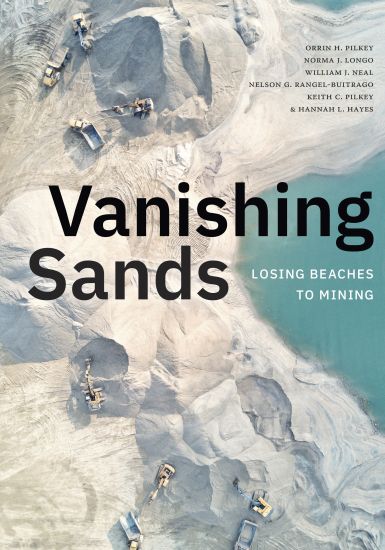
Vanishing Sands

Vanishing Sands

Orrin H. Pilkey; Norma J. Longo; William J. Neal; Nelson G. Rangel-Buitrago; Keith C. Pilkey; Hannah L. Hayes

DUKE UNIVERSITY PRESS
2023
sidottu
In a time of accelerating sea level rise and increasingly intensifying storms, the world’s sandy beaches and dunes have never been more crucial to protecting coastal environments. Yet, in order to meet the demands of large-scale construction projects, sand mining is stripping beaches and dunes, destroying environments, and exploiting labor in the process. The authors of Vanishing Sands track the devastating impact of legal and illegal sand mining over the past twenty years, ranging from Africa, Asia, and the Caribbean to South America and the eastern United States. They show how sand mining has reached crisis levels: beach, dune, and river ecosystems are in danger of being lost forever, while organized crime groups use deadly force to protect their illegal mining operations. Calling for immediate and widespread resistance to sand mining, the authors demonstrate that its cessation is paramount for saving not only beaches, dunes, and associated environments but also lives and tourism economies everywhere.
Escaping Nature

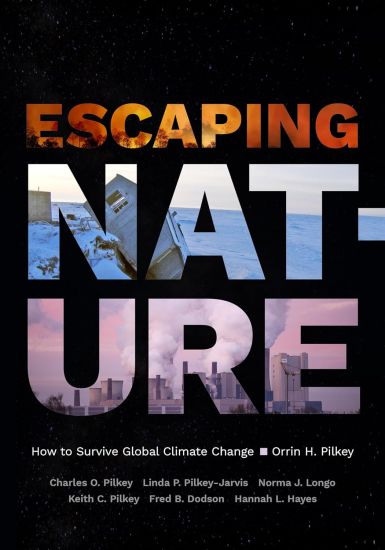
Escaping Nature

Orrin H. Pilkey; Charles O. Pilkey; Linda P. Pilkey-Jarvis; Norma J. Longo; Keith C. Pilkey; Fred B. Dodson; Hannah L. Hayes

DUKE UNIVERSITY PRESS
2024
pokkari
Industrial and agricultural greenhouse gas emissions are rapidly warming Earth’s climate, unleashing rising seas, ocean acidification, melting permafrost, powerful storms, wildfires, floods, deadly heat waves, droughts, tsunamis, food shortages, and armed conflict over shrinking water supplies while reducing nutritional levels in crops. Billions of people will become climate refugees. Hotter temperatures will allow tropical diseases to spread into temperate regions. Higher levels of CO2, allergens, dust, and other particulate matter will impair our physical and mental health and even reduce our cognitive abilities. Climate change disproportionately affects the world’s poor. It also harms Nature, and could ultimately trigger a sixth mass extinction. In Escaping Nature, Orrin H. Pilkey and his coauthors offer concrete suggestions for how to respond to the threats posed by global climate change. They argue that while we wait for the world’s governments to get serious about mitigating climate change we can adapt to a hotter world through technological innovations, behavioral changes, nature-based solutions, political changes, and education.
Escaping Nature

Escaping Nature

Orrin H. Pilkey; Charles O. Pilkey; Linda P. Pilkey-Jarvis; Norma J. Longo; Keith C. Pilkey; Fred B. Dodson; Hannah L. Hayes

DUKE UNIVERSITY PRESS
2024
sidottu
Industrial and agricultural greenhouse gas emissions are rapidly warming Earth’s climate, unleashing rising seas, ocean acidification, melting permafrost, powerful storms, wildfires, floods, deadly heat waves, droughts, tsunamis, food shortages, and armed conflict over shrinking water supplies while reducing nutritional levels in crops. Billions of people will become climate refugees. Hotter temperatures will allow tropical diseases to spread into temperate regions. Higher levels of CO2, allergens, dust, and other particulate matter will impair our physical and mental health and even reduce our cognitive abilities. Climate change disproportionately affects the world’s poor. It also harms Nature, and could ultimately trigger a sixth mass extinction. In Escaping Nature, Orrin H. Pilkey and his coauthors offer concrete suggestions for how to respond to the threats posed by global climate change. They argue that while we wait for the world’s governments to get serious about mitigating climate change we can adapt to a hotter world through technological innovations, behavioral changes, nature-based solutions, political changes, and education.
Vanishing Sands

Vanishing Sands

Orrin H. Pilkey; Norma J. Longo; William J. Neal; Nelson G. Rangel-Buitrago; Keith C. Pilkey; Hannah L. Hayes

DUKE UNIVERSITY PRESS
2023
pokkari
In a time of accelerating sea level rise and increasingly intensifying storms, the world’s sandy beaches and dunes have never been more crucial to protecting coastal environments. Yet, in order to meet the demands of large-scale construction projects, sand mining is stripping beaches and dunes, destroying environments, and exploiting labor in the process. The authors of Vanishing Sands track the devastating impact of legal and illegal sand mining over the past twenty years, ranging from Africa, Asia, and the Caribbean to South America and the eastern United States. They show how sand mining has reached crisis levels: beach, dune, and river ecosystems are in danger of being lost forever, while organized crime groups use deadly force to protect their illegal mining operations. Calling for immediate and widespread resistance to sand mining, the authors demonstrate that its cessation is paramount for saving not only beaches, dunes, and associated environments but also lives and tourism economies everywhere.
Living with Florida's Atlantic Beaches

Living with Florida's Atlantic Beaches

David M. Bush; William J. Neal; Norma J. Longo; Kenyon C. Lindeman; Deborah F. Pilkey; Luciana S. Esteves; John D. Congleton; Orrin H. Pilkey

Duke University Press
2004
sidottu
From Amelia Island just south of Georgia to Key West's southern tip, beaches are one of Florida's greatest assets. Yet these beaches are in danger: rapid structural development on a highly erodible coast make them vulnerable to some of nature's greatest storms. The same development that has been driven by the attraction of beautiful beaches and coastal amenities now threatens those very resources. In turn, coastal structures are at risk from sea-level rise, shoreline retreat, winter storms, and hurricanes. Most of the methods for reducing losses associated with storms protect property only in the short term-at a growing cost in dollars and loss of natural habitat in the long term.Living with Florida's Atlantic Beaches is a guide to mitigating or reducing losses of property, human life, and natural resources by living with, rather than just at, the shore. This illustrated volume provides an introduction to coastal processes and geology as well as a brief history of coastal hazards and short-sighted human responses. This is the first volume in the Living with the Shore series to discuss the significant long-term impact of dredge-and-fill beach construction on living marine resources. Guidance is provided for long-term risk reduction in the form of tips on storm-resistant construction and site evaluation; maps for evaluating relative vulnerability to hazards are also included. A brief review of coastal regulations will help property owners understand and navigate the various permit requirements for developing coastal property. Living with Florida's Atlantic Beaches is an invaluable source of information for everyone from the curious beach visitor to the community planner, from the prudent property investor to the decision-making public official.
Living with Florida's Atlantic Beaches

Living with Florida's Atlantic Beaches

David M. Bush; William J. Neal; Norma J. Longo; Kenyon C. Lindeman; Deborah F. Pilkey; Luciana S. Esteves; John D. Congleton; Orrin H. Pilkey

Duke University Press
2004
pokkari
From Amelia Island just south of Georgia to Key West's southern tip, beaches are one of Florida's greatest assets. Yet these beaches are in danger: rapid structural development on a highly erodible coast make them vulnerable to some of nature's greatest storms. The same development that has been driven by the attraction of beautiful beaches and coastal amenities now threatens those very resources. In turn, coastal structures are at risk from sea-level rise, shoreline retreat, winter storms, and hurricanes. Most of the methods for reducing losses associated with storms protect property only in the short term-at a growing cost in dollars and loss of natural habitat in the long term.Living with Florida's Atlantic Beaches is a guide to mitigating or reducing losses of property, human life, and natural resources by living with, rather than just at, the shore. This illustrated volume provides an introduction to coastal processes and geology as well as a brief history of coastal hazards and short-sighted human responses. This is the first volume in the Living with the Shore series to discuss the significant long-term impact of dredge-and-fill beach construction on living marine resources. Guidance is provided for long-term risk reduction in the form of tips on storm-resistant construction and site evaluation; maps for evaluating relative vulnerability to hazards are also included. A brief review of coastal regulations will help property owners understand and navigate the various permit requirements for developing coastal property. Living with Florida's Atlantic Beaches is an invaluable source of information for everyone from the curious beach visitor to the community planner, from the prudent property investor to the decision-making public official.
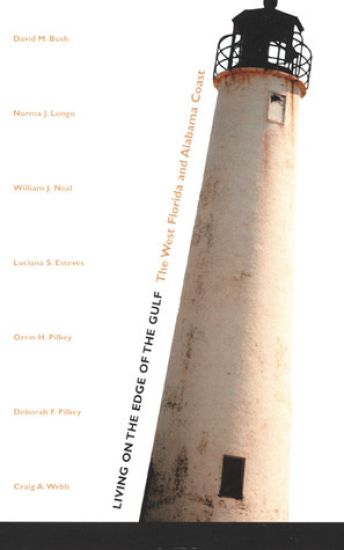
Living on the Edge of the Gulf

Living on the Edge of the Gulf

David M. Bush; Norma J. Longo; William J. Neal; Luciana S. Esteves; Orrin H. Pilkey; Deborah F. Pilkey; Craig A. Webb

Duke University Press
2001
sidottu
The Gulf coast of Florida and Alabama is a fragile combination of barrier islands, low-lying marshes, and highly erodable mainland shores. In addition to sea-level rise, winter storms, and altered sediment supplies, hurricanes frequently damage or destroy the human developments and infrastructures that line this coast. Indeed, a single storm can cause billions of dollars in losses. Memories of such hurricanes as Camille, Frederic, Opal, and Andrew cause great concern for residents and property owners alike; events of equal magnitude are always just beyond the horizon and the uninformed have much to lose.The authors of Living on the Edge of the Gulf seek to counteract potential loss by providing an illustrated introduction to coastal processes, a history of hazards for the region, and risk-reduction guidance in the form of site evaluations, community mitigation techniques, and storm-resistant construction practices. Risk maps that focus on individual coastal beaches are designed to assist property owners, community planners, and officials in prudent decision making, while a review of coastal regulations helps owners to understand and navigate various permit requirements.This latest book in the Living with the Shore series replaces the earlier guide Living with the West Florida Shore and supplements the Alabama portion of Living with the Alabama/Mississippi Shore.
Living on the Edge of the Gulf

Living on the Edge of the Gulf

David M. Bush; Norma J. Longo; William J. Neal; Luciana S. Esteves; Orrin H. Pilkey; Deborah F. Pilkey; Craig A. Webb

Duke University Press
2001
pokkari
The Gulf coast of Florida and Alabama is a fragile combination of barrier islands, low-lying marshes, and highly erodable mainland shores. In addition to sea-level rise, winter storms, and altered sediment supplies, hurricanes frequently damage or destroy the human developments and infrastructures that line this coast. Indeed, a single storm can cause billions of dollars in losses. Memories of such hurricanes as Camille, Frederic, Opal, and Andrew cause great concern for residents and property owners alike; events of equal magnitude are always just beyond the horizon and the uninformed have much to lose.The authors of Living on the Edge of the Gulf seek to counteract potential loss by providing an illustrated introduction to coastal processes, a history of hazards for the region, and risk-reduction guidance in the form of site evaluations, community mitigation techniques, and storm-resistant construction practices. Risk maps that focus on individual coastal beaches are designed to assist property owners, community planners, and officials in prudent decision making, while a review of coastal regulations helps owners to understand and navigate various permit requirements.This latest book in the Living with the Shore series replaces the earlier guide Living with the West Florida Shore and supplements the Alabama portion of Living with the Alabama/Mississippi Shore.