Kirjailija
Norma M. Riccucci
Kirjat ja teokset yhdessä paikassa: 18 kirjaa, julkaisuja vuosilta 1995-2026, suosituimpien joukossa Unsung Heroes. Vertaile teosten hintoja ja tarkista saatavuus suomalaisista kirjakaupoista.
Mukana myös kirjoitusasut: Norma M Riccucci
18 kirjaa
Kirjojen julkaisuhaarukka 1995-2026.
This book explores an important side of public employment that most Americans never get the opportunity to see - high-level career executives who make positive contributions to our quality of life. Norma M. Riccucci profiles six "unsung heroes", the people behind the scenes of some of the most successful programs in American government, and identifies the tools, skills, and strategies that make them effective leaders. Through in-depth interviews and provocative story-telling, Riccucci demonstrates that while these executive-level bureaucrats - or "execucrats" - may have an overall negative public image, they create, develop, execute, and enforce a number of programs and public policies that change our country for the better. She highlights six of these modern execucrats who best exemplify the creativity, determination, and leadership found in such officials: William Black, Senior Deputy Chief Counsel, Office of Thrift Supervision, who attacked the rampant corruption and mismanagement that created the savings and loan crisis; Eileen Claussen, Director, Atmospheric and Indoor Air Programs, U.S. Environmental Protection Agency, who negotiated as intensely within her own government as with other countries to create an international plan to protect the earth's ozone layer; and, Ambassador Edward Perkins, U.S. State Department, the first African-American Ambassador to South Africa and the first American ambassador to meet with black South African leaders as part of his persistent efforts to end apartheid in that country. This title highlights: Stephen Marica, Assistant Inspector General, Small Business Administration, who investigated the Wedtech scandal, which bilked millions of dollars in fraudulent defense contracts from American taxpayers; Dr. Vince Hutchins, Director, Division of Maternal and Child Health, U.S. Department of Health and Human Services, who spearheaded the team that developed "Healthy Mothers, Healthy Babies Coalition", a public-private partnership that improved, and even saved, the lives of thousands of newborn babies; and, Dr. Helene Gayle, Division Chief, HIV-AIDS Division, U.S. Centers for Disease Control, who is actively battling the AIDS virus through education and prevention programs around the world. Riccucci not only relates the intriguing tales of these six dedicated officials who overcame the challenges before them, but she also analyzes the specific factors - from knowledge of the system to honesty, integrity, and humor - that are needed to become a dynamic government executive. Of interest to those both inside and outside government circles, "Unsung Heroes" gives captivating insights into effective executive leadership.

Despite more recent attacks on diversity, equity, and inclusion at all levels of the U.S. government, public sector workforces remain diverse, leaving public organizations and the field that studies them, public administration, to seek ways to maintain a dedication to social equity, while moving away polarizing terminology. Managing Diversity in Public Sector Workforces, Third Edition provides practitioners and students preparing to enter the public sector workplace with an understanding of the important role of diversity in government organizations, as well as up-to-date, practical tools and strategies for managing employees well. The book illustrates the challenges and best practices of managing a diverse workforce in the public sector, particularly the efforts of the Trump Administration to prohibit the use of diversity, equity, and inclusion (DEI) programs. Using jargon-free, descriptive language, the book raises awareness, understanding, and appreciation for one of the most critical human resources management functions. New to this third edition: Exploration of the continued importance to DEI programs, and their implications for the promotion of democratic goals. Analysis of the Trump Administration’s retraction of commitment to DEI in the federal government, and a parallel examination of diversity efforts at the state and local levels of government. Assessment of the 2023 U.S. Supreme Court ruling in Students for Fair Admissions v. Harvard and UNC, and the implications of this ruling for government employers. Evaluation of demographic shifts in the nation’s labor workforces and the unfulfilled promises of preparing the workforce for change. Managing Diversity in Public Sector Workforces, Third Edition will be of interest to students of public administration and public personnel management, and it is essential reading for all those involved in managing public organizations.
This updated classic on public administration highlights advances in the field Since the publication of the first edition of Public Administration in 2010, this field has seen numerous advances in and augmentations to its logic of inquiry. While the foundational concepts examined in the book's first edition remain unchanged, Norma Riccucci has updated the book by adding a new preface and a substantive postscript discussing evolutions in the field over the last fifteen years. Public Administration examines the intellectual origins and identity of the discipline, the debates surrounding its diverse research traditions, and how public administration research is conducted today. The book intends to engage scholars, graduate students, and professionals in a dialogue about heterogeneity in epistemic traditions, and to deepen the field's understanding and acceptance of its epistemological scope. This updated edition also addresses recent research, highlighting an expanding array of innovative practices, ontologies, epistemological perspectives, methods, and issues of race, gender, and ethnicity in public administration. The original edition of the book was the winner of the best book award from the American Society for Public Administration's Section on Public Administration Research. This updated classic provides a concise overview of the discipline for graduate students and scholars. Public Management and Change Series
This Element explores Critical Race Theory (CRT) and its potential application to the field of public administration. It proposes specific areas within the field where a CRT framework would help to uncover and rectify structural and institutional racism. This is paramount given the high priority that the field places on social equity, the third pillar of public administration. If there is a desire to achieve social equity and justice, systematic, structural racism needs to be addressed and confronted directly. The Black Lives Matter (BLM) movement is one example of the urgency and significance of applying theories from a variety of disciplines to the study of racism in public administration.
Public and private sector workforces in the U.S. look very different today than they did even 25 years ago. The changes are having a significant effect on how organizations manage their workforces. The old styles of managing heterogeneous workforces are proving to be ineffectual, and so management strategies aimed at embracing diversity and inclusion are essential. These strategies can have positive implications for worker satisfaction, morale and – ultimately – the delivery of public services to the American people.Managing Diversity in Public Sector Workforces, Second Edition examines demographic changes to the U.S. labor force and workplace and the ways in which government employers are managing the diverse populations that now fill public sector jobs. Addressing specific management strategies and initiatives relied on by public sector employers, as well as the implications of effectively managing variegated workforces for the overall governance of American society, this book demonstrates the importance of ensuring that programs to promote inclusiveness and diversity that appear on paper are carried through to practice through implementation. The book begins with a review of equal employment opportunity and affirmative action and the extent to which EEO and AA are still relied upon in the workplace. It then examines law and other public policy issues surrounding EEO, AA and diversity management. The remainder of the book focuses on the core of managing diversity in the public sector, exploring the initiatives, strategies, and programs that government employers either do or might rely on to ensure that the demographic mosaic embodied by their workforces is prepared to meet the needs and interests of the American citizenry of the 21st century. Data are provided on the demographics of the federal, state and local government workforces. Separate chapters address each of the following aspects of diversity: race, ethnicity, gender, LGBTQ employment, physical ability, and the intersection of these constructs. Managing Diversity in Public Sector Workforces, Second Edition will be of interest to students of public administration and public personnel management, and it is essential reading for all those involved in managing public organizations.
Personnel Management in Government
Norma M. Riccucci; Katherine C. Naff; Madinah F. Hamidullah
Routledge
2019
sidottu
With over 20 million people on its payroll, the government is the largest employer in the country. Managing people who do the nation’s work is of critical importance to politicians, government leaders, and citizens alike. Personnel Management in Government: Politics and Process, eighth edition, examines the progress and innovations that public personnel professionals are making to address changes in the political, legal, and managerial environment of government. It provides students with a comprehensive understanding of human resource management within its historical and political context in the public sector.A number of new developments are addressed in the eighth edition, including discussion of: Human resource management in nonprofit organizations in an all-new, dedicated chapter Current and future challenges to recruitment and hiring, including the use of social media in recruitment Privatization and contracting out The rise of employment "at will" policies Digital technology or "digitalization" in HRM and the need to enhance cybersecurity Managing performance with human capital analytics Increased reliance on telework States’ attacks on public sector labor unions HRM changes under the Trump administrationSince publication of the first edition in 1977, Personnel Management in Government has addressed issues not yet considered mainstream, but that have proven central to the development of the field over time. This long-standing but no less innovative textbook is required reading for all students of public, government, and non-profit personnel management.
The role of formal and informal institutional forces in changing three areas of U.S. public policy: privacy rights, civil rights and climate policy There is no finality to the public policy process. Although it's often assumed that once a law is enacted it is implemented faithfully, even policies believed to be stable can change or drift in unexpected directions. The Fourth Amendment, for example, guarantees Americans' privacy rights, but the 9/11 terrorist attacks set off one of the worst cases of government-sponsored espionage. Policy changes instituted by the National Security Agency led to widespread warrantless surveillance, a drift in public policy that led to lawsuits challenging the constitutionality of wiretapping the American people. Much of the research in recent decades ignores the impact of large-scale, slow-moving, secular forces in political, social, and economic environments on public policy. In Policy Drift, Norma Riccucci sheds light on how institutional forces collectively contributed to major change in three key areas of U.S. policy (privacy rights, civil rights, and climate policy) without any new policy explicitly being written. Formal levers of change—U.S. Supreme Court decisions; inaction by Congress; Presidential executive orders—stimulated by social, political or economic forces, organized permutations which ultimately shaped and defined contemporary public policy. Invariably, implementations of new policies are embedded within a political landscape. Political actors, motivated by social and economic factors, may explicitly employ strategies to shift the direction of existing public polices or derail them altogether. Some segments of the population will benefit from this process, while others will not; thus, "policy drifts" carry significant consequences for social and economic change. A comprehensive account of inadvertent changes to privacy rights, civil rights, and climate policy, Policy Drift demonstrates how unanticipated levers of change can modify the status quo in public policy.
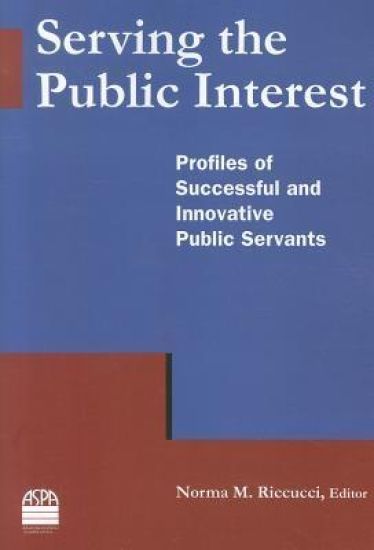
This reader presents a balanced collection of 16 administrative profiles of high-level government and nonprofit officials for course use. The profiles were originally published as part of a series for Public Administration Review. The profiles themselves cover a wide range of public service professionals at the local, state, and federal levels, and are written by a distinguished cast of authors. A concluding chapter by Riccucci pulls together and synthesizes the various themes of the profiles.
Is public administration an art or a science? This question of whether the field is driven by values or facts will never be definitively answered due to a lack of consensus among scholars. The resulting divide has produced many heated debates; however, in this pioneering volume, Norma Riccucci embraces the diversity of research methods rather than suggesting that there is one best way to conduct research in public administration. "Public Administration" examines the intellectual origins and identity of the discipline of public administration, its diverse research traditions, and how public administration research is conducted today. The book's intended purpose is to engage reasonable-minded public administration scholars and professionals in a dialogue on the importance of heterogeneity in epistemic traditions, and to deepen the field's understanding and acceptance of its epistemological scope. This important book will provide a necessary overview of the discipline for graduate students and scholars.
The readings in this volume will enlighten and enliven the contents of any standard public administration text covering human resource management. Selected mainly from the pages of Public Administration Review and Review of Public Personnel Administration, these classic articles trace the historical and evolutionary development of the fields of public personnel administration and labor relations from the point at which the first civil service law was passed - the Pendelton Act in 1883 - through the 21st century. The collection covers everything from the seminal concerns of civil service (e.g., keeping spoils out) to topics that early reformers would never have envisioned (e.g., affirmative action and drug testing). These works continue to inform the theory and practice of public personnel and labor relations. To facilitate an instructor's ability to assign readings that illuminate lectures and course material, a correlation matrix on the M.E. Sharpe website shows how this book can be used easily alongside eight leading textbooks.
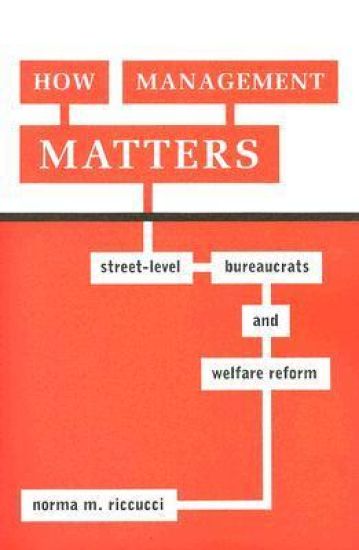
Both "bureaucracy" and "bureaucrats" have taken on a pejorative hue over the years, but does the problem lie with those on the "street-level" - those organizations and people the public deals with directly - or is it in how they are managed? Norma Riccucci knows that management matters, and she addresses a critical gap in the understanding of public policy by uniquely focusing on the effects of public management on street-level bureaucrats. How Management Matters examines not only how but where public management matters in government organizations. Looking at the 1996 welfare reform law (the Personal Responsibility and Work Opportunity Reconciliation Act, or PRWORA), Riccucci examines the law's effectiveness in changing the work functions and behaviors of street-level welfare workers from the role of simply determining eligibility of clients to actually helping their clients find work. She investigates the significant role of these workers in the implementation of welfare reform, the role of public management in changing the system of welfare under the reform law, and management's impact on results - in this case ensuring the delivery of welfare benefits and services to eligible clients. Over a period of two years, Riccucci traveled specifically to eleven different cities and, from interviews and a large national survey, she gathered quantitative results from cities in such states as New York, Texas, Michigan, and Georgia, that were selected because of their range of policies, administrative structures, and political cultures. General welfare data for all fifty states is included in this rigorous analysis, demonstrating to all with an interest in any field of public administration or public policy that management does indeed matter.