Kirjojen hintavertailu. Mukana 12 137 444 kirjaa ja 12 kauppaa.

Kirjailija

Norman A. Graebner

Kirjat ja teokset yhdessä paikassa: 11 kirjaa, julkaisuja vuosilta 1985-2014, suosituimpien joukossa Reagan, Bush, Gorbachev. Vertaile teosten hintoja ja tarkista saatavuus suomalaisista kirjakaupoista.

11 kirjaa

Kirjojen julkaisuhaarukka 1985-2014.

Reagan, Bush, Gorbachev

Reagan, Bush, Gorbachev

Norman A. Graebner; Richard Dean Burns; Joseph M. Siracusa

Praeger Publishers Inc
2008
sidottu
This work is a contemporary chronicle of the Cold War and offers an analysis of policy and rhetoric of the United States and Soviet Union during the 1980s. The authors examine the assumptions that drove political decisions and the rhetoric that defined the relationship as the Soviet Union began to implode. This work demonstrates that while the subsequent unraveling of the Soviet empire was an unintended side effect of Mikhail Gorbachev's reforms, termination of the Cold War was not. Ronald Reagan deserves full credit for recognizing Gorbachev's sincerity and his determination to change the direction of Soviet policies. For this, Reagan felt the full wrath of anticommunist hawks for doing business with a communist leader. But it was Gorbachev who concluded the superpowers had become mesmerized by ideological myths which ruled out any meaningful discussions of a possible accommodation of political issues for more than four decades. The evidence is compelling that Gorbachev himself broke the Cold War's ideological straight jacket that had paralyzed Moscow and Washington's ability to resolve their differences. Though politically weakened, Gorbachev conceded nothing to U.S. military superiority. Never did he negotiate from a position of weakness. In doing so, the last Soviet leader faced even greater political and physical risk. Without Gorbachev the end of the Cold War could have played out very differently and perhaps with great danger.
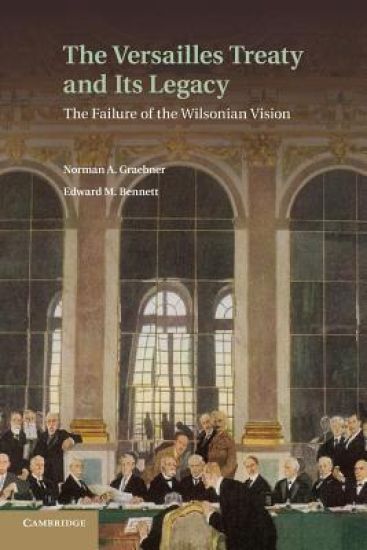
The Versailles Treaty and its Legacy

The Versailles Treaty and its Legacy

Norman A. Graebner; Edward M. Bennett

Cambridge University Press
2014
pokkari
This study, a realist interpretation of the long diplomatic record that produced the coming of World War II in 1939, is a critique of the Paris Peace Conference and reflects the judgment shared by many who left the Conference in 1919 in disgust amid predictions of future war. The critique is a rejection of the idea of collective security, which Woodrow Wilson and many others believed was a panacea, but which was also condemned as early as 1915. This book delivers a powerful lesson in treaty-making and rejects the supposition that treaties, once made, are unchangeable, whatever their faults.
Cold War Diplomacy: American Foreign Policy, 1945-1960

Cold War Diplomacy: American Foreign Policy, 1945-1960

Norman A. Graebner; Louis L. Snyder

Literary Licensing, LLC
2012
sidottu
Cold War Diplomacy: American Foreign Policy, 1945-1960 is a comprehensive historical account of the United States' foreign policy during the early years of the Cold War. Written by Norman A. Graebner, a renowned American historian, this book examines the key events and decisions that shaped American foreign policy during the period from the end of World War II to the beginning of the 1960s.The book covers a wide range of topics, including the Truman Doctrine, the Marshall Plan, the Korean War, and the Cuban Missile Crisis. It explores the complex relationships between the United States and its allies, as well as its adversaries, such as the Soviet Union and China. Graebner provides a detailed analysis of the political, economic, and military factors that influenced American foreign policy during this critical period in world history.Drawing on a wealth of primary sources, including government documents, diplomatic cables, and personal correspondence, Cold War Diplomacy offers a nuanced and insightful perspective on the challenges and opportunities faced by American policymakers during the early years of the Cold War. It is an essential read for anyone interested in the history of American foreign policy, international relations, and the Cold War.This scarce antiquarian book is a facsimile reprint of the old original and may contain some imperfections such as library marks and notations. Because we believe this work is culturally important, we have made it available as part of our commitment for protecting, preserving, and promoting the world's literature in affordable, high quality, modern editions, that are true to their original work.
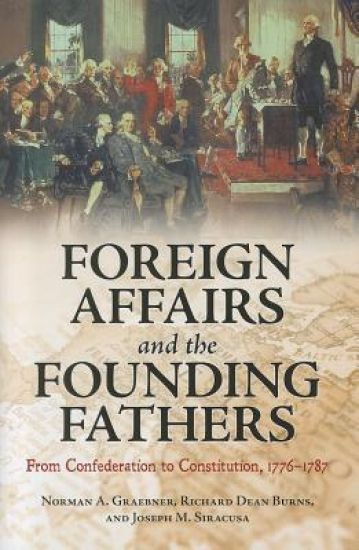
Foreign Affairs and the Founding Fathers

Foreign Affairs and the Founding Fathers

Norman A. Graebner; Richard Dean Burns; Joseph M. Siracusa

Praeger Publishers Inc
2011
sidottu
This concise diplomatic history of the Confederation era is the first new work on the topic in a generation. In its pages, three distinguished diplomatic historians offer a realist interpretation of the way in which the Founding Fathers conducted foreign affairs, refreshing our collective memory about their priorities and their values.When three of the nation's leading historians come together to fashion a fresh study of American history, the resulting work cannot help but be a monumental addition to the field. Foreign Affairs and the Founding Fathers: From Confederation to Constitution, 1776–1787 is such a work. These eminent scholars provide a thoughtful, realist interpretation of the Founders' view of America's place in the world, delivering a timely reassessment of their aspirations, thoughts, and actions during the seminal decades of the American nation.This book takes readers backstage where they can eavesdrop on the Founders to better understand their motives and intentions and see how they responded to threats and problems associated with America's place in the world. Arguing that the Founding Fathers essentially thought and acted in terms of power—ranking matters of national interest and security over ideology and moral concerns—the book sheds new light on the foreign policy opportunities and challenges of the day, as the Founders weighed and determined them. In so doing, it offers important guideposts for our own time.
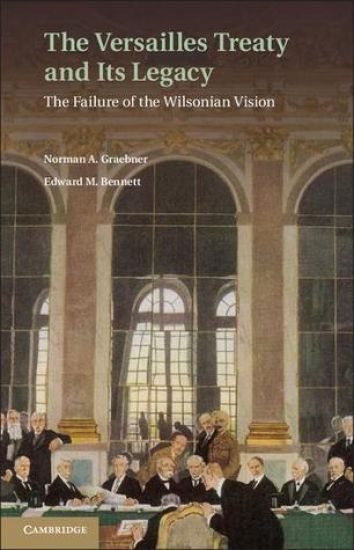
The Versailles Treaty and its Legacy

The Versailles Treaty and its Legacy

Norman A. Graebner; Edward M. Bennett

Cambridge University Press
2011
sidottu
This study, a realist interpretation of the long diplomatic record that produced the coming of World War II in 1939, is a critique of the Paris Peace Conference and reflects the judgment shared by many who left the Conference in 1919 in disgust amid predictions of future war. The critique is a rejection of the idea of collective security, which Woodrow Wilson and many others believed was a panacea, but which was also condemned as early as 1915. This book delivers a powerful lesson in treaty-making and rejects the supposition that treaties, once made, are unchangeable, whatever their faults.
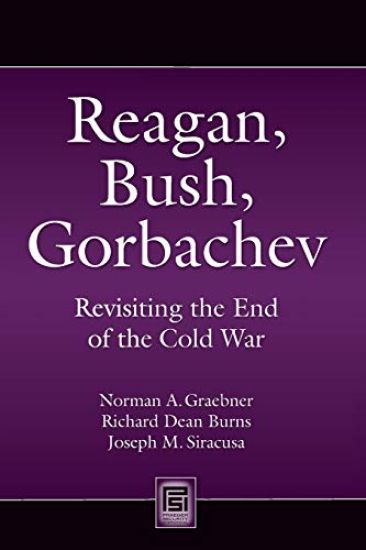
Reagan, Bush, Gorbachev

Reagan, Bush, Gorbachev

Norman A. Graebner; Richard Dean Burns; Joseph M. Siracusa

Praeger Publishers Inc
2008
nidottu
This work is a contemporary chronicle of the Cold War and offers an analysis of policy and rhetoric of the United States and Soviet Union during the 1980s. The authors examine the assumptions that drove political decisions and the rhetoric that defined the relationship as the Soviet Union began to implode. This work demonstrates that while the subsequent unraveling of the Soviet empire was an unintended side effect of Mikhail Gorbachev's reforms, termination of the Cold War was not. Ronald Reagan deserves full credit for recognizing Gorbachev's sincerity and his determination to change the direction of Soviet policies. For this, Reagan felt the full wrath of anticommunist hawks for doing business with a communist leader. But it was Gorbachev who concluded the superpowers had become mesmerized by ideological myths which ruled out any meaningful discussions of a possible accommodation of political issues for more than four decades. The evidence is compelling that Gorbachev himself broke the Cold War's ideological straight jacket that had paralyzed Moscow and Washington's ability to resolve their differences. Though politically weakened, Gorbachev conceded nothing to U.S. military superiority. Never did he negotiate from a position of weakness. In doing so, the last Soviet leader faced even greater political and physical risk. Without Gorbachev the end of the Cold War could have played out very differently and perhaps with great danger.
Traditions and Values

Traditions and Values

Norman A. Graebner

University Press of America
1985
nidottu
As the first of a trilogy of works on American diplomacy, this volume studies the task of diplomacy in achieving communication and dialogue among nations of widely divergent cultures and values.