
Kirjailija
Norman Fischer
Kirjat ja teokset yhdessä paikassa: 19 kirjaa, julkaisuja vuosilta 1979-2025, suosituimpien joukossa Slowly But Dearly. Vertaile teosten hintoja ja tarkista saatavuus suomalaisista kirjakaupoista.
19 kirjaa
Kirjojen julkaisuhaarukka 1979-2025.
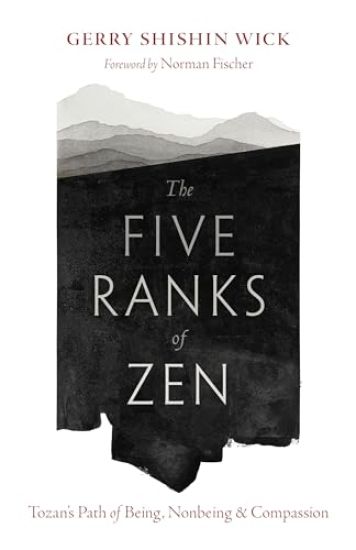
A comprehensive and accessible guide to the Five Ranks, the pinnacle teaching of Zen Buddhism pointing to the path to true freedom. The great Japanese Zen master Hakuin exclaimed, "How priceless is the merit gained through the step-by-step practice of the Five Ranks of Master Tozan " Hakuin here refers to a teaching created by the Chinese Buddhist master Dongshan, known in Japanese as Zen Master Tozan, which is honored and studied in both Soto and Rinzai schools of Zen and is a gem of the classical Zen tradition. The ranks--pithy, provocative titles followed by Tozan's brief poetic commentaries--serve as guides to a radical exploration of the experience of relative and absolute reality, the interpenetrating "Two Truths" of Mahayana Buddhism. In The Five Ranks of Zen, American Zen teacher Shishin Wick offers an accessible entry point to each of the ranks, which Tozan created in two formulations: the first and better-known is the Five Ranks of the Relative and the Absolute; while the second set, called the Sequence of Merit, is an abbreviated form of the Ten Oxherding Pictures, a traditional formulation of the Zen spiritual journey. Wick presents multiple translations and offers commentary on the ranks' titles and on Tozan's renowned verses, as well as offering guidance on these teachings' application in contemporary life and Zen practice. He emphasizes that, to truly plumb the depths of Tozan's teachings, you must treat these teachings as Zen koans and make a thorough investigation using your entire body.

Try Selected Poems by Norman Fischer in small pieces, koanstyle or parablelength, yet before you know it, his questions on mind, existence, compassion branch voluminously by location and torque the decades. The books meet each other as movements, variations.

From beloved Zen teacher Norman Fischer, a collection of essays spanning a life of inquiry into Zen practice, relationship, social engagement, and spiritual creativity. Looking backwards at a life lived, walking forward into more life to live built on all that, trying not to be too much influenced by what's already been said and done, not to be held to a point of view or an identity previously expressed, trying to be surprised and undone and maybe even dismayed by what lies ahead.--Norman Fischer Norman Fischer is a Zen priest, poet, and translator whose writings, teachings, and commitment to interfaith dialogue have supported and inspired Buddhist, Jewish, and other spiritual practitioners for decades. When You Greet Me I Bow spans the entirety of Norman Fischer's career and is the first collection of his writings on Buddhist philosophy and practice. Broken into four sections--the joy and catastrophe of relationship; thinking, writing, and emptiness; cultural encounters; and social engagement--this book allows us to see the fascinating development of the mind and interests of a gifted writer and profoundly committed practitioner.
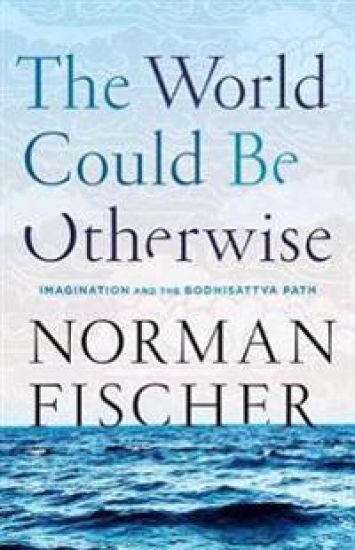
An imaginative approach to spiritual practice in difficult times, through the Buddhist teaching of the six paramitas or "perfections"--qualities that lead to kindness, wisdom, and an awakened life. The paramitas or "six perfections"--generosity, ethical conduct, patience, joyful effort, meditation, and understanding--are teachings that have been practiced in different Buddhist schools for millenia. In his warm and accessible style, Zen teacher Norman Fischer writes that these practices can become the focus for cultivating a profound and active use of imagination in our lives. With its balance of philosophical and practical resources, Fischer's interpretation of the paramitas can serve as a basis for practicing the bodhisattva path of living for the benefit of beings, without fixating on the difference between self and other. Fischer draws on his decades of experience as a poet, Buddhist teacher, and interfaith leader to weave together a fascinating range of references and topics--from the Romantic poetry of Coleridge to the provocative teachings of the thirteenth-century Zen master Dogen, and our everyday concerns about relationships, ethics, and consumption to our broadest spiritual yearnings. Depicting imaginative spiritual practice as a largely untapped resource for our troubled times, this book offers hope for Buddhists, practitioners of all religions, and anyone wanting to open their heart and mind to the transformative possibilities of the imagination.
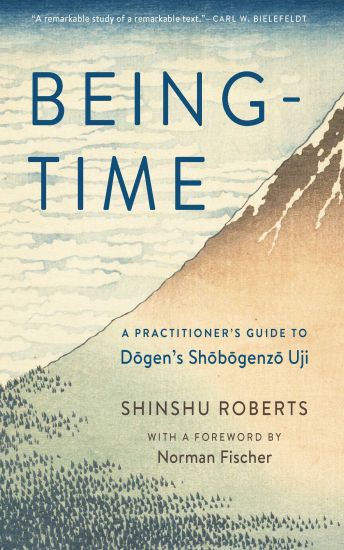
A tour-de-force guide to Zen Master Dogen's most subtle and sophisticated philosophical premises: that being and time are inseparable. "Impermanence is time itself, being itself--yet time and being are not at all as we imagine them to be. To really understand and fully embrace this point is to live in a radically different world--a world of awakening, inclusion, and love. Zen Master Dogen frames the teaching on impermanence explicitly as a teaching about time--and all of Dogen's profoundly poetic teachings flow from his seminal understanding of time, as expressed in Uji (Being-Time), the famous--and famously difficult--essay in his masterwork, Shobogenzo. In Uji, Dogen teaches that time itself, being itself, is luminous awakening. It is all-inclusive, all-elusive, ultimately healing, and eternal. In this book, Shinshu Roberts does full justice, as does no other book I know of, to Dogen's words. She offers interpretation of Uji only after careful consideration and marshaling of many sources--and offers simple everyday examples to illustrate points that seem at first abstruse. If this text causes you to doubt your most cherished concepts about your life, it will have done its work." --from the Foreword by Norman Fischer Being-Time thoroughly explores Dogen's teaching on how we practice as Buddhas by understanding the relationship between being and time as it is--and as we perceive it to be. Using Dogen's Shobogenzo Uji (The True Dharma Eye, Being-Time), Shinshu Roberts offers a twofold analysis of this teaching: the meaning of the text and practice with the text, giving examples how we apply Dogen's complex teaching to our daily lives.

" without love no quirks," writes Norman Fischer in the midst of any would be if. One might add: without quirks, no life, as in this book Fischer proceeds " by ellipsis," and suggests that living, noticing, even drinking tea, manifests in similar fashion. Indeed, " the teacup told us how to hold it," provides one of many delightful and slightly puzzling, or perhaps uncanny, moments in a book full of moments. Moments of thought, moments of action, moments of light, moments of language, moments through which " we pull ourselves into now." If one wants a book to show the world, not in its grandeur (or, maybe that, too) but in its process, in the betweenness we all inhabit, then this is the book one wants. I know I am glad to have it, and to return to it, often, " to be." Charles Alexander
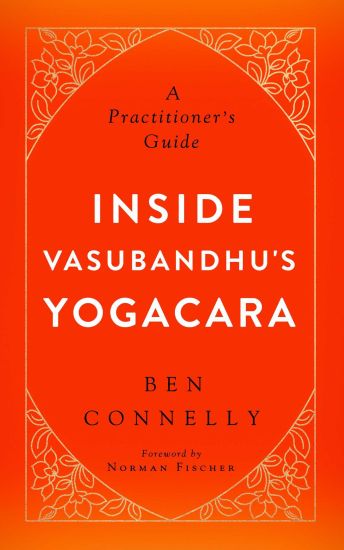
A practical guide to Vasubandhu's classic work "Thirty Verses of Consciousness Only" that can transform modern life and change how you see the world. In this down-to-earth book, Ben Connelly sure-handedly guides us through the intricacies of Yogacara and the richness of the "Thirty Verses." Dedicating a chapter of the book to each line of the poem, he lets us thoroughly lose ourselves in its depths. His warm and wise voice unpacks and contextualizes its wisdom, showing us how we can apply its ancient insights to our own modern lives, to create a life of engaged peace, harmony, compassion, and joy. In fourth-century India one of the great geniuses of Buddhism, Vasubandhu, sought to reconcile the diverse ideas and forms of Buddhism practiced at the time and demonstrate how they could be effectively integrated into a single system. This was the Yogacara movement, and it continues to have great influence in modern Tibetan and Zen Buddhism. "Thirty Verses on Consciousness Only," or "Trimshika," is the most concise, comprehensive, and accessible work by this revered figure. Vasubandhu's "Thirty Verses" lay out a path of practice that integrates the most powerful of Buddhism's psychological and mystical possibilities: Early Buddhism's practices for shedding afflictive emotional habit and the Mahayana emphasis on shedding divisive concepts, the path of individual liberation and the path of freeing all beings, the path to nirvana and the path of enlightenment as the very ground of being right now. Although Yogacara has a reputation for being extremely complex, the "Thirty Verses" distills the principles of these traditions to their most practical forms, and this book follows that sense of focus; it goes to the heart of the matter--how do we alleviate suffering through shedding our emotional knots and our sense of alienation? This is a great introduction to a philosophy, a master, and a work whose influence reverberates throughout modern Buddhism.
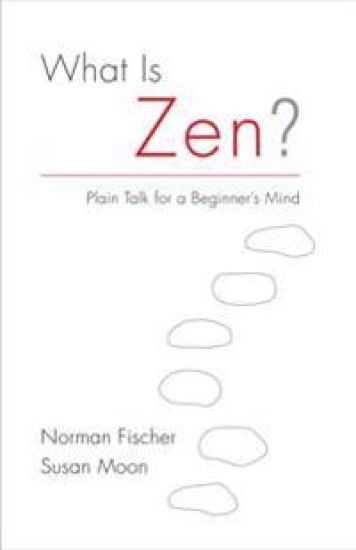
An accessible and enjoyable introduction to Zen Buddhist practice--in a reader-friendly question-and-answer format--by two highly regarded teacher-writers. The question-and-answer format makes this introduction to Zen especially easy to understand--and also to use as a reference, as you can easily look up just the question you had in mind. The esteemed Zen teacher Norman Fischer and his old friend and teaching colleague Susan Moon (both of them in the lineage of Shunryu Suzuki, author of Zen Mind, Beginner's Mind) give this collaborative effort a playful tone: Susan asks a question on our behalf, Norman answers it, and then Sue challenges him. By the time you get through their conversations, you'll have a good basic education in Zen--not only the history, theory, and practice but also the contemporary issues, such as gender inequality, sexual ethics, and the tension between Asian traditions and the modern American reality.
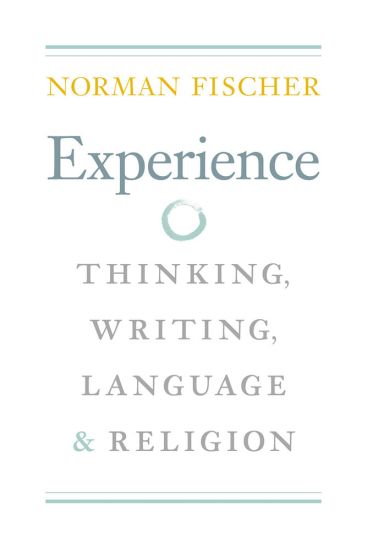
By what narrow path is the ineffable silence of Zen cleft by the scratch of a pen? The distilled insights of forty years, Norman Fischer’s Experience: Thinking, Writing, Language, and Religion is a collection of essays by Zen master Fischer about experimental writing as a spiritual practice.Raised in a Conservative Jewish family, Fischer embraced the twin practices of Zen Buddhism and innovative poetics in San Francisco in the early 1970s. His work includes original poetry, descriptions of Buddhist practice, translations of the Hebrew psalms, and eclectic writings on a range of topics from Homer to Heidegger to Kabbalah. Both Buddhist priest and participant in avant-garde poetry’s Language movement, Fischer has limned the fertile affinities and creative contradictions between Zen and writing, accumulating four decades of rich insights he shares in Experience.Fischer’s work has been deeply enriched through his collaborations with leading rabbis, poets, artists, esteemed Zen Buddhist practitioners, Trappist monks, and renowned Buddhist leaders, among them the Dalai Lama. Alone and with others, he has carried on a deep and sustained investigation into the intersection of writing and consciousness as informed by meditation.The essays in this artfully curated collection range across divers, fascinating topics such as time, the Heart Sutra, God in the Hebrew psalms, the supreme “uselessness” of art making, “late work” as a category of poetic appreciation, and the subtle and dubious notion of “religious experience.” From the theoretical to the revealingly personal, Fischer’s essays, interviews, and notes point toward a dramatic expansion of the sense of religious feeling in writing.Readers who join Fischer on this path in Experience can discover how language is not a description of experience, but rather an experience itself: shifting, indefinite, and essential.
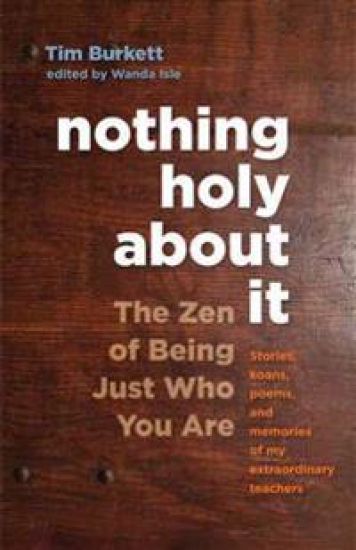
When Bodhidharma, the legendary first ancestor of Zen, was asked about the main principle of his holy teaching, he's said to have replied: "A vast emptiness--with nothing holy about it " A millennium-and-a-half later, Tim Burkett finds that the answer still applies: you don't need to go looking for something holy--buddha nature is right here in front of you. The concise summary of Zen teaching he presents in this book is expressed precisely in terms of what he found right in front of him: beginning with the delightful non-holiness he experienced in the presence of his original teacher, Shunyru Suzuki, and continuing through a lifetime of further teaching experiences.
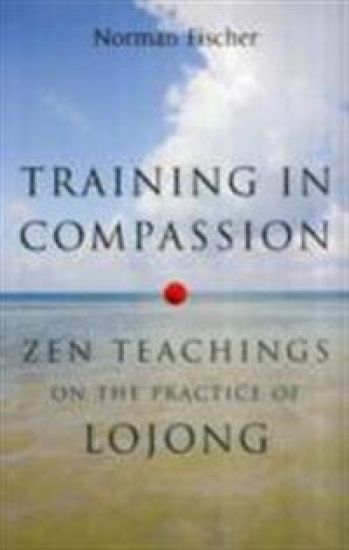
Lojong is the Tibetan Buddhist practice that involves working with short phrases (called "slogans") as a way of generating bodhichitta, the heart and mind of enlightened compassion. Though the practice is more than a millennium old, it has become popular in the West only in the last twenty years or so--and it has become very popular indeed, because it's a practice that one can fit very well into an ordinary life, and because it works.Through the influence of Pema Ch dr n, who was one of the first American Buddhist teachers to teach it extensively, the practice has moved out of its Buddhist context to affect the lives of non-Buddhists too. It's in this spirit that Norman Fischer offers his commentary on the lojong slogans. He applies Zen wisdom to them, showing how well they fit in that related tradition, but he also sets the slogans in the context of resonant practices throughout the spiritual traditions. He shows lojong to be a wonderful method for everyone, including those who aren't otherwise interested in Buddhism, who don't have the time or inclination to meditate, or who'd just like to morph into the kind of person who's focused rather than scattered, generous rather than stingy, and kind rather than thoughtless.
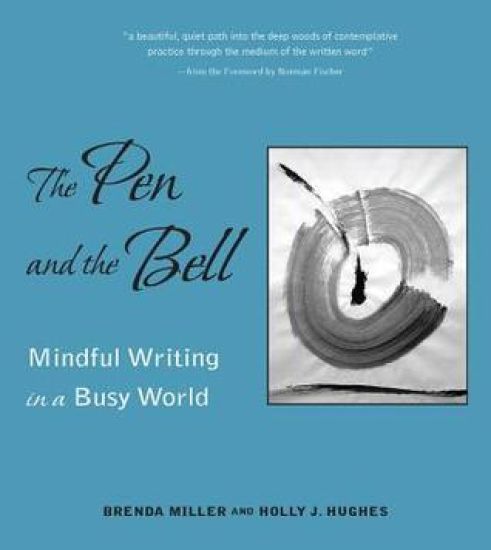
It can be difficult to create space for our spiritual lives in a world crowded with distractions. THE PEN AND THE BELL is about how to achieve mindfulness and creative fulfillment in spite of long to-do lists. It's about gaining access to our deeper selves in the workaday world and bringing forth this authentic self in our writing. With both meditative and writing exercises in each chapter, it will help you awaken your creative soul and find a more rewarding life. "This isn't a book - it's a beautiful, quiet path into the deep woods of contemplative practice through the medium of the written word. Yes, reading its chapters will delight you. Yes, listening to these two wise women talk quietly about their lives and their writing process is a sweet and effortless reading experience that will make you feel as if you are sitting across from them, a cu of tea in front of you, hearing the measure and lilt of their kindly, honest, voices. But the real crux of this book/path isn't their words - it's yours." -- Norman Fischer author Taking Our Places

Sailing Home: Using the Wisdom of Homer's Odyssey to Navigate Life's Perils and Pitfalls
Norman Fischer
NORTH ATLANTIC BOOKS
2011
nidottu
Homer's Odyssey holds a timeless allure. It is an ancient story for every generation: the struggle of a man on a long and difficult voyage longing to return to love and family. Odysseus's strivings to overcome both divine and earthly obstacles and to control his own impulsive nature hold valuable lessons for us as we confront the challenges of daily life. Sailing Home breathes fresh air into a classic we thought we knew, revealing its profound guidance for the modern seeker. Dividing the book into three parts--"Setting Forth," "Disaster," and "Return"--Fischer charts the course of Odysseus's familiar wanderings. Readers come to see this ancient hero as a flawed human being who shares their own struggles and temptations, such as yielding to desire or fear or greed, and making peace with family. Featuring thoughtful meditations, illuminating anecdotes from Fischer's and his students' lives, and stories from many wisdom traditions including Buddhist, Judaic, and Christian, Sailing Home shows the way to greater purpose in our own lives. The book's literary dimension expands its appeal beyond the Buddhist market to a wider spiritual audience and to anyone interested in the teachings of myth and story.
Reclaiming Vitality and Presence
Charlotte Selver; Charles V.W. Brooks; Norman Fischer
North Atlantic Books,U.S.
2007
pokkari

This engaging contemplation of maturity addresses the long neglected topic of what it means to grow up, and provides a hands-on guide for skilfully navigating the demands of our adult lives. Growing up happens whether we like it or not, but maturity must be cultivated. Challenged to consider his own sense of maturity while mentoring a group of teenage boys, Fischer began to investigate our preconceptions about what it means to be "an adult" and shows how crucial true maturity is to leading an engaged, fulfilled life. "Taking Our Places" details the marks of a mature person and shows how these attributes can help alleviate our suffering and enrich our relationships. Discussing such qualities as awareness, responsibility, humour, acceptance, and humility, Fischer brings a fresh and at times surprising new perspective that can turn old ideas on their heads and reinvigorate our understanding of what it means to be mature.


Benedict's Dharma
Norman Fischer; Joseph Goldstein; Judith Simmer-Brown
Penguin Putnam Inc
2002
pokkari
Saint Benedict's Rule-a set of guidelines that has governed Christian monastic life since the sixth century-continues to fascinate laypeople and monastics alike. Buddhist monks and nuns have been intrigued by Benedict's insights into human nature and by the similarities between Christian and Buddhist traditions. Now, through personal anecdotes and thoughtful comparison, four prominent Buddhist scholars reveal how the wisdom of each tradition can revitalize the other. Theirs is a lively and compelling dialogue which will appeal not only to Buddhists and Christians, but to anyone interested in rediscovering the value of an ancient discipline in the modern world.
An examination of the relationship between philosophical and economic thought in the nineteenth century, Economy and Self explores how the free enterprise theory of Classical Economy influenced and was in turn influenced by the philosophical notion of alienation common in the writings of the age.