Kirjojen hintavertailu. Mukana 12 595 353 kirjaa ja 12 kauppaa.

Kirjailija

Norman Franks

Kirjat ja teokset yhdessä paikassa: 26 kirjaa, julkaisuja vuosilta 2000-2022, suosituimpien joukossa Gallantry in Action. Vertaile teosten hintoja ja tarkista saatavuus suomalaisista kirjakaupoista.

26 kirjaa

Kirjojen julkaisuhaarukka 2000-2022.

The Fallen Few of the Battle of Britain

The Fallen Few of the Battle of Britain

Nigel McCrery; Norman Franks; Edward McManus

PEN SWORD BOOKS LTD
2022
nidottu
Never in the field of human conflict was so much owed by so many to so few Seventy-five years on the unforgettable words of Winston Churchill ring as powerfully as they did in August 1940 when the young men of the RAF stood as the last line of defence against Hitlers far more powerful Luftwaffe. This emotional yet factual book describes the three and a half months (10 July 31 October 1940) battle day-by-day and covers the essential details of every one of the 540 young pilots who died in this critical campaign that saved Britain from invasion by the Nazis. Thanks to the authors painstaking research we are given a short biography of each pilots and learn of their actions and the manner of their deaths, their squadrons and planes. The result is a unique record and fitting memorial of the courage and sacrifice of this select band of heroes. The text is enhanced by photographs of the individuals themselves.
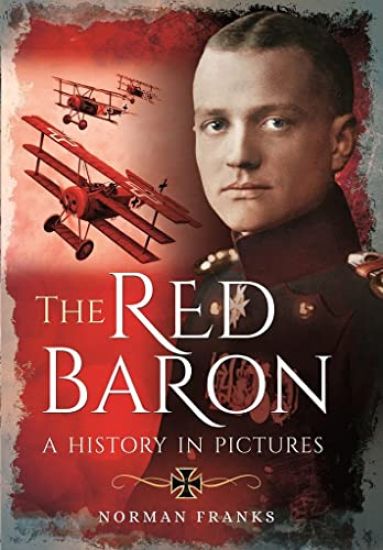
The Red Baron

The Red Baron

Norman Franks

PEN SWORD BOOKS LTD
2022
nidottu
Manfred von Richthofen, the iconic Red Baron, has remained at the forefront of First World War studies ever since he became recognised as one of the most illustrious fighter pilot aces of the conflict. As we approach the centenary anniversary of his death and the ending of the Great War, it seems like a good time to introduce a new arrangement of photographs covering the entire span of his war. Since the release of his earlier books exploring similar themes, a constant trickle of new information has filtered down to the author. Although none of it specifically challenges the conclusions drawn in earlier publications, in consolidating them here hes been able to preserve some significant notes of interest. Following a number of visits to Belgium and Northern France in recent years, Franks has managed to acquire fascinating images illustrating the places in which the Red Baron lived and fought between 1916 and 1918. This collection represents the entire span of von Richthofens recorded history in pictures, some new and lesser-known, some iconic and widely circulated; all housed here together under one roof for the very first time.
Gallantry in Action

Gallantry in Action

Norman Franks

Grub Street Publishing
2019
sidottu
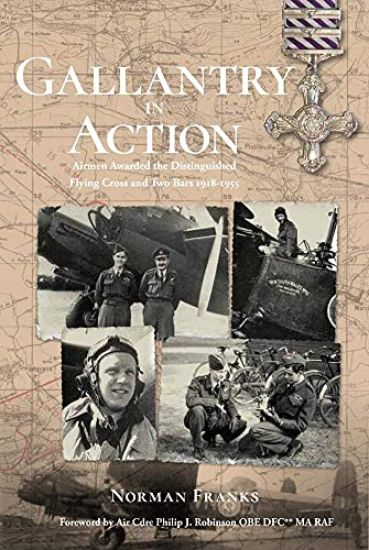
When the Royal Flying Corps and the Royal Naval Air Service merged on 1 April 1918, to form the Royal Air Force, the new command needed to have its own gallantry medals to distinguish itself from the Army and the Royal Navy. Thus the new Distinguished Flying Cross came into being. Not that this new award (along with the Distinguished Flying Medal for non-commissioned personnel) came into immediate use, but as 1918 progressed, awards that earlier might have produced the Military Cross or Distinguished Service Cross, became the Distinguished Flying Cross. By the end of WWI a large number of DFCs and First Bars had been awarded, but only three Second Bars had been promulgated for First War actions. Before WWII erupted, only four more Second Bars had been awarded, for actions largely in what we would now call the Middle East. By the end of the WWII, awards of the DFC and First Bars had multiplied greatly, but only fifty Second Bars had been awarded (and Gazetted), making fifty-seven in all between 1918 and 1946. To this can be added three more, awarded post-WWII, between 1952-1955, making a grand total of sixty. Still a significantly small number of members of this pretty exclusive ‘club’. Within the covers of this book recorded for the first time together are the mini-biographies of all those sixty along with the citations that accompanied their awards, or in some cases the recommendations for them. Also recorded are citations for other decorations such as the Distinguished Service Order, et al. The recommendations were often longer than the actual citations themselves, and during periods of large numbers of all types of awards, these citations did not make it into the London Gazette, recording name of the recipient only. As the reader will discover, the range of airmen who received the DFC and Two Bars, cover most of the ambit of WWII operations, be they fighter pilots, bomber pilots, night-fighter aircrew, aircrew navigators, engineers, etc, or reconnaissance pilots. Each has interesting stories, proving, if proof be needed, their gallantry in action.
Sky Tiger

Sky Tiger

Norman Franks

Goodall Publications Ltd
2019
nidottu
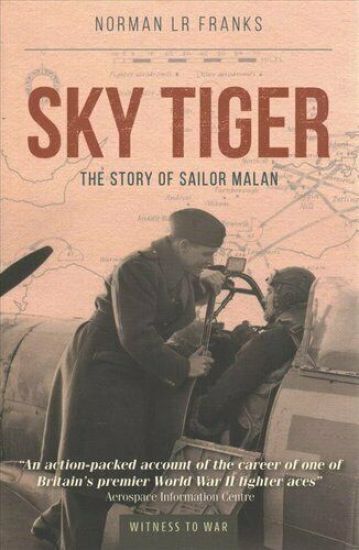
This is the biography of the renowned WWII South African Spitfire pilot Adolf (Sailor) Malan. The book recounts how he rose in less than 15 months to be acknowledged as Britain's premier fighter pilot. A born leader, a superb shot and an exceptional tactician, Malan honed his skills in the air battles over Dunkirk and later in his Spitfire during the Battle of Britain. He escorted Horsa Gliders carrying some of the first British units into action during the D-Day landings and later became Station Commander at Biggin Hill. Malan was a larger than life and heroic figure in an era which had more than its fair share of such men. He finished the war with the reputation both as one of the RAF's great fighter pilots and one of the leading tactical thinkers on the use of fighter aircraft in conflict.
Sopwith Camels Over Italy, 1917-1918

Sopwith Camels Over Italy, 1917-1918

Norman Franks

Pen Sword Aviation
2018
nidottu
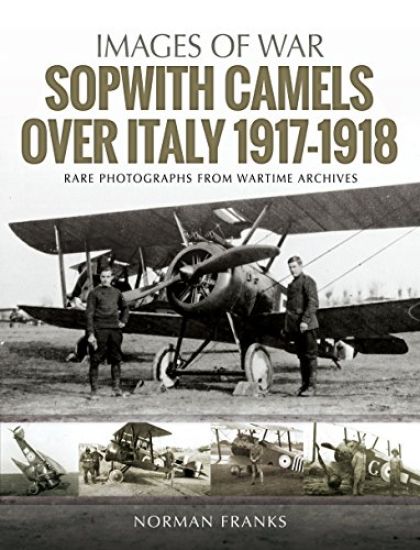
During the First World War, Italy was on the side of their British Allies and their fight was against the Austro-Hungarian Empire, bordering on Austria. In October 1917, the Austro-Hungarians managed to push the Italians back during the battle of Caporetto. With the danger signs obvious, both Britain and France sent reinforcements. Britain s Royal Flying Corps sent three squadrons of Sopwith Camel fighters, plus one RE8 reconnaissance squadron, and these Camel squadrons fought gallantly over the plains and mountainous regions of north-east Italy, sharing the air battle with aircraft of the Italian Air Force. Despite the difference in landscape between France and Italy, the Camel pilots employed the same air-fighting tactics and assisted in ground support missions that proved just as destructive in Italy as they had in France. Accompanied by a large selection of photographs of the men and the machines that saw action in this conflict, this book is a welcome addition to Pen and Sword s Images of War series.
Air Battle for Dunkirk

Air Battle for Dunkirk

Norman Franks

Grub Street Publishing
2017
nidottu
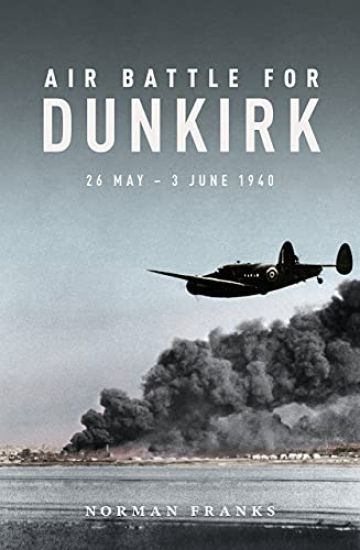
‘Where is the RAF?’ was the oft-quoted question asked by soldiers waiting on the beach at Dunkirk, to where they had retreated following the German blitzkrieg through northern France, and where they were now being pounded by the Luftwaffe. The air forces were there, as Norman Franks proves, detailing the outstanding achievements of the Allied pilots who fought, using outmoded tactics, against enemy pilots who had earlier had easy victories over the Polish, Dutch and Belgian air forces. The RAF’s achievement reminds us just how close Britain came to disaster in June 1940.
Dog Fight: Aerial Tactics of the Aces of World War I
'For enthusiasts of WWI aviation, this book is a true gem.' Flying Scale Models The history of aviation during the First World War is a rich and varied story marked by the evolution of aircraft from slow-moving, fragile, and unreliable powered kites, into quick, agile, sturdy fighter craft. At the same time there emerged a new kind of 'soldier', the pioneer fighter pilot whose individual cunning and bravery became crucial in the fight for control of the air. Dog Fight traces this rapid technological development alongside the strategy and planning of commanders and front-line airmen as they adapted to the rapidly changing events around them and learned to get the best from their machines. Often, this involved discovering and employing tactics instinctively to stay alive. Drawing on contemporary memoirs as well as the author's personal correspondence with surviving First World War fighter pilots and aces, this is an authoritative and captivating history that serves as an important tribute to the brave pilots of both sides.
Coastal Command's Air War Against the German U-Boats
This book summarises the story of how RAF Coastal Command overcame the German U-boat danger during the Second World War and how the escalation of the U-boat war promoted the development of anti-submarine warfare, leading to victory over this menace in the Atlantic. At the start of the war, RAF Coastal Command had virtually no real chance of either finding or sinking Germany's submarines, but within a short period of time, new methods of detecting and delivering deadly ordnance with which to sink this underwater threat were dreamt up and implemented. It took the men of Coastal Command long hours patrolling over an often hostile sea, in all types of weather, but their diligence, perseverance and dedication won through, saving countless lives of both merchant and navy seamen out in the cold wastes of the Atlantic and contributing much to the final victory over Nazi Germany. This new addition to the Images of War series serves as a tribute to these men, recording their exploits in words and images.
RAF Fighter Pilots Over Burma: Images of War

RAF Fighter Pilots Over Burma: Images of War

Norman Franks

Pen Sword Aviation
2013
nidottu
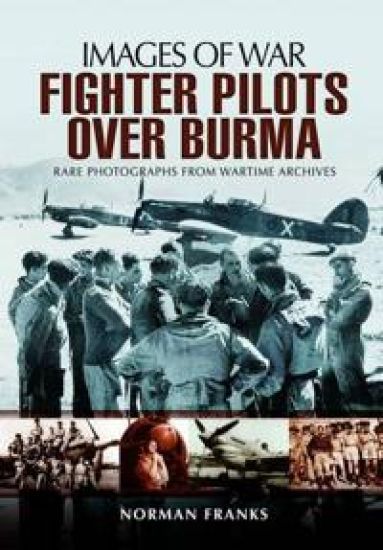
It is a recognized fact that, had the war gone badly for the Allies on the India/Burma front, and had the Japanese succeeded in invading the Indian Continent, the outcome of the war would have been entirely different. Yet despite this, the campaign on the Burma front is offered surprisingly scant coverage in the majority of photo-history books. This new book, from respected military historian and author Norman Franks, attempts to redress the balance, noting the importance of this particular aerial conflict within the wider context of the Second World War. Franks takes as his focus the pilots, aircraft and landscapes that characterized the campaign. Photographs acquired during the course of an intensive research period are consolidated into a volume that is sure to make for a popular addition to the established Images of War series. Many unpublished photographs feature, each one offering a new insight into the conflict as it unfolded over Burmese skies. The archive offers a wealth of dynamic images of RAF Hurricanes and Spitfires in flight, with shots of both the aircraft and the pilots employed during this challenging conflict. To fly and fight in Burma, pilots really had to be at the top of their game. The Japanese enemy certainly weren't the only problem to contend with; weather, poor food, incredible heat and all its attendant maladies, jungle diseases, tigers, elephants, fevers...The Japanese were the real enemy but the British pilots had so much more to deal with. And they did it for years. In Britain, a pilot could look forward to a break from operations every six months or so on average. In Burma, pilots first employed in 1941 were still flying operations in 1944. The collection represents a determination on the author's part to record the part played by these resilient and skilled RAF fighter pilots, the contribution that they paid in supporting General Slim's 14th Army and the part they ultimately played in defeating the Japanese attempts to break through into India. These efforts, all paramount and imperative to success, are celebrated here in words and images in a volume sure to appeal to Spitfire and Hurricane enthusiasts, as well as the more general reader.
Flying Among Heroes

Flying Among Heroes

Norman Franks; Simon Muggleton

The History Press Ltd
2012
nidottu
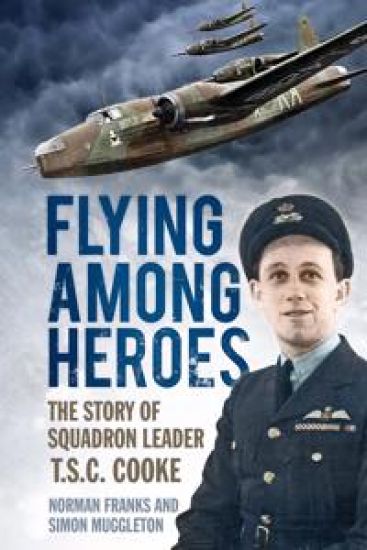
Following the extraordinary career of a Second World War bomber pilot, Flying Among Heroes brings together adventure and human daring with the harsh realities of being a member of the wartime Royal Air Force. Tom Cooke, like hundreds of other young men in 1939, joined up to the RAF just a few days before war began aged 18, being selected for pilot training. Just five years later, he had flown fifty-one operations, taken part in the Berlin bombings and three 1,000-bomber raids, and had even taken part in special operations in conjunction with the SOE. Not only did Cooke volunteer for an optional second and third tour of operations, but he was also shot down over France on his thirteenth special operation, survived the bale out with his crew and evaded capture. Helped by the French Resistance, he managed to make his way into Spain and was taken back to England from Gibraltar. Unsurprisingly, considering Cooke’s outstanding bravery and patriotism, he was decorated multiple times in his career. Franks and Muggleton make use of primary documentation, including Cooke’s own words, and contemporary images to put together a poignant story of wartime duty. In an effort to portray the situation for many young men like Cooke, much information is included on other squadrons and operations, as well as on Bomber Command itself. In all, 55,000 men of Bomber Command gave their lives to the cause of the Second World War; this is the tale of just one of those remarkable young men who survived the hardships of war, returning victorious to a nation of heroes.
Tempest Pilot

Tempest Pilot

C.J. Sheddan; Norman Franks; J. E. Johnson

Grub Street Publishing
2011
nidottu
Jimmy Sheddan was one of the many New Zealanders who joined the RNZAF, then left his native land to come to England to fight the enemies of Great Britain and her Empire during World War Two. Through his recollections we can share some of the trials and wartime tribulations they faced. Yet we can read too of the enormous amount of fun these men had despite the dangers and sacrifices of war. It is this quality which endears his book to us as well as the achievements of the airmen with whom he served. During the war, Jim Sheddan rose from the rank of sergeant pilot to squadron leader with 486 Squadron, a considerable achievement. After starting with Spitfires, then going onto the Typhoon, Jim became an expert on the Hawker Tempest, winning the DFC. In many ways his is a very special account as, amongst other things, he survived 19 hours in a dinghy off the French coast, a crash landing in a Tempest after a battle with a V1 flying bomb, and the advance across northern Europe in the final weeks of the war. Few Tempest pilots have told their story but Jim has, and in an honest, self-effacing way that will astound and enthral. With a foreword by AVM J E Johnnie Johnson, CB, CBE, DSO and 2 bars, DFC and bar.
SE 5/5a Aces of World War I

SE 5/5a Aces of World War I

Norman Franks

Osprey Publishing
2007
nidottu
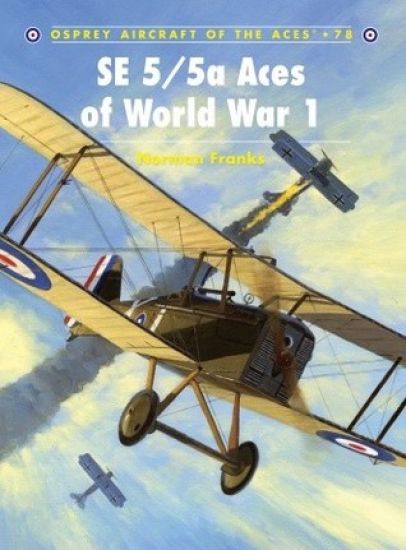
The Royal Aircraft Factory SE 5/5a was, along with the Sopwith Camel, the major British fighting scout of the last 18 months of the war in France. It equipped several major squadrons, the first being, No 56 Sqn in April 1917. This unit became famous for the number of aces it had among its pilots, including Albert Ball, James McCudden, Geoffrey Bowman, Richard Maybery, Leonard Barlow, Hank Burden and Cyril Crowe. In all, 26 aces flew the aircraft with No 56 Sqn alone. Other well-known units were Nos 1, 24, 29, 32, 40, 41, 60, 64, 2 AFC, 74, 84, 85 and 92 Sqns. A number of Victoria Cross winners also flew SE 5/5as, namely Ball, Mannock, McCudden, Beauchamp Proctor and Bishop. Among the aces, no fewer than 20 scored more than 20 victories. In all, there were almost 100 SE 5/5a aces, and a large number of them are profiled in this volume. Supporting the text are more than 110 photographs, 37 brand new colour artworks and detailed appendices listing every pilot who 'made ace' on the SE 5/5a.
British and Commonwealth Aces of World War II

British and Commonwealth Aces of World War II

Norman Franks

Schiffer Publishing Ltd
2006
sidottu
Having photographically covered the British Aces of World War I in his book British and American Aces of World War I: The Pictorial Record, it followed that the RAF and Commonwealth aces of World War II should also be depicted in a single volume. This book therefore shows all RAF, Commonwealth and other country (tm)s aces who flew with the RAF between 1939-1945. Featured here "" in most cases as portraits "" are those fighter pilots who achieved ten or more victories. This is the first time that the faces of these men have been featured in one book, paying tribute to them and all RAF fighter pilots of the Second World War.
British and American Aces of World War I

British and American Aces of World War I

Norman Franks

Schiffer Publishing Ltd
2005
sidottu
A companion volume to German Aces of World War I - The Pictorial Record (Norman Franks & Greg VanWyngarden, Schiffer, 2004), this new book covers the British and Commonwealth fighter aces of the Great War. One chapter covers the aces with ten or more victories, and an additional chapter lists the fighter aces with nine down to five victories, giving their squadrons, where they hailed from, and in many cases their subsequent fate. For the American aces, the author lists every fighter ace of the period, from Rickenbacker’s twenty-six down to those with five victories.
Sopwith Pup Aces of World War 1

Sopwith Pup Aces of World War 1

Norman Franks

Osprey Publishing
2005
nidottu
The Sopwith Pup was the forerunner of the hugely successful Sopwith Camel, which duly became the most successful fighter of World War I. The first proper British fighting scout, the first Pups - the Royal Naval Air Service - arrived on the Western Front in 1916. Although regarded as a 'nice' aeroplane to fly, pilots who used it in combat gained much success during the first half of 1917. The Royal Flying Corps also used the Pup from January 1917 onwards, with the final combats with the machine occurring in December of that year. This book describes the combat careers of the successful Pup aces, how they flew and how they fought.
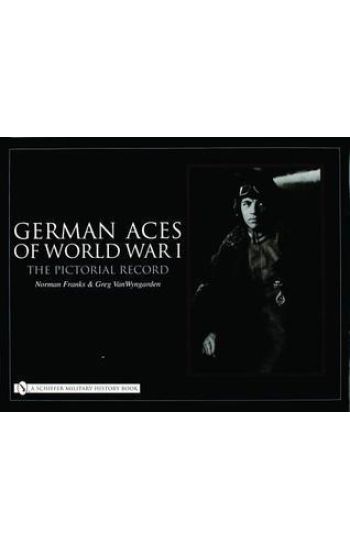
German Aces of World War I

German Aces of World War I

Norman Franks

Schiffer Publishing Ltd
2004
sidottu
The air aces of Imperial Germany’s Luftstreitkräfte are an ever-popular subject among aviation historians, enthusiasts, war gamers, and aircraft modelers. The images of famous airmen such as Manfred von Richthofen, Ernst Udet, and Werner Voss are well known and frequently published, but the same cannot be said for all of the over 300 German airmen who achieved five or more aerial victories in the Great War. Their stories have often been published, but never have as many photographs of the aces been assembled within the pages of one volume. Of necessity these photos vary widely in style, format and quality, yet they serve to reveal a good deal of information about the pilots and the multitude of different uniforms and decorations they wore. Students of World War I aircraft will also find useful illustrations of the various machines in which these pilots attained their fame. Over 330 photographs of the aces are provided. The aces are listed in ‘score’ order, starting with the ‘Red Baron’ himself with eighty victories, and proceeding down the list to the last alphabetically ordered airman with five claims, Martin Zander. Each photograph is accompanied by a brief service history and victory total of the ace.
Sopwith Triplane Aces of World War 1

Sopwith Triplane Aces of World War 1

Norman Franks

Osprey Publishing
2004
nidottu
Built as a replacement for the Pup, the Triplane boasted a superior rate of climb and greatly improved manoeuvrability thanks to its extra wing. Indeed, when the type made its combat debut with the RNAS in February 1917, the Triplane could easily out-climb any other aircraft operated by either side. This book focuses on the aircraft whose design had a great impact on the enemy - so much so that the German High Command immediately ordered their manufacturers to produce triplane designs to counter the Sopwith fighter, the most famous of which was the Fokker Dr I. This book examines the Sopwith Triplane's history from the perspective of the aces that flew it.
Fokker D VII Aces of World War 1

Fokker D VII Aces of World War 1

Greg VanWyngarden; Norman Franks

Osprey Publishing
2004
nidottu
Befitting its status as Germany's premier fighter unit, von Richthofen's JG I (led by Hermann Goring in the wake of the 'Red Baron's recent death) received the first examples of the D VII to reach the frontline in late April. Built to oppose the new generation of French SPAD XIIIs and British SE 5as and Carnel fighters, the D VII was arguably the best all-round fighting scour of the Great War. This volume completes the Osprey Aircraft of the Aces coverage of arguably the best fighting scout put into the air by either side in World War I.
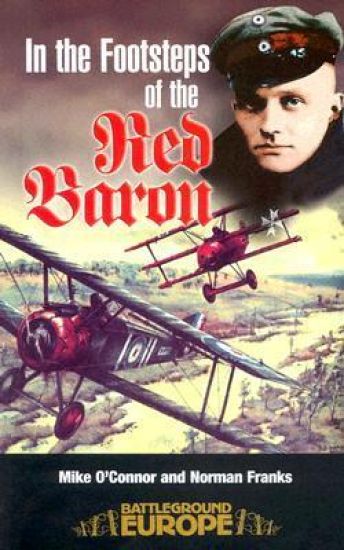
In the Footsteps of the Red Baron

In the Footsteps of the Red Baron

Mike O'Connor; Norman Franks

Leo Cooper Ltd
2004
nidottu
Manfred von Richthofen became a fighter pilot on the Western Front in August 1916. By January 1917, Richthofen had shot down fifteen aircraft had been appointed commander of his own unit. He painted the fuselage of his Albatros D-III bright red and was nicknamed the Red Baron. This book is divided into three sectors of the WWI front line in which von Richthofen operated. Airfield sites, memorials and the graves of Manfred's famous victims are described with directions for the battlefield walker.
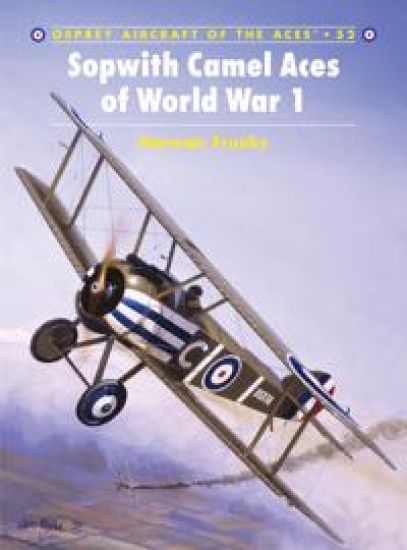
Sopwith Camel Aces of World War 1

Sopwith Camel Aces of World War 1

Norman Franks

Osprey Publishing
2003
nidottu
Responsible for destroying 1294 enemy aircraft between June 1917 and November 1918, the Camel was the most successful fighting scout employed by either side in terms of the sheer number of victories that it scored. The Camel was renowned for its sensitivity and need for skill and experience, and casualties amongst pilots undergoing training on the type were very high. More than 5490 examples were constructed, and this work covers its combat use on the Western Front, in Palestine, on the Italian front, in the Home Defence role in the UK and in Russia.