Kirjojen hintavertailu. Mukana 12 595 353 kirjaa ja 12 kauppaa.

Kirjailija

Norman Friedman

Kirjat ja teokset yhdessä paikassa: 37 kirjaa, julkaisuja vuosilta 1980-2026, suosituimpien joukossa EIMI. Vertaile teosten hintoja ja tarkista saatavuus suomalaisista kirjakaupoista.

37 kirjaa

Kirjojen julkaisuhaarukka 1980-2026.

EIMI

EIMI

E. E. Cummings; Norman Friedman

Liveright Publishing Corporation
2007
nidottu
Unavailable for more than fifty years, EIMI finally returns. While sometimes termed a "novel," it is better described as a novelistic travelogue, the diary of a trip to Russia in the 1930s during the rise of the Stalinist government. Despite some contempt for what he witnesses, Cummings's narrator has an effective, occasionally hilarious way of evoking feelings of accord and understanding. As Ezra Pound wrote, Cummings's Soviet Union is laid "out there pellucidly on the page in all its Slavic unfinishedness, in all of its Dostoievskian slobberyness....Does any man wish to know about Russia? 'EIMI'!" A stylistic tour de force, EIMI is a mélange of styles and tones, the prose containing many abbreviations, grammatical and syntactical shifts, typographical devices, compounds, and word coinages. This is Cummings's invigorating and unique voice at its finest, and EIMI is without question one of his most substantial accomplishments.
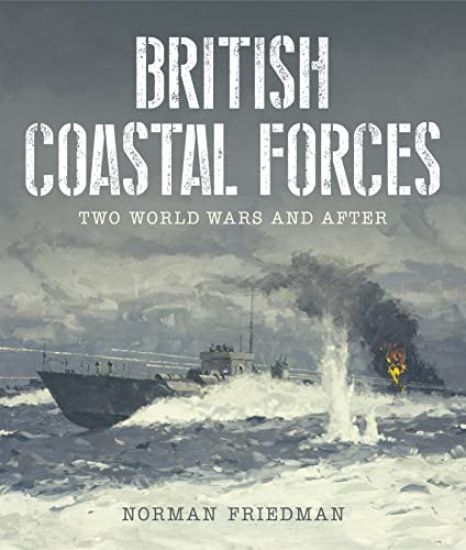
British Coastal Forces

British Coastal Forces

Norman Friedman

PEN SWORD BOOKS LTD
2023
sidottu
The Royal Navy invented the fast motor torpedo boat during the First World War, and used it and other small coastal craft to great effect during the Second. This book tells the dramatic story of British coastal forces, both offensive and defensive, in both World Wars and beyond. In the Second World War British coastal forces fought a desperate battle to control the narrow seas, particularly the Channel and the North Sea, and took the war to the coasts of German-occupied Europe, fighting where larger warships could not be risked. They also made a significant contribution to victory in the Mediterranean, but it was primarily warfare in home waters that shaped wartime British Coastal Forces and left lessons for postwar development. In this book, Norman Friedman uniquely connects the technical story of the coastal craft and their weapons and other innovations with the way they fought. In both world wars much of the technology was at the edge of what was feasible at the time. Boats incorporated considerable British innovation and also benefited from important US contributions, particularly in supplying high-powered engines during World War II. In contrast with larger warships, British coastal forces craft were essentially shaped by a few builders, and their part in the story is given full credit. They also built a large number of broadly similar craft for air-sea rescue, and for completeness these are described in an appendix. This fascinating, dramatic story is also relevant to modern naval thinkers concerned with gaining or denying access to hostile shores. The technology has changed but the underlying realities have not. This book includes an extensive account of how coastal forces supported the biggest European example of seizing a defended shore, the Normandy invasion. That was by far the largest single British coastal forces operation, demanding a wide range of innovations to make it possible. Like other books in this series, this one is based very heavily on contemporary official material, much of which has not been used previously - like the extensive reports of US naval observers, who were allowed wide access to the Royal Navy as early as 1940. Combined with published memoirs, these sources offer a much more complete picture than has previously appeared of how Coastal Forces fought and of the way in which various pressures, both operational and industrial, shaped them.
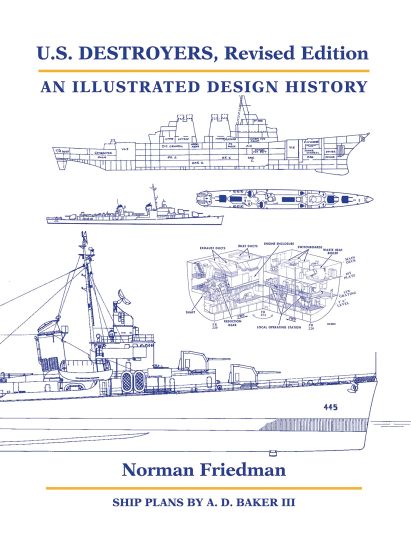
U.S. Destroyers, Revised Edition

U.S. Destroyers, Revised Edition

Norman Friedman

Naval Institute Press
2021
sidottu
The Norman Friedman Illustrated Design History series of U.S. warships books has been an industry standard for three decades and has sold thousands of copies worldwide. To mark and celebrate this achievement, the Naval Institute Press is proud to make these books available once more. Digitally remastered for enhanced photo resolution and quality, corrected, and updated, this series will continue to serve--for scholars and enthusiasts alike--as the foundation for U.S. naval warship research and reference for years to come. U.S. Destroyers is one the most comprehensive references available on the entire development of U.S. Destroyers, from their early torpedo boat forebears to the mass-produced Fletcher-class of World War II, through the Spruance and Perry classes of the Cold War, and to the workhorse Arleigh Burke-class of the contemporary Navy. Like the other books in Friedman's design-history series, U.S. Destroyers is based largely on formerly classified internal U.S. Navy records. Friedman, a leading authority on U.S. warships, explains the political and technical rationales of warship construction and recounts the evolution of each design. Alan Raven and A.D. Baker III have created detailed scale outboard and plan views of each ship class and of major modifications to many classes. Numerous photographs complement the text.
E. E. Cummings

E. E. Cummings

Norman Friedman

Johns Hopkins University Press
2020
pokkari
Originally published in 1960. In E. E. Cummings: The Art of His Poetry, Norman Friedman argues that critics who have focused on what Cummings's poetry lacks have failed to judge Cummings on his strengths. Friedman identifies a main strength of Cummings as his being a "sensual mystic." The book unpacks Cummings's subject matter, devices, and symbolism, ultimately helping readers develop a deeper understanding and appreciation of Cummings's work.
The Cold War

The Cold War

Norman Friedman

Andre Deutsch Ltd
2019
pokkari
A graphic account of this long-running global drama, The Compact Guide: The Cold War is published in a new era of fear and uncertainty. It encompasses moments of high tension, such as the Berlin Crisis of 1961, the Cuban Missile Crisis of 1962 and the nuclear alerts of 1973 and 1983. At several times the world stood on the brink of nuclear Armageddon, but these dangerous moments all ended with both sides drawing back, until the long confrontation ended peacefully. Written by a leading American defence analyst, Dr Norman Friedman, The Compact Guide: The Cold War is supplemented with 60 photographs and documents that allow the reader to witness the events as they unfolded. Maps, diaries, letters and other items which, up till now, have remained filed or exhibited in the Imperial War Museum and other museum collections in Northern Europe and America include a 1963 nuclear attack protective booklet produced for homeowners by the British government and the official pack for US troops passing through Checkpoint Charlie, with practical advice on visiting Communist-controlled East Berlin.
British Naval Weapons of World War Two

British Naval Weapons of World War Two

Norman Friedman

Seaforth Publishing
2019
sidottu
John Lambert was a renowned naval draughtsman, whose plans were highly valued for their accuracy and detail by modelmakers and enthusiasts. By the time of his death in 2016 he had produced over 850 sheets of drawings, many of which have never been published. These have now been acquired by Seaforth and this is the first of a planned series of albums on selected themes, reproducing complete sheets at a large page size, with an expert commentary and captioning. The initial volumes will concentrate on British naval weaponry used in the Second World War, thus completing the project John Lambert was working on when he died. His interest was always focused on smaller warships and his weapons drawings tend to be of open mountings - the kind that present a real challenge to modelmakers - rather than enclosed turret guns, but he also produced drawings of torpedo tubes, underwater weapons, fire-control directors and even some specific armament-related deck fittings. This volume covers all such weapons carried by British destroyers of this era, with additional appendices devoted to earlier guns still in service, and destroyer-calibre weapons only mounted in larger ships. The drawings are backed by introductory essays by Norman Friedman, an acknowledged authority on naval ordnance, while a selection of photographs add to the value of the book as visual reference. Over time, the series will be expanded to make this unique technical archive available in published form, a move certain to be welcomed by warship modellers, enthusiasts and the many fans of John Lambert's work.
Winning a Future War

Winning a Future War

Norman Friedman

Military Bookshop
2019
pokkari
"To win in the Pacific during World War II, the U.S. Navy had to transform itself technically, tactically, and strategically. It had to create a fleet capable of the unprecedented feat of fighting and winning far from home, without existing bases, in the face of an enemy with numerous bases fighting in his own waters. Much of the credit for the transformation should go to the war gaming conducted at the U.S. Naval War College. Conversely, as we face further demands for transformation, the inter-war experience at the War College offers valuable guidance as to what works, and why, and how."
The Theatre of E. E. Cummings

The Theatre of E. E. Cummings

E. E. Cummings; Norman Friedman

Liveright Publishing Corporation
2013
sidottu
The Theatre of E. E. Cummings collects in their entirety Cummings’s long out-of-print theatrical works: the plays HIM (1927), Anthropos (1930), and Santa Claus (1946), and the ballet treatment Tom (1935). In HIM, a creatively blocked artist and his lover, Me, struggle to bridge the impasse in their relationship and in his art. In Anthropos, a Platonic parable, three “infrahumans” brainstorm slogans while a man sketches on a cave wall; and in Santa Claus, Death and Saint Nick exchange identities. Harriet Beecher Stowe’s Uncle Tom’s Cabin is reimagined as dance, transforming the novel into a symbolic attack against Evil itself. Cummings’s prodigious creativity is on display in each of these works, which are ultimately about the place of the artist outside of society. “DON’T TRY TO UNDERSTAND IT, LET IT TRY TO UNDERSTAND YOU,” Cummings famously wrote about his intentions for the stage. Thoughtful and witty, Cummings’s dramas are an integral part of his canon.
Network-Centric Warfare

Network-Centric Warfare

Norman Friedman

Naval Institute Press
2009
sidottu
This book explains what network-centric warfare is, and how it works, using concrete historical naval examples rather than the usual abstractions. It argues that navies invented this style of warfare over the last century, led by the Royal Navy, and that the wars of that century, culminating in the Cold War, show how networked warfare worked – and did not work. These wars also illustrate what net-on-net warfare means; most exponents of the new style of war assume that the United States will enjoy a monopoly on it. This account is important to all the services; it is naval because navies were the first to use network-centric approaches (the book does take national air defence into account, because air defence systems deeply influenced naval development). This approach is probably the only way a reader can get a realistic feeling for what the new style of war offers, and also for what is needed to make it work. Thus the book concentrates on the tactical picture which the network is erected to help form and to disseminate, rather than, as is usual, the communications network itself. This approach makes it possible to evaluate different possible contributions to a network-centric system, because it focuses on what the warriors using the picture really want and need. Without such a focus, the needs of networked warfare reduce simply to the desire for more and more information, delivered at greater and greater speeds. It is the first book about network-centric warfare to deal in concrete examples, and the first to use actual history to illuminate current operational concepts. It also offers considerable new light on the major naval battles of the World Wars, and will be of intense interest to historians.
The British Aircraft Carrier

The British Aircraft Carrier

Norman Friedman

PEN SWORD BOOKS LTD
2026
sidottu
The Royal Navy ended the Second World War with a large force of aircraft carriers and a substantial construction programme intended to produce larger and more capable ships. Most of these were cancelled during postwar retrenchment and the few that survived were completed much later, leaving the RN with an ageing and rapidly shrinking fleet. At the same time, the introduction of jet aircraft threatened the viability of carrier aviation, and it was only a sequence of British innovations (the angled deck, the steam catapult, and the mirror landing sight) that made it possible for carriers to operate jet aircraft. These British developments, particularly the steam catapult, were crucial to the survival of the US carrier force in the postwar era, to an extent often forgotten. Driven by limited resources, the British continued to innovate, producing the first commando carriers, and later the RN played a crucial role in the VSTOL carrier revolution – a response to the cancellation of the large-deck CVA-01 design in 1966. Although the size of the Fleet air Arm declined in numbers, without the Sea Harriers of Hermes and Invincible the recapture of the Falklands in 1982 would have been impossible. Most recently, the tradition of original thinking continues to be seen in the radical two-island layout of Queen Elizabeth and Prince of Wales –since imitated by the Chinese – and the acquisition of F35 stealth fighters once again gives the Royal Navy potent ship-based air power. This book covers all postwar British-built carriers, including those in Commonwealth and foreign service, with the historical context, both operational and technical, explained in detail, as is the connection to larger British national concerns. Based largely on declassified official documents, both British and US, it is heavily illustrated with photographs, but also reproduces official plans from the National Maritime Museum, many of which have never previously been published.
Cold War Anti-Submarine Warfare

Cold War Anti-Submarine Warfare

Norman Friedman

Naval Institute Press
2025
sidottu
As enmity between China and Russia and the West deepens, and as the Chinese navy grows, the United States finds itself more and more in the situation it faced during the Cold War. Again, the United States depends on access to the world, and again a possible enemy is building a massive navy intended to cut off the U.S., which may well have to fight for the seas. In doing so, it is helpful to look back to the closest analogy—the struggle against the Soviet navy. For the first time, this book brings together enough of the declassified record—and enough of what the Russians published during their brief period of openness—to tell the story of the great Cold War anti-submarine warfare (ASW) struggle. This book explains what happened and how the West won that fight. Although technology has changed, history is the best guide for future operations and to understand how different strategies and tactics can affect outcomes. The experience of post-Cold War ASW is much less relevant because it was conducted on a much smaller scale and generally in waters very different from the oceans of the Cold War. Unfortunately, much of what happened during the Cold War has been forgotten. The senior officers who understood the ASW fight have long since retired. Author Norman Friedman is extraordinarily well placed to examine what happened and why. He has published books not only on Cold War ships and aircraft, but also on Cold War strategy, including the award-winning Fifty-Year War, and on the naval weapons and sensors of the Cold War. He has written design histories of U.S. and British submarines and surface ASW ships of the Cold War based on declassified documents. In this book he emphasizes that there was no single Cold War ASW strategy because the character of the war changed greatly over time. This variety of themes makes it possible to consider alternative parallels to the present and the future.
The British Aircraft Carrier

The British Aircraft Carrier

Norman Friedman

PEN SWORD BOOKS LTD
2025
sidottu
The Royal Navy invented the aircraft carrier and most of the key innovations which have enabled carriers to remain effective, exploiting continuing changes in aircraft technology, from biplanes to supersonic jets. This book tells (and explains) how that happened over more than a century of British carrier development, based largely on declassified official documents, both British and US. Major themes include British domination of the early years of carrier development, and the audacious and highly original plans for their use during World War I, which inspired later naval thinking on the potential of carrier aviation. The introduction of armoured flight decks in the 1930s was only the first of a sequence of British innovations, the most important of which made it possible for carriers to operate jet aircraft (the angled deck, the steam catapult, and the mirror landing sight). These British developments, particularly the steam catapult, were crucial to the survival of the US carrier force in the postwar era, to an extent often forgotten. Later the Royal Navy produced the first commando carriers, and played a crucial role in the VSTOL carrier revolution, and continues to demonstrate originality and innovation as seen in the current pair of large carriers. This book covers all British-built carriers, including those in Commonwealth and foreign service, with the historical context, both operational and technical, explained in detail, as is the connection to larger British national concerns. The book is heavily illustrated with photographs, but also reproduces official plans from the National Maritime Museum, many of which have never previously been published.
U.S. Submarines since 1945, Revised Edition

U.S. Submarines since 1945, Revised Edition

Norman Friedman

Naval Institute Press
2023
sidottu
In the tradition of his acclaimed warship design histories, Norman Friedman describes the forces--technical, political, and operational--that shaped a vital element of U.S. sea power. For example, he examines the evolution in missions, such as forward-based antisubmarine warfare and strategic deterrence, that transformed the submarine from its former subsidiary role to the center of national power. U.S. Submarines Since 1945 is also the story of a technological revolution: first the emergence of fast diesel-electric craft, then the shock of nuclear power, followed by the appearance of submarine-launched ballistic missiles. Nowhere else can a reader find so complete or sophisticated an account of the development of the U.S. submarine force, including not only the hulls, but also the weapons and sensors they carry. The book details what submarines were ordered, what weapons and propulsion systems they had, how they performed, and what sonars and combat systems were developed. This illustrated design history contains more than 100 photographs and more than 100 line drawings, including specially commissioned artwork from technical illustrator James L. Christley. These exclusive illustrations, along with the incisive text, capture the excitement of a revolutionary period in submarine development. Enthusiasts and professionals alike will welcome the abundance of information offered. In this revised edition, Norman Friedman explores what has happened since the Cold War, which means both new classes and new technology (some of it applied to existing submarines). New material includes weapons and sensors as they have developed since 1995. This new technology is explained in the context of very different post-Cold-War priorities. In addition, Friedman includes new information that has become available on submarines described in the earlier edition.
U.S. Aircraft Carriers

U.S. Aircraft Carriers

Norman Friedman

Naval Institute Press
2022
sidottu
The Norman Friedman Illustrated Design History series of U.S. warships books has been an industry standard for three decades and has sold thousands of copies worldwide. To mark and celebrate this achievement, the Naval Institute Press is proud to make these books available once more. Digitally remastered for enhanced photo resolution and quality, corrected, and updated, this series will continue to serve--for scholars and enthusiasts alike--as the foundation for U.S. naval warship research and reference for years to come.U.S. Aircraft Carriers, Revised Edition is one the most comprehensive references available on the entire development of U.S. Aircraft Carriers, starting in 1920, with USS Langley CV-1, continuing to Enterprise, the mass-produced Essex-class, and the large Midway-class of post-World War II. Friedman authoritatively analyzes the design and performance histories of this popular type. The long careers of the Nimitz-class and the new Ford-class are also included. Like the other books in Friedman's design-history series, U.S. Aircraft Carriers is based largely on formerly classified internal U.S. Navy records.Friedman, a leading authority on U.S. warships, explains the political and technical rationales for building battleships and recounts the evolution of each design. A.D. Baker III has created detailed scale outboard and plan views of each ship class and of major modifications to many classes. Numerous photographs complement the text.
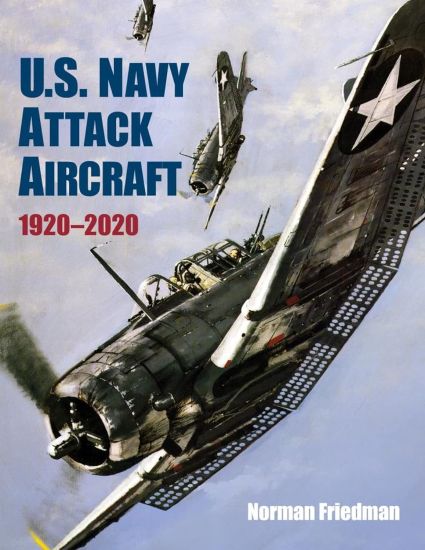
U.S. Navy Attack Aircraft, 1920-2020

U.S. Navy Attack Aircraft, 1920-2020

Norman Friedman

Naval Institute Press
2022
sidottu
U.S. Navy Attack Aircraft, 1920-2020 is uniquely told from the point of view of the Navy, as understood through its previously-classified documents. Spanning a century from the earliest airplanes conceived to operate from U.S. carriers in 1920, to the current F-35 Joint Strike Fighter (JSF) Both the requirements and the available technology kept changing. In many cases the Navy drove the technology. Norman Friedman is the first to take the requirements and the available technology into account to explain the choices the Navy made. The airplanes the Navy bought were always designers' attempts to meet specific demands set by the kind of warfare the Navy expected. The reader sees Navy successes and failures in guessing at the future. This is a unique way to understand the panoply of airplanes the Navy has relied on through the years, and why some succeeded but others failed.
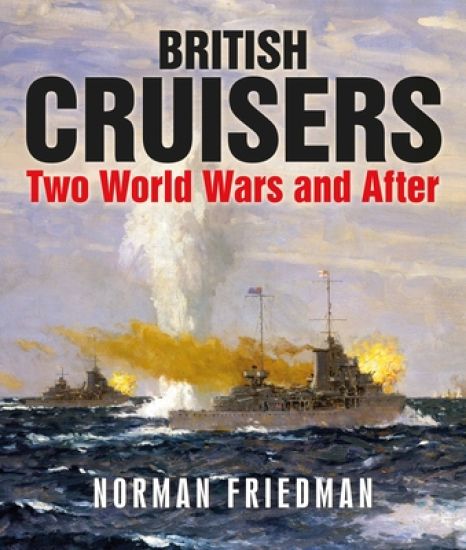
British Cruisers

British Cruisers

Norman Friedman

PEN SWORD BOOKS LTD
2022
nidottu
For most of the twentieth century Britain possessed both the worlds largest merchant fleet and its most extensive overseas territories. It is not surprising, therefore, that the Royal Navy always showed a particular interest in the cruiser a multi-purpose warship needed in large numbers to defend trade routes and police the empire. Above all other types, the cruisers competing demands of quality and quantity placed a heavy burden on designers, and for most of the inter-war years Britain sought to square this circle through international treaties restricting both size and numbers. In the process she virtually invented the heavy cruiser and inspired the large 6in-armed cruiser, neither of which, ironically, served her best interests. For the first time this book seeks to comprehend the full policy background, from which a different and entirely original picture emerges of British cruiser development. After the war the cruisers role was reconsidered and the final chapters of the book cover modernisations, the plans for missile-armed ships and the convoluted process that turned the through-deck cruiser into the Invincible class light carriers. With detailed appendices of ship data, and illustrated in depth with photos and A D Bakers specially commissioned plans, British Cruisers truly matches the lofty standards set by Friedmans previous books on British destroyers. **'This is a sumptuous volume, providing a most authoritative and comprehensive review of British cruisers in the twentieth century. The book is beautifully laid out to Seaforth's traditional high standard.'** _Scuttlebutt_
U.S. Cruisers

U.S. Cruisers

Norman Friedman

Naval Institute Press
2021
sidottu
The Norman Friedman Illustrated Design History series of U.S. warships books has been an industry standard for three decades and has sold thousands of copies worldwide. To mark and celebrate this achievement, the Naval Institute Press is proud to make these books available once more. Digitally remastered for enhanced photo resolution and quality, corrected, and updated, this series will continue to serve--for scholars and enthusiasts alike--as the foundation for U.S. naval warship research and reference for years to come. U.S. Cruisers is one the most comprehensive references available on the entire development of U.S. cruisers, from the first steel cruisers, the flawed designs of the Washington Naval Treaty era, the light, heavy, and large cruisers of World War II, the postwar rapid-fire artillery designs of the Des Moines and the Worcester classes, guided-missile conversions, and to the Aegis ships of the Ticonderoga-class. Like the other books in Norman Friedman's design-history series, U.S. Cruisers is based largely on formerly classified internal U.S. Navy records. Friedman, a leading authority on U.S. warships, explains the political and technical rationales of warship construction and recounts the evolution of each design. Alan Raven and A.D. Baker III have created detailed scale outboard and plan views of each ship class and of major modifications to many classes. Numerous photographs complement the text.
U.S. Battleships

U.S. Battleships

Norman Friedman

Naval Institute Press
2021
sidottu
The Norman Friedman Illustrated Design History series of U.S. warships books has been an industry standard for three decades and has sold thousands of copies worldwide. To mark and celebrate this achievement, the Naval Institute Press is proud to make these books available once more. Digitally remastered for enhanced photo resolution and quality, corrected, and updated, this series will continue to serve--for scholars and enthusiasts alike--as the foundation for U.S. naval warship research and reference for years to come.U.S. Battleships is one the most comprehensive references available on the entire development of U.S. battleships, starting in 1886, with Maine and Texas, continuing to South Carolina, the U. S. Navy's first dreadnought, through to the behemoth Montana-class of World War II, Friedman authoritatively analyzes the design and performance histories of this popular type. The long careers of the Iowa-class, including their recommissioning in the late Cold War, are covered. Like the other books in Friedman's design-history series, U.S. Battleships is based largely on formerly classified internal U.S. Navy records. Friedman, a leading authority on U.S. warships, explains the political and technical rationales for building battleships and recounts the evolution of each design. Alan Raven and A.D. Baker III have created detailed scale outboard and plan views of each ship class and of major modifications to many classes. Numerous photographs complement the text.
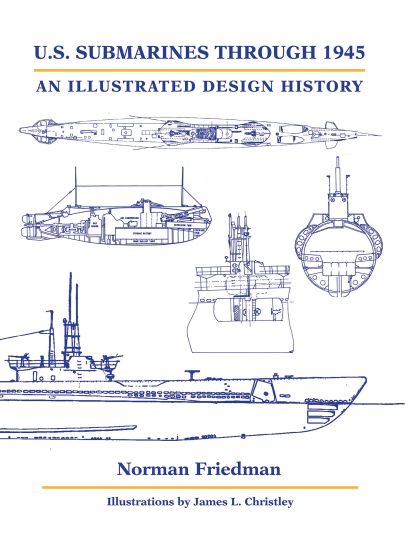
U.S. Submarines Through 1945

U.S. Submarines Through 1945

Norman Friedman

Naval Institute Press
2021
sidottu
The Norman Friedman Illustrated Design History series of U.S. warships books has been an industry standard for three decades and has sold thousands of copies worldwide. To mark and celebrate this achievement, the Naval Institute Press is proud to make these books available once more. Digitally remastered for enhanced photo resolution and quality, corrected, and updated, this series will continue to serve--for scholars and enthusiasts alike--as the foundation for U.S. naval warship research and reference for years to come. U.S. Submarines Through 1945 is one the most comprehensive references available on the entire development of U.S. Submarines from the first commissioned undersea fighting vessel, Alligator, in 1862, to the S boats of World War I, and the feared fleet submarines of the Gato and Balao classes of World War II. Like the other books in Norman Friedman's design-history series, U.S. Submarines Through 1945 is based largely on formerly classified internal U.S. Navy records. Friedman, a leading authority on U.S. warships, explains the political and technical rationales of warship construction and recounts the evolution of each design. This volume is fully illustrated with deck plans, outboard profiles, sketches from major design studies, and numerous detailed photographs complement the text.