Kirjojen hintavertailu. Mukana 12 246 928 kirjaa ja 12 kauppaa.

Kirjailija

Norman M. Naimark

Kirjat ja teokset yhdessä paikassa: 9 kirjaa, julkaisuja vuosilta 1983-2023, suosituimpien joukossa Fires of Hatred. Vertaile teosten hintoja ja tarkista saatavuus suomalaisista kirjakaupoista.

Mukana myös kirjoitusasut: Norman M Naimark

9 kirjaa

Kirjojen julkaisuhaarukka 1983-2023.

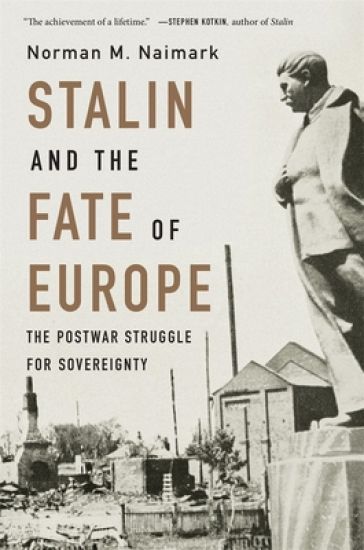
Stalin and the Fate of Europe

Stalin and the Fate of Europe

Norman M. Naimark

HARVARD UNIVERSITY PRESS
2023
nidottu
A Financial Times Best Book of the YearWinner of the Norris and Carol Hundley AwardWinner of the US–Russia Relations Book Prize“The achievement of a lifetime.”—Stephen Kotkin, author of Stalin“Naimark has few peers as a scholar of Stalinism, the Soviet Union and 20th-century Europe, and his latest work Stalin and the Fate of Europe is one of his most original and interesting.”—Financial Times“A timely and instructive account not merely of our own history but also of our fractious, unsettling present.”—Daniel Beer, The Guardian“Adds an abundance of fresh knowledge to a time and place that we think we know, clarifying the contours of Soviet–American conflict by skillfully enriching the history of postwar Europe.”—Timothy Snyder, author of BloodlandsWas the division of Europe after World War II inevitable? In this powerful reassessment of the postwar order, Norman Naimark suggests that Stalin was far more open to a settlement than we have thought. Through revealing case studies from Poland and Yugoslavia to Finland and Albania, Naimark recasts the early Cold War by focusing on Europeans’ fight to determine their future.With Western occupation forces in central Europe and Soviet forces controlling most of the continent’s eastern half, European leaders had to nimbly negotiate outside pressures. For some, this meant repelling Soviet dominance. For others, it meant enlisting the Americans to support their aims. Revealing an at times surprisingly flexible Stalin and showing European leaders deftly managing their nations’ interests, Stalin and the Fate of Europe uncovers the lost potential of an alternative trajectory before 1949, when the Cold War split became irreversible.
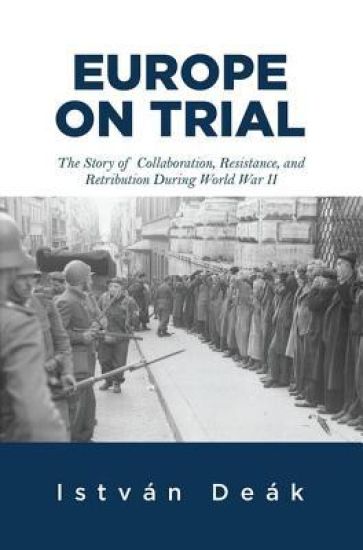
Europe on Trial

Europe on Trial

Istvan Deak; Norman M. Naimark

Routledge
2019
sidottu
Europe on Trial explores the history of collaboration, retribution, and resistance during World War II. These three themes are examined through the experiences of people and countries under German occupation, as well as Soviet, Italian, and other military rule. Those under foreign rule faced innumerable moral and ethical dilemmas, includin
Genocide

Genocide

Norman M. Naimark

Oxford University Press Inc
2017
sidottu
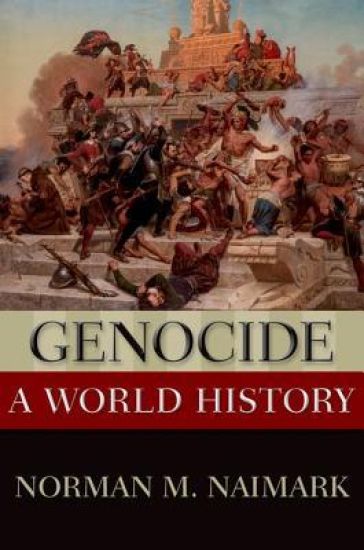
Genocide occurs in every time period and on every continent. Using the 1948 U.N. definition of genocide as its departure point, this book examines the main episodes in the history of genocide from the beginning of human history to the present. Norman M. Naimark lucidly shows that genocide both changes over time, depending on the character of major historical periods, and remains the same in many of its murderous dynamics. He examines cases of genocide as distinct episodes of mass violence, but also in historical connection with earlier episodes. Unlike much of the literature in genocide studies, Naimark argues that genocide can also involve the elimination of targeted social and political groups, providing an insightful analysis of communist and anti-communist genocide. He pays special attention to settler (sometimes colonial) genocide as a subject of major concern, illuminating how deeply the elimination of indigenous peoples, especially in Africa, South America, and North America, influenced recent historical developments. At the same time, the "classic" cases of genocide in the twentieth Century - the Armenian Genocide, the Holocaust, Rwanda, and Bosnia -- are discussed, together with recent episodes in Darfur and Congo.
Genocide

Genocide

Norman M. Naimark

Oxford University Press Inc
2016
nidottu
Genocide occurs in every time period and on every continent. Using the 1948 U.N. definition of genocide as its departure point, this book examines the main episodes in the history of genocide from the beginning of human history to the present. Norman M. Naimark lucidly shows that genocide both changes over time, depending on the character of major historical periods, and remains the same in many of its murderous dynamics. He examines cases of genocide as distinct episodes of mass violence, but also in historical connection with earlier episodes. Unlike much of the literature in genocide studies, Naimark argues that genocide can also involve the elimination of targeted social and political groups, providing an insightful analysis of communist and anti-communist genocide. He pays special attention to settler (sometimes colonial) genocide as a subject of major concern, illuminating how deeply the elimination of indigenous peoples, especially in Africa, South America, and North America, influenced recent historical developments. At the same time, the "classic" cases of genocide in the twentieth Century - the Armenian Genocide, the Holocaust, Rwanda, and Bosnia -- are discussed, together with recent episodes in Darfur and Congo.
Europe on Trial

Europe on Trial

Istvan Deak; Norman M. Naimark

Westview Press Inc
2013
nidottu
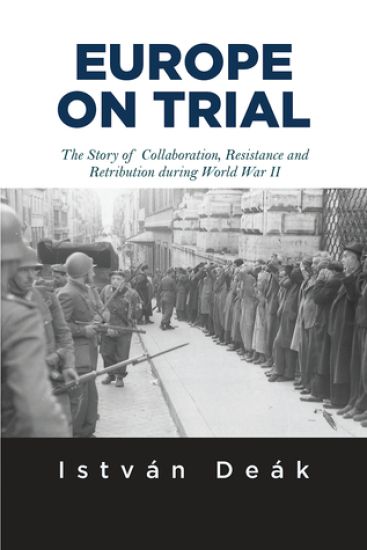
Europe on Trial explores the history of collaboration, retribution, and resistance during World War II. These three themes are examined through the experiences of people and countries under German occupation, as well as Soviet, Italian, and other military rule. Those under foreign rule faced innumerable moral and ethical dilemmas, including the question of whether to cooperate with their occupiers, try to survive the war without any political involvement, or risk their lives by becoming resisters. Many chose all three, depending on wartime conditions. Following the brutal war, the author discusses the purges of real or alleged war criminals and collaborators, through various acts of violence, deportations, and judicial proceedings at the Nuremberg International Military Tribunal as well as in thousands of local courts. Europe on Trial helps us to understand the many moral consequences both during and immediately following World War II.
Stalin's Genocides

Stalin's Genocides

Norman M. Naimark

Princeton University Press
2011
pokkari
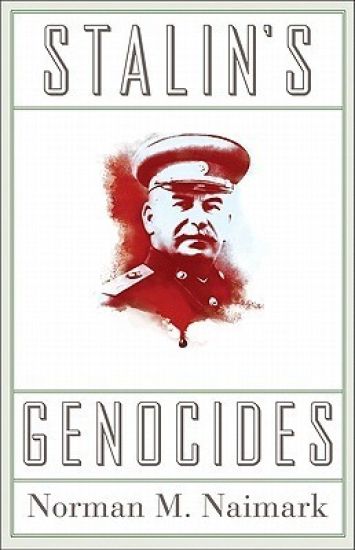
Between the early 1930s and his death in 1953, Joseph Stalin had more than a million of his own citizens executed. Millions more fell victim to forced labor, deportation, famine, bloody massacres, and detention and interrogation by Stalin's henchmen. Stalin's Genocides is the chilling story of these crimes. The book puts forward the important argument that brutal mass killings under Stalin in the 1930s were indeed acts of genocide and that the Soviet dictator himself was behind them. Norman Naimark, one of our most respected authorities on the Soviet era, challenges the widely held notion that Stalin's crimes do not constitute genocide, which the United Nations defines as the premeditated killing of a group of people because of their race, religion, or inherent national qualities. In this gripping book, Naimark explains how Stalin became a pitiless mass killer. He looks at the most consequential and harrowing episodes of Stalin's systematic destruction of his own populace--the liquidation and repression of the so-called kulaks, the Ukrainian famine, the purge of nationalities, and the Great Terror--and examines them in light of other genocides in history. In addition, Naimark compares Stalin's crimes with those of the most notorious genocidal killer of them all, Adolf Hitler.
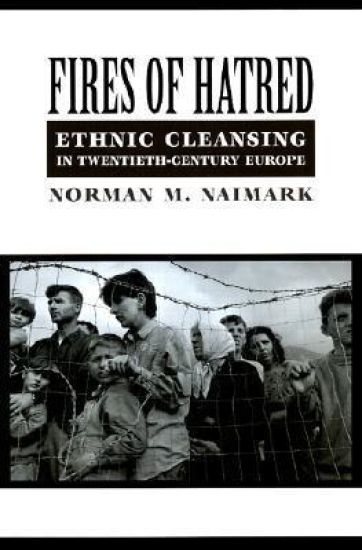
Fires of Hatred

Fires of Hatred

Norman M. Naimark

Harvard University Press
2002
nidottu
Of all the horrors of the last century—perhaps the bloodiest century of the past millennium—ethnic cleansing ranks among the worst. The term burst forth in public discourse in the spring of 1992 as a way to describe Serbian attacks on the Muslims of Bosnia-Herzegovina, but as this landmark book attests, ethnic cleansing is neither new nor likely to cease in our time.Norman Naimark, distinguished historian of Europe and Russia, provides an insightful history of ethnic cleansing and its relationship to genocide and population transfer. Focusing on five specific cases, he exposes the myths about ethnic cleansing, in particular the commonly held belief that the practice stems from ancient hatreds. Naimark shows that this face of genocide had its roots in the European nationalism of the late nineteenth century but found its most virulent expression in the twentieth century as modern states and societies began to organize themselves by ethnic criteria. The most obvious example, and one of Naimark’s cases, is the Nazi attack on the Jews that culminated in the Holocaust. Naimark also discusses the Armenian genocide of 1915 and the expulsion of Greeks from Anatolia during the Greco–Turkish War of 1921–22; the Soviet forced deportation of the Chechens-Ingush and the Crimean Tatars in 1944; the Polish and Czechoslovak expulsion of the Germans in 1944–47; and Bosnia and Kosovo.In this harrowing history, Naimark reveals how over and over, as racism and religious hatreds picked up an ethnic name tag, war provided a cover for violence and mayhem, an evil tapestry behind which nations acted with impunity.
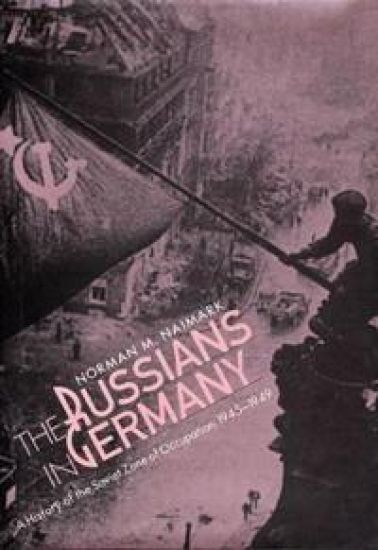
The Russians in Germany

The Russians in Germany

Norman M. Naimark

The Belknap Press
1997
nidottu
In 1945, when the Red Army marched in, eastern Germany was not “occupied” but “liberated.” This, until the recent collapse of the Soviet Bloc, is what passed for history in the German Democratic Republic. Now, making use of newly opened archives in Russia and Germany, Norman Naimark reveals what happened during the Soviet occupation of eastern Germany from 1945 through 1949. His book offers a comprehensive look at Soviet policies in the occupied zone and their practical consequences for Germans and Russians alike—and, ultimately, for postwar Europe.In rich and lucid detail, Naimark captures the mood and the daily reality of the occupation, the chaos and contradictions of a period marked by rape and repression, the plundering of factories, the exploitation of German science, and the rise of the East German police state. Never have these practices and their place in the overall Soviet strategy, particularly the political development of the zone, received such thorough treatment. Here we have our first clear view of how the Russians regarded the postwar settlement and the German question, how they made policy on issues from reparations to technology transfer to the acquisition of uranium, how they justified their goals, how they met them or failed, and how they changed eastern Germany in the process. The Russians in Germany also takes us deep into the politics of culture as Naimark explores the ways in which Soviet officers used film, theater, and education to foster the Bolshevization of the zone.Unique in its broad, comparative approach to the Soviet military government in Germany, this book fills in a missing—and ultimately fascinating—chapter in the history of modern Europe.