

Kirjailija
Norman Page
Kirjat ja teokset yhdessä paikassa: 34 kirjaa, julkaisuja vuosilta 1981-2020, suosituimpien joukossa D. H. Lawrence. Vertaile teosten hintoja ja tarkista saatavuus suomalaisista kirjakaupoista.
34 kirjaa
Kirjojen julkaisuhaarukka 1981-2020.



Fifty-Two illustrated memoirs and spiritual insights,from a veterinary surgeon who came to see that Christ was ultimately `in all and through all'. This is a book to inspire a living faith in children and adults alike.

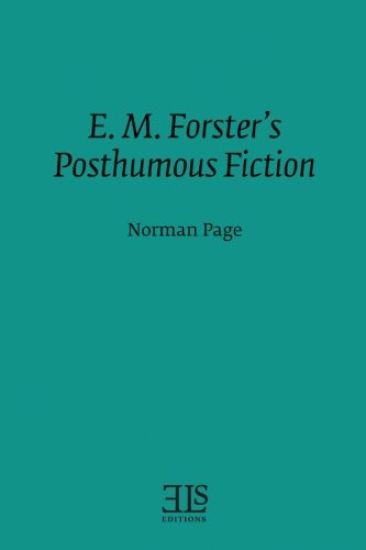
E. M. Forster's Posthumous Fiction
Norman Page
Createspace Independent Publishing Platform
2016
nidottu

The MERCHANT of SKID ROW: A Novella
Norman Page
Createspace Independent Publishing Platform
2015
nidottu
This story is about an ex-stockbroker who ended up on LA's Skid Row. During a dumpster diving episode he found a cell phone containing a threating text message. He and two of his fellow residents realized they must work fast in order to save a life.


Folk Artistry: Discover your Inner Ingenuista
Norman Page
Createspace Independent Publishing Platform
2014
nidottu
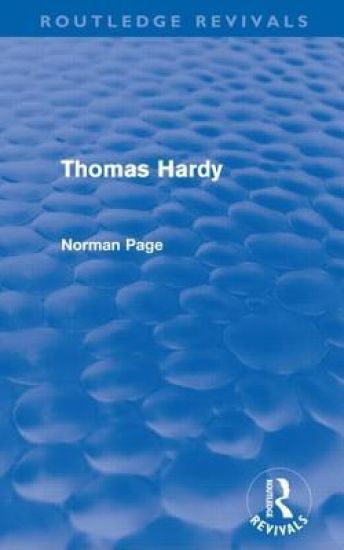
First published in 1977, this concise and insightful study of the life and works of Thomas Hardy provides a thorough examination of Hardy's literary output. Alongside a brief biography of Hardy's life, Professor Page's study also spotlights his major and minor novels, his short stories, his non-fiction prose and his verse.
First published in 1972, Norman Page’s seminal study of The Language of Jane Austen seeks to demonstrate both the exceptional nature and the degree of subtlety of Jane Austen’s use of language. As well as examining the staple items of her vocabulary and some of the characteristic patterns of her syntax, attention is paid to her use of dialogue and of the letter form. The aim of the study is not simply to analyse linguistic qualities for their own sake but to employ close verbal analysis to enrich the critical understanding of Jane Austen’s novels.
First published in 1972, Norman Page’s seminal study of The Language of Jane Austen seeks to demonstrate both the exceptional nature and the degree of subtlety of Jane Austen’s use of language. As well as examining the staple items of her vocabulary and some of the characteristic patterns of her syntax, attention is paid to her use of dialogue and of the letter form. The aim of the study is not simply to analyse linguistic qualities for their own sake but to employ close verbal analysis to enrich the critical understanding of Jane Austen’s novels.
First published in 1977, this concise and insightful study of the life and works of Thomas Hardy provides a thorough examination of Hardy's literary output. Alongside a brief biography of Hardy's life, Professor Page's study also spotlights his major and minor novels, his short stories, his non-fiction prose and his verse.
This book is designed to serve as a practical guide for students and others wishing to improve their skills in the detailed analysis and discussion of Hardy's prose texts. Its aim is to sharpen readers' awareness of the complexity and subtlety of Hardy's art by encouraging responsiveness to such aspects as language and style, imagery and symbol, descriptive and dramatic method and narrative technique. At the same time extracts are considered not in isolation but in relation to the overall purposes of a highly-organised text.While the main focus is on four of Hardy's most-widely read novels, the twenty-four examples of close analysis cover six major themes that are relevant to all his fiction. There are also numerous references to his other writings in prose and verse. The second part of the book provides, in succinct form, essential background material, including an outline of Hardy's life and career and an account of the literary, historical and intellectual contexts of his fiction. As well as a guide to further reading, a chapter is devoted to samples of criticism illustrating a range of approaches to the chosen texts and representing the work of important critics past and present.
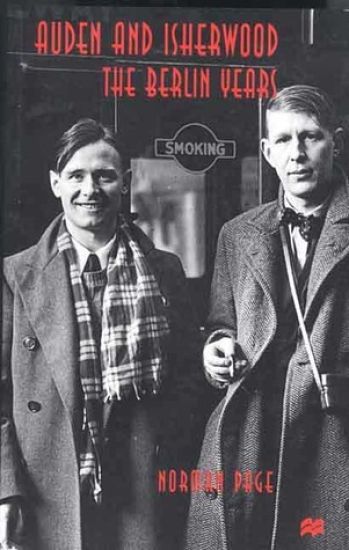
Like Paris in the '20s, Berlin in the early thirties was one of the most exciting cities in the world. As the Weimar Republic sputtered to a close and war loomed on the horizon, the city was a magnet for talented writers and artists. It was in this now-vanished time and place that W.H. Auden and Christopher Isherwood lived, wrote and slept together. Norman Page tells the story of how these years shaped these important writers and, in doing so, illuminates a bygone era.
Drawing on much contemporary material, including Auden's fascinating unpublished diary, this book places personal experience in the context of the life of a great city: not only its political, artistic and cultural life, but the life of the streets, bars and caf? It presents portraits of figures, often fascinating in their own right, with whom Auden and Isherwood came into contact, and it demonstrates how, especially in Isherwood's fiction, the raw material of daily existence was transformed into art. The wide scope of this study, which ranges from poetry and cinema to street violence and prostitution, provides a richly detailed context for its account of two writers engaged in the process of self-definition.
Drawing on much contemporary material, including Auden's fascinating unpublished diary, this book places personal experience in the context of the life of a great city: not only its political, artistic and cultural life, but the life of the streets, bars and caf? It presents portraits of figures, often fascinating in their own right, with whom Auden and Isherwood came into contact, and it demonstrates how, especially in Isherwood's fiction, the raw material of daily existence was transformed into art. The wide scope of this study, which ranges from poetry and cinema to street violence and prostitution, provides a richly detailed context for its account of two writers engaged in the process of self-definition.
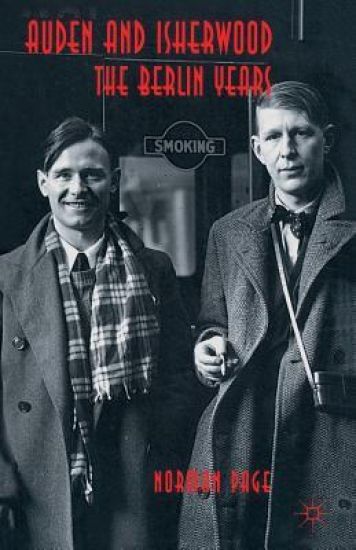
Drawing on much contemporary material, including Auden's fascinating unpublished diary, this book places personal experience in the context of the life of a great city: not only its political, artistic and cultural life, but the life of the streets, bars and caf? It presents portraits of figures, often fascinating in their own right, with whom Auden and Isherwood came into contact, and it demonstrates how, especially in Isherwood's fiction, the raw material of daily existence was transformed into art. The wide scope of this study, which ranges from poetry and cinema to street violence and prostitution, provides a richly detailed context for its account of two writers engaged in the process of self-definition.