Kirjojen hintavertailu. Mukana 12 595 353 kirjaa ja 12 kauppaa.

Kirjailija

Norman Polmar

Kirjat ja teokset yhdessä paikassa: 16 kirjaa, julkaisuja vuosilta 2003-2026, suosituimpien joukossa World War II: the Encyclopedia of the War Years, 1941-1945. Vertaile teosten hintoja ja tarkista saatavuus suomalaisista kirjakaupoista.

16 kirjaa

Kirjojen julkaisuhaarukka 2003-2026.

Submarines of the Russian and Soviet Navies

Submarines of the Russian and Soviet Navies

Norman Polmar

SCHIFFER PUBLISHING LTD
2026
sidottu
This is the definitive history of the Russian submarine program since WWII. Submarines emerged as a particularly terrifying weapon after WWII, in no small part through the application of nuclear propulsion and the development of shipborne nuclear missiles. The Soviet Union invested huge funding into a world-class submarine program, producing innovative designs in imposing numbers. Norman Polmar is a best-selling author and recognized authority on the topic. His earlier works on Russian and Soviet subs earned plaudits from high-ranking officers in both the US and Russian navies. This new volume, based on those earlier works, provides readers with the authoritative English-language history of the postwar submarine force of the USSR and Russian Federation. It includes more than 100 photographs and line drawings.
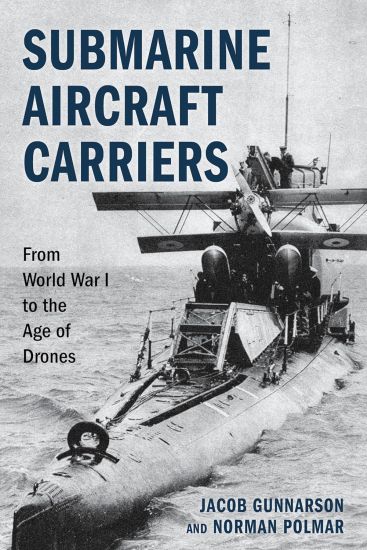
Submarine Aircraft Carriers

Submarine Aircraft Carriers

Jacob Gunnarson; Norman Polmar

STACKPOLE BOOKS
2025
sidottu
Two innovations in weaponry appeared at the beginning of the twentieth century and revolutionized warfare, turning it into a multidimensional contest: the modern diesel-powered submarine and the fixed-wing aircraft. Both saw extensive use during World War I, and the nations of the world soon developed mobile launching pads for planes during and after the war, first using surface ships and then submarines. The submarine aircraft carrier was born. Virtually nothing has been written about these weapons--until now, in this detailed narrative by one of the world's leading naval experts. Submarine aircraft carriers were pursued by all of the world's major naval powers: the United States, Great Britain, Germany, France, Italy, Japan, and the Soviet Union. Germany led the way, and while its efforts did not put vessels into battle during World War I, rumors of such a submarine caused widespread panic in New York City in 1918. Despite concentrated efforts during the 1920s and 1930s, only Japan and France had seagoing submarine aircraft carriers when World War II erupted. France's single such vessel disappeared at sea in 1942, but Japan built forty-seven, including three of its massive I-400 class, the largest submarines of World War II. Japanese submarine aircraft carriers launched the only aerial bombing of the contiguous United States, when a sub-based plane dropped bombs over Oregon. The three I-400s figured prominently in Japan's never-realized plans to attack the Panama Canal, New York City, and Washington, DC, as well as in Operation Cherry Blossoms at Night, Japan's last-ditch plan to spread bubonic plague and other pathogens to the coastal cities of California. After World War II, both the United States and the Soviet Union pursued further development of submarine aircraft carriers as part of their nuclear strike capabilities--including some fanciful ideas for truly gigantic submarines launching bomber aircraft--but the advent of guided cruise missiles quickly ended interest in these vessels. In this comprehensive and readable history, Jacob Gunnarson and Norman Polmar draws on more than sixty years of researching and writing about the world's naval vessels to uncover the development of submarine aircraft carriers. Their story reveals much about twentieth-century naval strategy, tactics, and technology.
Spy Ships

Spy Ships

Norman Polmar; Lee J. Mathers; Rear Admiral Thomas A Brooks

Potomac Books Inc
2023
sidottu
Almost from the first days of seafaring, men have used ships for “spying” and intelligence collection. Since early in the twentieth century, with the technological advancements of radio and radar, the U.S. Navy and other government agencies and many other navies have used increasingly specialized ships and submarines to ferret out the secrets of other nations. The United States and the Soviet Union/Russia have been the leaders in those efforts, especially during the forty-five years of the Cold War. But, as Norman Polmar and Lee J. Mathers reveal, so has China, which has become a major maritime power in the twenty-first century, with special interests in the South China Sea and with increasing hostility toward the United States. Through extensive, meticulous research and through the lens of such notorious spy ship events as the Israeli attack on the USS Liberty, the North Korean capture of the USS Pueblo, and the U.S. Central Intelligence Agency’s success in clandestinely salvaging part of a Soviet submarine with the Hughes Glomar Explorer, Spy Ships is a fascinating and valuable resource for understanding maritime intelligence collection and what we have learned from it.
Admiral Gorshkov

Admiral Gorshkov

Norman Polmar; Thomas A. Brooks; George E. Fedoroff

Naval Institute Press
2019
sidottu
Admiral of the Fleet of the Soviet Union Sergei G. Gorshkov was the product of a tradition unlike those of his Western contemporaries. He had a unique background of revolution, civil war, world wars, and the forceful implementation of an all-controlling communist dictatorship. Out of this background of violence and overwhelming transformation came a man with a clear understanding of the value of navies, but with his own unique ideas about the kind of navy that the Soviet Union required, and the role that navy should play in Soviet military and national strategy.Western naval observers have often attempted to define Admiral Gorshkov in Western naval terms. Many of these observers have been baffled when they find that the man and his actions simply did not fit conventional narratives. This book lays out the tradition, background, experiences, and thinking of the man as they relate to the development of the Soviet Navy that Gorshkov commanded for almost three decades and that was able to directly challenge the maritime dominance of the United States--a traditional sea power. His influence persists to this day, as the Russian Navy that is at sea in the twenty-first century is, to a significant degree, based on the fleet that Admiral Gorshkov built.
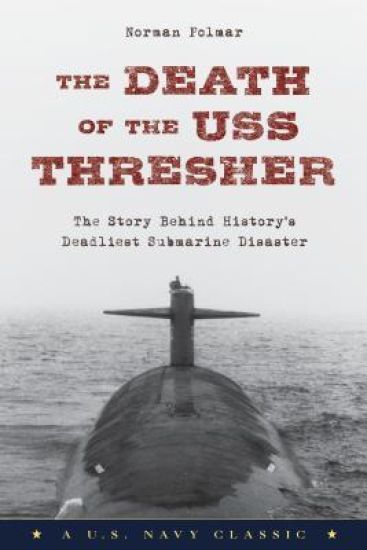
The Death of the USS Thresher

The Death of the USS Thresher

Norman Polmar

The Lyons Press
2018
pokkari
A must-read for submarine buffs! On the morning of April 10, 1963, the world's most advanced submarine was on a test dive off the New England coast when she sent a message to a support ship a thousand feet above her on the surface: experiencing minor problem . . . have positive angle . . . attempting to blow . . . . Then came the sounds of air under pressure and a garbled message: . . . test depth . . . Last came the eerie sounds that experienced navy men knew from World War II: the sounds of a submarine breaking up and compartments collapsing. When she first went to sea in April of 1961, the U.S. nuclear submarine Thresher was the most advanced submarine at sea, built specifically to hunt and kill Soviet submarines. In The Death of the USS Thresher, renowned naval and intelligence consultant Norman Polmar recounts the dramatic circumstances surrounding her implosion, which killed all 129 men on board, in history's first loss of a nuclear submarine.
The Naval Institute Guide to the Ships and Aircraft of the U.S. Fleet, 19th Edition
Continuing its longstanding tradition as the most complete naval resource of its kind, this updated 19th edition of The Naval Institute Guide to the Ships and Aircraft of the U.S. meets the high expectations and exacting standards of those who rely on this volume to stay informed and to make related policy, force level, technological and weapons decisions. Packed with comprehensive information, up-to-date photographs, line drawings, and useful appendixes, this timely new guide describes the U.S. Navy, Marine Corps, and Coast Guard during an intensive period of transformation while engaged in combat operations as the Muslim world undergoes dramatic changes. In describing“ships and aircraft,” extensive coverage is given to the new littoral combat ships, joint high-speed vessels, GERALD R. FORD-class aircraft carriers, and other new ships as well as developments in shipboard ballistic missile defense. At the same time, the convoluted path in surface combatant construction is “deciphered” while the belated decision to cancel the Marine expeditionary fighting vehicle is explained. Also addressed in detail is the new F-35 series joint strike fighter and other aviation programs. Similarly addressed are Navy personnel, Marine Corps issues, Coast Guard forces, marine mammals, unmanned underwater and aerial vehicles, and other aspects of U.S. naval forces. About the Author Norman Polmar is an internationally known analyst, consultant and award-winning author specialising in naval, aviation and intelligence areas.
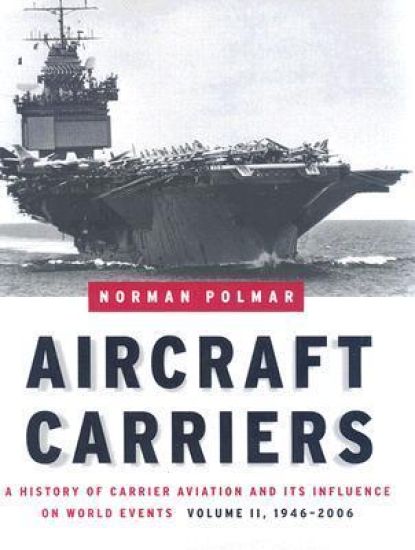
Aircraft Carriers

Aircraft Carriers

Norman Polmar

Potomac Books Inc
2008
sidottu
In the post-1945 era, the aircraft carrier has remained a valued weapon despite the development of nuclear weapons, cruise and ballistic missiles, and highly capable submarines. At times, as in the early days of the Korean and Vietnam Wars and in the Falklands conflict, carriers alone could deploy high-performance aircraft to the battlefield. In other operations, such as enforcing the no-fly zones and the U.S. invasions of Afghanistan and Iraq, only carriers could provide the bases needed for sustained combat and support operations. This second volume of Norman Polmar's landmark study details the role of carriers in the unification of the U.S. armed forces and strategic deterrence, fiscally constrained Great Britain, the development of British Commonwealth and ex-colonial navies, and the efforts of France and the Netherlands to rebuild their fleets. The role of the modern carrier-nine nations currently possess them-is discussed, as are the issues confronting nations that might acquire them. Chapters on the Soviet Union's effort to produce carriers are included for the first time. The development of both carrier planes and the many "oddball" aircraft that have flown from carriers-such as the U-2 spy plane-are also examined. Appendixes include comprehensive data on all carriers built and converted through 2006.This volume is a valuable companion to the critically acclaimed Volume I, which covers aircraft carrier development and operations from 1909 to 1945.
Rickover

Rickover

Thomas B. Allen; Norman Polmar

Potomac Books Inc
2007
pokkari
Hyman G. Rickover was not long removed from his Jewish roots in Poland when he graduated from the U.S. Naval Academy in 1922. After a respectable career spent mostly in unglamorous submarine and engineering billets, he took command of the U.S. Navy's nuclear propulsion program and revived his career, being retired—involuntarily—some thirty years later in early 1982. He was not only the architect of the nuclear Navy but also its builder. In the process, he erected a network of power and influence that rivaled those who were elected to high office, and that protected him from them when his controversial methods became objectionable or, as critics would suggest, undermined the nation's vital interests. Authors Thomas B. Allen and Norman Polmar, whose full-length biography of Rickover (in manuscript in 1981) was consulted by the Reagan Administration during the decision to remove him from active duty, are eminently qualified to write an essential treatment on the controversial genius of Admiral Rickover.
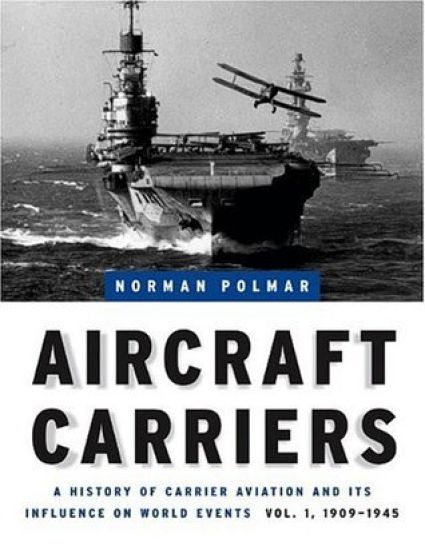
Aircraft Carriers - Volume 1

Aircraft Carriers - Volume 1

Norman Polmar

Potomac Books Inc
2006
sidottu
Aircraft Carriers is the definitive history of world aircraft carrier development and operations. Norman Polmar's revised and updated, two-volume classic describes the political and technological factors that influenced aircraft carrier design and construction, meticulously records their operations, and explains their impact on modern warfare. Volume I provides a comprehensive analysis of carrier developments and warfare in the first half of the twentieth century, and examines the advances that allowed the carrier to replace the battleship as the dominant naval weapons system. Polmar gives particular emphasis to carrier operations from World War I, through the Japanese strikes against China in the 1930s, to World War II in the Atlantic, Mediterranean, Arctic, and Pacific theaters. It begins with French inventor Clément Ader's remarkably prescient 1909 description of an aircraft carrier. The book then explains how Britain led the world in the development of aircraft-carrying ships, soon to be followed by the United States and Japan. While ship-based aircraft operations in World War I had limited impact, they foreshadowed the aircraft carriers built in the 1920s and 1930s. The volume also describes the aircraft operating from those ships as well as the commanders who pioneered carrier aviation.Aircraft Carriers has benefited from the technical collaboration of senior carrier experts Captain Eric M. Brown and General Minoru Genda as well as noted historians Robert M. Langdon and Peter B. Mersky. Aircraft Carriers is heavily illustrated with more than 400 photographs—some never before published—and maps.Volume II, which is forthcoming from Potomac Books in the winter 2006-2007 (ISBN 978-1-57488-665-8), will cover the period 1946 to the present.
Defcon-2

Defcon-2

Norman Polmar

Wiley
2006
nidottu
The closest we've ever come to the end of the world""DEFCON-2 is the best single volume on the Cuban Missile Crisis published and is an important contribution to the history of the Cold War. Beyond the military and political facts of the crisis, Polmar and Gresham sketch the personalities that created and coped with the crisis. They also show us how close we came to the edge without becoming sensationalistic.""--Larry Bond, bestselling author of Dangerous GroundSpy-satellite and aerial-reconnaissance photos reveal that one of the United States's bitterest enemies may be acquiring weapons of mass destruction and the means to use them against the American homeland. Administration officials refuse to accept intelligence professionals' interpretation of these images and order an end to spy missions over the offending nation. More than a month later, after vicious infighting, the president orders the spy missions to resume. The new photos reveal an array of ballistic missiles, capable of carrying nuclear warheads and striking deep within U.S. territory. It appears that the missiles will be fully operational within one week.This is not a plot setup for a suspense novel; it is the true story of the most terrifying moment in the 45-year Cold War between the United States and the Soviet Union: the Cuban Missile Crisis. DEFCON-2 tells this tale as it has never been told before--from both sides, with the help of hundreds of recently declassified U.S. and Soviet documents, as well as interviews with numerous former spies, military figures, and government officials who speak out here for the first time.
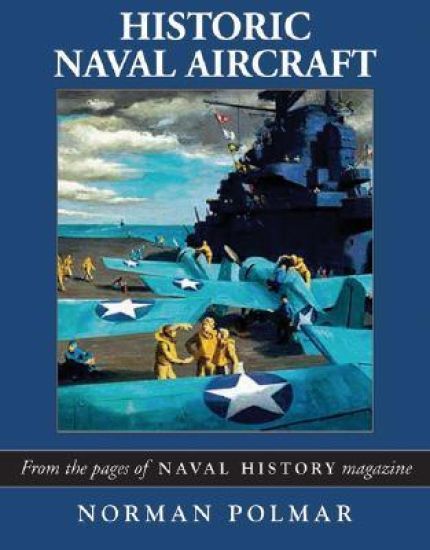
Historic Naval Aircraft

Historic Naval Aircraft

Norman Polmar

Potomac Books Inc
2006
nidottu
Norman Polmar’s book is a behind-the-scenes look at thirty-two important U.S. Navy and Marine Corps aircraft. These entries are based on the author’s "Historic Aircraft" column, appearing in Naval History. The aircraft selected, some famous and others virtually unknown, represent a mix of types: fighters, dive-bombers, patrol planes, transports, trainers, and helicopters, including the Pitcairn XOP-1 autogiro, the first rotary-wing aircraft to be operated by the Navy and Marines. They span the period from the Vought VE-7, the first type to take off from the Navy’s first carrier, the USS Langley, in 1922, through the Grumman A-6 Intruder, which flew in the Vietnam and Persian Gulf Wars before being retired from service in 1996. Prominently featured also are the classic aircraft that the Navy and Marines flew to victory in World War II. Combining technical detail with the human dramas of flight and aerial combat, Polmar makes each historic aircraft literally fly off the pages. This book is a must-have for every aviation enthusiast.
Defcon-2: Standing on the Brink of Nuclear War During the Cuban Missile Crisis
The closest we've ever come to the end of the world"DEFCON-2 is the best single volume on the Cuban Missile Crisis published and is an important contribution to the history of the Cold War. Beyond the military and political facts of the crisis, Polmar and Gresham sketch the personalities that created and coped with the crisis. They also show us how close we came to the edge without becoming sensationalistic."-Larry Bond, bestselling author of Dangerous GroundSpy-satellite and aerial-reconnaissance photos reveal that one of the United States's bitterest enemies may be acquiring weapons of mass destruction and the means to use them against the American homeland. Administration officials refuse to accept intelligence professionals' interpretation of these images and order an end to spy missions over the offending nation. More than a month later, after vicious infighting, the president orders the spy missions to resume. The new photos reveal an array of ballistic missiles, capable of carrying nuclear warheads and striking deep within U.S. territory. It appears that the missiles will be fully operational within one week.This is not a plot setup for a suspense novel; it is the true story of the most terrifying moment in the 45-year Cold War between the United States and the Soviet Union: the Cuban Missile Crisis. DEFCON-2 tells this tale as it has never been told before--from both sides, with the help of hundreds of recently declassified U.S. and Soviet documents, as well as interviews with numerous former spies, military figures, and government officials who speak out here for the first time.
Cold War Submarines

Cold War Submarines

Norman Polmar; K. J. Moore

Potomac Books Inc
2005
pokkari
Submarines had a vital, if often unheralded, role in the superpower navies during the Cold War. Their crews carried out intelligence-collection operations, sought out and stood ready to destroy opposing submarines, and, from the early 1960s, threatened missile attacks on their adversary's homeland, providing in many respects the most survivable nuclear deterrent of the Cold War. For both East and West, the modern submarine originated in German U-boat designs obtained at the end of World War II. Although enjoying a similar technology base, by the 1990s the superpowers had created submarine fleets of radically different designs and capabilities. Written in collaboration with the former Soviet submarine design bureaus, Norman Polmar and K. J. Moore authoritatively demonstrate in this landmark study how differing submarine missions, antisubmarine priorities, levels of technical competence, and approaches to submarine design organizations and management caused the divergence.
The Enola Gay

The Enola Gay

Norman Polmar

Potomac Books Inc
2004
nidottu
The world entered the atomic age in August 1945, when the B-29 Superfortress nicknamed Enola Gay flew some 1,500 miles from the island of Tinian and dropped an atomic bomb on Hiroshima, Japan. The "Little Boy" bomb exploded with the force of 12.5 kilotons of TNT, nearly destroying the city. Three days later, another B-29 dropped an atomic bomb on Nagasaki. The Japanese government, which had been preparing a bloody defense against an invasion, surrendered six days later. The aircraft was the primary artifact in an exhibition at the National Air and Space Museum from 1995 to 1998. The original, controversial exhibit script was changed, and the final exhibition attracted some 4 million visitors, testifying to the enduring interest in the aircraft and its mission. This book tells the story of the Enola Gay, the Boeing B-29 program, and the combat operations of the B-29 type. After nearly two decades of restoration, the Enola Gay will be one of the highlights of the museum's new Udvar-Hazy Center, which is scheduled to open at Dulles International Airport on December 15, 2003.