

Kirjailija
NORMAN RUSSELL
Kirjat ja teokset yhdessä paikassa: 27 kirjaa, julkaisuja vuosilta 1981-2025, suosituimpien joukossa SPUNTINO GERMAN CO ED. Vertaile teosten hintoja ja tarkista saatavuus suomalaisista kirjakaupoista.
27 kirjaa
Kirjojen julkaisuhaarukka 1981-2025.
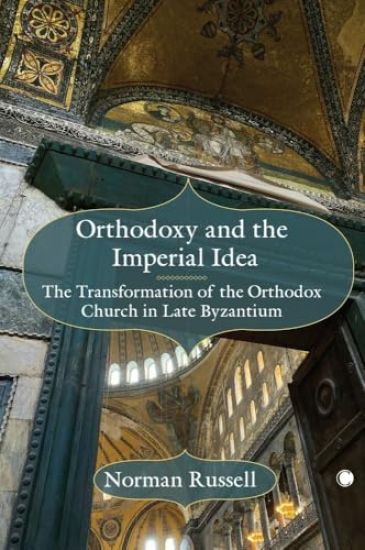
For those living in the East Roman Empire, it was God-protected, immune from the impermanence of other states. But in late Byzantium, intellectuals began to reconsider this assumption: could the East Roman Empire be vulnerable, even temporary? And what would that mean for the Orthodox Church? Through his engagement with influential intellectuals at the time, principally Philotheos Kokkinos, Demetrios Kydones, Cardinals Bessarion and Isidore, George Gemistos Plethon, Mark Eugenikos and George Scholarios, Norman Russell explores the strategies and responses to this seismic shift in the imagination and conceptualisation of the Church and the Empire. By exploring the details of such crucial events as the Hesychast Controversy, the ecclesiastical revolution that followed, and successive attempts to attain ecclesiastical union with the West, Norman Russell considers how the Orthodox Church adapted to survive and flourish under Ottoman rule. This is an important new contribution to the scholarship of the Orthodox Church in the Byzantine period, of interest to scholars of Byzantine civilisation, the East Roman Empire, and the Orthodox Church.
Village Work in India; pen Pictures From a Missionary's Experience
Norman Russell
Hutson Street Press
2025
pokkari
Village Work in India; pen Pictures From a Missionary's Experience
Norman Russell
Hutson Street Press
2025
sidottu
For those living in the East Roman Empire, it was God-protected, immune from the impermanence of other states. But in late Byzantium, intellectuals began to reconsider this assumption: could the East Roman Empire be vulnerable, even temporary? And what would that mean for the Orthodox Church? Through his engagement with influential intellectuals at the time, principally Philotheos Kokkinos, Demetrios Kydones, Cardinals Bessarion and Isidore, George Gemistos Plethon, Mark Eugenikos and George Scholarios, Norman Russell explores the strategies and responses to this seismic shift in the imagination and conceptualisation of the Church and the Empire. By exploring the details of such crucial events as the Hesychast Controversy, the ecclesiastical revolution that followed, and successive attempts to attain ecclesiastical union with the West, Norman Russell considers how the Orthodox Church adapted to survive and flourish under Ottoman rule. This is an important new contribution to the scholarship of the Orthodox Church in the Byzantine period, of interest to scholars of Byzantine civilisation, the East Roman Empire, and the Orthodox Church.
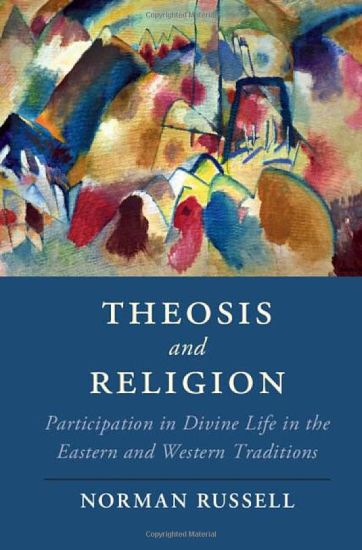
Theosis, originally a Greek term for Christian divinisation or deification, has become a vogue word in modern theology. Although recent publications have explored its meaning in a selection of different contexts, this is the first book to offer a coherent narrative of how the concept of theosis developed in both its Eastern and Western versions. Norman Russell shows how the role of Dionysius the Areopagite was pivotal, not only in Byzantium but also in the late mediaeval West, where it strengthened the turn towards an individualistic interiority. Russell also relates theosis to changing concepts of religion in the modern age. He investigates the Russian version of theosis, introduced in the West by Russian members the Paris School after the 1917 Revolution. Since then, theosis has undergone additional development through the addition of esoteric elements which have since passed into the mainstream of all theological traditions and even into popular spirituality.
Theosis, originally a Greek term for Christian divinisation or deification, has become a vogue word in modern theology. Although recent publications have explored its meaning in a selection of different contexts, this is the first book to offer a coherent narrative of how the concept of theosis developed in both its Eastern and Western versions. Norman Russell shows how the role of Dionysius the Areopagite was pivotal, not only in Byzantium but also in the late mediaeval West, where it strengthened the turn towards an individualistic interiority. Russell also relates theosis to changing concepts of religion in the modern age. He investigates the Russian version of theosis, introduced in the West by Russian members the Paris School after the 1917 Revolution. Since then, theosis has undergone additional development through the addition of esoteric elements which have since passed into the mainstream of all theological traditions and even into popular spirituality.
DEATH AT THE ALTAR an absolutely gripping murder mystery full of twists
Norman Russell
JOFFE BOOKS LTD
2023
pokkari
Residents of Oldminster are horrified by the arrival of the city's first lady vicar, Reverend Stacey Williams. No sooner does she step foot in the ancient church that trouble begins . . . First there are violent protests. Next are several threatening letters. Then the font where Williams is meant to hold her first baptism is discovered filled with blood. Finally, a few weeks later, whilst performing Holy Communion, Reverend Williams keels over after taking a sip of the holy wine. The chalice clangs onto the altar steps as she lands, like a rag doll, onto the sanctuary floor. Oldminster's first female vicar is dead, most likely poisoned by her own wine Suspicion immediately falls onto the many townsfolk who were so outraged by Williams' arrival. But could one of them really be capable of cold-blooded murder? The devil is at play, and it's up to Detectives French and Edwards to uncover the truth.
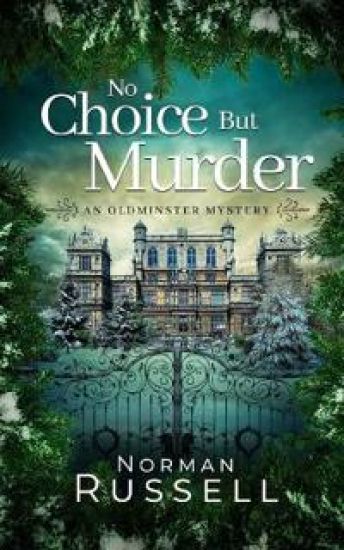
NO CHOICE BUT MURDER an absolutely gripping murder mystery full of twists
Norman Russell
JOFFE BOOKS LTD
2022
pokkari
It's a stormy dark night in the quaint English town of Oldminister when local gallery owner Louis Gillette is discovered dead in his office. Gillette seems to have been bludgeoned to death, the safe nearby open and empty of all contents - possibly the result of a burglary? But all is not as it seems. Very soon, it comes to light that Gillette was in fact poisoned first. Someone then beat his unconscious body. Were both these crimes committed by the same person? And more importantly, why? It soon becomes apparent that Gillette was an unpopular man, infamous in the area for his greed and nastiness - the suspects for his murder are many. Could it have been his beautiful but unfaithful wife Lydia? Or possibly Gillette's best friend Jack, charming but in possession of a dark secret he would do anything to keep from Gillette . . . Rival businessman Manfred Tauber also stands to gain a great deal with Gillette gone. Even the victim's own father-in-law, a millionaire himself with a great deal of influence, couldn't stand him. Detectives French and Edwards are once more on the case. But with so many suspects to sort through, each telling a lie to deflect suspicion, how will they ever reach the truth?

John Zizioulas is renowned for his controversial reflection on the ontological freedom as the cause and cipher of God's being, which also has important implications for anthropology, ecclesiology and ecumenical dialogue. This view is bound up with a personalist conception of the Trinity, recognised in the teaching of the Greek Church Fathers, in which the person represents the primary ontological category. In particular, Zizioulas shows how, by virtue of the Father, personhood coincides with absolute freedom. In The Father's Eternal Freedom, Dario Chiapetti explores this ontology. Taking into account Zizioulas' epistemological principles, his patristic reading and his theological development, the author systematically presents Zizioulas' thesis, verifying its conformity to dogma and its internal coherence. Chiapetti analyses how Zizioulas' proposal brings back to the centre of systematic theology the teaching of the Greek Fathers, especially the Cappadocians, and the apophatic horizon of dogmatic reflection. Such reflection pushes the discourse on God to its maximum degree, identifying and bringing out, rather than resolving or attenuating, the aporetic terms that structure it.
Gregory Palamas, a monk of Mount Athos and metropolitan of Thessalonike from 1347 to 1357, was a leading fourteenth-century Byzantine intellectual. He was the chief spokesman for the hesychasts in the controversy bearing that name, which began when a charge of heresy was laid against him in 1340 and ended with his proclamation as a saint in 1368. Although excellent English translations of some of Palamas’ theological writings are available, very few texts relating to his historical role have yet been translated. This book contains the first English translation of the contemporary Life of Palamas by Philotheos Kokkinos, which is our principal source of biographical information on him. Also translated into English for the first time are the Synodal Tomoi from 1341 to 1368, which chart the progress of the hesychast controversy from the viewpoint of the victors, together with the corpus of material relating to Palamas’ year of captivity among the Turks, which offers a unique insight into conditions for Christians and Muslims in the early Ottoman emirate. The translations, all of which are based on critical texts, are preceded by introductions which set Palamas in his historical context and propose some changes to the conventional chronology of his life.

THE SECRET OF BAGNETT HALL an absolutely gripping murder mystery full of twists
Norman Russell
Joffe Books
2022
pokkari
One dead heiress.A fortune hanging in the balance.A cunning guest who'll do anything to claim the money for herself.CAN YOU UNLOCK THE SECRET OF BAGNETT HALL?Janet Baxter is a con woman on the run from her obsessive ex. One dark and stormy night, she stumbles across rambling old Bagnett Hall. She's struck gold.Bridget Messite, the lady of the house, invites her in. She offers Janet a job and a place to stay. No questions asked.The arrangement suits Janet just fine. Until Bridget drops dead, leaving Janet with quite the dilemma.The mistress of Bagnett Hall was a timid recluse with no family or friends to mourn her. Everything that was hers could now belong to Janet.But little does Janet realize, she's not the only one hiding a secret. And this one might just be worth killing for . . .

John Zizioulas is renowned for his controversial reflection on the ontological freedom as the cause and cipher of God's being, which also has important implications for anthropology, ecclesiology and ecumenical dialogue. This view is bound up with a personalist conception of the Trinity, recognised in the teaching of the Greek Church Fathers, in which the person represents the primary ontological category. In particular, Zizioulas shows how, by virtue of the Father, personhood coincides with absolute freedom. In The Father's Eternal Freedom, Dario Chiapetti explores this ontology. Taking into account Zizioulas' epistemological principles, his patristic reading and his theological development, the author systematically presents Zizioulas' thesis, verifying its conformity to dogma and its internal coherence. Chiapetti analyses how Zizioulas' proposal brings back to the centre of systematic theology the teaching of the Greek Fathers, especially the Cappadocians, and the apophatic horizon of dogmatic reflection. Such reflection pushes the discourse on God to its maximum degree, identifying and bringing out, rather than resolving or attenuating, the aporetic terms that structure it.

AN ANTIQUE MURDER an absolutely gripping murder mystery full of twists
Norman Russell
Joffe Books
2022
pokkari
The Irving retirement home for actors in their twilight years is never short of drama. Not least when legendary thespian Sir Frank Taylor is discovered dead in his bloodstained bed. A Nazi dagger plunged deep in his chest. Sir Frank was once England's most dazzling leading man, but someone is clearly not a fan. Detectives French and Edwards are called to the home to investigate. And soon find out the star of the stage was hiding a shocking secret he never wanted his public to know. The residents at the Irving are now living in perpetual fear. Who will be next? The race is on to uncover the truth before the killer strikes again. A victim who thought he could outrun his past. A killer who'll never forget. Two detectives determined to find the truth.
AN INVITATION TO MURDER an absolutely gripping murder mystery full of twists
Norman Russell
Joffe Books
2021
pokkari
⭐⭐⭐⭐⭐ "What a twisty plot Kind of like if Agatha Christie was alive and writing mysteries in the present." Karen ⭐⭐⭐⭐⭐ "Blackmail, crime, murder, revenge, obsession, deception, lies and secrets . . . this book has it all " Linda S. ⭐⭐⭐⭐⭐ "One to read slowly, and savour like a fine wine." MyShelf Originally published as Tongued with Fire. ____________________ Delivering twist after brilliant twist, this clever whodunnit is sure to keep you guessing until the final page. Welcome to Oldminster, a quaint little town where there's always a mystery to be solved. Frank Renfield, Baron of Renfield Hall, will stop at nothing to save himself from ruin. Even if that means marrying his daughter off to a rich American. Unfortunately for him, she is already in love with a penniless nobody named Alan Lavender - to the glee of Alan's greedy uncle Guy. He's been nosing into the Renfields' murky past, and he says he's uncovered a secret. Something so shocking it casts a shadow over Frank's entire legacy. Tensions run high at the hall, until Guy Lavender turns up dead. A convenient coincidence for Frank? Detectives French and Edwards are on the case. But in a town full of secrets, the truth can be hard to find. And Guy's won't be the only body to fall before their work is done . . . Who will be next to die under the Renfields' roof? ____________________ Perfect for fans of Midsomer Murders, Agatha Christie, Frances Lloyd, Catherine Moloney, Anthony Horowitz, or Ann Cleeves. What everyone is saying: ⭐⭐⭐⭐⭐ "Crime, murder, debt, revenge, family, image, obsession, past impacting the present . . . so many emotions and motivations in this book " Cathy ⭐⭐⭐⭐⭐ "With a plot containing blackmail, several murders, secondary characters who are more rounded than in many other novels, good pacing, and good style, this is a novel that I relished to the end." Michael ⭐⭐⭐⭐⭐ "This is a quality modern-day murder mystery but with an old-fashioned feel. Well written and entertaining with excellent characterization throughout, plenty of plot twists and turns . . . certainly more than enough for this reader at any rate. Authentic and engaging from first to last page. Highly recommended." John ⭐⭐⭐⭐⭐ "A fantastic mystery that is well written and has great characters. I loved this book and want to read more from this author." Cristie THE SETTINGOldminster is a city with a past and an ancient cathedral at its heart. Visit the twisty maze-like streets of the old quarter, and prepare to fall in love. But cross over the river - to the seamy side of town - and you'll discover a secret side to this picture-perfect little place. Oldminster might seem like a place for summer rain and golden sunsets, but like Miss Marple's village, it's cram-full of wickedness. THE DETECTIVESDS Glyn EdwardsThirty-something DS Edwards lives with his wife Sandra, but his home life is anything but blissful. Is his career about to cost him his marriage? Or can he find a way to reconcile the two? Either way, Glyn is a very hands-on detective who never gives up on a case. He works hand-in-glove with his superior officer . . . DI FrenchRedoubtable Detective French has always been a stickler for order, detail and procedure - until the arrival of his baby daughter late in his marriage to Moira turned his orderly world upside down. Still, he doesn't suffer fools gladly, and is more than a match for certain prickly, well-to-do residents of Oldminster. ALSO BY NORMAN RUSSELLTHE OLDMINSTER MYSTERIESBook 1: AN INVITATION TO MURDER
Gregory Palamas, a monk of Mount Athos and metropolitan of Thessalonike from 1347 to 1357, was a leading fourteenth-century Byzantine intellectual. He was the chief spokesman for the hesychasts in the controversy bearing that name, which began when a charge of heresy was laid against him in 1340 and ended with his proclamation as a saint in 1368. Although excellent English translations of some of Palamas’ theological writings are available, very few texts relating to his historical role have yet been translated. This book contains the first English translation of the contemporary Life of Palamas by Philotheos Kokkinos, which is our principal source of biographical information on him. Also translated into English for the first time are the Synodal Tomoi from 1341 to 1368, which chart the progress of the hesychast controversy from the viewpoint of the victors, together with the corpus of material relating to Palamas’ year of captivity among the Turks, which offers a unique insight into conditions for Christians and Muslims in the early Ottoman emirate. The translations, all of which are based on critical texts, are preceded by introductions which set Palamas in his historical context and propose some changes to the conventional chronology of his life.
Gregory Palamas and the Making of Palamism in the Modern Age
Norman Russell
Oxford University Press
2019
sidottu
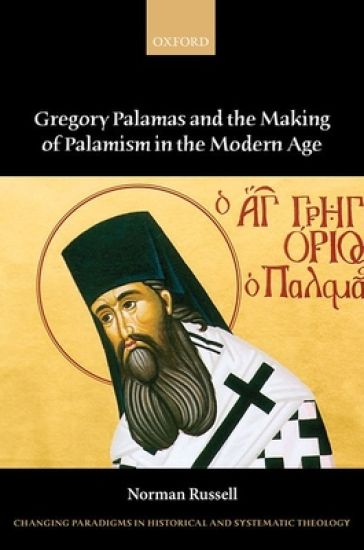
The fourteenth-century Greek hesychast and controversialist, Gregory Palamas, has been so successfully cast as 'the other' in Western theological discourse that it can be difficult to gain a sympathetic hearing for him. In the first part of this book, Norman Russell traces the historical reception of Palamite thought in Orthodoxy and in the West, and investigates how 'Palamism' was constructed in the early twentieth century by both Western and Eastern theologians (principally Martin Jugie and John Meyendorff) for polemical or apologetic purposes. Russell argues that we need to go behind these ideological constructions in order to gain a true perception of the teaching of Gregory Palamas. In his recent survey of Palamite scholarship, Robert Sinkewicz noted that it is now time to raise the larger questions. The second part of the book attempts to do this, following the contours of Palamas' thinking in three areas: his relationship to tradition, his philosophy, and his theology. Russell shows that Palamite thought, when freed of misunderstanding and misrepresentation, has the potential to enrich our understanding of divine-human communion. This study contributes to the changing paradigm of scholarship on Palamas, nudging it towards the point at which Palamite thought can be used fruitfully by contemporary Western and Eastern theologians without the need to subscribe to what has been regarded as 'Palamism'.
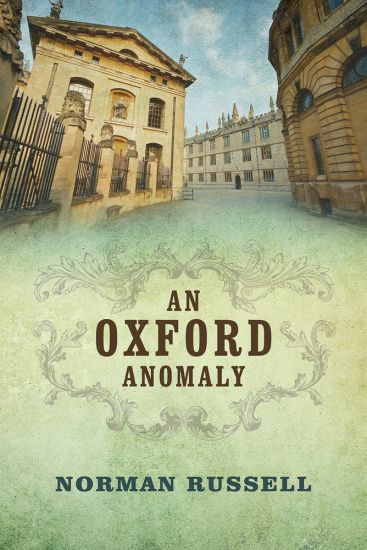
Jeremy Oakshott, Fellow of Jerusalem Hall, and an authority on the Crusades, is content with life until renowned archaeologist Mrs Lestrange urges him to join her expedition to Syria. His wealthy uncle, Ambrose Littlemore, refuses to help him, and is murdered soon afterwards. Detective Inspector Antrobus has already investigated the savage murder of one of Oakeshott's old friends, but the scholar's alibis are completely water-tight. Assisted by his doctor friend, Sophia Jex-Blake, Antrobus looks further afield, visiting two criminal lunatic asylums, a remote nunnery, and a quiet country village, where at last they uncover the truth about five savage murders, and the identity of their perpetrator.
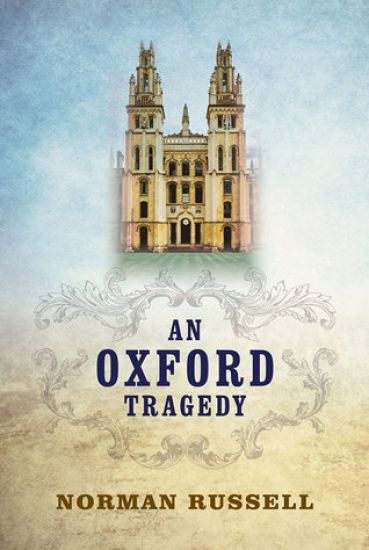
1894, Sir Montague Fowler, warden of St Michael's College, Oxford, dies from apparent natural causes. Before long vicious rumours begin to circulate about the actual cause of his death, and an autopsy reveals that Sir Montague's body was full of the deadly poison mercuric chloride. Detective Antrobus of the Oxford city police is summoned to investigate. Who would benefit most from the warden's death? His three children are all in desperate need of money and each are embroiled in their own scandal: his son John is a secret gambler with enormous debts, daughter Frances has fallen into the clutches of a blackmailer, and son Timothy had stood by and watched his rival in love drown. Antrobus's list of suspects grows as it seems everyone had something to gain from the death. Aided by pioneer physician, Sophia Jex-Blake, the detective sets about unravelling the truth behind this Oxford tragedy.
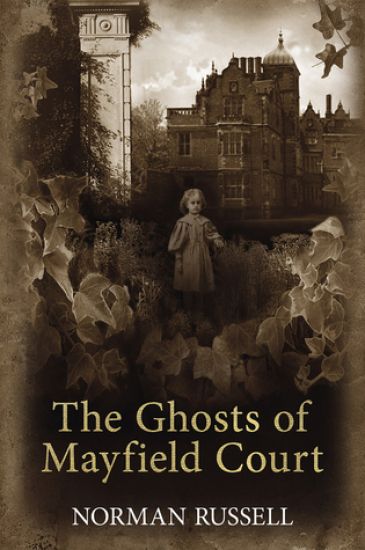
When Maximilian Paget inherits Mayfield Court, he and his niece Catherine find it to be half ruined, and haunted by the wraith of a murdered child. Catherine discovers a child's skeleton, bringing rural Detective Inspector Saul Jackson and his bibulous but shrewd sergeant, Herbert Bottomley, to investigate. Once returned to London, neither uncle nor niece can shake off the baleful influence of Mayfield. And when Uncle Max is murdered by a deranged killer who, Jackson discovers, has left a trail of corpses in an attempt to secure a hidden fortune, Catherine herself faces imminent death and a monstrous betrayal. Set in late Victorian times, this is the ninth Inspector Jackson story.