Kirjojen hintavertailu. Mukana 12 286 810 kirjaa ja 12 kauppaa.

Kirjailija

Norman Sartorius

Kirjat ja teokset yhdessä paikassa: 12 kirjaa, julkaisuja vuosilta 1996-2025, suosituimpien joukossa Paradigms Lost, Paradigms Found. Vertaile teosten hintoja ja tarkista saatavuus suomalaisista kirjakaupoista.

12 kirjaa

Kirjojen julkaisuhaarukka 1996-2025.

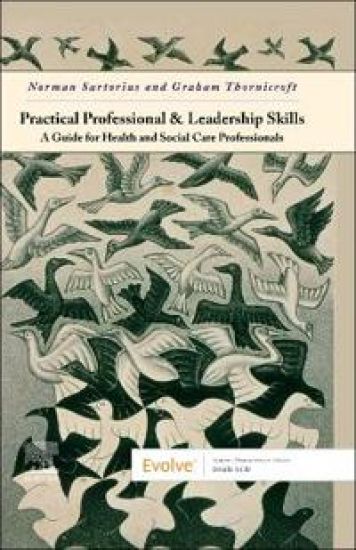
Practical Professional and Leadership Skills: A Guide for Health and Social Care Professionals

Practical Professional and Leadership Skills: A Guide for Health and Social Care Professionals

Norman Sartorius; Sir Graham Thornicroft

Elsevier Health Sciences
2025
sidottu
Written by two prominent and influential psychiatrists of international renown, Professors Norman Sartorius and Graham Thornicroft, Practical Leadership Skills is a highly pragmatic guide designed to boost the abilities of healthcare students and professionals to lead and achieve their goals. The content in this book has been honed and tested over many years in the internationally acclaimed courses on leadership run by Professor Sartorius. Readers will gain essential, practical skills to become effective leaders, to work well with smaller and larger groups, and to work well when alone. Each skill is covered in a short chapter, along with case studies, examples, and key action points. The professional skills covered in the book will help readers work better with colleagues, supervisors and students, and will increase competence, confidence and satisfaction at work. Practical Leadership Skills is ideal for early career researchers, doctors, psychologists, nurses, social workers and others working in allied health or human services. It will be invaluable for teachers and lecturers engaged in leadership training. Written by highly distinguished authors with many years of experience in delivering leadership training in a variety of global contexts, with extensive international leadership experience Honed by feedback from more than 2,000 course participants from across the world Highly practical text - a focus on ‘how to’ develop leadership skills and build your career A highly versatile teaching aid, with bite-sized, focused chapters covering essential topics Informal and accessible style Feature boxes setting out key practical points for each chapter, with brief real-world examples to bring the key points to life Clear and detailed worksheets for specific individual and group exercises so readers can practise each skill Training aids for all who wish to add leadership and professional skills to their teaching

Paradigms Lost, Paradigms Found

Paradigms Lost, Paradigms Found

Heather Stuart; Norman Sartorius

OXFORD UNIVERSITY PRESS INC
2022
sidottu
In 2012, Paradigms Lost critically examined the key paradigms used in programs aiming to prevent or reduce the stigma attached to mental illness. Today, many programs addressing stigma have been successfully developed or improved using the notions and recommendations presented in that volume. Paradigms Lost, Paradigms Found builds on the lessons of the first edition and adds new approaches to reducing the stigma related to mental illness. It brings together the latest theory and experience in the field to provide effective recommendations for addressing stigma in its various forms. This second edition also presents targeted programs used by different social groups and explores future directions in stigma prevention, including evolving techniques for the digital age. Integrating experience with modern technology, Paradigms Lost, Paradigms Found provides evidence and inspiration for mental health advocates seeking to prevent or reduce stigma of mental illness and protect the rights of people with mental and substance use disorders.
Assessment and Staging of Care for People with Dementia

Assessment and Staging of Care for People with Dementia

Maya Semrau; Alistair Burns; Antonio Lobo; Marcel Olde Rikkert; Philippe Robert; Mirjam Schepens; Gabriela Stoppe; Norman Sartorius

Oxford University Press
2019
nidottu
Assessment and Staging of Care for Dementia: The IDEAL schedule and its user manual is a unique resource containing a global clinical staging schedule for dementia alongside essential, practical information on how to use it. The International Schedule for the Integrated Assessment and Staging of Care for Dementia (IDEAL) schedule assesses a patient's capacity to function in seven domains. These domains are 'activities of daily living', 'physical health', 'cognitive functioning', 'behavioural and psychological symptoms', 'social support', 'informal care', and 'formal professional care'. Each domain has a set of anchor points to assist with rating the different dimensions appropriately along with critical information on how to calculate the total sum score on the IDEAL schedule. In addition to the IDEAL schedule itself, this resource includes a glossary of key terms and guidance on recommended priorities for interventions for different symptoms and severity patterns. Global examples of how to apply the schedule based on different levels of resources and experience are also presented along with relatable case studies mapped directly to the schedule. Created by the International Dementia Alliance, this innovative tool and user manual is suitable for health care professionals with experience in the diagnosis and treatment of people with dementia around the world, as well as any of those involved in dementia care.
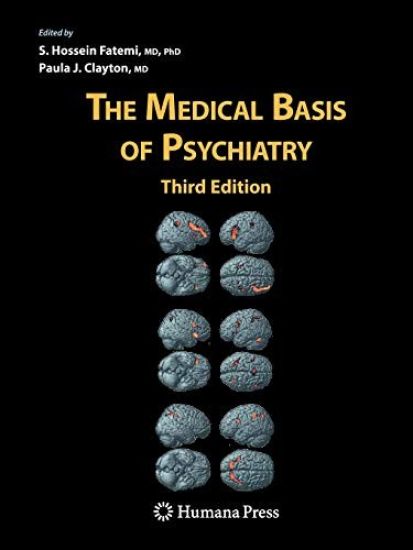
The Medical Basis of Psychiatry

The Medical Basis of Psychiatry

Norman Sartorius

Humana Press Inc.
2016
nidottu
Psychiatry has emerged as a burgeoning scientific field with major advances in etiology and treatment of several disorders. Just as there was excitement in the anatomic advances that took place a hundred years ago when Emil Kraepelin and his collaborators took on the enormous task of classification of psychiatric disorders based on rational scientific thinking, new advances in genetics, biochemistry, neuroanatomy and pharmacotherapy of mental disorders have brought us even closer to a better understanding of complex disorders like schizophrenia, bipolar disorder, depression and even autism. The major goal of the previous edition of this classic book was to update the busy clinician, psychiatric resident and medical student with the most up-to-date information on etiology, diagnosis and treatment of psychiatric disorders. This goal remains the focus of the third edition of this book. In this updated and expanded edition, the reader is provided with the most contemporary information and literature supported by a close survey of the field. Several new chapters dealing with new concepts in biology and treatment of mental disorders have been added. This new edition of this classic title, with its focus on biologic and medical aspects of psychiatry, will continue to be of significant help to all interested in the scientific practice of psychiatry.
A Companion to the Classification of Mental Disorders

A Companion to the Classification of Mental Disorders

John E. Cooper; Norman Sartorius

Oxford University Press
2013
nidottu
A Companion to the Classification of Mental Disorders provides essential reading as a background and supplement to both the recently produced DSM-5 and the forthcoming ICD-11. It focuses on the processes of classification and diagnosis, and the uses for these classifications. The book emphasises the dangers of regarding any current psychiatric classification as true or complete, in view of the present partial state of knowledge about the causes and mechanisms of most mental and behavioural disorders. This book is unique in containing a number of chapters that give a brief history of the cooperative efforts and projects necessary for the production of internationally agreed psychiatric classifications. The discussion begins in 1965 with the US/UK Diagnostic study, the preparations for ICD-8 with its first international glossary, and the International Pilot Study of Schizophrenia, designed and coordinated by the World Health Organization. While recognizing the importance of the innovations of the DSM series of classifications of the American Psychiatric Association, the book also takes a truly international perspective. The expert authors are well placed to do this, having been personally involved in many of the collaborative studies and developments discussed. A Companion to the Classification of Mental Disorders is an illustration of how much international collaborative work has been necessary over several decades to produce the currently agreed classifications. There is still a long way to go, but a start has been made.
Paradigms Lost

Paradigms Lost

Heather Stuart; Julio Arboleda-Florez; Norman Sartorius

Oxford University Press Inc
2012
sidottu
Paradigms Lost challenges key paradigms currently held about the prevention or reduction of stigma attached to mental illness using evidence and the experience the authors gathered during the many years of their work in this field. Each chapter examines one currently held paradigm and presents reasons why it should be replaced with a new perspective. The book argues for enlightened opportunism (using every opportunity to fight stigma), rather than more time consuming planning, and emphasizes that the best way to approach anti-stigma work is to select targets jointly with those who are most concerned. The most radical change of paradigms concerns the evaluation of outcome for anti-stigma activities. Previously, changes in stigmatizing attitudes were used as the best indicator of success. Paradigms Lost and its authors argue that it is now necessary to measure changes in behaviors (both from the perspective of those stigmatized and those who stigmatize) to obtain a more valid measure of a program's success. Other myths to be challenged: providing knowledge about mental illness will reduce stigma; community care will de-stigmatize mental illness and psychiatry; people with a mental illness are less discriminated against in developing countries. Paradigms Lost concludes by describing key elements in successful anti stigma work including the recommended duration of anti-stigma programmes, the involvement of those with mental illness in designing programmes, and the definition of programmes in accordance with local circumstances. A summary of weaknesses of currently held paradigms and corresponding lists of best practice principles to guide future anti-stigma action and research bring this insightful volume to an apt conclusion.
Mental Illness, Discrimination and the Law

Mental Illness, Discrimination and the Law

Felicity Callard; Norman Sartorius; Julio Arboleda-Flórez; Peter Bartlett; Hanfried Helmchen; Heather Stuart; José Taborda; Graham Thornicroft

Wiley-Blackwell
2012
sidottu
This book describes clearly how legislation can be used to advance the rights and entitlements of people with mental health problems. Straightforward and practical, it provides useful information on how to address disabilities so these people may enjoy full citizenship. It presents the key issues succinctly and illustrates these with legislative examples from around the world. This book documents the role that law can play, at all levels, in combating such discrimination and abuse.
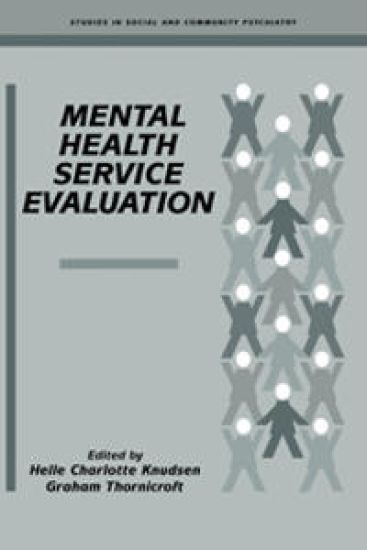
Mental Health Service Evaluation

Mental Health Service Evaluation

Norman Sartorius

Cambridge University Press
2011
pokkari
With the international consensus towards community care of the mentally ill, there came a growing need for meaningful evaluation of services. Redressing the lack of guidance this book describes how to do mental health service research. It comprehensively reviews developments in research design, method and measurement at the level of both whole service systems and individual programmes within mental health services. Each of the issues is adeptly illustrated with practical descriptions of comprehensive evaluation projects. The important advances already achieved in knowledge about effective services are highlighted along with descriptions of future work that will further develop our understanding of meeting patient requirements. This volume will appeal to all who are involved in mental health service research as well as those who make use of their results.
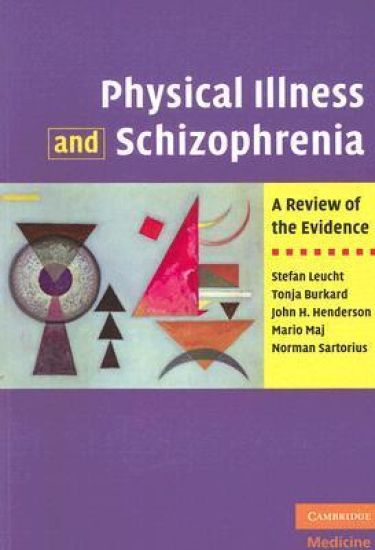
Physical Illness and Schizophrenia

Physical Illness and Schizophrenia

Stefan Leucht; Tonja Burkard; John H. Henderson; Mario Maj; Norman Sartorius

Cambridge University Press
2007
pokkari
It is well established that people suffering from schizophrenia have a higher prevalence of serious physical illness and a higher mortality than the general population. This book provides the first comprehensive and systematic review of current research evidence on the prevalence of physical diseases in people with schizophrenia, a disorder afflicting approximately 1% of the global population, and a group with mortality rates twice as high as the general population. The epidemiological data described in this book will provide the basis for improved awareness of these problems and better treatment for patients. This is the first in a series of books addressing an issue emerging as a priority in the mental health field: the timely and proper recognition of physical health problems in people with mental disorders. They should be read by policy makers, service managers, mental health professionals and general practitioners.
Reducing the Stigma of Mental Illness

Reducing the Stigma of Mental Illness

Norman Sartorius; Hugh Schulze

Cambridge University Press
2005
pokkari
The stigma attached to mental illness is the main obstacle to better mental health care and the better quality of life of people who have the illness, of their families, of their communities and of health service staff that deal with psychiatric disorders. Stigma is pernicious and there are indications that despite advances of psychiatry and medicine it continues to grow and has more and often terrible consequences for patients and families. In 1996, the WPA began an international programme to fight the stigma and discrimination because of schizophrenia. The 'Open the Doors' programme has since been implemented in more than 20 countries and involved roughly 200 different anti-stigma interventions. This book details the results of these efforts internationally and provides recommendations and guidance for those seeking to join this international effort or start similar efforts to dispel stigma and discrimination.
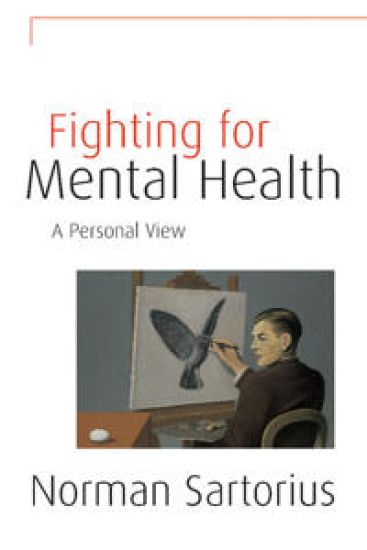
Fighting for Mental Health

Fighting for Mental Health

Norman Sartorius

Cambridge University Press
2002
sidottu
As Director of the Division of Mental Health at the World Health Organization, and subsequently President of the World Psychiatric Association, Norman Sartorius has over many years been in a position to survey the state of psychiatry worldwide and to campaign for greater equity and honesty in the clinical and research agenda. The essays collected in this 2002 book represent his latest thinking, as well as including his own selection from among a few of his innumerable speeches and previously published articles. They range from trenchant critiques of mental health service delivery and prevention to more light-hearted, anecdotal pieces on the use of language and how to get things done. All point to the core concerns for mental health programmes today: definition of needs; the role of psychiatry worldwide; and the challenges that urbanization presents for mental health. This is a book that every psychiatrist will wish to own.
Mental Health Service Evaluation

Mental Health Service Evaluation

Norman Sartorius

Cambridge University Press
1996
sidottu
With the emerging international consensus towards community care of the mentally ill, there comes a growing need for meaningful evaluation of services. Redressing the current lack of guidance this book describes how to do mental health service research. It comprehensively reviews the most recent developments in research design, method and measurement at the level of both whole service systems and individual programmes within mental health services. Each of the issues is adeptly illustrated with practical descriptions of comprehensive evaluation projects. The important advances already achieved in knowledge about effective services are highlighted along with descriptions of future work that will further develop our understanding of meeting patient requirements. This volume will appeal to all who are involved in mental health service research as well as those who make use of their results.