Kirjojen hintavertailu. Mukana 12 595 353 kirjaa ja 12 kauppaa.

Kirjailija

Northrop Frye

Kirjat ja teokset yhdessä paikassa: 51 kirjaa, julkaisuja vuosilta 1958-2025, suosituimpien joukossa The Northrop Frye Quote Book. Vertaile teosten hintoja ja tarkista saatavuus suomalaisista kirjakaupoista.

51 kirjaa

Kirjojen julkaisuhaarukka 1958-2025.

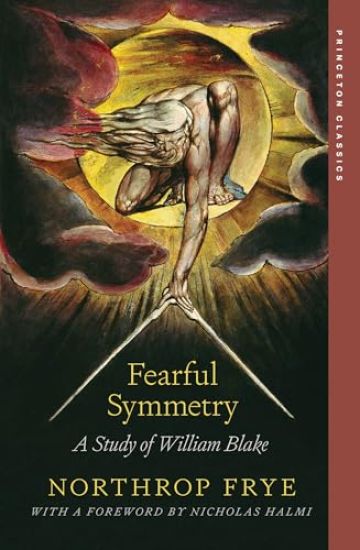
Fearful Symmetry

Fearful Symmetry

Northrop Frye; Nicholas Halmi

PRINCETON UNIVERSITY PRESS
2025
pokkari
The landmark book that situates Blake’s poetry within the intellectual movements of his day and unlocks his symbolism for modern readersSince it was first published, Northrop Frye’s Fearful Symmetry has established itself as the defining commentary on the poetic vision of William Blake. Frye gives a complete solution to the riddles of Blake’s longer poems—the so-called “Prophecies”—and demonstrates how Blake’s works form a coherent mythical pattern that broadens our conception of literature. He explains how Blake arrived at a theory of knowledge that was also, for him, a theory of religion, life, and art, and how this rigorously defined system of ideas found expression in the complicated but consistent symbolism of his poetry. With an incisive foreword by scholar and literary critic Nicholas Halmi, this Princeton Classics edition shows how Blake reflects the literary and the intellectual atmosphere of his time while holding renewed meaning for us today.
Educated Imagination

Educated Imagination

Northrop Frye

House of Anansi Press
2024
pokkari
"What good is the study of literature? Does it help us think more clearly, or feel more sensitively, or live a better life than we could without it?" Written in the relaxed and frequently humorous style of his public lectures, this remains, of Northrop Frye's many books, perhaps the easiest introduction to his theories of literature and literary education.Northrop Frye's 1962 CBC Massey Lectures provide a wonderful and concise introduction to his theories of literature and literary education.
Creative Evolution

Creative Evolution

Henri Bergson; Northrop Frye

Alpha Edition
2020
pokkari
This book has been considered by academicians and scholars of great significance and value to literature. This forms a part of the knowledge base for future generations. So that the book is never forgotten we have represented this book in a print format as the same form as it was originally first published. Hence any marks or annotations seen are left intentionally to preserve its true nature.
Anatomy of Criticism

Anatomy of Criticism

Northrop Frye

Princeton University Press
2020
pokkari
A landmark work of literary criticismNorthrop Frye's Anatomy of Criticism is the magnum opus of one of the most important and influential literary theorists of the twentieth century. Breaking with the practice of close reading of individual texts, Frye seeks to describe a common basis for understanding the full range of literary forms by examining archetypes, genres, poetic language, and the relations among the text, the reader, and society. Using a dazzling array of examples, he argues that understanding "the structure of literature as a total form" also allows us to see the profoundly liberating effect literature can have.
Northrop Frye's Writings on Shakespeare and the Renaissance

Northrop Frye's Writings on Shakespeare and the Renaissance

Northrop Frye

University of Toronto Press
2018
pokkari
This collection of Northrop Frye's writings on Shakespeare and the Renaissance spans forty years of his career as a university teacher, public critic, and major theorist of literature and its cultural functions. Extensive annotations and an in-depth critical introduction demonstrate Frye's wide-ranging knowledge of Renaissance culture, the pivotal place of the Renaissance in his oeuvre, his impact on Renaissance criticism and on the Stratford Festival, and his continuing importance as a literary theorist. This volume brings together Frye's extensive writings on Shakespeare and other Renaissance writers (excluding Milton, who is featured in other volumes), and includes major articles, introductions, public lectures, and four previously published books on Shakespeare. Frye's insightful analyses offer not just a formidable knowledge of Renaissance culture but also a transformative experience, moving the reader imaginatively towards an experience of created reality.
The Bush Garden

The Bush Garden

Northrop Frye

House of Anansi Press Ltd ,Canada
2017
pokkari
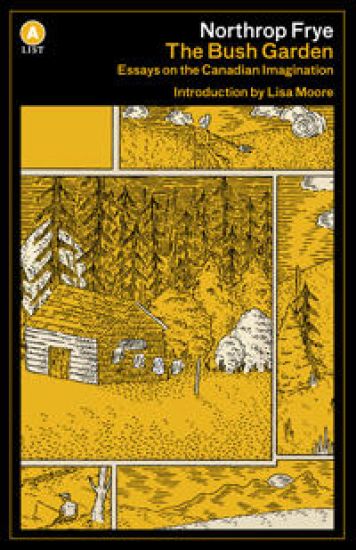
Originally published in 1971,The Bush Garden features Northrop Frye’s timeless essays on Canadian literature and painting, and an introduction by bestselling author Lisa Moore.In this cogent collection of essays written between 1943 and 1969, formidable literary critic and theorist Northrop Frye explores the Canadian imagination through the lens of the country’s artistic output: prose, poetry, and paintings. Frye offers insightful commentary on the works that shaped a “Canadian sensibility,” and includes a comprehensive survey of the landscape of Canadian poetry throughout the 1950s, including astute criticism of the work of E. J. Pratt, Robert Service, Irving Layton, and many others.Written with clarity and precision,The Bush Garden is a significant cache of literary criticism that traces a pivotal moment in the country’s cultural history and the evolution of Frye’s thinking at various stages of his career. These essays are evidence of Frye’s brilliance, and cemented his reputation as Canada’s — and the world’s — foremost literary critic.
Northrop Frye's Uncollected Prose

Northrop Frye's Uncollected Prose

Northrop Frye

University of Toronto Press
2015
sidottu
Northrop Frye’s Uncollected Prose, which features twenty-one pieces in the form of notes, prefaces, reviews, and talks, is the latest addition to the impressive body of writing by and about Frye. Among the highlights of the collection are Frye’s “Notes on Romance,” written in preparation for the lectures that eventually became The Secular Scripture; a newly discovered early notebook, parts of which may date from his second year as an undergraduate at Victoria College; and a pair of previously unavailable interviews. Expertly introduced by Robert D. Denham, one of the leading editors of Frye’s papers, Northrop Frye’s Uncollected Prose offers valuable insight into Frye’s early life, his research methodology, and thought process, and is further proof of the remarkable depth and range of his work.
The Northrop Frye Quote Book

The Northrop Frye Quote Book

Jean O'Grady; Northrop Frye

Dundurn Group Ltd
2014
pokkari
A collection of quotations from Canada’s greatest literary theorist. "There is no Canadian writer of whom we can say … that their readers can grow up inside their work without ever being aware of a circumference." Northrop Frye came to that conclusion after a detailed study of the imaginative achievements of Canada’s writers from the earliest period to 1965, when that sentence from his study first appeared in print. Over the decades since then, the statement has come to be regarded as a benchmark of individual and national literary achievement. The Northrop Frye Quote Book is a specialized dictionary of quotations on all subjects that is based on the thoughts and writings of one person. It is the handiwork of a single contributor, albeit the cogitations of a remarkable one. It is also evidence that there is a Canadian writer of whom it may be said that we can grow up inside his work "without ever being aware of a circumference." John Robert Colombo has written, translated, edited, or compiled over two hundred books, including seven dictionaries of quotations. He is a graduate of the University of Toronto and a Fellow of the Frye Centre at Victoria University. Jean O’Grady, a graduate of the University of Toronto, served as the associate editor of The Collected Works of Northrop Frye. She is also the author of the biography of Margaret Addison, the first dean of women at Victoria College.
Northrop Frye's Student Essays, 1932-1938

Northrop Frye's Student Essays, 1932-1938

Northrop Frye

University of Toronto Press
2014
pokkari
'Frye was a person of uncommon gifts, and very little that came from his pen is without interest.' So writes Robert Denham in his introduction to this unique collection of twenty-two papers written by Northrop Frye during his student years. Made public only after Frye's death in 1991, all but one of the essays are published here for the first time. The majority of these papers were written for courses at Emmanuel College, the theology school of Victoria College at the University of Toronto. Essays such as 'The Concept of Sacrifice,' 'The Fertility Cults,' and 'The Jewish Background of the New Testament' reveal the links between Frye's early research in theology and the form and content of his later criticism. It is clear that even as a theology student Frye's first impulse was always that of the cultural critic. The papers on Calvin, Eliot, Chaucer, Wyndham Lewis, and on the forms of prose fiction show Frye as precociously witty, rigorous, and incisive - a gifted writer who clearly found his voice before his last undergraduate year. David Lodge wrote in the New Statesman: 'There are not many critics whose twenty-year-old book reviews one can read with pleasure and instruction, but Frye is an exception to most rules.' Northrop Frye's student essays provide pleasure and instruction through their comments on the Augustinian view of history, on beauty, truth, and goodness, on literary symbolism and tradition.
The Stubborn Structure (Routledge Revivals)
First published in 1970, this collection is made up of a selection of essays composed between 1962 and 1968, written by distinguished humanist and literary critic Northrop Frye. The book is divided into two parts: one deals largely with the contexts of literary criticism; the other offers more specific studies of literary works in roughly historical sequence. One of the essays is Frye’s own elucidation of the development of his critical premises out of his early concern with the poetry of William Blake. Taken together, the essays offer a continuous and coherent argument, making a whole that is entirely equal to the sum of its parts.
The Stubborn Structure

The Stubborn Structure

Northrop Frye

Routledge
2011
sidottu
First published in 1970, this collection is made up of a selection of essays composed between 1962 and 1968, written by distinguished humanist and literary critic Northrop Frye. The book is divided into two parts: one deals largely with the contexts of literary criticism; the other offers more specific studies of literary works in roughly historical sequence. One of the essays is Frye’s own elucidation of the development of his critical premises out of his early concern with the poetry of William Blake. Taken together, the essays offer a continuous and coherent argument, making a whole that is entirely equal to the sum of its parts.
Northrop Frye

Northrop Frye

Northrop Frye

McFarland Co Inc
2009
pokkari
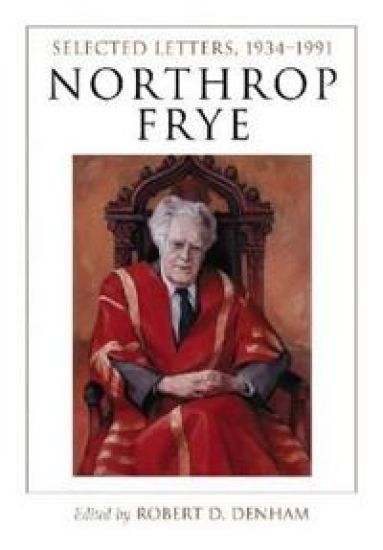
Presented here is a selection from the professional and personal correspondence of Northrop Frye, one of the preeminent literary critics of the last century. With frank and accessible appraisals, the letters reveal Frye's attitudes toward scores of topics: the value of James Bond thrillers, the gap between faith and reason, surrealism, hippies, Milton's imagery, comparative literature, political hysteria in the U.S., the nature of the educated imagination, anarchism, the teaching of religion in the university, the Proteus myth, the distinction between subjects and themes, the connection between Nietzsche and Yeats, the difference between cliche and aphorism, the fussy rules of copy editors, and scores of other issues.
Words with Power

Words with Power

Northrop Frye

University of Toronto Press
2008
sidottu
Words with Power is the crowning achievement of the latter half of Northrop Frye's career. Portions of the work can be found in Frye's notebooks as far back as the mid-1960s when he had just finished Anatomy of Criticism, and he completed the book shortly before his death in 1991. Beyond summing up his ideas about the relation of the Bible to Western culture, Words with Power boldly confronts a host of questions ranging from the relationship between literature and ideology to the real meaning of words like 'spirit' and 'faith.' The first half of the 'double mirror' structure looks at the language in which the Bible is written, arguing that it is identical to that of myth and metaphor. Frye suggests, therefore, that given this characteristic, the Bible should be read imaginatively rather than historically or doctrinally. However, he is also careful to point out the ways in which the Bible is more than a conventional work of fiction. The second half is an astonishing tour de force in which Frye demonstrates how both the Bible and literature revolve around four primary concerns of human life. This edition goes beyond the original in its documentation of Frye's dazzlingly encyclopedic range of reference. Profound and searching, Words with Power is perhaps the most daring book of Frye's career and one of the most exciting.
Northrop Frye's Notebooks for Anatomy of Critcism

Northrop Frye's Notebooks for Anatomy of Critcism

Northrop Frye

University of Toronto Press
2008
sidottu
Northrop Frye's Anatomy of Criticism (1957) is widely regarded as a masterpiece of literary theory. The product of years of reading and reflection, the book's value extends far beyond its impact on criticism as a whole; ultimately, it must be viewed as a synoptic defense of liberal learning by one of the twentieth century's most distinguished critics. In this, the twenty-third volume of the Collected Works, editor Robert D. Denham presents the notebooks to the Anatomy, blue-prints, as it were, for Frye's comprehensive account of literary conventions. Composed from the late 1940s to 1956, the notebooks document the struggle Frye underwent to provide a structure for his work. This involved incorporating previously published essays and developing new material that would maintain the continuity of his argument. This fully annotated volume contains seventeen holograph notebooks, each illuminating some aspect of the grand structure that eventually emerged. Altogether, the notebooks offer an intimate picture of Frye's working process and a renewed appreciation for his magisterial accomplishment.
Northrop Frye's Fiction and Miscellaneous Writings

Northrop Frye's Fiction and Miscellaneous Writings

Northrop Frye

University of Toronto Press
2007
sidottu
This thirteenth and final volume of previously unpublished writings by Northrop Frye gathers together autobiographical reflections, short stories, an unfinished novel, and commentary on a wide range of topics from Canadian culture to religion. Drawn from holdings in the Frye archives – holograph notebooks, typed notes, and typescripts – these writings have been largely inaccessible to Frye scholars until now. Some of the contents of this volume, Frye’s early fiction, for example, will come as a surprise to those acquainted primarily with his published criticism. All of his fables and dialogues are included here, as are a half-dozen sets of notes in which he speculates on forms of fiction and various literary projects he planned to one day undertake. These miscellaneous writings offer further evidence of Frye’s fertile mind, quick wit, expansive imagination, and eloquence. Frye always claimed that the process of writing was for him a search for proper formulas through which to communicate. The material in this volume, which seldom fails to instruct and delight, discloses the process of that search.
Anatomy of Criticism

Anatomy of Criticism

Northrop Frye

University of Toronto Press
2007
sidottu
This volume, the twenty-second in the acclaimed Collected Works of Northrop Frye series, presents Frye's most influential work, Anatomy of Criticism (1957). In four stylish and sweeping essays, Frye attempts to formulate an overall view of the scope, principles, and techniques of literary criticism and the conventions of literature - its modes, symbols, archetypes, and genres. He makes the case for criticism as a legitimate and structured science, a science that he would go on to wield with great influence over the course of his distinguished career. Robert D. Denham's introduction to this edition examines the book's genesis, its initial reception, and its relation to Frye's other works, particularly Fearful Symmetry (Volume 14 in the series). He highlights the diagrammatic way of thinking that characterizes Frye's brand of structuralism and explores the meaning of the word 'anatomy.' Denham also provides context for the work, considering the critical tradition out of which it emerged, as well as how it relates to some of the movements that appeared after the waning of structuralism. A key volume in the Collected Works series, this annotated and expertly introduced edition of Anatomy of Criticism will be sure to satisfy Frye's many admirers.
The Educated Imagination and Other Writings on Critical Theory 1933-1963
In 1933, Northrop Frye was a recent university graduate, beginning to learn his craft as a literary essayist. By 1963, with the publication of The Educated Imagination, he had become an international academic celebrity. In the intervening three decades, Frye wrote widely and prodigiously, but it is in the papers and lectures collected in this installment of the Collected Works of Northrop Frye, that the genesis of a distinguished literary critic can be seen. Here is Frye tracing the first outlines of a literary cosmology that would culminate in The Anatomy of Criticism (1958) and shapeThe Great Code (1982) and Words with Power (1990). At the same time that Frye garnered such international acclaim, he was also a working university teacher, lecturing in the University of Toronto's English Language and Literature program. In her lively introduction, Germaine Warkentin links Frye's evolution as a critic with his love of music, his passionate concern for his students, and his growing professional ambition. The writings included in this volume show how Frye integrated ideas into the work that would consolidate the fame that Fearful Symmetry (1947) had first established.
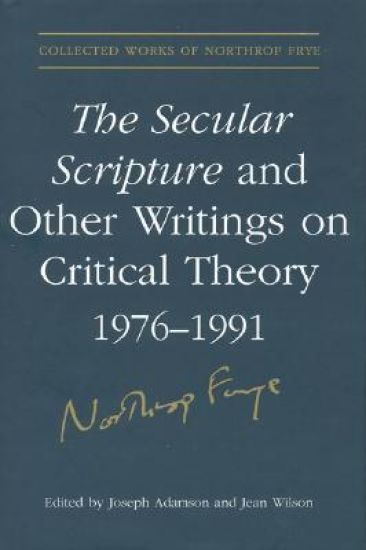
The Secular Scripture and Other Writings on Critical Theory, 1976-1991
Northrop Frye’s The Secular Scripture was first published in 1976 and was soon recognized as one of his most influential works, reflecting an extensive development of Frye’s thoughts about romance as a literary form. This new edition in the Collected Works of Northrop Frye series brings The Secular Scripture together with thirty shorter pieces pertaining to literary theory and criticism from the last fifteen years of Frye’s life. Frye’s study illuminates the enduring attraction and deep human significance of the romance genre in all its forms. He provides a unique perspective on popular fiction and culture and shows how romance forms have, by their very structural and conventional features, an ability to address both specific social concerns and deep and fundamental human concerns that span time and place. In distinguishing popular from elite culture, Frye insists that they are both ultimately two aspects of the same “human compulsion to create in the face of chaos.” The additional late writings reflect Frye’s sense at the time that he was working “toward some kind of final statement,” which eventually saw the light of day, only months before his death, as Words with Power (1990).