Kirjojen hintavertailu. Mukana 12 511 893 kirjaa ja 12 kauppaa.
Kirjailija
Nour Shafik El-Gendy
Kirjat ja teokset yhdessä paikassa: 8 kirjaa, julkaisuja vuosilta 2015-2026, suosituimpien joukossa Introduction to Petroleum Biotechnology. Vertaile teosten hintoja ja tarkista saatavuus suomalaisista kirjakaupoista.
Introduction to Petroleum Biotechnology introduces the petroleum engineer to biotechnology, bringing together the various biotechnology methods that are applied to recovery, refining and remediation in the uses of petroleum and petroleum products. A significant amount of petroleum is undiscoverable in reservoirs today using conventional and secondary methods. This reference explains how microbial enhanced oil recovery is aiding to produce more economical and environmentally-friendly metabolic events that lead to improved oil recovery. Meanwhile, in the downstream side of the industry, petroleum refining operators are facing the highest levels of environmental regulations while struggling to process more of the heavier crude oils since conventional physical and chemical refining techniques may not be applicable to heavier crudes. This reference proposes to the engineer and refining manager the concepts of bio-refining applications to not only render heavier crudes as lighter crudes through microbial degradation, but also through biodenitrogenation, biodemetallization and biodesulfurization, making more petroleum derivatives purified and upgraded without the release of more pollutants. Equipped for both upstream and downstream to learn the basics, this book is a necessary primer for today’s petroleum engineer.

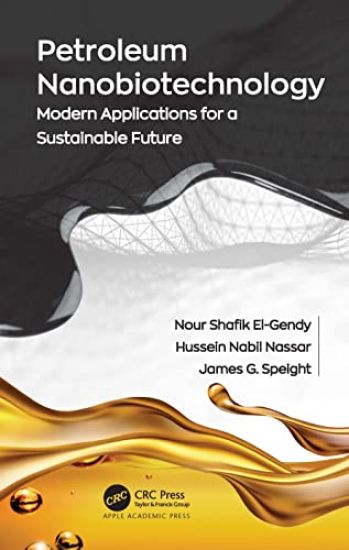
This book, Petroleum Nanobiotechnology: Modern Applications for a Sustainable Future, explores the unique fusion of biotechnology and nanotechnology as applied to the different sectors of the oil and gas industry. It is a concise resource on the most recent and most up-to-date bottom-up fabrication techniques in petroleum nanobiotechnology, covering the advantages of biofabrication over chemical or physical techniques from the point of being more cost-effective, ecofriendly, biocompatibly superior, and highly stable.The volume covers the important topic of microbial and phytosynthesis of metal and metal oxide nanoparticles. The key applications discussed here include the application of these nanoparticles in different sectors of the oil and gas industry, with special emphasis on antimicrobial applications, reduction of environmental pollutants, and bio-upgrading of petroleum and its fractions. The discussion of each application is augmented with a critical review of the potential for continued development.The book first provides an overview of petroleum microbiology and nanotechnology and proceeds to consider phytosynthesis of metal nanoparticles, microbial synthesis of metal nanoparticles, biosynthesis of metal oxide nanoparticles, nanobiotechnology and mitigation of microbial-influenced corrosion in petroleum industry, applications of nanobiotechnology in petroleum refining, and how nanobiotechnology can be used for petroleum wastewater treatment.This book covers the very important principle of nanobiotechnology as applied in the petroleum industry and how it can be used for:Oil recoveryMicrobial enhanced oil recoveryPetroleum refinery, such as, for example, desulfurization, denitrogenation, demetallization, biotransformation, and bio-upgradingBioremediation of oil polluted soil and waterMitigation of microbial corrosion and bio-foulingToxicity of nano-materials and its obstacles upon applicationNanobiotechnology in petroleum industry and the 17 goals of sustainable developmentThe advantages of the application of nanobiotechnology in the oil industries are enormous and clearly outweigh any negligible cons. The success can have a huge impact on the exploration, production, refining, mitigation of corrosion, waste management, and economics. This informative volume will be valuable for petroleum engineers and petroleum microbiologists, scientists, and researchers concerned with nanotechnology, environmental pollution, petroleum biotechnology, petroleum microbiology, petroleum refining, and the petroleum industry in general.
Handbook of Refinery Desulfurization describes the operation of the various desulfurization process units in a petroleum refinery. It also explains the processes that produce raw materials for the petrochemical industry. It illustrates all the possible processes to lower the sulfur contents in petroleum and its fractions to decrease emissions of sulfur oxides.This book introduces you to desulfurization concepts, including biodesulfurization, as well as technology, giving guidance on how to accomplish desulfurization in various refining processes. It contains background chapters on the composition and evaluation of feedstocks and includes diagrams and tables of feedstocks and their respective produce. It also outlines how to decide which method should be employed to remove sulfur from different feedstocks.A practical and thorough discussion of the field, Handbook of Refinery Desulfurization gives you a strong grasp of the various processes involved with industrial desulfurization while giving you pointers on which procedures to use under certain conditions.
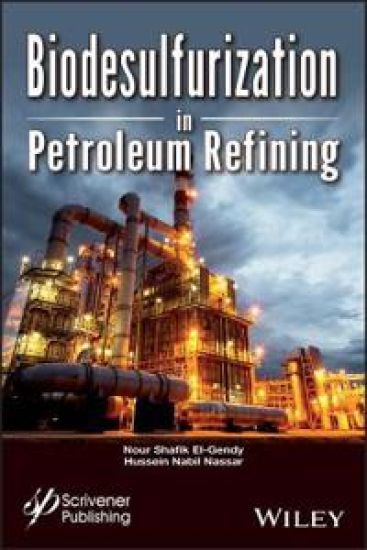
From basic tenets to the latest advances, this is the most comprehensive and up-to-date coverage of the process of biodesulfurization in the petroleum refining industry. Petroleum refining and process engineering is constantly changing. No new refineries are being built, but companies all over the world are still expanding or re-purposing huge percentages of their refineries every year, year after year. Rather than building entirely new plants, companies are spending billions of dollars in the research and development of new processes that can save time and money by being more efficient and environmentally safer. Biodesulfurization is one of those processes, and nowhere else it is covered more thoroughly or with more up-to-date research of the new advances than in this new volume from Wiley-Scrivener. Besides the obvious benefits to biodesulfurization, there are new regulations in place within the industry with which companies will, over the next decade or longer, spend literally tens, if not hundreds, of billions of dollars to comply. Whether for the veteran engineer needing to update his or her library, the beginning engineer just learning about biodesulfurization, or even the student in a chemical engineering class, this outstanding new volume is a must-have. Especially it covers also the bioupgrading of crude oil and its fractions, biodenitrogenation technology and application of nanotechnology on both biodesulfurization and biodenitrogenation technologies.
Handbook of Refinery Desulfurization describes the operation of the various desulfurization process units in a petroleum refinery. It also explains the processes that produce raw materials for the petrochemical industry. It illustrates all the possible processes to lower the sulfur contents in petroleum and its fractions to decrease emissions of sulfur oxides.This book introduces you to desulfurization concepts, including biodesulfurization, as well as technology, giving guidance on how to accomplish desulfurization in various refining processes. It contains background chapters on the composition and evaluation of feedstocks and includes diagrams and tables of feedstocks and their respective produce. It also outlines how to decide which method should be employed to remove sulfur from different feedstocks.A practical and thorough discussion of the field, Handbook of Refinery Desulfurization gives you a strong grasp of the various processes involved with industrial desulfurization while giving you pointers on which procedures to use under certain conditions.