Kirjojen hintavertailu. Mukana 12 657 676 kirjaa ja 12 kauppaa.

Kirjailija

Noura Erakat

Kirjat ja teokset yhdessä paikassa: 4 kirjaa, julkaisuja vuosilta 2019-2026, suosituimpien joukossa Confronting Zionism. Vertaile teosten hintoja ja tarkista saatavuus suomalaisista kirjakaupoista.

4 kirjaa

Kirjojen julkaisuhaarukka 2019-2026.

Confronting Zionism

Confronting Zionism

Noura Erakat; John Reynolds

Haymarket Books
2026
pokkari
Drawing on the history of global anticolonial movements and a rich Palestinian intellectual tradition, two leading legal scholars demonstrate that justice in Palestine cannot be realized without confronting the problem of Zionism For over one hundred years, Palestinians have struggled for liberation in their homeland. Confronting Zionism takes direct analytical aim at the ideology and institutional structures animating Israel’s brutal rule over Palestinian lives. With cutting precision and comprehensive evidence, Noura Erakat and John Reynolds argue that Zionism is colonial and racist in essence and practice. Tracing the history of the Zionist project, the establishment of the Israeli settler colonial state and development of its apartheid laws and institutions—plus the damning failure of diplomatic efforts, including the Oslo peace process—this book provides the concepts and tools for understanding the horrors unfolding in Palestine today. Erakat and Reynolds also provide a clear-eyed assessment of the role of international law, in a world where its relevance is increasingly in question. Taking lessons from ongoing inequalities in South Africa as well as anticolonial and socialist policies across the global south, Confronting Zionism argues that at this crucial historical juncture, decolonization in Palestine predicated on redistribution, reparations and refugee return remains the only just way forward.
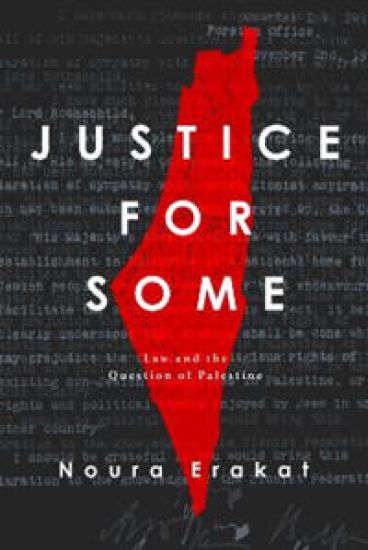
Justice for Some

Justice for Some

Noura Erakat

Stanford University Press
2020
pokkari
Justice in the Question of Palestine is often framed as a question of law. Yet none of the Israel-Palestinian conflict's most vexing challenges have been resolved by judicial intervention. Occupation law has failed to stem Israel's settlement enterprise. Laws of war have permitted killing and destruction during Israel's military offensives in the Gaza Strip. The Oslo Accord's two-state solution is now dead letter. Justice for Some offers a new approach to understanding the Palestinian struggle for freedom, told through the power and control of international law. Focusing on key junctures—from the Balfour Declaration in 1917 to present-day wars in Gaza—Noura Erakat shows how the strategic deployment of law has shaped current conditions. Over the past century, the law has done more to advance Israel's interests than the Palestinians'. But, Erakat argues, this outcome was never inevitable. Law is politics, and its meaning and application depend on the political intervention of states and people alike. Within the law, change is possible. International law can serve the cause of freedom when it is mobilized in support of a political movement. Presenting the promise and risk of international law, Justice for Some calls for renewed action and attention to the Question of Palestine.
Justice for Some

Justice for Some

Noura Erakat

STANFORD UNIVERSITY PRESS
2019
sidottu
Justice in the Question of Palestine is often framed as a question of law. Yet none of the Israel-Palestinian conflict's most vexing challenges have been resolved by judicial intervention. Occupation law has failed to stem Israel's settlement enterprise. Laws of war have permitted killing and destruction during Israel's military offensives in the Gaza Strip. The Oslo Accord's two-state solution is now dead letter. Justice for Some offers a new approach to understanding the Palestinian struggle for freedom, told through the power and control of international law. Focusing on key junctures—from the Balfour Declaration in 1917 to present-day wars in Gaza—Noura Erakat shows how the strategic deployment of law has shaped current conditions. Over the past century, the law has done more to advance Israel's interests than the Palestinians'. But, Erakat argues, this outcome was never inevitable. Law is politics, and its meaning and application depend on the political intervention of states and people alike. Within the law, change is possible. International law can serve the cause of freedom when it is mobilized in support of a political movement. Presenting the promise and risk of international law, Justice for Some calls for renewed action and attention to the Question of Palestine.