Kirjojen hintavertailu. Mukana 12 215 424 kirjaa ja 12 kauppaa.

Kirjailija

Obbie Tyler Todd

Kirjat ja teokset yhdessä paikassa: 8 kirjaa, julkaisuja vuosilta 2021-2024, suosituimpien joukossa Let Men Be Free. Vertaile teosten hintoja ja tarkista saatavuus suomalaisista kirjakaupoista.

8 kirjaa

Kirjojen julkaisuhaarukka 2021-2024.

Let Men Be Free

Let Men Be Free

Obbie Tyler Todd; Thomas S Kidd

Pickwick Publications
2022
pokkari
The assortment of political views held by Baptists was as diverse as any other denomination in the early United States, but they were bound together by a fundamental belief in the inviolability of the individual conscience in matters of faith. In a nation where civil government and religion were inextricable, and in states where citizens were still born into the local parish church, the doctrine of believer's baptism was an inescapably political idea. As a result, historians have long acknowledged that Baptists in the early republic were driven by their pursuit of religious liberty, even partnering with those who did not share their beliefs. However, what has not been as well documented is the complexity and conflict with which Baptists carried out their Jeffersonian project. Just as they disagreed on seemingly everything else, Baptists did not always define religious liberty in quite the same way. Let Men Be Free offers the first comprehensive look into Baptist politics in the early United States, examining how different groups and different generations attempted to separate church from state and how this determined the future of the denomination and indeed the nation itself.
Let Men Be Free

Let Men Be Free

Obbie Tyler Todd; Thomas S Kidd

Pickwick Publications
2022
sidottu
The assortment of political views held by Baptists was as diverse as any other denomination in the early United States, but they were bound together by a fundamental belief in the inviolability of the individual conscience in matters of faith. In a nation where civil government and religion were inextricable, and in states where citizens were still born into the local parish church, the doctrine of believer's baptism was an inescapably political idea. As a result, historians have long acknowledged that Baptists in the early republic were driven by their pursuit of religious liberty, even partnering with those who did not share their beliefs. However, what has not been as well documented is the complexity and conflict with which Baptists carried out their Jeffersonian project. Just as they disagreed on seemingly everything else, Baptists did not always define religious liberty in quite the same way. Let Men Be Free offers the first comprehensive look into Baptist politics in the early United States, examining how different groups and different generations attempted to separate church from state and how this determined the future of the denomination and indeed the nation itself.
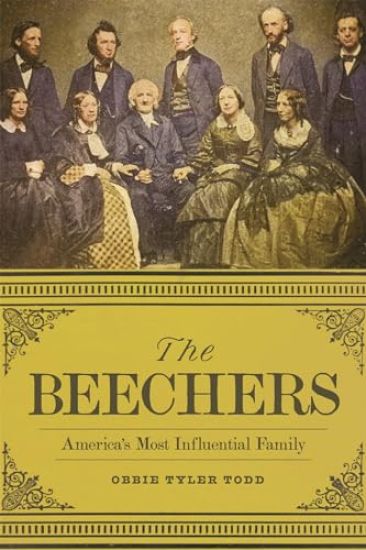
The Beechers

The Beechers

Obbie Tyler Todd; Mark A. Noll

LOUISIANA STATE UNIVERSITY PRESS
2024
sidottu
The Reverend Lyman Beecher was once called ""the father of more brains than any other man in America."" Among his eleven living children were a celebrity novelist, a college president, the most well-known preacher in America, a suffragist, a radical abolitionist, a pioneer in women's education, and the founder of home economics. Rejecting many of their father's Puritan beliefs, the deeply religious Beechers nevertheless embraced his quest to exert moral influence. They disagreed over issues of slavery, women's rights, and religion and found themselves at the center of race riots, denominational splits, college protests, a civil war, and one of the most public sex scandals in American history. They were nonetheless unified in their ""Beecherism"" a phrase used to describe their sense of self-importance in reforming the nation. Obbie Tyler Todd's masterful work is the first biography of the Beechers in more than forty years and the first chronological portrait of one of the most influential families in nineteenth-century America.
Southern Edwardseans: The Southern Baptist Legacy of Jonathan Edwards
The founders and forerunners of the Southern Baptist Convention were fundamentally shaped by the thought of Puritan theologian Jonathan Edwards and his theological successors. While Baptists in the antebellum South boasted a different theological pedigree than Presbyterians or Congregationalists, and while they inhabited a Southern landscape unfamiliar to the bustling cities and tall forests of New England, they believed their similarities with Edwards far outweighed their differences. Like Edwards, these Baptists were revivalistic, Calvinistic, loosely confessional, and committed to practical divinity. In these four things, Southern Edwardseanism lived, moved, and had its being. In the nineteenth-century, when so many Presbyterians scoffed at Edwards's "innovation" and Methodists scorned his Calvinism, Baptists found in Edwards a man after their own heart. By 1845, at the first Southern Baptist Convention, Southern Edwardseans had laid the groundwork for a convention marked by the theology of Jonathan Edwards.
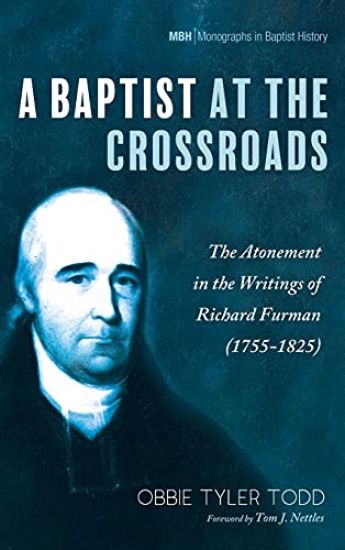
A Baptist at the Crossroads

A Baptist at the Crossroads

Obbie Tyler Todd; Tom J Nettles

Wipf Stock Publishers
2021
sidottu
South Carolina Baptist Richard Furman (1755-1825) personified a host of seeming contradictions. As a Regular Baptist baptized by a Separate Baptist, an ardent patriot with puritan sensibilities, a Federalist who zealously defended religious liberty, and a slave-owning aristocrat who associated with backwoods revivalists, Furman is a complex figure in American history. His doctrine of atonement exhibited this same complexity, as he uniquely held to both a penal substitutionary theory of the atonement as well as to a moral governmental view, models of the atonement that were often conceived as mutually exclusive in the nineteenth century. Furman was the first of his American Baptist kind to attempt to integrate these two models. As a Baptist standing at the political, cultural, and theological crossroads of America, Furman blended Edwardsean and confessional Calvinism, Regular and Separate Baptist traditions, and a host of other elements into his theology, laying the groundwork for an entire generation of Southern Baptists who followed in his theological footsteps.
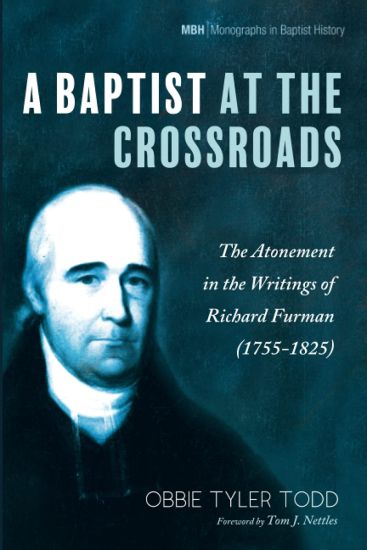
A Baptist at the Crossroads

A Baptist at the Crossroads

Obbie Tyler Todd; Tom J Nettles

Wipf Stock Publishers
2021
pokkari
South Carolina Baptist Richard Furman (1755-1825) personified a host of seeming contradictions. As a Regular Baptist baptized by a Separate Baptist, an ardent patriot with puritan sensibilities, a Federalist who zealously defended religious liberty, and a slave-owning aristocrat who associated with backwoods revivalists, Furman is a complex figure in American history. His doctrine of atonement exhibited this same complexity, as he uniquely held to both a penal substitutionary theory of the atonement as well as to a moral governmental view, models of the atonement that were often conceived as mutually exclusive in the nineteenth century. Furman was the first of his American Baptist kind to attempt to integrate these two models. As a Baptist standing at the political, cultural, and theological crossroads of America, Furman blended Edwardsean and confessional Calvinism, Regular and Separate Baptist traditions, and a host of other elements into his theology, laying the groundwork for an entire generation of Southern Baptists who followed in his theological footsteps.
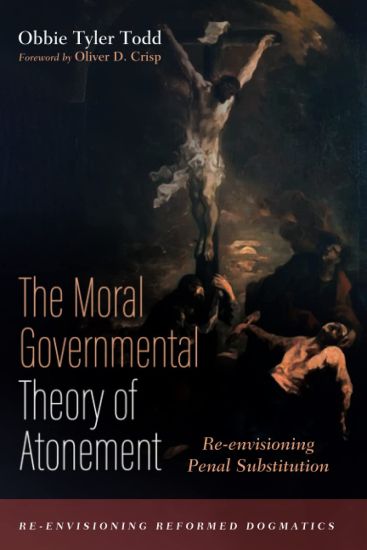
The Moral Governmental Theory of Atonement

The Moral Governmental Theory of Atonement

Obbie Tyler Todd; Oliver D Crisp

Cascade Books
2021
sidottu
The American moral governmental theory of the atonement (MGT) was arguably the most contextualized doctrine of atonement in the history of the Protestant tradition. Hewn from the theology of Jonathan Edwards, and engineered to address the theological, political, philosophical, moral, and even economic milieu in the early republic, MGT became the doctrinal centerpiece of ""the first indigenous American school of Calvinism."" As a result, it stands as a kind of theological time capsule to the people and principles that shaped the tumultuous period between the first Great Awakening and the Civil War when it flourished in America. For over a century in the Anglo-American world, the doctrine of atonement was under heavy construction in the broader Reformed community. By endowing new meaning to old theological terms like imputation, substitution, justice, punishment, and even atonement, MGT represents a theological watermark of sorts in Reformed dogmatics, defining its limits, testing its boundaries, and demanding a level of precision from today's theologians. This book offers a contextualization, distillation, and conversation with this Edwardsean doctrine of atonement.