Kirjojen hintavertailu. Mukana 12 657 676 kirjaa ja 12 kauppaa.

Kirjailija

Okwui Enwezor

Kirjat ja teokset yhdessä paikassa: 13 kirjaa, julkaisuja vuosilta 2015-2025, suosituimpien joukossa Fiona Tan: With the Other Hand. Vertaile teosten hintoja ja tarkista saatavuus suomalaisista kirjakaupoista.

13 kirjaa

Kirjojen julkaisuhaarukka 2015-2025.

Fiona Tan: With the Other Hand

Fiona Tan: With the Other Hand

Okwui Enwezor; Saskia Bos; Doris Von Drathen; Adrian Searle; Fiona Tan; John Berger; Lynne Cooke

Snoeck Verlagsgesellschaft mbH
2020
pokkari
This Reader, edited and introduced by noted art historian and critic Gilda Williams, gathers the key critical writings across the artist's essential works as explored through the lens of art history, post-colonial theory, film analysis, and more. Catalogue essays and exhibition reviews on individual works are set alongside Tan's own substantial body of writing: essays, letters, scripts, project notes, as well as discussions of other -artists' work, from Chantal Akerman to Jeff Wall.
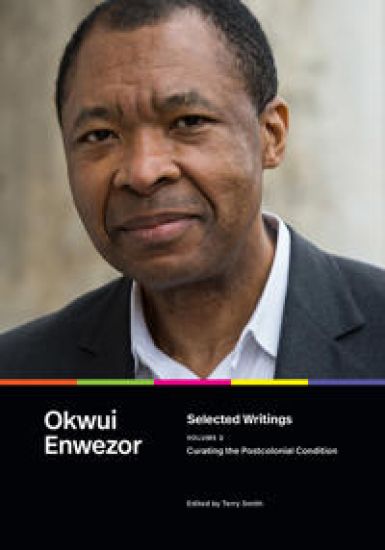
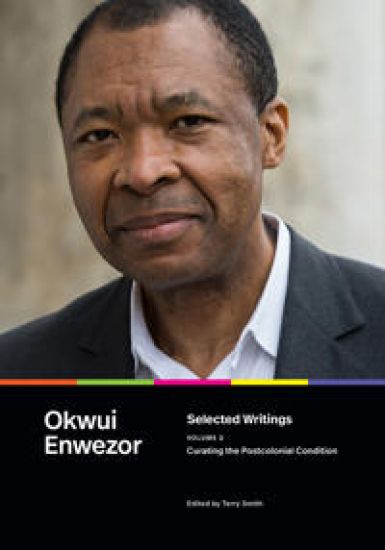
Selected Writings, Volume 2

Selected Writings, Volume 2

Okwui Enwezor

DUKE UNIVERSITY PRESS
2025
pokkari
Okwui Enwezor is widely regarded as a leader among the brilliant curators who emerged in the 1990s to set agendas for understanding the global expansiveness of contemporary art. Among his pathfinding exhibitions were the second Johannesburg Biennale (1997), the paradigm-shifting Documenta 11 (2002), Archive Fever (2008), and Postwar (2016). In addition to his groundbreaking curatorial work, Enwezor was also a prolific critic, essayist, and theorist. Selected Writings-a landmark two-volume set-brings together Enwezor’s most influential and foundational works. Spanning a quarter-century, these selections reflect the depth and breadth of Enwezor’s writing and its role in his tireless efforts to decolonize the art world. Volume 2, Curating the Postcolonial Condition, includes seventeen essays written between 2006 and 2019. Drawn from exhibition catalogs, art journals, interviews with artists, art reviews, curatorial statements, historical studies, and book chapters, these texts show him striving to fulfil the second main ambition that drove his career: enabling a critical, diasporic imagining of postcoloniality that would become pervasive within global art discourse. Demonstrating that his writing helped fulfill this goal, this collection reaffirms Enwezor’s status as a transformational figure in the global contemporary art world.
Selected Writings, Volume 2

Selected Writings, Volume 2

Okwui Enwezor

DUKE UNIVERSITY PRESS
2025
sidottu
Okwui Enwezor is widely regarded as a leader among the brilliant curators who emerged in the 1990s to set agendas for understanding the global expansiveness of contemporary art. Among his pathfinding exhibitions were the second Johannesburg Biennale (1997), the paradigm-shifting Documenta 11 (2002), Archive Fever (2008), and Postwar (2016). In addition to his groundbreaking curatorial work, Enwezor was also a prolific critic, essayist, and theorist. Selected Writings-a landmark two-volume set-brings together Enwezor’s most influential and foundational works. Spanning a quarter-century, these selections reflect the depth and breadth of Enwezor’s writing and its role in his tireless efforts to decolonize the art world. Volume 2, Curating the Postcolonial Condition, includes seventeen essays written between 2006 and 2019. Drawn from exhibition catalogs, art journals, interviews with artists, art reviews, curatorial statements, historical studies, and book chapters, these texts show him striving to fulfil the second main ambition that drove his career: enabling a critical, diasporic imagining of postcoloniality that would become pervasive within global art discourse. Demonstrating that his writing helped fulfill this goal, this collection reaffirms Enwezor’s status as a transformational figure in the global contemporary art world.
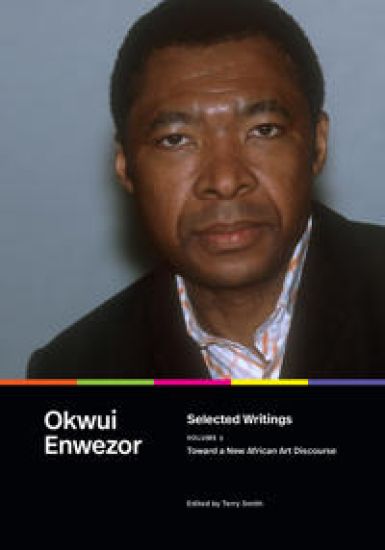
Selected Writings, Volume 1

Selected Writings, Volume 1

Okwui Enwezor

DUKE UNIVERSITY PRESS
2025
sidottu
Okwui Enwezor is widely regarded as a leader among the brilliant curators who emerged in the 1990s to set agendas for understanding the global expansiveness of contemporary art. Among his pathfinding exhibitions were the second Johannesburg Biennale (1997), the paradigm-shifting Documenta11 (2002), Archive Fever (2008), and Postwar (2016). In addition to his groundbreaking curatorial work, Enwezor was also a prolific critic, essayist, and theorist. Selected Writings-a landmark two-volume set-brings together Enwezor’s most influential and foundational works. Spanning a quarter-century, these selections reflect the depth and breadth of Enwezor’s writing and its role in his tireless efforts to decolonize the art world. Volume 1, Toward a New African Art Discourse, includes fifteen essays written between 1994 and 2006. Drawn from exhibition catalogs, art journals, interviews with artists, art reviews, curatorial statements, historical studies, and book chapters, these texts show him striving to fulfil the first main ambition that drove his career: to found and sustain what he called a “New African Art Discourse.” Demonstrating that his writing helped fulfill this goal, this collection reaffirms Enwezor’s status as a transformational figure in the global contemporary art world.
Selected Writings, Volume 1

Selected Writings, Volume 1

Okwui Enwezor

DUKE UNIVERSITY PRESS
2025
pokkari
Okwui Enwezor is widely regarded as a leader among the brilliant curators who emerged in the 1990s to set agendas for understanding the global expansiveness of contemporary art. Among his pathfinding exhibitions were the second Johannesburg Biennale (1997), the paradigm-shifting Documenta11 (2002), Archive Fever (2008), and Postwar (2016). In addition to his groundbreaking curatorial work, Enwezor was also a prolific critic, essayist, and theorist. Selected Writings-a landmark two-volume set-brings together Enwezor’s most influential and foundational works. Spanning a quarter-century, these selections reflect the depth and breadth of Enwezor’s writing and its role in his tireless efforts to decolonize the art world. Volume 1, Toward a New African Art Discourse, includes fifteen essays written between 1994 and 2006. Drawn from exhibition catalogs, art journals, interviews with artists, art reviews, curatorial statements, historical studies, and book chapters, these texts show him striving to fulfil the first main ambition that drove his career: to found and sustain what he called a “New African Art Discourse.” Demonstrating that his writing helped fulfill this goal, this collection reaffirms Enwezor’s status as a transformational figure in the global contemporary art world.
El Anatsui

El Anatsui

Chika Okeke-Agulu; Okwui Enwezor

Damiani
2022
sidottu
Authored by two acclaimed scholars, Okwui Enwezor and Chika Okeke-Agulu, this is the most comprehensive and authoritative account yet on the work of El Anatsui, the world-renowned Ghanaian-born sculptor. The product of more than three decades of research and close collaboration with the artist, it shows how his early wood reliefs and terracottas, and the later monumental metal sculptures, express a search for alternative models of art-making. The authors argue that the pervasiveness of fragmentation as a compositional device in Anatsui’s oeuvre evokes the impact of colonization and postcolonial forces on African cultures. At the same time, the invocation of resilience and fragility invests his shape-shifting sculptures with iconic power. The authors also show how, in his critically acclaimed metal works, the manual labor of flattening, cutting, twisting and crushing bottle caps and using copper wires to suture and stitch the elements into one dazzling, reconfigurable epic piece serves as a powerful metaphor for human life. This book presents Anatsui as a visionary of incomparable imagination, also situating his work within a broader historical context—specifically, the postcolonial modernism of midcentury African artists and writers, the cultural ferment of post-independence Ghana and the intellectual environment of the 1970s Nsukka School. By recovering these histories, the authors show how and why Anatsui became one of the most formidable sculptors of our time.
El Anatsui: Triumphant Scale

El Anatsui: Triumphant Scale

Okwui Enwezor

Prestel
2022
sidottu
Focusing on major recent sculpture and works in almost every media, this book provides an overview of the five decades of practice that have made El Anatsui one of Africa's most prominent living artists. Most famous for his magnificent installations created using bottle caps and other repurposed materials, El Anatsui has established himself as one of the most exalted and accomplished artists of his generation. This volume explores the physical as well as thematic enormity of Anatsui's works. It spans every period of the artist's career, from wooden and ceramic sculptures dating from the 1970s to newly commissioned sculptures. While his most famous sculptures are enormous and formidable, they manage to seem ethereal and light. Anatsui draws upon African art and culture in order to confront the legacies of colonialism and poverty, and responds to the formal Western artistic tradition under which he was trained. Essays by Okwui Enwezor and Chika Okeke-Agulu discuss Anatsui's ability to straddle form and genre. This book reveals the artist's unique understanding of the dialectical relationship between the physical presence of sculpture and its ability to convey new historical meaning. AUTHORS: Okwui Enwezor was Director of Haus der Kunst in Munich, Artistic Director of the 56th Venice Biennial, and Artistic Director of documenta 11 in Kassel. Chika Okeke-Agulu is Professor in the Department of Art and Archaeology and Department of African American Studies at Princeton University. 190 colour illustrations
Thomas Ruff: Transforming Photography

Thomas Ruff: Transforming Photography

Okwui Enwezor

David Zwirner
2019
sidottu
Over the course of his three-decade career, Thomas Ruff has taken up many approaches to photography in his investigation into the status of the image in contemporary culture.In Thomas Ruff, the artist presents new work that continues his ongoing probe into the history, different processes, techniques, and technology of photography. One of the most influential photographers working today, Thomas Ruff has redefined photography’s conceptual possibilities, simultaneously capturing and challenging the essence of the medium as both a means and a tool for visual experience. Over the past twenty-five years, he has investigated various photographic genres, including portraiture, the nude, and landscape and architectural photography, using both analog and digital technologies, and culling imagery from scientific archives, print media, and the internet.Presented here is a selection of Ruff’s most well-known works, as well as the newer Tripe series, begun in 2018, which draws on negatives of India and Burma taken in the 1850s by an officer in the East India Company army. Also included is a conversation between Ruff and Okwui Enwezor, which took place at the Haus der Kunst in Munich, in connection with Ruff’s retrospective then on view. The conversation, published here for the first time, has been edited for this volume and examines Ruff’s artistic practice and inspiration, serving as an engaging and dynamic introduction to the artist.Published on the occasion of the artist’s solo exhibition at David Zwirner, Hong Kong, in 2019, Thomas Ruff is available in both English only and bilingual English/traditional Chinese editions.
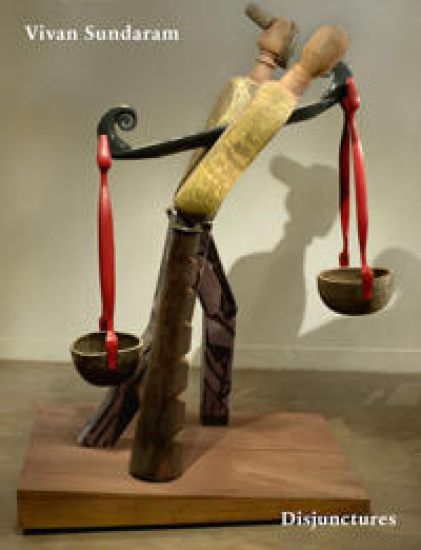
Vivan Sundaram

Vivan Sundaram

Okwui Enwezor; Deepak Ananth; Andreas Huyssen; Katya Garcia-Anton; Ashish Radhyadaksha

Prestel
2018
sidottu
Vivan Sundaram’s eclecticism is a distinctive feature of his work and is the focus of this monograph. A pioneer of installation art in India, Sundaram started off as a painter in the late 1960s but his desire to break free of the limits imposed by the pictorial frame only came to fruition in the early 1990s, when Sundaram began making works that no longer hinged on the specificity of a medium. This change in artistic direction coincided with his interest in exploring the materiality of a range of substances, whether artisanal or industrial. Sundaram’s choice of materials has had a thematic resonance in the different bodies of work that he has made over the last twenty-five years. His practice keenly registers the civic dimension and political import of art. History, memory, and archive are the overarching concerns of his work. These themes define and structure this important publication and offer an open-ended framework for exploring the oeuvre of a highly original artist.
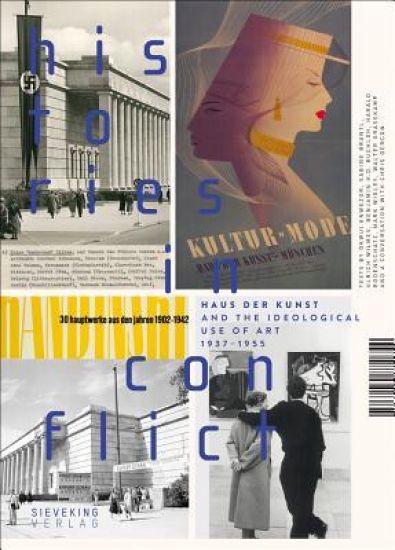
Histories in Conflict: The Haus der Kunst and the Ideological Uses of Art, 1937-1955

Histories in Conflict: The Haus der Kunst and the Ideological Uses of Art, 1937-1955

Sabine Branti; Harald Bodenschatz; Benjamin H. D. Buchloh; Chris Dercon; Okwui Enwezor; Walter Grasskamp; Mark Wigley; Ulrich Wilmes

Sieveking Verlag
2017
nidottu
For the Haus der Kunst in Munich, the question of how to deal with its own past arose directly after the end of the Second World War, when the building once again served as an exhibition space . This richly illustrated volume spans the key historical dates during which a social and political development took place, at whose beginning stood the ideology of the National Socialists and whose end marked the start of Germany's transformation into a democratic state. In this time period, it was not only the orientation of the Haus der Kunst's content that changed; as a result of the cultural-historical upheavals of this time, the basis for the building's development as an international exhibition venue was also laid. Today the Haus der Kunst plays a formative role in the discussion of relevant positions in contemporary art. It documents the historical developments within the context of political and cultural transformations, as well as their international parallels and references. Large exhibitions that were influential for the topography of the art of the twentieth century such as the World Exposition in Paris in 1937, the biennials in Venice, and the first documenta in 1955 provide the coordinates for the international dimension of the Haus der Kunst's story.
All the World’s Futures

All the World’s Futures

Okwui Enwezor

Marsilio
2015
nidottu
Rather than one overarching theme, the 56th International Art Exhibition of the Biennale is informed by a layer of intersecting filters. These filters are a constellation of parameters that circumscribe multiple ideas which will be touched upon to imagine and realize a diversity of practices. All the World's Futures employs as a filter the historical trajectory that the Biennale itself, over the course of its one hundred and twenty years existence has run over. A filter through which to reflect on both the current 'state of things' and the 'appearance of things.' At its core is the notion of the exhibition as a stage, where historical and counter-historical projects are explored. Within this framework the main aspects of the 56th Biennale Exhibition solicit and privilege new proposals and works conceived specifically by invited artists, filmmakers, choreographers, performers, composers, and writers.