Kirjojen hintavertailu. Mukana 12 595 353 kirjaa ja 12 kauppaa.

Kirjailija

Olav Slaymaker

Kirjat ja teokset yhdessä paikassa: 5 kirjaa, julkaisuja vuosilta 1993-2016, suosituimpien joukossa The Cryosphere and Global Environmental Change. Vertaile teosten hintoja ja tarkista saatavuus suomalaisista kirjakaupoista.

5 kirjaa

Kirjojen julkaisuhaarukka 1993-2016.

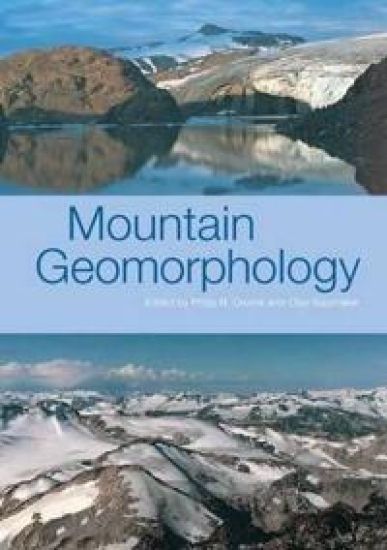
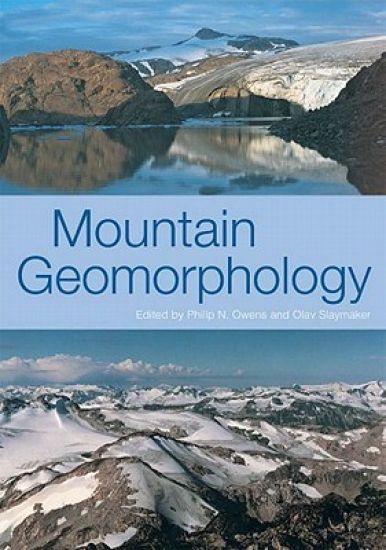
MOUNTAIN GEOMORPHOLOGY

MOUNTAIN GEOMORPHOLOGY

Phil Owens; Olav Slaymaker

Routledge
2016
sidottu
Mountains represent one of the most inspiring and attractive natural features on the surface of the earth. Visually, they dominate the landscape. However, the increasing realization of the fragility of mountain areas because of changes in land use, management and climate, combined with an understanding of their importance for water and other natural resources, has resulted in a growing interest in mountain environments in recent years. Hence, Mountain Geomorphology represents a timely and unique contribution to the literature. Written by a team of international experts, this book is divided into three sections, which consider historical, functional and applied mountain geomorphology from both global and local perspectives. Historical mountain geomorphology focuses on the evolution of landforms. Functional mountain geomorphology emphasises the interaction between processes and landforms, while applied mountain geomorphology concerns the interrelationships between geomorphological processes and society. Mountain Geomorphology is a valuable source of information for students studying mountain geomorphology, and also for academics and research scientists interested in mountain environments.
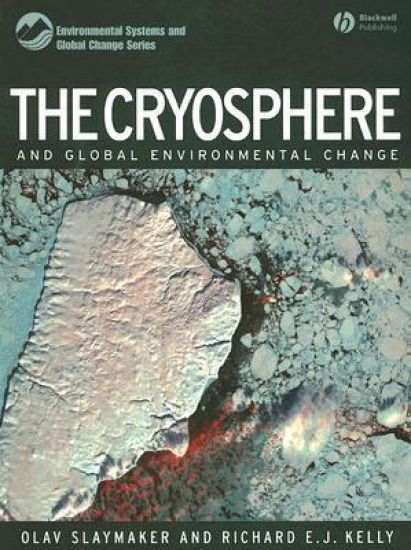
The Cryosphere and Global Environmental Change

The Cryosphere and Global Environmental Change

Olav Slaymaker; Richard Kelly

Wiley-Blackwell (an imprint of John Wiley Sons Ltd)
2006
nidottu
This is the first textbook to consider all aspects of the cryosphere system in the context of global environmental change driven by human activity and climate. Considers all six aspects of the cryosphere – ice sheets, glacier ice, permafrost, river and lake ice, sea ice and snow – in the context of global environmental change driven by human activity and climate.Describes a new concept of cryosphere transience and landscape transition which links climate, hydrology, ecology and geomorphology.Looks at the evidence, process, and patterns of cryosphere change, on local and global scales.Provides a wealth of data to inform the current global environmental change debate. Additional resources for this book can be found at: bcs.wiley.com/he-bcs/Books?action=index&bcsId=5064&itemId=140512976X
MOUNTAIN GEOMORPHOLOGY

MOUNTAIN GEOMORPHOLOGY

Phil Owens; Olav Slaymaker

Hodder Education
2004
nidottu
Mountains represent one of the most inspiring and attractive natural features on the surface of the earth. Visually, they dominate the landscape. However, the increasing realization of the fragility of mountain areas because of changes in land use, management and climate, combined with an understanding of their importance for water and other natural resources, has resulted in a growing interest in mountain environments in recent years. Hence, Mountain Geomorphology represents a timely and unique contribution to the literature. Written by a team of international experts, this book is divided into three sections, which consider historical, functional and applied mountain geomorphology from both global and local perspectives. Historical mountain geomorphology focuses on the evolution of landforms. Functional mountain geomorphology emphasises the interaction between processes and landforms, while applied mountain geomorphology concerns the interrelationships between geomorphological processes and society. Mountain Geomorphology is a valuable source of information for students studying mountain geomorphology, and also for academics and research scientists interested in mountain environments.
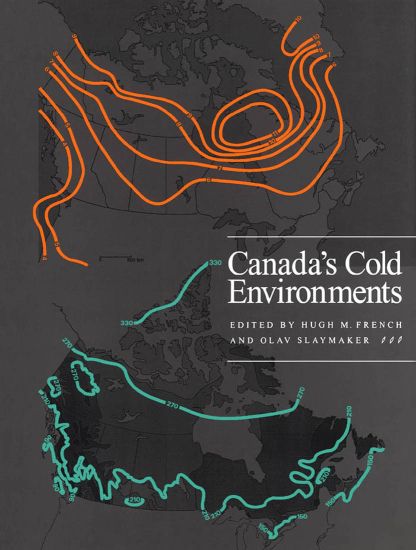
Canada's Cold Environments

Canada's Cold Environments

Hugh M. French; Olav Slaymaker

McGill-Queen's University Press
1997
nidottu
A collection of scientific essays about the physical nature of Canada's coldness. They focus on the distinctive attributes of Canada's cold environments, their temporal and spatial variability, and the constraints that coldness places on human activity. This text is aimed at environmental scientists at all levels who need informed overviews of the substantive findings on a range of cold-related topics.
Canada's Cold Environments

Canada's Cold Environments

Hugh M. French; Olav Slaymaker

McGill-Queen's University Press
1993
sidottu
Low temperatures, wind-chill, snow, sea ice, and permafrost have been primary characteristics of Canada's northern and alpine environments during the past two million years. The evolution of Canada's cultural landscapes, the processes of settlement of rural areas, and the present interaction of Canadian industrial society with its biophysical environment are all deeply influenced, directly or indirectly, by the frigidity of the greater part of the country. The phenomenon of global warming, if it occurs, will lessen this coldness, but its impact on temperature extremes, sea ice regimes, vegetation, snow distribution, permafrost, glaciers, lakes, rivers, and mountain hazards are all the subject of intensive research -- the highlights of which are reviewed in Canada's Cold Environments.