Kirjojen hintavertailu. Mukana 12 595 353 kirjaa ja 12 kauppaa.

Kirjailija

Ole Bjerg

Kirjat ja teokset yhdessä paikassa: 16 kirjaa, julkaisuja vuosilta 2008-2021, suosituimpien joukossa Research methods in public health. Vertaile teosten hintoja ja tarkista saatavuus suomalaisista kirjakaupoista.

16 kirjaa

Kirjojen julkaisuhaarukka 2008-2021.

Research methods in public health

Research methods in public health

Signild Vallgårda; Lene Koch; Klaus Lindgaard Høyer; Ole Bjerg; Ulla Christensen; Lone Schmidt; Lise Dyhr; Tine Tjørnhøj-Thomsen; Susan Reynolds Whyte; Sniff Andersen Nexø; Lisa Dahlager; Hanne Fredslund; Mette Madsen; Kirstine Rugholm Münster; Lisbeth Ehlert Knudsen; Kirsten Ohm Kyvik

Gyldendal
2008
nidottu
In this book, 16 authors describe various public health research methods ranging from interviews, discourse analysis, hermeneutic analysis, historical and comparative studies, and anthropological field work to statistical methods, questionnaire surveys and register studies. The book opens with a chapter on different ways of understanding the role of theory and on the relationship between theory and method; a subsequent introductory chapter addresses the topic of qualitative and quantitative methods and epistemology. The book will be of interest to anyone who is about to embark on a public health and other research project or who is writing a thesis or a paper, and who is looking for help in the choice of methods. New researchers, Ph.D. students and undergraduate students of medicine, public health, nursing, occupational therapy and physiotherapy and students in other areas such as sociology, pedagogy, and anthropology, as well as students taking their master's degrees will benefit from this book.
El Sentido de Ser Hombre
Qu significa ser un hombre? Aunque esta pregunta es crucial para por lo menos la mitad de la poblaci n mundial, Ole Bjerg argumenta que ha sido casi olvidada por la filosof a. En este revolucionario libro, el autor pone en movimiento las ideas de Martin Heidegger y Hannah Arendt para acu ar el concepto de ser-hombre como una alternativa al discurso convencional sobre el g nero y la identidad. Esto conduce a una exploraci n del amor, el sexo, el arte, la verdad, la paternidad, las mujeres y otros asuntos existenciales que confrontan a los hombres en su esfuerzo por dar sentido a su existencia y su vida en el mundo actual.El sentido de ser hombre puede ser le do por cualquiera, pero est escrito expl citamente para aquellos hombres inconformes con los debates acad micos actuales acerca de las cuestiones relativas a los hombres y las mujeres y que, sin embargo, a n creen en que la filosof a tiene algo valioso que decir sobre estos temas.Ole Bjerg (1974) es profesor de filosof a y econom a en la Copenhagen Business School. Sus escritos abarcan diversos temas como el dinero, la banca, el Dinero Digital del Banco Central, el Bitcoin, la sustentabilidad, las teor as de la conspiraci n, el p quer, las adicciones y la tica. Entre otros libros, es autor de Parallax of Growth (Polity Press 2016), Making Money (Verso 2014) y Poker: The Parody of Capitalism (University of Michigan Press 2011).Naci en Jutlandia. Actualmente vive en Copenhagen con su esposa y sus dos hijos.
Hacer dinero

Hacer dinero

Ole Bjerg

Athos Books
2021
pokkari
Este libro es un viaje filos fico a las entra as del dinero y las finanzas. Vivimos en una poca dominada por la especulaci n burs til, el endeudamiento, el poder de los bancos y el mercado financiero. Pueden los conceptos filos ficos ayudarnos a dilucidar c mo funcionan estos campos? C mo es posible que un conjunto de signos financieros almacenados en sistemas virtuales estructure nuestra sociedad y determine la vida de las personas? Pueden las sociedades hacer algo para liberarse del peso de la deuda? Es posible imaginar un sistema monetario organizado bajo principios democr ticos? La tesis central de este libro es desafiante: sostiene no s lo que los economistas no entienden el dinero; sino que la filosof a es la disciplina mejor armada para desentra ar la realidad de este elusivo objeto y el poder que en l se encierra. Hacer dinero. Filosof a del capitalismo postcr dito, es una vibrante defensa de la filosof a y un llamado urgente a la organizaci n pol tica.
The Meaning of Being a Man
What does it mean to be a man? While this is a key question for at least half the population of the world, Ole Bjerg argues that it has been largely forgotten by philosophy. In his groundbreaking new book, he mobilizes ideas from Martin Heidegger and Hannah Arendt to coin the notion of Being-Man as an alternative to the conventional talk about gender and identity. This leads into an exploration of love, sex, work, art, truth, fatherhood, women, and other existential issues confronting men in our efforts to make sense of ourselves and our lives today.The Meaning of Being a Man may be read by anyone. But it is explicitly written for men who are discontented with contemporary academic debates about men and women and yet still believe that philosophy has something valuable to say on these matters.Ole Bjerg (b. 1974) is an Associate Professor in Philosophy and Economics at the Copenhagen Business School. His writings span a range of topics such as money, banking, central bank digital currency, bitcoin, sustainability, conspiracy theory, poker, addiction, and ethics. A list of previous books in English include Parallax of Growth (Polity Press 2016), Making Money (Verso 2014) and Poker: The Parody of Capitalism (University of Michigan Press 2011).
The Meaning of Being a Man
What does it mean to be a man? While this is a key question for at least half the population of the world, Ole Bjerg argues that it has been largely forgotten by philosophy. In his groundbreaking new book, he mobilizes ideas from Martin Heidegger and Hannah Arendt to coin the notion of Being-Man as an alternative to the conventional talk about gender and identity. This leads into an exploration of love, sex, work, art, truth, fatherhood, women, and other existential issues confronting men in our efforts to make sense of ourselves and our lives today.The Meaning of Being a Man may be read by anyone, but it is explicitly written for men who are discontented with contemporary academic debates about men and women and yet still believe that philosophy has something valuable to say on these matters.
Vores penge i vores bank

Vores penge i vores bank

Ole Bjerg

Informations Forlag
2017
nidottu
Nationalbanken blev grundlagt ved en pengereform i 1818, som en reaktion på, at den enevældige konge havde skabt alt for mange papirpenge. Nu 200 år efter har vi brug for en ny pengereform, som en reaktion på, at bankerne har skabt alt for mange elektroniske kontopenge. Nationalbanken er det knudepunkt i økonomien, hvor den demokratiske stat og det private finansielle system er bundet sammen.Nationalbanken har det juridiske mandat til at administrere pengevæsenet. I de seneste 40 år har Nationalbanken primært set sin rolle som fødselshjælper for de private bankers produktion af elektroniske kontopenge. Hvis vi demokratisk vil styre pengevæsenet i en bestemt retning, er Nationalbanken den knap, vi skal skrue på. Det har man gjort masser af gange tidligere i historien, og det kan vi gøre igen.I Vores penge i vores bank giver Ole Bjerg et bud på, hvordan vi kan håndtere nutidige finansielle kriser ved at opdatere Nationalbankens monopol på at skabe penge til det 21. århundredes digitale økonomi.OM FORFATTERENOle Bjerg (f. 1974) er lektor i filosofi og økonomi på Copenhagen Business School, hvor han også underviser på uddannelsen i Erhvervsøkonomi og filosofi. Hans seneste bog er Parallax of Growth - The Philosophy of Ecology and Economy (2016). Han er desuden forfatter til Making Money - The Philosophy of Crisis Capitalism (2014), Gode Penge - et kontant svar på gældskrisen (Informations Forlag 2013), Poker - The Parody of Capitalism (2011), For tæt på kapitalismen - ludomani, narkomani og købemani (2011) og Etik uden moral (2008).
Sundhed og magt

Sundhed og magt

Holger Højlund; Kaspar Villadsen; Lars Thorup Larsen; Mitchell Dean; Nikolas Rose; Niels Åkerstrøm Andersen; Ole Bjerg; Thomas Lemke; Mads Peter Karlsen; Kathrine Hoffmann Pii; Ayo Wahlberg; Justine Grønbæk Pors; Anders la Cour

Gyldendal
2017
nidottu
I de senere år er forståelsen af sundhed undergået en række forandringer. Fokus er blevet udvidet fra patienten som biomedicinsk krop til et subjekt, der oplever sundhedsproblemer og lever med dem i interaktion med det omgivende miljø. Sundhed er blevet et langt mere omfattende anliggende, der potentielt vedrører alle aspekter af vores tilværelse. Det betyder samtidig, at ideer om sundhed ikke kan dikteres af sundhedsmyndigheder og eksperter. Sundhedsfremmende tiltag må i dag tage målgruppens værdier og rationaler i betragtning, bl.a. i form af kampagner, der ikke kræver absolut overholdelse af sundhedsdoktriner, men forsøger at få folk til at afveje deres usunde vaner i forhold til sundhedsværdier. Sundhed og magt tager bestik af denne udvikling. I bogen står Michel Foucaults begreb om biopolitik centralt – et begreb, som netop sætter fokus på, at reguleringen af det biologiske liv sammenvæves med en mere omfattende ledelse af sociale og kulturelle forhold. Bogen rummer bidrag fra førende danske og internationale forskere, som anlægger perspektiver, der udfordrer traditionel sundhedsforskning, herunder genealogi, systemteori, psykoanalyse og aktør-netværk-teori. Den henvender sig til studerende og fagfolk på sundheds- og samfundsvidenskabelige uddannelser. Redigeret af Mads Peter Karlsen og Kaspar Villadsen, hhv. adjunkt og professor mso ved Copenhagen Business School.
Gode penge

Gode penge

Ole Bjerg

Informations Forlag
2016
nidottu
I Gode penge tages både penge og banker under grundig behandling af sociologen Ole Bjerg, som søger svar på tre grundlæggende spørgsmål; Hvor kommer penge fra? Hvem laver dem? Og hvem burde lave dem? De to første spørgsmål er helt essentielle for at forstå årsagerne til den aktuelle krise, og besvarelsen af det sidste spørgsmål er afgørende for vores evne til at komme videre. I bogen præsenterer Ole Bjerg en model for et bankvæsen med fuld reserve. En omstilling af pengesystemet efter denne model kan forebygge fremtidige finanskriser og skabe en mere stabil og retfærdig økonomi. OM FORFATTERENOLE BJERG (f. 1974) er sociolog og lektor på institut for ledelse, politik og filosofi på Copenhagen Business School. Han er forfatter til bøgerne For tæt på kapitalismen – Ludomani, narkomani og købemani (2008), Etik uden moral – Det gode menneske i det postmoderne samfund (2010), Poker – The Parody of Capitalism (2011), Making Money – The Philosophy of Post Credit Capitalism (2014) og Parallax of Growth – The Philosophy of Ecology and Economy (2016).
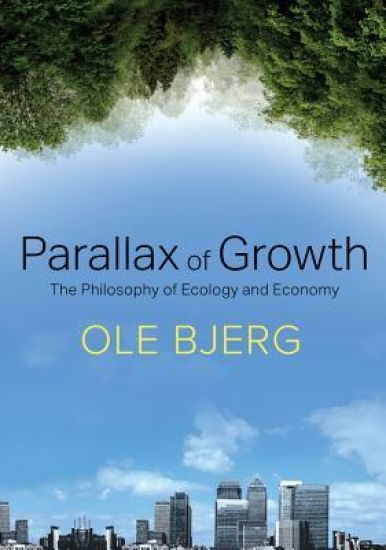
Parallax of Growth

Parallax of Growth

Ole Bjerg

Polity Press
2016
sidottu
Parallax of Growth explores the ideas of economy and ecology and the factors that have put them on a collision course. Bjerg argues that our current mode of economic organization is characterized by an inherent ?debt drive?, whereby the creation of money through the issuance of commercial bank credit has locked our economy into a vicious circle of forced growth and increasing debt. Parallax of Growth is not a catalogue of solutions to the ecological or the economic crisis. The book aims to shift the inquiry from ?what shall we do?? to ?why have we not already done it?? In order to address the challenges of our contemporary times of crisis, we need to understand how the idea of growth is deeply ingrained in the ideology as well as the organization of our society. The book aims to open the space for philosophical thinking about this important issue.
Parallax of Growth

Parallax of Growth

Ole Bjerg

Polity Press
2016
nidottu
Parallax of Growth explores the ideas of economy and ecology and the factors that have put them on a collision course. Bjerg argues that our current mode of economic organization is characterized by an inherent ?debt drive?, whereby the creation of money through the issuance of commercial bank credit has locked our economy into a vicious circle of forced growth and increasing debt. Parallax of Growth is not a catalogue of solutions to the ecological or the economic crisis. The book aims to shift the inquiry from ?what shall we do?? to ?why have we not already done it?? In order to address the challenges of our contemporary times of crisis, we need to understand how the idea of growth is deeply ingrained in the ideology as well as the organization of our society. The book aims to open the space for philosophical thinking about this important issue.
Making Money

Making Money

Ole Bjerg

Verso Books
2014
nidottu
What is money? Where does it come from? Who makes it? And how can we understand the current state of our economy as a crisis of money itself? In Making Money, Ole Bjerg turns these questions into a matter of philosophical rather than economic analysis. Applying the thinking of Slavoj Zizek and other scholars to mainstream economic literature, Bjerg provides a radical new way of looking at the mysterious stuff we use to buy things. It is a theory unfolded in reflections on the nature of monetary phenomena such as financial markets, banks, debt, credit, derivatives, gold, risk, value, price, interests, and arbitrage. The analysis of money is put into an historical context, suggesting that the current financial turbulence and debt crisis are evidence that we live in the age of post-credit capitalism. By bridging the fields of economics and contemporary philosophy, Bjerg's work engages in a compelling form of intellectual arbitrage.
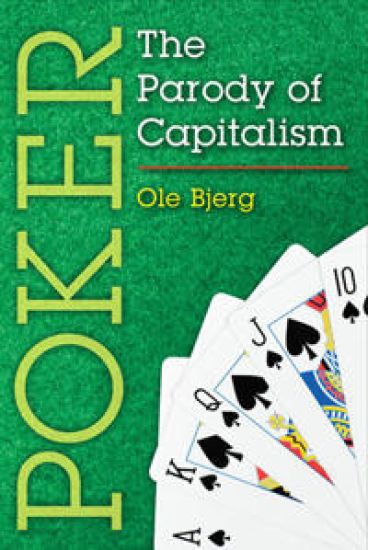
Poker

Poker

Ole Bjerg

The University of Michigan Press
2011
sidottu
Poker is an extraordinary worldwide phenomenon with major social, cultural, and political implications, and Poker: The Parody of Capitalism investigates the game of poker as a cultural expression of significance not unlike art, literature, film, or music. Tracing the history of poker and comparing the evolution of the game to the development of capitalism, Ole Bjerg complicates prevalent notions of “casino capitalism” and correspondingly facile and simplistic comparisons of late capitalism and poker. By employing Slavoj Žižek’s threefold distinction between imaginary-symbolic-real as a philosophical framework to analyze poker and to understand the basic strategies of the game, Bjerg explores the structural characteristics of poker in relation to other games, making a clear distinction between poker and other gambling games of pure chance such as roulette and craps. With its combination of social theory and empirical research, Poker offers an engaging exploration of a cultural trend."Poker is a theoretically sophisticated, highly original and innovative treatment of a contemporary social phenomenon, and contributes greatly to our understanding of the nature of contemporary capitalism."—Charles Livingstone, Monash University Australia
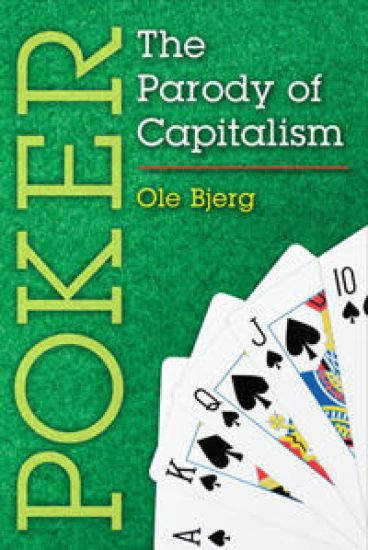
Poker

Poker

Ole Bjerg

The University of Michigan Press
2011
nidottu
Poker is an extraordinary worldwide phenomenon with major social, cultural, and political implications, and Poker: The Parody of Capitalism investigates the game of poker as a cultural expression of significance not unlike art, literature, film, or music. Tracing the history of poker and comparing the evolution of the game to the development of capitalism, Ole Bjerg complicates prevalent notions of “casino capitalism” and correspondingly facile and simplistic comparisons of late capitalism and poker. By employing Slavoj Žižek’s threefold distinction between imaginary-symbolic-real as a philosophical framework to analyze poker and to understand the basic strategies of the game, Bjerg explores the structural characteristics of poker in relation to other games, making a clear distinction between poker and other gambling games of pure chance such as roulette and craps. With its combination of social theory and empirical research, Poker offers an engaging exploration of a cultural trend."Poker is a theoretically sophisticated, highly original and innovative treatment of a contemporary social phenomenon, and contributes greatly to our understanding of the nature of contemporary capitalism."—Charles Livingstone, Monash University Australia
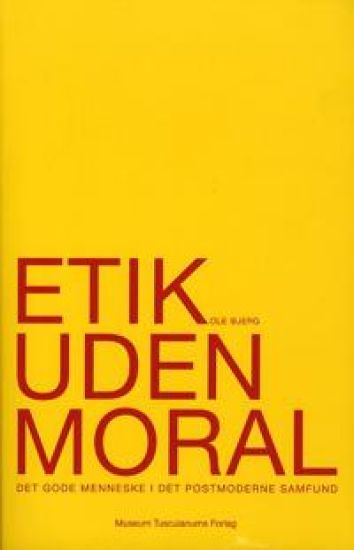
Etik uden moral

Etik uden moral

Ole Bjerg

Museum Tusculanums Forlag
2010
nidottu
I Etik uden moral udvikler Ole Bjerg et begreb om etik i det postmoderne samfund, som han med afsæt i Niklas Luhmanns systemteori beskriver som hyperdifferentieret. Indretningen af det postmoderne samfund gør det umuligt at tænke moral som et altomfattende metasystem, og Bjerg argumenterer for, at der i dag ikke findes et etisk regelsæt, som kan fortælle os, hvad vi skal gøre og ikke gøre. I stedet må den enkelte navigere ud fra en praktisk fornemmelse for, hvad der er rigtigt og forkert i enhver given situation. Den etiske fornemmelse er altså konkret og kan ikke generaliseres eller defineres. Bogens omfattende undersøgelse udfoldes med eksempler inden for videnskab, kunst, økonomi, politik, sundhed og kærlighed i det postmoderne. Den kombinerer filosofiske diskussioner af bl.a. Aristoteles, Schopenhauer, Durkheim, Weber, Heidegger, Baudrillard og Luhmann med sociologiske analyser af tidstypiske personlighedstyper. Desuden undersøger bogen, hvordan det er muligt at tænke og handle etisk inden for virksomheder og andre organisationer.
For tæt på kapitalismen

For tæt på kapitalismen

Ole Bjerg

Museum Tusculanums Forlag
2008
nidottu
Antallet af mennesker i vores samfund, som lider af ludomani, narkomani eller købemani er både stort og stigende. At blive afhængig af enten spil, stoffer eller shopping er en stor menneskelig tragedie for den enkelte. Samtidig synes netop disse afhængighedsformer imidlertid også at udgøre kulturelle udtryk for det samfund, vi lever i.For tæt på kapitalismen består af tre særskilte analyser af hhv. ludomani, narkomani og købemani, som tilsammen udgør en diagnose af nutidens form for kapitalisme. Ved at trække på en lang række forskelligartede kilder såsom neurobiologisk hjerneforskning, H.C. Andersens eventyr om »Prinsessen på ærten«, marxistisk merværditeori, interviews med stofmisbrugere og markedsføring af firehjulstrækkere indkredses den særlige ideologiske betydning af tre forskellige objekter: penge, krop og vare. Ludomani, narkomani og købemani kan netop forstås som tilfælde, hvor forholdet til et af disse objekter er blevet forstyrret og den ideologiske betydning kollapser. Afhængigheden opstår i det øjeblik, subjektet kommer for tæt på objektet. Ludomanen, narkomanen og tvangskøberen er på paradoksal vis både avantgarde og affaldsprodukt i kapitalismen.Bogen udgør endvidere en revitalisering af den marxistiske kapitalanalyse, hvor de gamle begreber om udbytning, fremmedgørelse og merværdiproduktion omsættes til Slavoj Zizeks begreber om begær, desublimering og nydelse.