Kirjojen hintavertailu. Mukana 12 595 353 kirjaa ja 12 kauppaa.
Kirjailija
Ole Jacob Sending
Kirjat ja teokset yhdessä paikassa: 5 kirjaa, julkaisuja vuosilta 2008-2017, suosituimpien joukossa The Politics of Expertise. Vertaile teosten hintoja ja tarkista saatavuus suomalaisista kirjakaupoista.
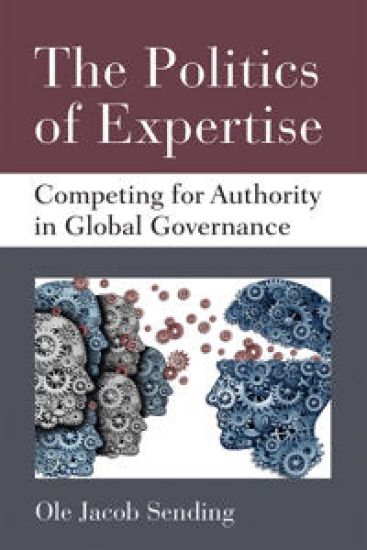
Experts dominate all facets of global governance, from accounting practices and antitrust regulations to human rights law and environmental conservation. In this study, Ole Jacob Sending encourages a critical interrogation of the role and power of experts by unveiling the politics of the ongoing competition for authority in global governance. Drawing on insights from sociology, political science, and institutional theory, Sending challenges theories centered on particular actors’ authority, whether it is the authority of so-called epistemic communities, the moral authority of advocacy groups, or the rational-legal authority of international organizations. Using in-depth and historically oriented case studies of population and peacebuilding, he demonstrates that authority is not given nor located in any set of particular actors. Rather, continuous competition for recognition as an authority to determine what is to be governed, by whom, and for what purpose shapes global governance in fundamental ways. Advancing a field-based approach, Sending highlights the political stakes disguised by the technical language of professionals and thus opens a broader public debate over the key issues of our time.
Experts dominate all facets of global governance, from accounting practices and antitrust regulations to human rights law and environmental conservation. In this study, Ole Jacob Sending encourages a critical interrogation of the role and power of experts by unveiling the politics of the ongoing competition for authority in global governance. Drawing on insights from sociology, political science, and institutional theory, Sending challenges theories centered on particular actors’ authority, whether it is the authority of so-called epistemic communities, the moral authority of advocacy groups, or the rational-legal authority of international organizations. Using in-depth and historically oriented case studies of population and peacebuilding, he demonstrates that authority is not given nor located in any set of particular actors. Rather, continuous competition for recognition as an authority to determine what is to be governed, by whom, and for what purpose shapes global governance in fundamental ways. Advancing a field-based approach, Sending highlights the political stakes disguised by the technical language of professionals and thus opens a broader public debate over the key issues of our time.
I dagens globaliserte verden angår utenrikspolitikk oss alle. Av den grunn igangsatte utenriksminister Jonas Gahr Støre UD-prosjektet "Refleks -- norske interesser i en globalisert verden". Hensikten er å stimulere til bred og åpen debatt om Norges rolle i verdenssamfunnet. Rapporten Norske interesser springer ut av Refleksprosjektets arbeid. Det er den første helhetlige drøftingen av globalisering og dens utfordringer for norske interesser siden Berlinmurens fall i 1989 endret på rammene for norsk utenrikspolitikk. I sentrum av rapporten står spørsmålene: - Hva er norske interesser? - Hva er sammenhengen mellom krigen i Afghanistan, norsk sikkerhet og NATOs fremtid? - Hva betyr politisk stabilitet i Asia og Midt-Østen for Norges økonomiske fremtid? - Kan oljelandet Norge forene økonomiske interesser og hensynet til klimaproblemene? "Vi må våge å drøfte våre egne interesser i verden. Vi må gjøre oss klokere med hensyn til hvordan det norske samfunnets ulike mål og behov utfordres av globalisering, og best kan ivaretas. Vi må utfordre oss selv. Vi må våge å teste om utenrikspolitikkens etablerte svar fortsatt er gyldige", skriver Jonas Gahr Støre innledningsvis. Norske interesser er et viktig og aktuelt bidrag til den politiske debatten, og utfordrer vårt bilde av oss selv som land og våre interesser i forholdet til verden for øvrig.