Kirjojen hintavertailu. Mukana 12 156 584 kirjaa ja 12 kauppaa.

Kirjailija

Oliver D. Crisp

Kirjat ja teokset yhdessä paikassa: 33 kirjaa, julkaisuja vuosilta 2005-2023, suosituimpien joukossa Jonathan Edwards's Moral Thought and Its British Context. Vertaile teosten hintoja ja tarkista saatavuus suomalaisista kirjakaupoista.

Mukana myös kirjoitusasut: Oliver D Crisp

33 kirjaa

Kirjojen julkaisuhaarukka 2005-2023.

Participation and Atonement – An Analytic and Constructive Account
The atonement is at the heart of Christian doctrine. But how does it relate to the life of the church? And what difference does it make for worship and liturgy? Highly respected theologian Oliver Crisp sets out a new, comprehensive account of the nature of the atonement, exploring how this doctrine affects our participation in the life of God and in the shared life of the Christian community. Crisp builds on key insights from other historic substitutionary models of Christ's work while avoiding the problems plaguing penal substitution.
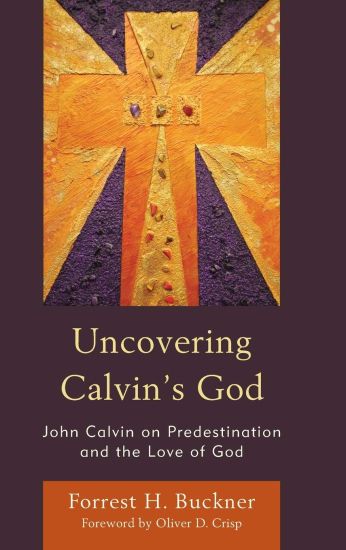
Uncovering Calvin’s God

Uncovering Calvin’s God

Forrest H. Buckner; Oliver D. Crisp

BLOOMSBURY PUBLISHING PLC
2022
nidottu
Although “God loves you” is a common summary of the central message of Christian teaching and preaching, a close reading of the Bible and attention to the Christian tradition will reveal passages of Scripture and Christian doctrines--particularly John Calvin’s doctrine of predestination--that seem to undermine confidence in God’s love for all people. For numerous theologians, including many within the Reformed tradition, the secret decree of Calvin’s God to save some and condemn others seems to undercut completely one’s assurance of salvation along with one’s ability to trust in and worship God. However, pastor and scholar John Calvin confidently spoke of God as a loving Father throughout his teaching and preaching. In Uncovering Calvin’s God, Forrest H. Buckner unearths Calvin’s teaching about the God of love who reigns sovereign over predestination. Drawing upon sources from across Calvin’s corpus, Buckner examines Calvin’s teaching on the knowledge of God and the doctrine of predestination to provide a more robust and cohesive understanding of Calvin’s theology, which Buckner then confirms through an extensive examination of Calvin’s preaching in Geneva. He then offers a critical comparison of Calvin’s approach with the teaching of Luther, Zwingli, Bullinger, Arminius, and Barth. Using Calvin’s system as a starting point, this book helps readers perceive the essentials and trade-offs of any doctrine of predestination that takes seriously both the Bible and the loving God revealed in Jesus Christ.
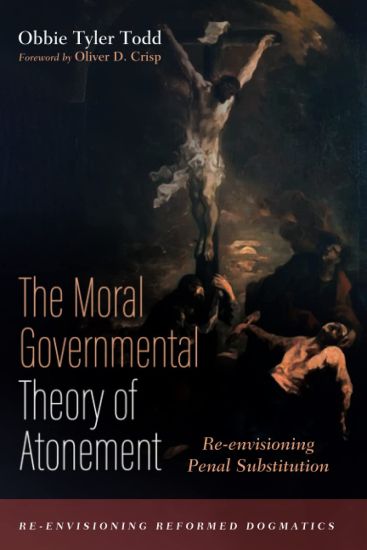
The Moral Governmental Theory of Atonement

The Moral Governmental Theory of Atonement

Obbie Tyler Todd; Oliver D Crisp

Cascade Books
2021
sidottu
The American moral governmental theory of the atonement (MGT) was arguably the most contextualized doctrine of atonement in the history of the Protestant tradition. Hewn from the theology of Jonathan Edwards, and engineered to address the theological, political, philosophical, moral, and even economic milieu in the early republic, MGT became the doctrinal centerpiece of ""the first indigenous American school of Calvinism."" As a result, it stands as a kind of theological time capsule to the people and principles that shaped the tumultuous period between the first Great Awakening and the Civil War when it flourished in America. For over a century in the Anglo-American world, the doctrine of atonement was under heavy construction in the broader Reformed community. By endowing new meaning to old theological terms like imputation, substitution, justice, punishment, and even atonement, MGT represents a theological watermark of sorts in Reformed dogmatics, defining its limits, testing its boundaries, and demanding a level of precision from today's theologians. This book offers a contextualization, distillation, and conversation with this Edwardsean doctrine of atonement.
Uncovering Calvin’s God

Uncovering Calvin’s God

Forrest H. Buckner; Oliver D. Crisp

Lexington Books/Fortress Academic
2020
sidottu
Although “God loves you” is a common paraphrase of Christian teaching and preaching, a close reading of the Bible and attention to the Christian tradition will reveal passages of Scripture and Christian doctrines-- particularly John Calvin’s doctrine of predestination--that seem to undermine confidence in God’s love for all people. For many theologians, not only in the Reformed tradition, the secret decree of Calvin’s God to save some and condemn others seems completely to undercut any assurance of salvation and the ability to trust in and worship God. However, pastor and scholar John Calvin confidently spoke of God as a loving Father throughout his teaching and preaching. In Uncovering Calvin’s God, Forrest H. Buckner unearths Calvin’s teaching about the God of love who reigns sovereign over predestination. Drawing upon sources from across Calvin’s corpus, Buckner examines Calvin’s teaching on the knowledge of God and the doctrine of predestination to provide a more robust and cohesive understanding of Calvin’s theology, which Buckner then confirms through an extensive examination of Calvin’s preaching in Geneva. He then offers a critical comparison of Calvin’s approach with the teaching of Luther, Zwingli, Bullinger, Arminius, and Barth. Using Calvin’s system as a starting point, this book helps readers perceive the essentials and trade-offs of any doctrine of predestination that takes seriously both the Bible and the loving God revealed in Jesus Christ.
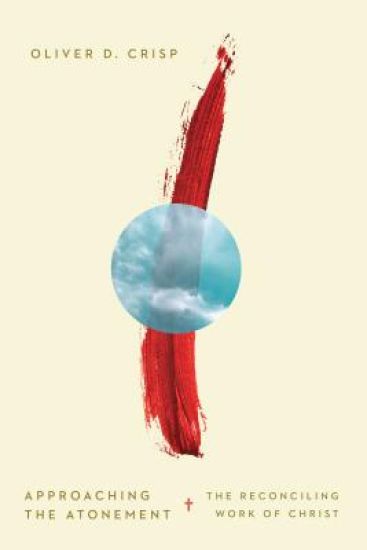
Approaching the Atonement – The Reconciling Work of Christ
In many ways, the death of Jesus Christ on the cross stands at the heart of the Christian faith. But how should we understand the theological significance of Christ's death? Should we limit our doctrine of the atonement to the cross, or is Christ's work more expansive than that? How should we account for the violence of this event? Theologian Oliver Crisp explores such questions around the meaning of the cross and the various ways that the death of Jesus has been interpreted in the church's history—from ransom theory in the early church to penal substitutionary theory to more recent feminist critiques. What emerges from this study is a more complex, expansive, and fruitful understanding of the atonement and its significance for the Christian faith today.
God, Creation, and Salvation

God, Creation, and Salvation

Oliver D. Crisp

T. T.Clark Ltd
2020
nidottu
This collection of studies in theology is written from the perspective of one from within the Christian faith, and seeking greater understanding of the doctrinal deposit of that faith. As a leading scholar in Christian and analytic theology, Oliver D. Crisp summarizes and analyses Christian doctrine, written in the form of traditional dogmatics.Beginning with issues concerning the task of theology, Crisp explores the challenges to systematic theology as a discipline, the uses of Scripture in theological discourse, and the reception of the theology of John Calvin. He then moves issues at the centre of serious theological debate in recent theology, the relationship between God and abstract objects in the thought of Jonathan Edwards, and theological anthropology. This volume culminates with studies that focus on central and defining issues in contemporary systematic and philosophical theology, taking forward a constructive theological program in dialogue with important figures in the Christian tradition, and engaged with some of the best contemporary theological scholarship.
God, Creation, and Salvation

God, Creation, and Salvation

Oliver D. Crisp

T. T.Clark Ltd
2020
sidottu
This collection of studies in theology is written from the perspective of one from within the Christian faith, and seeking greater understanding of the doctrinal deposit of that faith. As a leading scholar in Christian and analytic theology, Oliver D. Crisp summarizes and analyses Christian doctrine, written in the form of traditional dogmatics.Beginning with issues concerning the task of theology, Crisp explores the challenges to systematic theology as a discipline, the uses of Scripture in theological discourse, and the reception of the theology of John Calvin. He then moves issues at the centre of serious theological debate in recent theology, the relationship between God and abstract objects in the thought of Jonathan Edwards, and theological anthropology. This volume culminates with studies that focus on central and defining issues in contemporary systematic and philosophical theology, taking forward a constructive theological program in dialogue with important figures in the Christian tradition, and engaged with some of the best contemporary theological scholarship.
Jonathan Edwards

Jonathan Edwards

Oliver D. Crisp

Routledge
2019
nidottu
This title was first published in 2003. It has often been claimed that Jonathan Edwards (1703-1758) was America's greatest philosopher and theologian. From literary criticism of his sermons to philosophical assessments of his metaphysics, there has been a burgeoning industry in Edwardsian studies, but there has been no one place where an exploration of the theology and philosophy of Edwards has been brought together. 2003 marks the tercentenary date of the birth of Jonathan Edwards. This book draws together specially-commissioned contributions from philosophers and theologians from the USA and UK, to present new analytic philosophical and theological thinking on Edwards in a way that reflects Edwards' own concerns, as well as those current in the academy.
Analyzing Doctrine

Analyzing Doctrine

Oliver D. Crisp

Baylor University Press
2019
sidottu
In Analyzing Doctrine Oliver Crisp carefully considers the relationship of systematic theology to analytic philosophy, arguing that the tools of analytic philosophy can be fruitfully applied to traditional systematic theology. Doing so, as Analyzing Doctrine reveals, creates a distinct and rich analytic theology. Analyzing Doctrine employs traditional themes of systematic theology to structure Crisp's analytic theological analysis. Crisp examines the doctrine of God, the mystery of the Trinity, and God's intention in creating and relating to the world. He then addresses the incarnation, original sin, the virgin birth, Christ's two wills, salvation, and, finally, the resurrection. In the process of making his constructive case, Crisp engages a range of historic theological voices from the tradition, as well as contemporary biblical studies and systematic theology. Clear, accessible, and engaging, Analyzing Doctrine establishes analytic theology's place in the architecture of systematic theology while also challenging some of its misconceptions. By seamlessly weaving together Christian tradition and analytic philosophy to construct his theology, Crisp argues for the integral role that analytic theology plays in the theological imagination.
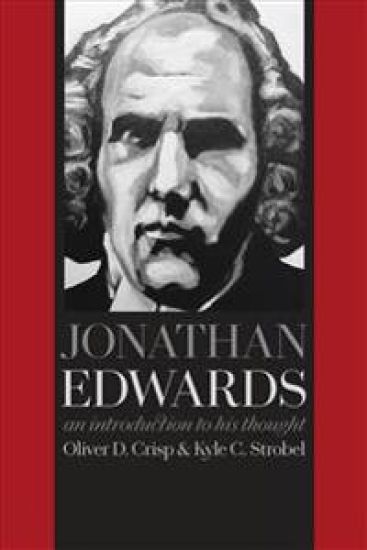
Jonathan Edwards

Jonathan Edwards

Oliver D. Crisp; Kyle C. Strobel

William B Eerdmans Publishing Co
2018
nidottu
Student-friendly intro to one of America's most fascinating theological minds Jonathan Edwards (1703-1758) has long been recognized as one of the preeminent thinkers in the early Enlightenment and a major figure in the history of American Christianity. In this accessible one-volume text, leading Edwards experts Oliver Crisp and Kyle Strobel introduce readers to the fascinating and formidable mind of Jonathan Edwards as they survey key theological and philosophical themes in his thought, including his doctrine of the Trinity, his philosophical theology of God and creation, and his understanding of the atonement and salvation. More than two centuries after his death, theologians and historians alike are finding the larger-than-life Edwards more interesting than ever. Crisp and Strobel's concise yet comprehensive guide will help students of this influential eighteenth-century revivalist preacher to understand why.
Jonathan Edwards

Jonathan Edwards

Oliver D. Crisp

Routledge
2017
sidottu
This title was first published in 2003. It has often been claimed that Jonathan Edwards (1703-1758) was America's greatest philosopher and theologian. From literary criticism of his sermons to philosophical assessments of his metaphysics, there has been a burgeoning industry in Edwardsian studies, but there has been no one place where an exploration of the theology and philosophy of Edwards has been brought together. 2003 marks the tercentenary date of the birth of Jonathan Edwards. This book draws together specially-commissioned contributions from philosophers and theologians from the USA and UK, to present new analytic philosophical and theological thinking on Edwards in a way that reflects Edwards' own concerns, as well as those current in the academy.
Jonathan Edwards and the Metaphysics of Sin
Jonathan Edwards (1703-1758) is widely regarded as America's greatest philosopher-theologian. In the last half century there has been a resurgence of interest in Edwards' work from historians, theologians and philosophers, aided by the publication of the Yale edition of Edwards' Works. Edwards' thinking on sin has long been a mystery to scholars trying to fit his thought into the traditional categories of Reformed theology. What this study shows is that Edwards' theory of sin was an original contribution to philosophical theology, which can only be understood when read on its own terms as a philosophical theory about the nature of sin, its origin and transmission. This constitutes a substantial contribution to the literature on Edwards and, more broadly, to philosophical theology in general.
Saving Calvinism – Expanding the Reformed Tradition

Saving Calvinism – Expanding the Reformed Tradition

Oliver D. Crisp

Inter-Varsity Press,US
2016
nidottu
Is there hope for Calvinism beyond TULIP? For many, Calvinism evokes the idea of a harsh God who saves a select few and condemns others to eternal torment. Others find comfort in the Five Points of TULIP with its emphasis on the sovereignty of God's grace. Oliver Crisp thinks both sides have too small a picture of the Reformed tradition. There are ample resources for developing a more expansive Calvinism. Reformed Christians have inherited a vast mansion, but many of them only live in two rooms, reading John Calvin and Jonathan Edwards on repeat, while the rest of the house lies waiting for someone to discover its treasures. Saving Calvinism explores some of the thorniest problems in the Reformed tradition, including free will, the extent of the atonement, and the possibility of universal salvation. By engaging a host of Reformed thinkers and exploring often ignored ideas, Crisp shows that Calvinism is much more diverse and flexible than the stereotype suggests.
Jonathan Edwards among the Theologians

Jonathan Edwards among the Theologians

Oliver D. Crisp

William B Eerdmans Publishing Co
2015
nidottu
A fresh, comparative study of the innovative thought of America's greatest theologianThough Jonathan Edwards (1703-1758) is widely regarded as America's most important theologian, very few people are actually familiar with his theology. In Jonathan Edwards among the Theologians Oliver Crisp helpfully elucidates key themes in Edwards's thought.Treating Edwards as a constructive theologian with serious philosophical interests, Crisp explains Edwards's thinking on such matters as the Trinity, creation, original sin, free will, and preaching. Crisp underscores the innovative nature of Edwards's work by bringing his thought into dialogue with other creative and important Christian theologians such as Anselm and Arminius.What emerges from Crisp's study is a complex, multifaceted picture of Edwards as a highly original, significant thinker who sometimes pressed at the very limits of orthodoxy and whose theological thought remains strikingly relevant today.
Deviant Calvinism

Deviant Calvinism

Oliver D. Crisp

Fortress Press,U.S.
2014
pokkari
Deviant Calvinism seeks to show that the Reformed tradition is much broader and more variegated than is often thought. Crisp's work focuses on a cluster of theological issues concerning the scope of salvation and shows that there are important ways in which current theological discussion of these topics can be usefully resourced by attention to theologians of the past. The scope of atonement, in particular, is once again a hot topic in current evangelical theology. This volume addresses that issue via discussion of eternal justification, whether Calvinists can be free-will libertarians (like Arminian theologians); whether the Reformed should be universalists, and if they are not, why not; whether Reformed theology is consistent with a universal atonement; and whether the hypothetical universalism of some Calvinists is actually as eccentric and strange a doctrine as is sometimes thought. This book contributes to theological retrieval within the Reformed tradition, and establishes a wider path to thinking Calvinism differently.