
Kirjailija
Oliver Davies
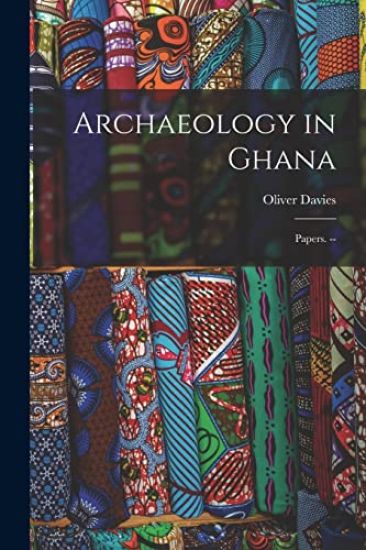
Kirjat ja teokset yhdessä paikassa: 10 kirjaa, julkaisuja vuosilta 2001-2021, suosituimpien joukossa Archaeology in Ghana: Papers. --. Vertaile teosten hintoja ja tarkista saatavuus suomalaisista kirjakaupoista.
10 kirjaa
Kirjojen julkaisuhaarukka 2001-2021.
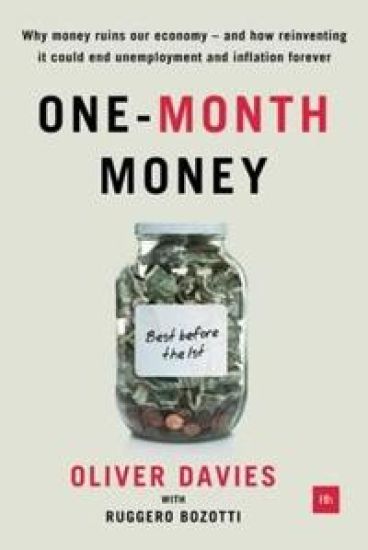
Money makes the world go round - until it doesn't. Bankers blunder, governments turn a blind eye and investors just get it plain wrong. But what if there's something else lurking behind all our great recessions and depressions, something operating in the shadows that makes our bubbles bigger and our crashes more catastrophic? Something so familiar and ubiquitous that we hardly ever think of its effects - even when it's under our very nose. What if it's money? Our modern system of money is a marvel, enabling complex trade and economic growth on a scale never known before. But money also carries a fatal flaw: it can be hoarded forever, and whenever we hoard we depress spending and distort interest rates. The result is a dreaded sequence of boom-and-bust that we know as the business cycle, an endless swing from unemployment to inflation and back again. But it doesn't have to be this way. One-Month Money begins as an eye-opening demonstration of how modern money is often our own worst economic enemy, and ends by proposing a controversial and innovative solution: a simple reinvention of money that would end recessions, inflation and unemployment forever.By rewiring the banking system and giving money a monthly expiry date, we can create a system of money with all its current benefits and none of its drawbacks, a system where money greases the wheels of global production without ever destabilising it. We can still save - just not under the mattress. Bad businesses can still go bust - just without bringing the wider economy down with them. Once money cannot be hoarded and interest rates are always perfect, there will be no more business cycles. The system of one-month money automatically checks our worst hoarding impulses, allowing us to save productively, keep prices stable and enjoy permanent full employment. With many countries struggling for growth and the stimulus toolbox growing emptier by the year, a creative rethink of our monetary system is critically urgent. One-Month Money is not only a timely and enjoyable addition to a vital conversation, but a book that will forever change the way you think about what's in your wallet.
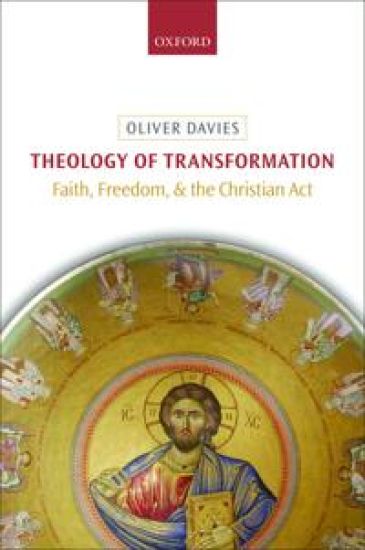
Significant advances in science bring new understandings of the human as a unity of mind, body and world and calls into question the deep-seated dualistic presuppositions of modern theology. Oliver Davies argues that the changing framework allows a return to the defining question of the Easter Church: 'Where is Jesus Christ?'. This is a question which can bring about a fundamental re-orientation of theology, since it gives space for the theological reception of the disruptive presence of the living Christ as the present material as well as formal object of theology in the world. At the centre of this study therefore is a new theology of the doctrine of the exaltation of Christ, based upon St Paul's encounter with the exalted or commissioning Christ on the road to Damascus. This places calling and commissioning at the centre of systematic theology. It provides the ground for a new understanding of theology as transcending the Academy-Church division as well as the divide between systematic and practical theology. It points also to a new critical theological method of engagement and collaboration. This book begins to explore new forms of world-centred theological rationality in the contexts not only of scripture, doctrine, anthropology, ecclesiology and faith, but also of Christian politics and philosophy. It is a work of contemporary and global Christological promise in Fundamental Theology, and is addressed to all those who are concerned, from whichever denomination, with the continuing vitality of Christianity in a changing world.
This book is the fruit of a close collaboration between three leading scholars with a background in systematics, philosophical theology and ethics. It sets out a new account of how incarnation is mediated in the world of space and time, leading to a new orientation of theology within the world. The doctrinal ("from above") and philosophical ("from below") sections lead to a new exposition of Christian life in confrontation with deepseated problems of ethics and justice. The three pieces closely interweave with each other in the elaboration of a new kind of practical, doctrinal theology of full philosophical integrity.
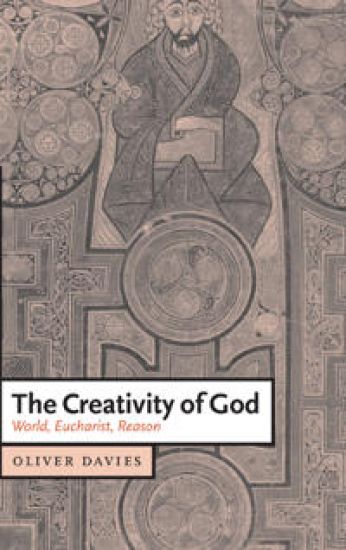
We have, as a theological community, generally lost a language in which to speak of the created-ness of the world. As a consequence, our discourses of reason cannot bridge the way we know God and the way we know the world. Therefore, argues Oliver Davies, a primary task of contemporary theology is the regeneration of a Christian account of the world as sacramental, leading to the formation of a Christian conception of reason and a new Christocentric understanding of the real. Both the Johannine tradition of creation through the Word and a Eucharistic semiotics of Christ as the embodied, sacrificial and creative speech of God serve the project of a repairal of Christian cosmology. The world itself is viewed as a creative text authored by God, of which we as interpreters are an integral part. This is a wide-ranging and convincing book that makes an important contribution to modern theology.
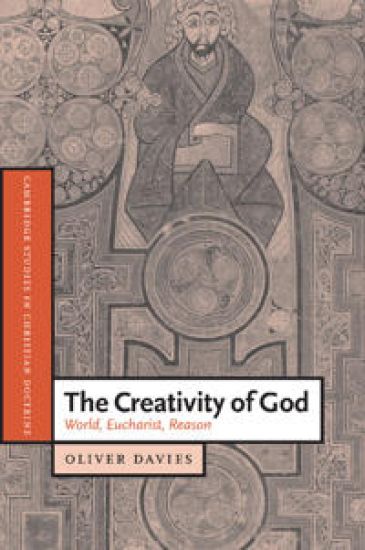
We have, as a theological community, generally lost a language in which to speak of the created-ness of the world. As a consequence, our discourses of reason cannot bridge the way we know God and the way we know the world. Therefore, argues Oliver Davies, a primary task of contemporary theology is the regeneration of a Christian account of the world as sacramental, leading to the formation of a Christian conception of reason and a new Christocentric understanding of the real. Both the Johannine tradition of creation through the Word and a Eucharistic semiotics of Christ as the embodied, sacrificial and creative speech of God serve the project of a repairal of Christian cosmology. The world itself is viewed as a creative text authored by God, of which we as interpreters are an integral part. This is a wide-ranging and convincing book that makes an important contribution to modern theology.
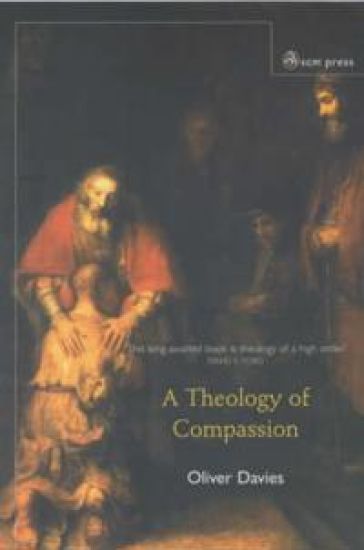
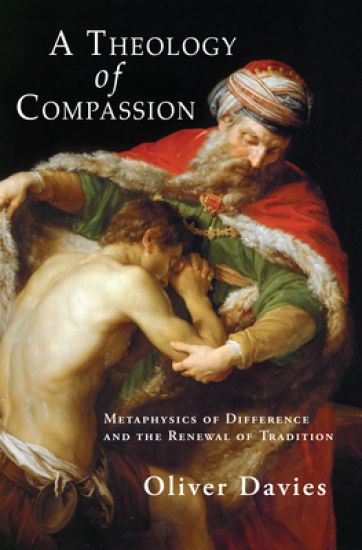
The wide-scale rejection of metaphysics today has become the test of the postmodern. In this volume, Oliver Davies argues for a renewal of metaphysics, as the language of createdness, based not in a return to outmoded concepts of essence, but in a dynamic new understanding of ontology as narrataive and performance. His repairing of the western metaphysical tradition is grounded both in the divine self-naming in Exodus which, for the rabbis, identified God's presence in the world with God's compassionate acts, and in the compassionate resistance of Etty Hillesum and Edith Stein to the violence of the Holocaust. Building upon a new metaphysics of compassion which is attentive to the deepest histories of the contemporary world, Davies offers a renewed systematic theology of divine speech and relation, focused in Jesus Christ who, as the triadic "Word" of God, speaks creatively at the heart of human culture and action, and, as the redeeming "Compassion" of God, regenerates the world. Oliver Davies is Reader in Theology at the University of Wales, Lampeter. His previous publications have been mainly in the area of medieval mysticism, especially Meister Eckhart, and Celtic Christianity.