Kirjojen hintavertailu. Mukana 12 390 323 kirjaa ja 12 kauppaa.

Kirjailija

Oliver Gassmann

Kirjat ja teokset yhdessä paikassa: 28 kirjaa, julkaisuja vuosilta 1997-2026, suosituimpien joukossa Internationales F&E-Management. Vertaile teosten hintoja ja tarkista saatavuus suomalaisista kirjakaupoista.

28 kirjaa

Kirjojen julkaisuhaarukka 1997-2026.

Leading Pharmaceutical Innovation

Leading Pharmaceutical Innovation

Oliver Gassmann; Alexander Schuhmacher; Max von Zedtwitz; Gerrit Reepmeyer

Springer International Publishing AG
2018
sidottu
This book investigates and highlights the most critical challenges the pharmaceutical industry faces in an increasingly competitive environment of inflationary R&D investments and tightening cost control pressures. The authors present three sources of pharmaceutical innovation: new management methods in the drug development pipeline; new technologies as enablers for cutting-edge R&D; and new forms of cooperation and internationalization, such as open innovation in the early phases of R&D. New models and methods are illustrated with cases from Europe, the US, and Asia. This third fully revised edition was expanded to reflect the latest updates in open and collaborative innovation, the greater strategic importance of venture capital and early-stage investments, and the new range of emerging technologies now being put to use in pharmaceutical innovation.
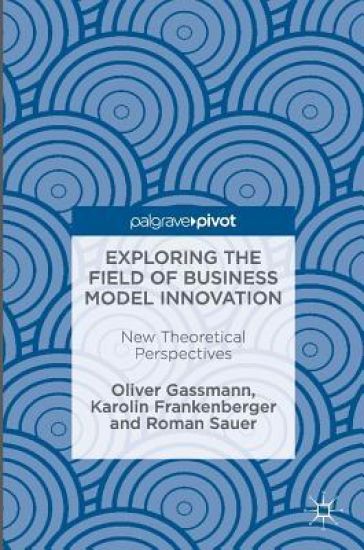
Exploring the Field of Business Model Innovation

Exploring the Field of Business Model Innovation

Oliver Gassmann; Karolin Frankenberger; Roman Sauer

Springer International Publishing AG
2018
nidottu
Presenting a broad literature review of scholarly work in the area of Business Model Innovation, this new book analyses 50 management theories in the context of BMI to yield valuable new insights. Research on BMI is still in its infancy and has so far proved to be more than just a sub-discipline of strategy or innovation research. Exploring the field of Business Innovation demonstrates the importance of the discipline as a more specialized management research field and offers new understandings of this important subject. It presents ‘grand theories’ that will help researchers approach BMI through a different angle and describes business models as phenomena, enabling readers to understand their patterns and mechanisms. Reviewing the most important academic work on the subject over the last 15 years, the authors aim to open up the debate and inspire researchers to look at this phenomenon from new and different angles.
Exploring the Field of Business Model Innovation

Exploring the Field of Business Model Innovation

Oliver Gassmann; Karolin Frankenberger; Roman Sauer

Springer International Publishing AG
2016
sidottu
Presenting a broad literature review of scholarly work in the area of Business Model Innovation, this new book analyses 50 management theories in the context of BMI to yield valuable new insights. Research on BMI is still in its infancy and has so far proved to be more than just a sub-discipline of strategy or innovation research. Exploring the field of Business Innovation demonstrates the importance of the discipline as a more specialized management research field and offers new understandings of this important subject. It presents ‘grand theories’ that will help researchers approach BMI through a different angle and describes business models as phenomena, enabling readers to understand their patterns and mechanisms. Reviewing the most important academic work on the subject over the last 15 years, the authors aim to open up the debate and inspire researchers to look at this phenomenon from new and different angles.
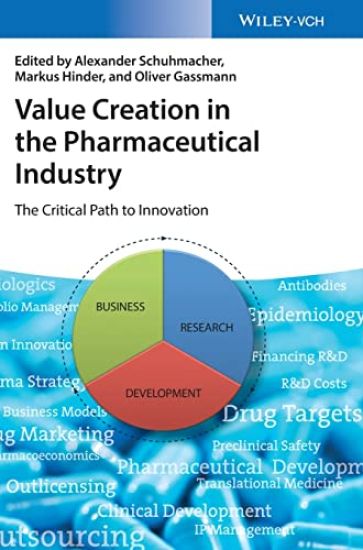
Value Creation in the Pharmaceutical Industry

Value Creation in the Pharmaceutical Industry

Alexander Schuhmacher; Markus Hinder; Oliver Gassmann

Wiley-VCH Verlag GmbH
2016
sidottu
This practical guide for advanced students and decision-makers in the pharma and biotech industry presents key success factors in R&D along with value creators in pharmaceutical innovation. A team of editors and authors with extensive experience in academia and industry and at some of the most prestigious business schools in Europe discusses in detail the innovation process in pharma as well as common and new research and innovation strategies. In doing so, they cover collaboration and partnerships, open innovation, biopharmaceuticals, translational medicine, good manufacturing practice, regulatory affairs, and portfolio management. Each chapter covers controversial aspects of recent developments in the pharmaceutical industry, with the aim of stimulating productive debates on the most effective and efficient innovation processes. A must-have for young professionals and MBA students preparing to enter R&D in pharma or biotech as well as for students on a combined BA/biomedical and natural sciences program.
Profiting from Innovation in China

Profiting from Innovation in China

Oliver Gassmann; Angela Beckenbauer; Sascha Friesike

Springer-Verlag Berlin and Heidelberg GmbH Co. K
2015
nidottu
China is dramatically catching up and is rapidly becoming a leading technological innovator on the global scale. The number of Chinese firms with global ambitions is growing fast, more and more technological innovation is coming from China, and the number of patents in China is also growing steadily. The negative side of this development is the still insufficient protection of intellectual property in China. The phenomenon of counterfeits originating from China has increased constantly over the past two decades. Moreover, within the past ten years the scale of intellectual property theft has risen exponentially in terms of its sophistication, volume, the range of goods, and the countries affected. This book addresses managers dealing with innovation in China, and offers concrete advice on how Western firms can benefit from these innovations. Among others, it provides examples and checklists to help decision-makers active in China.?
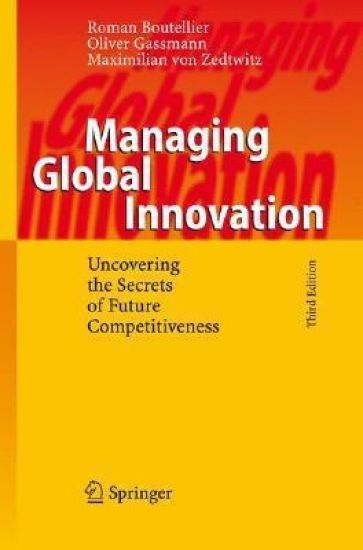
Managing Global Innovation

Managing Global Innovation

Roman Boutellier; Oliver Gassmann; Maximilian Zedtwitz

Springer-Verlag Berlin and Heidelberg GmbH Co. K
2014
nidottu
If R&D and innovation in the 1990s were about more internationalization, more corporate entrepreneurship, and more information-integration, then the 2000s have been about consolidating and expanding these trends further: more globalization including the technology mavericks of China and India, more open and inbound innovation integrating external technology providers, and more web- and Intern- enabling of innovation processes by involving R&D contributors regardless of their location. The corporate R&D powerhouses of the 1980s are now mostly history. Even where they survived, they had to yield to corporate efficiency efforts and business-wide integration programs. Still, it would be unfair to belittle them in retrospect as they have found new roles in corporate R&D and innovation n- works. In fact, the very successes of centralized R&D organizations of the 1970s and 1980s made possible the revolution of globalized innovation that we have been witnessing since the 1990s. The first two editions of Managing Global Innovation, published in 1999 and 2000, were testimonials of an increasingly internationalizing world of innovation and R&D. In this third edition of Managing Global Innovation, we have retained the basic structure of two conceptual parts (I and II) and three case study parts (III, IV, V). However, we have greatly revised all chapters, including the final “Imp- cations” chapter (part VI), and incorporated new chapters and cases that illuminate and describe the recent trends in the context of the beginnings of global innovation in the 1980s and 1990s.
Profiting from Innovation in China

Profiting from Innovation in China

Oliver Gassmann; Angela Beckenbauer; Sascha Friesike

Springer-Verlag Berlin and Heidelberg GmbH Co. K
2012
sidottu
China is dramatically catching up and is rapidly becoming a leading technological innovator on the global scale. The number of Chinese firms with global ambitions is growing fast, more and more technological innovation is coming from China, and the number of patents in China is also growing steadily. The negative side of this development is the still insufficient protection of intellectual property in China. The phenomenon of counterfeits originating from China has increased constantly over the past two decades. Moreover, within the past ten years the scale of intellectual property theft has risen exponentially in terms of its sophistication, volume, the range of goods, and the countries affected. This book addresses managers dealing with innovation in China, and offers concrete advice on how Western firms can benefit from these innovations. Among others, it provides examples and checklists to help decision-makers active in China.?
Managing Global Innovation

Managing Global Innovation

Roman Boutellier; Oliver Gassmann; Maximilian Zedtwitz

Springer-Verlag Berlin and Heidelberg GmbH Co. K
2008
sidottu
If R&D and innovation in the 1990s were about more internationalization, more corporate entrepreneurship, and more information-integration, then the 2000s have been about consolidating and expanding these trends further: more globalization including the technology mavericks of China and India, more open and inbound innovation integrating external technology providers, and more web- and Intern- enabling of innovation processes by involving R&D contributors regardless of their location. The corporate R&D powerhouses of the 1980s are now mostly history. Even where they survived, they had to yield to corporate efficiency efforts and business-wide integration programs. Still, it would be unfair to belittle them in retrospect as they have found new roles in corporate R&D and innovation n- works. In fact, the very successes of centralized R&D organizations of the 1970s and 1980s made possible the revolution of globalized innovation that we have been witnessing since the 1990s. The first two editions of Managing Global Innovation, published in 1999 and 2000, were testimonials of an increasingly internationalizing world of innovation and R&D. In this third edition of Managing Global Innovation, we have retained the basic structure of two conceptual parts (I and II) and three case study parts (III, IV, V). However, we have greatly revised all chapters, including the final “Imp- cations” chapter (part VI), and incorporated new chapters and cases that illuminate and describe the recent trends in the context of the beginnings of global innovation in the 1980s and 1990s.