Kirjailija
Oliver P. Richmond
Kirjat ja teokset yhdessä paikassa: 22 kirjaa, julkaisuja vuosilta 1998-2025, suosituimpien joukossa Mitigating Conflict. Vertaile teosten hintoja ja tarkista saatavuus suomalaisista kirjakaupoista.
22 kirjaa
Kirjojen julkaisuhaarukka 1998-2025.
This title examines the roles and new opportunities arising from the increasing participation of non-governmental organizations (NGOs) in peace-making, peacekeeping and peace-building processes, both formal and informal, state-sponsored and unofficial. Drawing on both academic experts and activists, this study brings together contributions from those who have observed how NGOs have sought to reflect civil society concerns, provide humanitarian relief, monitor compliance with international norms and treaty requirements, and disseminate information of concern to advocacy networks. A critical appraisal of the opportunities and constraints of NGOs is provided alongside the examination of the NGOs role in the "new agendas" for peace.
At the Heart of Conflict - Talking Resolution
Oliver P. Richmond
AURORA METRO PUBLICATIONS
2025
nidottu
A ground-breaking new book that dares to bridge the divide between peacemakers and military strategists. As the world reels from an unprecedented surge in destructive wars and international crises, a new and critically important book challenges conventional wisdom and asks: Can peace be built by dialogue alone, or is there a role for those who wield military force? With 20 unflinching first-person accounts, the book uniquely gives voice to both sides of the "conflict resolution debate" from seasoned UN negotiators and grassroots peacebuilders to intelligence experts and military veterans.Interviewees include: Victor Angelo; Gershon Baskin; Nurcan Baysal; Saskia Binet; Caroline Brooks; Latif Fayaz; Paulo Goncalves; Maria Hadjipavlou; John Holmes; Corey Levine; Simon Mann; Patrick McGrann; Sandra Melone; Julie Norman; Jehan Perera; Tony Schiena; Simon Smith; Anjan Sundaram; Emily Winterbotham; Heela Yoon
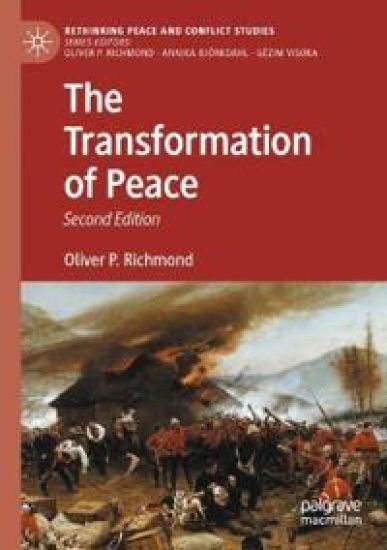
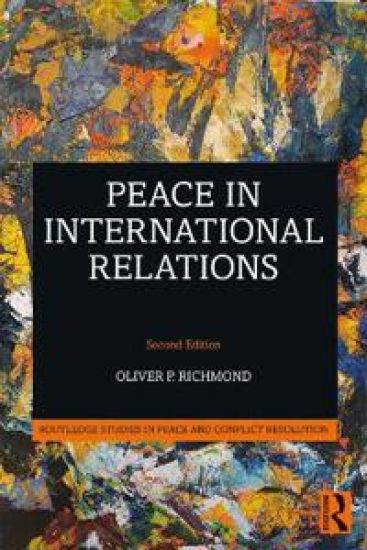
The second edition of this influential book examines the transformation of the discourse and praxis of peace, from its early beginnings in the literature on war and power to the development of intellectual and theoretical discourses of peace, contrasting this with the development of practical approaches to peace and examining the intellectual and policy evolution regarding peace. Now with reflections on each chapter and a new introduction and conclusion, the book is essential reading for researchers and students of peace and conflict studies and beyond.
Failed Peacemaking
Sandra Pogodda; Oliver P. Richmond; Gëzim Visoka
Springer International Publishing AG
2023
sidottu
This book investigates why peace and reform processes across the world have recently been stagnating or have become blocked. They have failed to maintain security, rights, development, and justice in the liberal international order. The book identifies the related rise of counter-peace processes at the heart of failed peacemaking efforts, and explores the implications for an emerging multi-polar order where local and international tools for peace and reform appear to be ineffective. Across a range of recent cases, from Cambodia, the Balkans, the Sahel region, DRC, Colombia, Afghanistan, and many others, such dynamics are becoming clearer. In particular, small-scale blocking tactics across different peace processes have been evolving into larger political strategies which are then disseminated within revisionist and revanchist international networks. Ultimately, this phenomenon has undermined liberal international order.Spoilers and tactical blockages to peace have connected across local, national, regional and international scales, highlighting ideological divisions. Drawing on counter-revolutionary theory, the concept of counter-peace is used as a tool to critically interrogate a systemic array of blockages to peace. Distinct counter-peace patterns are now entangled in peace and reform processes, including the stalemate pattern, the limited counter-peace, and the unmitigated counter-peace patterns. Across cases, once tactical blockages begin to form these patterns, they become systemic and ultimately enable conflict escalation. Consequently, the intimate entanglement of the existing international peace architecture with counter-peace processes points to ideological divisions in international order, as well as the growing gulf between diminished practices of peace and reform with critical scholarship on peace, justice, and sustainability.
Peace in Digital International Relations
Oliver P. Richmond; Gëzim Visoka; Ioannis Tellidis
Cambridge University Press
2023
pokkari
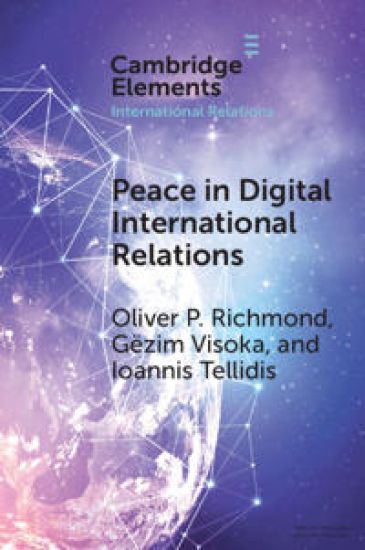
The international architecture of peacebuilding and statebuilding is currently responding to a shift from 'analogue' to 'digital' approaches in international relations. This is affecting conflict management, intervention, peacebuilding, and the all-important role of civil society. This Element analyses the potential that these new digital forms of international relations offer for the reform of peace praxis – namely, the enhancement of critical agency across networks and scales, the expansion of claims for rights and the mitigation of obstacles posed by sovereignty, locality, and territoriality. The Element also addresses the parallel limitations of digital technologies in terms of political emancipation related to subaltern claims, the risk of co-optation by historical and analogue power structures, institutions, and actors. We conclude that though aspects of emerging digital approaches to making peace are promising, they cannot yet bypass or resolve older, analogue conflict dynamics revolving around power-relations, territorialism, and state formation.
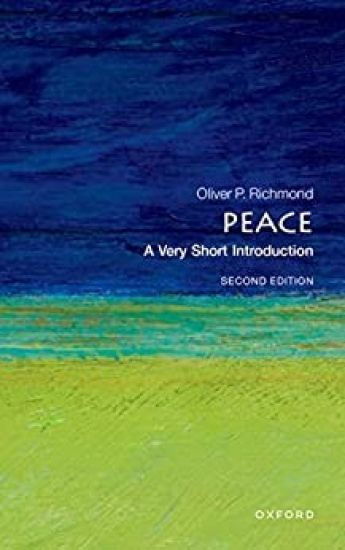
Very Short Introductions: Brilliant, Sharp, Inspiring The concept of peace has always attracted radical thought, action, and practices. It has been taken to mean merely an absence of overt violence or war, but in the contemporary era it is often used interchangeably with 'peacemaking', 'peacebuilding', 'conflict resolution', and 'statebuilding'. The modern concept of peace has therefore broadened from the mere absence of violence to something much more complicated. In this Very Short Introduction, Oliver Richmond explores the evolution of peace in practice and in theory, exploring our modern assumptions about peace and the various different interpretations of its applications. This second edition has been theoretically and empirically updated and introduces a new framework to understand the overall evolution of the international peace architecture. ABOUT THE SERIES: The Very Short Introductions series from Oxford University Press contains hundreds of titles in almost every subject area. These pocket-sized books are the perfect way to get ahead in a new subject quickly. Our expert authors combine facts, analysis, perspective, new ideas, and enthusiasm to make interesting and challenging topics highly readable.
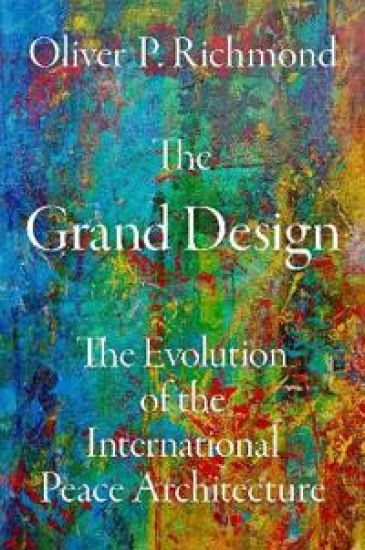
The guiding principle of peacemaking and peacebuilding over the past quarter century has been "liberal peace": the promotion of democracy, capitalism, law, and respect for human rights. These components represent a historic effort to prevent a reoccurrence of the nationalism, fascism, and economic collapse that led to the World Wars as well as many later conflicts. Ultimately, this strategy has been somewhat successful in reducing war between countries, but it has failed to produce legitimate and sustainable forms of peace at the domestic level. The goals of peacebuilding have changed over time and place, but they have always been built around compromise via processes of intervention aimed at supporting "progress" in conflict-affected countries. They have simultaneously promoted changes in the regional and global order. As Oliver P. Richmond argues in this book, the concept of peace has evolved continuously through several eras: from the imperial era, through the states-system, liberal, and current neoliberal eras of states and markets. It holds the prospect of developing further through the emerging "digital" era of transnational networks, new technologies, and heightened mobility. Yet, as recent studies have shown, only a minority of modern peace agreements survive for more than a few years and many peace agreements and peacebuilding missions have become intractable, blocked, or frozen. This casts a shadow on the legitimacy, stability, and effectiveness of the overall international peace architecture, reflecting significant problems in the evolution of an often violently contested international and domestic order. This book examines the development of the international peace architecture, a "grand design" comprising various subsequent attempts to develop a peaceful international order. Richmond examines six main theoretical-historical stages in this process often addressed through peacekeeping and international mediation, including the balance of power mechanism of the 19th Century, liberal internationalism after World War I, and the expansion of rights and decolonization after World War II. It also includes liberal peacebuilding after the end of the Cold War, neoliberal statebuilding during the 2000s, and an as yet unresolved current "digital" stage. They have produced a substantial, though fragile, international peace architecture. However, it is always entangled with, and hindered by, blockages and a more substantial counter-peace framework. The Grand Design provides a sweeping look at the troubled history of peace processes, peacemaking, peacekeeping, and peacebuilding, and their effects on the evolution of international order. It also considers what the next stage may bring.
This updated and revised second edition examines the conceptualisation and evolution of peace in International Relations (IR) theory.The book examines the concept of peace and its usage in the main theoretical debates in IR, including realism, liberalism, constructivism, critical theory, and post-structuralism, as well as in the more direct debates on peace and conflict studies. It explores themes relating to culture, development, agency, and structure, not just in terms of representations of IR, and of peace, but in terms of the discipline of IR itself. The work also specifically explores the recent mantras associated with liberal and neoliberal versions of peace, which appear to have become foundational for much of the mainstream literature and for doctrines for peace and development in the policy world. Analysing war has often led to the dominance – and mitigation – of violence as a basic assumption in, and response to, the problems of IR. This study aims to redress this negative balance by arguing that the discipline offers a rich basis for the study of peace, which has advanced significantly over the last century or so. It also proposes innovative theoretical dimensions of the study of peace, with new chapters discussing post-colonial and digital developments.This book will be of great interest to students of peace and conflict studies, politics, and IR.
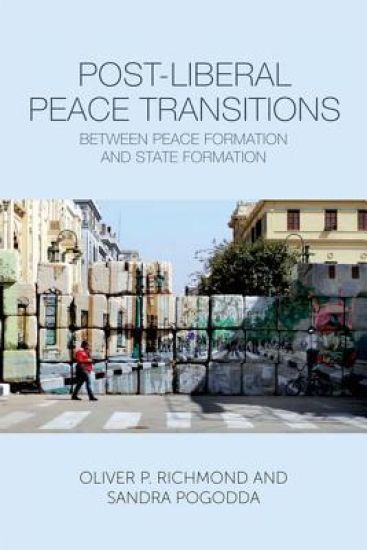
Post-liberal Peace Transitions
Oliver P. Richmond; Sandra Pogodda
Edinburgh University Press
2017
pokkari
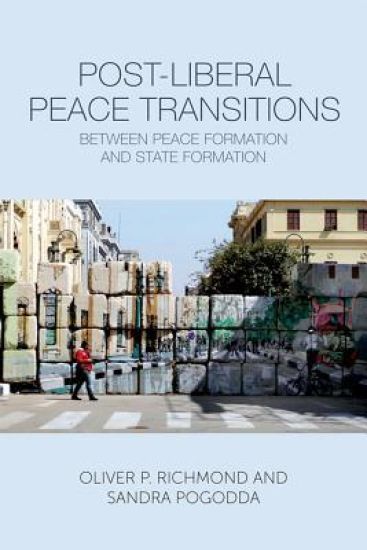
Why is it that states emerging from intervention, peacebuilding and statebuilding over the last 25 years appear to be 'failed by design'? This study explores the interplay of local peace agency with the (neo)liberal peacebuilding project. And it looks at how far can local 'peace formation' dynamics can go to counteract the forces of violence and play a role in rebuilding the state, consolidate peace processes and induce a more progressive form of politics. By looking at local agency related to peace formation, Oliver Richmond and Sandra Pogodda find answers to the pressing question of how large-scale peacebuilding or statebuilding may be significantly improved and made more representative of the lives, needs, rights, and ambitions of its subjects.
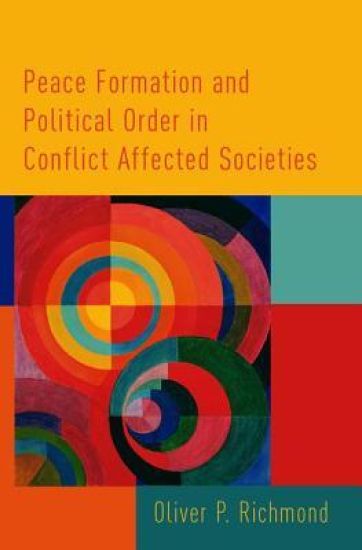
Peace Formation and Political Order in Conflict Affected Societies
Oliver P. Richmond
Oxford University Press Inc
2016
nidottu
As Oliver Richmond explains, there is a level to peacemaking that operates in the realm of dialogue, declarations, symbols and rituals. But after all this pomp and circumstance is where the reality of security, development, politics, economics, identity, and culture figure in; conflict, cooperation, and reconciliation are at their most vivid at the local scale. Thus local peace operations are crucial to maintaining order on the ground even in the most violent contexts. However, as Richmond argues, such local capacity to build peace from the inside is generally left unrecognized, and it has been largely ignored in the policy and scholarly literature on peacebuilding. In Peace and Political Order, Richmond looks at peace processes as they scale up from local to transnational efforts to consider how to build a lasting and productive peace. He takes a comparative and expansive look at peace efforts in conflict situations in countries around the world to consider what local voices might suggest about the inadequacy of peace processes engineered at the international level. As well, he explores how local workers act to modify or resist peace processes headed by international NGOs, and to what degree local actors have enjoyed success in the peace process (and how they have affected the international peace process).
Peace Formation and Political Order in Conflict Affected Societies
Oliver P. Richmond
Oxford University Press Inc
2016
sidottu
As Oliver Richmond explains, there is a level to peacemaking that operates in the realm of dialogue, declarations, symbols and rituals. But after all this pomp and circumstance is where the reality of security, development, politics, economics, identity, and culture figure in; conflict, cooperation, and reconciliation are at their most vivid at the local scale. Thus local peace operations are crucial to maintaining order on the ground even in the most violent contexts. However, as Richmond argues, such local capacity to build peace from the inside is generally left unrecognized, and it has been largely ignored in the policy and scholarly literature on peacebuilding. In Peace and Political Order, Richmond looks at peace processes as they scale up from local to transnational efforts to consider how to build a lasting and productive peace. He takes a comparative and expansive look at peace efforts in conflict situations in countries around the world to consider what local voices might suggest about the inadequacy of peace processes engineered at the international level. As well, he explores how local workers act to modify or resist peace processes headed by international NGOs, and to what degree local actors have enjoyed success in the peace process (and how they have affected the international peace process).
Post-Liberal Peace Transitions
Oliver P. Richmond; Sandra Pogodda
Edinburgh University Press
2016
sidottu
Why is it that states emerging from intervention, peacebuilding and statebuilding over the last 25 years appear to be 'failed by design'? This study explores how local peace-formation dynamics must develop their role, influence and capacity against a backdrop of internal violence, external intervention, international actors and the (neo)liberal peacebuilding project.
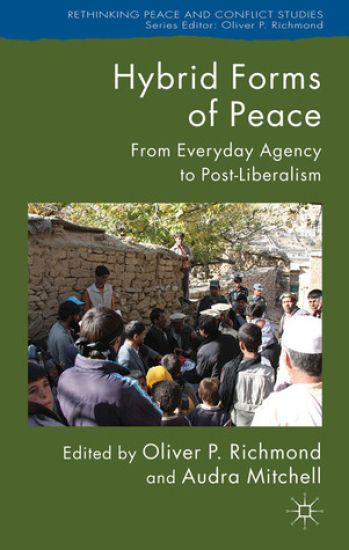
This book examines the role of everyday action in accepting, resisting and reshaping interventions, and the unique forms of peace that emerge from the interactions between local and international actors. Building on critiques of liberal peace-building, it redefines critical peace and conflict studies, based on new research from 16 countries.
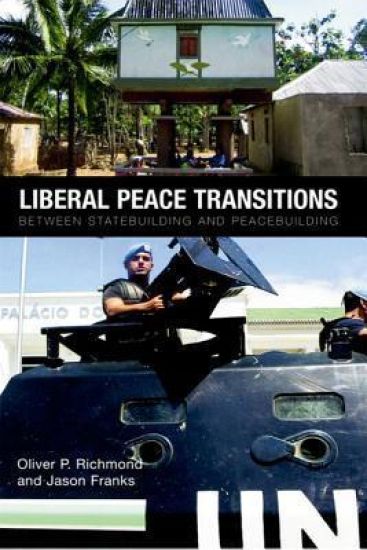
This book, newly available in paperback, examines the nature of 'liberal peace': the common aim of the international community's approach to post-conflict statebuilding. Adopting a particularly critical stance on this one-size-fits-all paradigm, it explores the process by breaking down liberal peace theory into its constituent parts: democratisation, free market reform and development, human rights, civil society, and the rule of law. Readers are provided with critically and theoretically informed empirical access to the 'technology' of the liberal peacebuilding process, particularly in regard to Cambodia, Kosovo, East Timor, Bosnia and the Middle East. Key Features *critically interrogates the theory, experience, and current outcomes of liberal peacebuilding *includes five empirically-informed case studies: Cambodia, Kosovo, East Timor, Bosnia and the Middle East *focuses on the key institutional aspects of liberal peacebuilding and key international actors *assesses the local outcomes of liberal peacebuilding
This book examines the nature of 'liberal peace': the common aim of the international community's approach to post-conflict statebuilding. Adopting a particularly critical stance on this one-size-fits-all paradigm, it explores the process by breaking down liberal peace theory into its constituent parts: democratisation, free market reform and development, human rights, civil society, and the rule of law. Readers are provided with critically and theoretically informed empirical access to the 'technology' of the liberal peacebuilding process, particularly in regard to Cambodia, Kosovo, East Timor, Bosnia and the Middle East. Key Features *critically interrogates the theory, experience, and current outcomes of liberal peacebuilding *includes five empirically-informed case studies: Cambodia, Kosovo, East Timor, Bosnia and the Middle East *focuses on the key institutional aspects of liberal peacebuilding and key international actors *assesses the local outcomes of liberal peacebuilding
This title examines the roles and new opportunities arising from the increasing participation of non-governmental organizations (NGOs) in peace-making, peacekeeping and peace-building processes, both formal and informal, state-sponsored and unofficial. Drawing on both academic experts and activists, this study brings together contributions from those who have observed how NGOs have sought to reflect civil society concerns, provide humanitarian relief, monitor compliance with international norms and treaty requirements, and disseminate information of concern to advocacy networks. A critical appraisal of the opportunities and constraints of NGOs is provided alongside the examination of the NGOs role in the "new agendas" for peace.