

Kirjailija
Oliver Rathkolb
Kirjat ja teokset yhdessä paikassa: 13 kirjaa, julkaisuja vuosilta 2004-2025, suosituimpien joukossa Das Vermögen der jüdischen Bevölkerung Österreichs. Vertaile teosten hintoja ja tarkista saatavuus suomalaisista kirjakaupoista.
13 kirjaa
Kirjojen julkaisuhaarukka 2004-2025.

Geschichte Österreichs
Christian Lackner; Brigitte Mazohl; Oliver Rathkolb
Reclam Philipp Jun.
2024
pokkari

Hitler made the eighteen-year-old Baldur von Schirach the offer he was hoping for, telling him the party needed young men like him. The young man snapped up Hitler's invitation and enjoyed a rapid rise through the ranks of the National Socialist Party, marrying Henriette Hoffmann, the daughter of Hitler's personal photographer Heinrich Hoffmann. In 1930 he was appointed "Reich" youth leader, and as Hitler's loyal servant he harnessed the Hitler Youth for the 'brown revolution'. He dreamt of a fascist Europe under German leadership and as Gauleiter of Vienna he had the city's Jewish population deported to the death camps while enriching himself with looted Jewish art collections. But his independence of mind and artistic ideals led to tensions between Berlin and Vienna. In 1946, Baldur von Schirach stood trial at Nuremberg, where he offered a crafty defence, confessing his role in the rise of National Socialist ideology and attacking Adolf Hitler but denying involvement in the murder of Jews. As a result, he escaped execution and was sentenced to twenty years in prison for crimes against humanity. In the 1960s, he emerged from Spandau prison to great media attention, but he would later die in obscurity. In this critical biography, Oliver Rathkolb uses previously untapped archive material to examine a controversial figure who used his keen media savvy to paint a favourable picture of himself after the war. The book traces how this key figure in the National Socialist propaganda machine was shaped by the German political milieu - before going on to shape German youth.
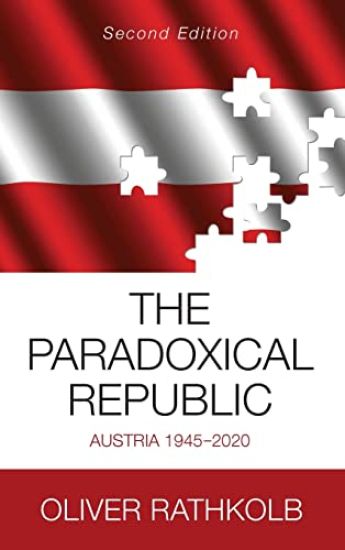
From its emergence out of the ashes of World War II through to the economic and political challenges of today, Austria has embodied many of the contradictions of recent European history. Written by one of the nation’s leading historians, this account of postwar Austria explores the tensions that have defined it for over seven decades, whether in its overlapping policies of engagement and isolationism, its grandiose visions and persistent sense of inferiority, or its position as a model social democracy that has suffered recurrent bouts of xenophobic nationalism. This newly revised edition also addresses the major developments since 2005, including a resurgent far right, economic instability, and the potential fracturing of the European Union.
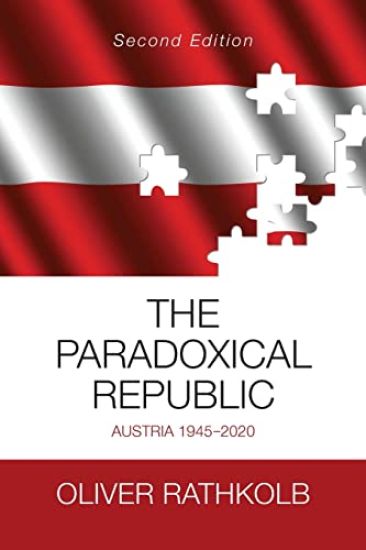
From its emergence out of the ashes of World War II through to the economic and political challenges of today, Austria has embodied many of the contradictions of recent European history. Written by one of the nation’s leading historians, this account of postwar Austria explores the tensions that have defined it for over seven decades, whether in its overlapping policies of engagement and isolationism, its grandiose visions and persistent sense of inferiority, or its position as a model social democracy that has suffered recurrent bouts of xenophobic nationalism. This newly revised edition also addresses the major developments since 2005, including a resurgent far right, economic instability, and the potential fracturing of the European Union.
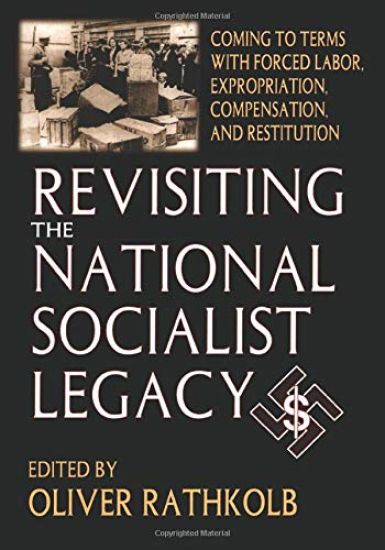
Since the mid-1990s, political, legal, and historical debates about Nazi theft and confiscation of property, the use of slave labor during World War II, and restitution and compensation have reemerged. Revisiting the National Socialist Legacy presents completely new historical research on these issues conducted worldwide.This volume responds to concern about Holocaust era assets in Europe, the United States, and Latin America. It focuses on both reexamination of the history of National Socialist property theft and employment of forced labor in the wartime economy, and the compensation and restitution solutions advanced in various European and Latin American countries since 1945. While the question of Nazis in exile and the memories of survivors are explored, attention is focused on the role of numerous historical commissions and the tension between judicial processes, media coverage, historical scholarship, and politics.The book is divided into five parts: "At the Nexus of Justice, Media Coverage, Historical Scholarship and Politics"; "Commissioned History"; "Research on Slave and Forced Labor"; "National Socialist Theft: Banking, Industry, Insurance and Works of Art"; and "History as Catharsis."
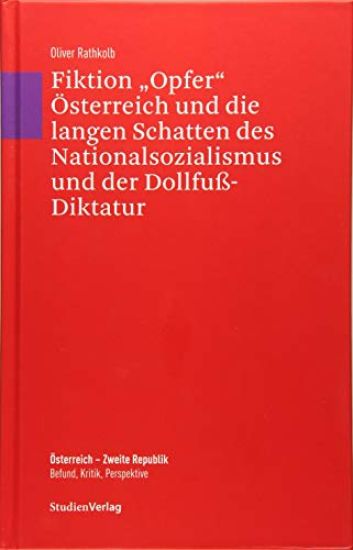
Fiktion "Opfer" Österreich und die langen Schatten des Nationalsozialismus und der Dollfuß-Diktatur
Oliver Rathkolb
StudienVerlag
2017
nidottu
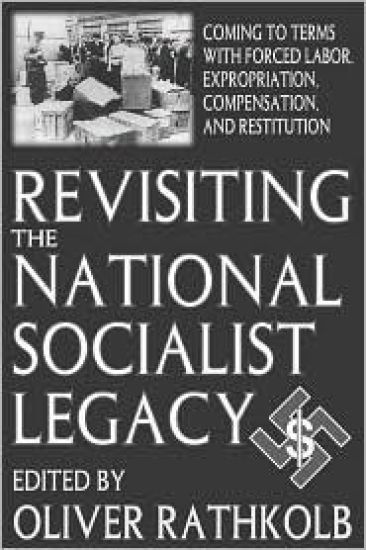
Since the mid-1990s, political, legal, and historical debates about Nazi theft and confiscation of property, the use of slave labor during World War II, and restitution and compensation have reemerged. Revisiting the National Socialist Legacy presents completely new historical research on these issues conducted worldwide.This volume responds to concern about Holocaust era assets in Europe, the United States, and Latin America. It focuses on both reexamination of the history of National Socialist property theft and employment of forced labor in the wartime economy, and the compensation and restitution solutions advanced in various European and Latin American countries since 1945. While the question of Nazis in exile and the memories of survivors are explored, attention is focused on the role of numerous historical commissions and the tension between judicial processes, media coverage, historical scholarship, and politics.The book is divided into five parts: "At the Nexus of Justice, Media Coverage, Historical Scholarship and Politics"; "Commissioned History"; "Research on Slave and Forced Labor"; "National Socialist Theft: Banking, Industry, Insurance and Works of Art"; and "History as Catharsis."

Das Vermögen der jüdischen Bevölkerung Österreichs
Barbara Holzheu; Vitali Bodnar; Alexander Schröck; Sonja Niederacher; Theodor Venus; Oliver Rathkolb
Bohlau Verlag
2004
isokokoinen pokkari