Kirjojen hintavertailu. Mukana 12 574 298 kirjaa ja 12 kauppaa.

Kirjailija

Oliver Sacks

Kirjat ja teokset yhdessä paikassa: 96 kirjaa, julkaisuja vuosilta 1991-2026, suosituimpien joukossa Briefe von Oliver Sacks. Vertaile teosten hintoja ja tarkista saatavuus suomalaisista kirjakaupoista.

96 kirjaa

Kirjojen julkaisuhaarukka 1991-2026.

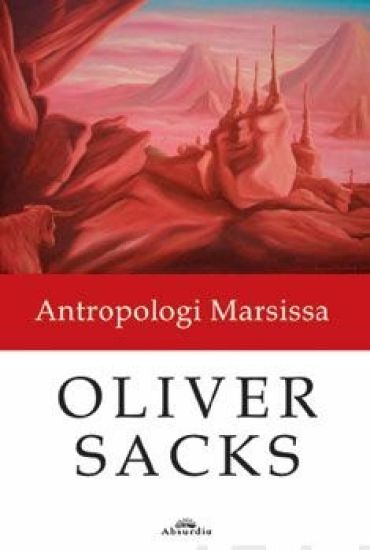
Antropologi Marsissa

Antropologi Marsissa

Oliver Sacks

Absurdia
2006
nidottu
Oliver Sacks tunnetaan ennen kaikkea kirjasta Mies joka luuli vaimoaan hatuksi ja elokuvasta Heräämisiä sekä TV-dokumentti-sarjasta Matka mieleen. Matkaksi mieleen voisi luonnehtia myös tätä kirjaa, jossa Sacks kuvaa seitsemän henkilön sopeutumista erilaisiin neurologisiin tiloihin, kuten värinäön täydelliseen menetykseen, näön palauttamiseen, muistinmenetykseen, autismiin ja Touretten oireyhtymään. Sacks ei jää vastaanottohuoneeseen, vaan seuraa tarinoittensa henkilöitä näiden omaan maailmaan ja avaa sen lämpimästi, kunnioittavasti ja syvällisesti myös lukijalle. Kirjasta huokuu inhimillisyys, älyllinen uteliaisuus ja tieteellinen tinkimättömyys.Antropologi Marsissa tarjoaa kiehtovaa tietoa ja syvälle luotaavaa ajateltavaa jokaiselle, joka haluaa ymmärtää aivojen salaperäistä toimintaa. Se avaa myös uusia näkökulmia erilaisten neurologisten tilojen kanssa eläville ja niihin sopeutuville sekä alan ammattilaisille.

Beyond Pain

Beyond Pain

Angela Mailis-Gagnon; David Israelson; Oliver Sacks

The University of Michigan Press
2005
nidottu
Using case studies drawn from her own practice and personal experience, the author delves into the condition of chronic pain in order to help readers understand its complexities. Original.
Onkel Wolfram

Onkel Wolfram

Oliver Sacks

Rowohlt Taschenbuch
2003
pokkari
Mit seinen unkonventionellen Fallgeschichten hat der Neurologe Oliver Sacks Millionen Leser in aller Welt gefunden. Seine Bücher werben höchst einfühlsam für mehr Verständnis und Toleranz gegenüber Menschen, die von der sozialen Norm abweichen. Jetzt erinnert sich Oliver Sacks an seine Kindheit und Jugend in einer jüdischen Familie mit vielen Geschwistern, Onkeln und Tanten in London. Diese Reise in die eigene Vergangenheit hat ebenso überraschende Komponenten, wie die früheren Bücher dieses Autors: Der berühmte Seelenforscher erweist sich als kenntnisreicher Naturgelehrter, der mit seiner Autobiographie zugleich einführt in die Gedankenwelt der großen Chemiker und Physiker unserer Zeit.
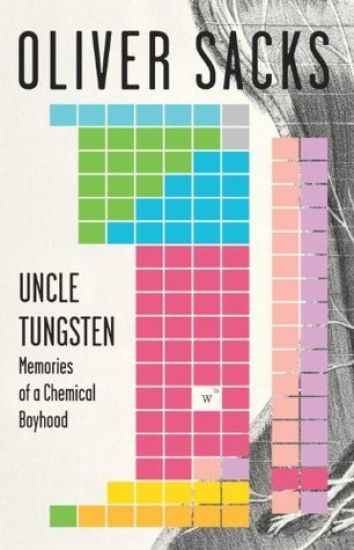
Uncle Tungsten: Memories of a Chemical Boyhood
The scientific wonder of youth is skillfully evoked in this intriguing memoir by the distinguished neurologist and author of Awakenings in which he describes his fascination with metals, gases, and chemicals, especially "Uncle Tungsten," and with unravelling the complex mysteries of the world around him. Reprint. 100,000 first printing.
Seeing Voices

Seeing Voices

Oliver Sacks

Knopf Doubleday Publishing Group
2000
nidottu
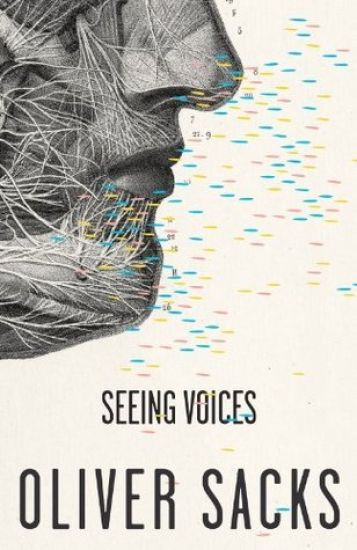
The renowned neurologist and bestselling author of The Man Who Mistook His Wife for a Hat takes us on a journey into the world of deaf culture, and the underpinnings of the remarkable visual language of the congenitally deaf. "This book will shake your preconceptions about the deaf, about language and about thought.... One of the finest and most thoughtful writers of our time." --Los Angeles Times Book ReviewLike The Man Who Mistook His Wife for a Hat, this is a fascinating voyage into a strange and wonderful land, a provocative meditation on communication, biology, adaptation, and culture. In Seeing Voices, Oliver Sacks turns his attention to the subject of deafness, and the result is a deeply felt portrait of a minority struggling for recognition and respect--a minority with its own rich, sometimes astonishing, culture and unique visual language, an extraordinary mode of communication that tells us much about the basis of language in hearing people as well. Seeing Voices is, as Studs Terkel has written, "an exquisite, as well as revelatory, work."
Awakenings

Awakenings

Oliver Sacks

VINTAGE
1999
nidottu
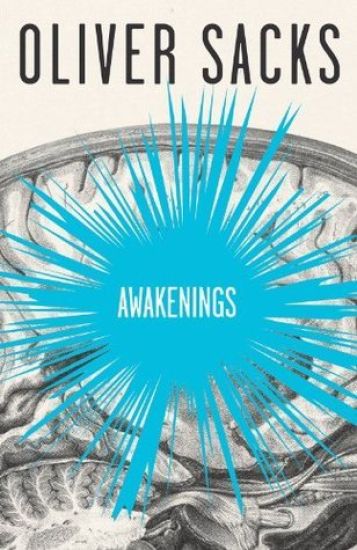
The classic account of survivors of the sleeping-sickness during the great epidemic just after World War I--and their return to the world after decades of "sleep." - From the distinguished neurologist and the bestselling author of The Man Who Mistook His Wife for a Hat "One of the most beautifully composed and moving works of our time." --The Washington PostAwakenings--which inspired the major motion picture starring Robert DeNiro and Robin Williams--is the remarkable story of a group of patients who contracted sleeping-sickness during the great epidemic just after World War I. Frozen for decades in a trance-like state, these men and women were given up as hopeless until 1969, when Dr. Oliver Sacks gave them the then-new drug L-DOPA, which had an astonishing, explosive, "awakening" effect. Dr. Sacks recounts the moving case histories of his patients, their lives, and the extraordinary transformations which went with their reintroduction to a changed world.
Migraine

Migraine

Oliver Sacks

VINTAGE
1999
nidottu
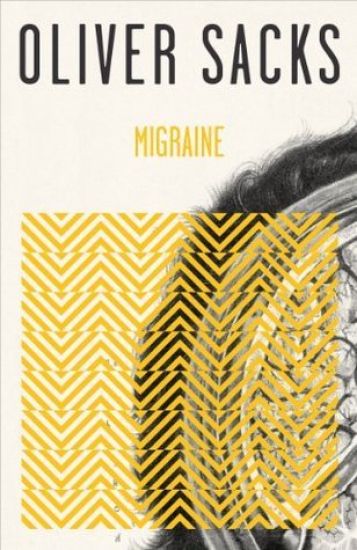
From the renowned neurologist and bestselling author of Awakenings and The Man Who Mistook His Wife for a Hat comes a fascinating investigation of the many manifestations of migraine, including the visual hallucinations and distortions of space, time, and body image which migraineurs can experience. "So erudite, so gracefully written, that even those people fortunate enough never to have had a migraine in their lives should find it equally compelling." --The New York Times The many manifestations of migraine can vary dramatically from one patient to another, even within the same patient at different times. Among the most compelling and perplexing of these symptoms are the strange visual hallucinations and distortions of space, time, and body image which migraineurs sometimes experience. Portrayals of these uncanny states have found their way into many works of art, from the heavenly visions of Hildegard von Bingen to Alice in Wonderland. Dr. Oliver Sacks argues that migraine cannot be understood simply as an illness, but must be viewed as a complex condition with a unique role to play in each individual's life.
Die Insel der Farbenblinden

Die Insel der Farbenblinden

Oliver Sacks

Rowohlt Taschenbuch
1998
pokkari
Das neue Buch von Oliver Sacks entführt den Leser in die Welt der Südseeinseln. Die erste der Reisen führt uns zu zwei Inseln, wo ein überdurchschnittlich hoher Bevölkerungsanteil an einer totalen Farbenblindheit leidet. Die Begegnungen mit den Betroffenen sowie die Untersuchungen und Theorien zur Herkunft der erblichen Farbenblindheit stehen im Mittelpunkt. 
 Auf der zweiten Reise begegnet Sacks Menschen mit dem bislang unheilbaren Lytico-Bodig-Syndrom, das sich in fortschreitender Lähmung oder Demenz manifestiert. Ist die Erkrankung auf den Genuß von Früchten, Blättern und Samen der zahllosen Farne zurückzuführen? Ein faszinierender Einblick in die Arbeit des berühmten Neuropsychologen Oliver Sacks und zugleich ein farbenfrohes Buch in der Tradition der großen Reiseberichte von Melville, Cook und Darwin.
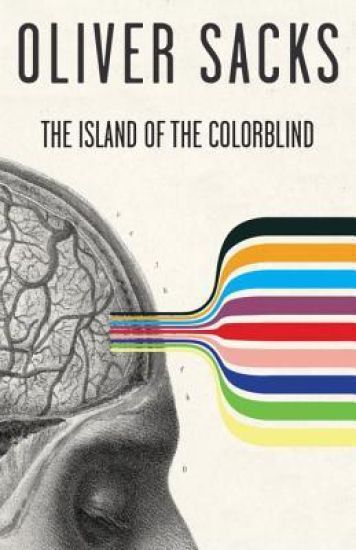
The Island of the Colorblind

The Island of the Colorblind

Oliver Sacks

Knopf Doubleday Publishing Group
1998
nidottu
Part travelogue, part autobiography, part medical mystery, this moving book by the "poet laureate of medicine" (The New York Times) and bestselling author of Awakenings takes us to a tiny Pacific atoll and the island of Guam to explore the genesis of disease, the wonders of botany, and the complexities of being human. "Sacks's total immersion in island life makes this luminous, beautifully written report a wonderous voyage of discovery. As a travel writer, Sacks ranks with Paul Theroux and Bruce Chatwin. As an investigator of the mind's mysteries, he is in a class by himself." --Publishers WeeklyFor Oliver Sacks, islands conjure up equally the romance of Melville and Stevenson, the adventure of Magellan and Cook, and the scientific wonder of Darwin and Wallace. Drawn to the tiny Pacific atoll of Pingelap by intriguing reports of an isolated community of islanders born totally color-blind, Sacks finds himself setting up a clinic in a one-room island dispensary, where he listens to these achromatopic islanders describe their colorless world in rich terms of pattern and tone, luminance and shadow. And on Guam, where he goes to investigate the puzzling neurodegenerative paralysis endemic there for a century, he becomes, for a brief time, an island neurologist, making house calls with his colleague John Steele, amid crowing cockerels, cycad jungles, and the remains of a colonial culture. Out of this unexpected journey, Sacks has woven an unforgettable narrative which immerses us in the romance of island life, and shares his own compelling vision of the mysteries of being human.
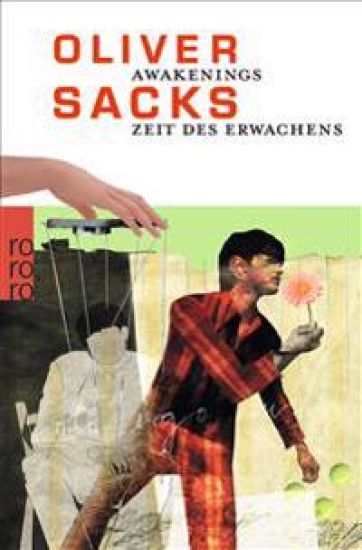
Awakenings: Zeit des Erwachens

Awakenings: Zeit des Erwachens

Oliver Sacks

Rowohlt Taschenbuch
1997
pokkari
Zwischen 1916 und 1927 grassierte weltweit eine Epidemie der sogenannten Europäischen Schlafkrankheit, eine Gehirnkrankheit. Der Neuropsychologe Oliver Sacks stieß Ende der 60er Jahre in einem Krankenhaus bei New York auf Überlebende dieser Epidemie, und er begann, sie mit einem neu entdeckten Medikament, L-Dopa, zu behandeln. Die Wirkung des Medikaments war überwältigend - jahrzehntelang "erstarrte" Menschen erwachten plötzlich wieder zum Leben. Oliver Sacks beschreibt in seinem Buch die Geschichte dieser Menschen und die schier unfaßbaren Folgen der Dopamin-Behandlung.
Eine Anthropologin auf dem Mars

Eine Anthropologin auf dem Mars

Oliver Sacks

Rowohlt Taschenbuch Verlag
1997
pokkari
Nach "Der Mann, der seine Frau mit einem Hut verwechselte" legt Oliver Sacks diese Sammlung von sieben neuen Fallgeschichten vor. Eindrucksvolle Gestalten begegnen dem Leser, feinfühlig porträtierte Menschen, die ihn nicht wieder loslassen, die in ihm weiterleben. Die Zeitschrift "bild der wissenschaft" kürte 1995 in der Rubrik Unterhaltung "Eine Anthropologie auf dem Mars" zum Wissenschaftsbuch des Jahres. Die Begründung: Das Buch, das ein Thema am spannensten präsentiert.
Migräne

Migräne

Oliver Sacks

Rowohlt Taschenbuch Verlag
1996
pokkari
"Migräne" ist eine umfassende medizinische und medizinhistorische Darstellung eines der am meisten verbreiteten Leiden der Menschheit. Oliver Sacks hat sich mit Beharrlichkeit über 1000 Migräne-Patienten gewidmet und dabei Erstaunliches zutage gefördert. Auch wenn es den Leidenden sicher zunächst nur mit Zögern annehmen können: Jede Migräne hat im Leben des Betroffenen einen Sinn, eine ganz individuelle Bedeutung. Und ist diese erst erkannt, kann der Schmerz besiegt werden.
An Anthropologist on Mars: Seven Paradoxical Tales
THE INSPIRATION FOR THE NBC SERIES BRILLIANT MINDS - From the bestselling author of The Man Who Mistook His Wife for a Hat - Fascinating portraits of neurological disorder in which men, women, and one extraordinary child emerge as brilliantly adaptive personalities, whose conditions have not so much debilitated them as ushered them into another reality. Here are seven detailed narratives of neurological patients, including a surgeon consumed by the compulsive tics of Tourette's syndrome unless he is operating; an artist who loses all sense of color in a car accident, but finds a new sensibility and creative power in black and white; and an autistic professor who cannot decipher the simplest social exchange between humans, but has built a career out of her intuitive understanding of animal behavior. Sacks combines the well honed mind of an academician with the verve of a true storyteller.
Pride and a Daily Marathon

Pride and a Daily Marathon

Jonathan Cole; Ian Waterman; Oliver Sacks

Bradford Books
1995
pokkari
At the age of 19, Ian Waterman was suddenly struck down at work by a rare neurological illness that deprived him of all sensation below the neck. He fell on the floor in a heap, unable to stand or control his limbs, having lost the sense of joint position and proprioception, of that "sixth sense" of his body in space, which we all take for granted. After months in a neurological ward he was judged incurable and condemned to a life of wheelchair dependence. This is the first U.S. publication of a remarkable book by his physician, Jonathan Cole. It tells the compelling story, including a clear clinical description of a rare condition, of how Waterman reclaimed a life of full mobility against all expectations, by mental effort and sheer courage. Cole describes how Waterman gradually adapted to his strange condition. As the doctors had predicted, there was no neurological recovery. He had to monitor every movement by sight to work out where his limbs were, since he had no feedback from his peripheral nerves. But with astonishing persistence Waterman developed elaborate tricks and strategies to control his movements, enabling him to cope not only with the day-to-day problems of living, but even with the challenges of work, love, and marriage.
Stumme Stimmen

Stumme Stimmen

Oliver Sacks

Rowohlt Taschenbuch
1992
pokkari
Um die visuelle, sich im Raum entfaltende Gebärdensprache zu erforschen, macht Oliver Sacks diverse Reisen im wörtlichen und übertragenen Sinne. Das Ergebnis seiner Erkundungen: Die Gebärdensprache ist kein primitiver Behelf, wie viele glauben, sondern eine strukturierte, differenzierte, feinste intellektuelle wie emotionale Nuancen vermittelnde Ausdrucksform, der Lautsprache ebenbürtig, ja in mancher Hinsich überlegen, "eine Sprache, die sich für Vorträge ebensogut eignet wie für die Liebe".
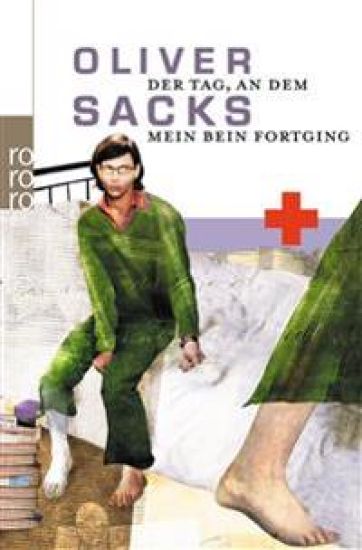
Der Tag, an dem mein Bein fortging

Der Tag, an dem mein Bein fortging

Oliver Sacks

Rowohlt Taschenbuch
1991
pokkari
Zu Beginn begegnen wir dem Autor auf einer Wanderung in den norwegischen Bergen. Das Urlaubsidyll verwandelt sich jäh in eine Katastrophe: In einer gottverlassenen Gegend verletzt sich Sacks ein Bein. Unter unsäglichen Schmerzen kriecht er ins Tal hinunter: Er muß vor Anbruch der Dunkelheit gefunden werden, weil er sonst zu erfrieren droht. Zwei Jäger entdecken ihn. Der Sehnenabriß verheilt gut, aber Sacks hat das Gefühl für sein bein verloren. Es liegt da wie etwas Abgestorbenes, das nicht zu ihm gehört. Oliver Sacks läßt den Leser auch in diesem Buch in die Abgründe nerologischer Störungen blicken.