

Kirjailija
Omar Khayyam
Kirjat ja teokset yhdessä paikassa: 116 kirjaa, julkaisuja vuosilta 1889-2026, suosituimpien joukossa Rubaiyât D'omar Khàyyâm. Vertaile teosten hintoja ja tarkista saatavuus suomalaisista kirjakaupoista.
Mukana myös kirjoitusasut: Omar Khayyám, Omar Khayyàm, Omar Khàyyâm
116 kirjaa
Kirjojen julkaisuhaarukka 1889-2026.
One Hundred Quatrains From The Rubaiyat Of Omar Khayyam (1899)
Omar Khayyam; Elizabeth Alden Curtis
KESSINGER PUBLISHING, LLC
2009
pokkari
The Testament Of Omar Khayyam (1907)
Omar Khayyam; Louis Charles Alexander
KESSINGER PUBLISHING, LLC
2009
pokkari
Edward Fitzgerald's Ruba'Iyat Of Omar Khayyam
Omar Khayyam; Edward Fitzgerald
KESSINGER PUBLISHING, LLC
2009
pokkari

The Dialogue of the Gulshan-i-raz, or Mystical Garden of Roses of Mahmoud Shabistari
Mahmud Ibn Abd Al-Karim Shabistari; Edward Armstrong (TRN) Johnson; Omar Khayyam
Kessinger Pub
2009
pokkari


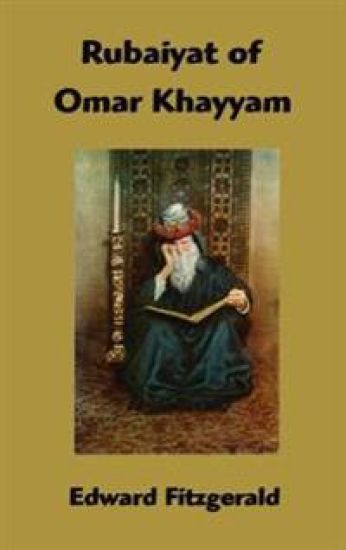

A ruba'i is a two-line stanza with two parts (or hemistichs) per line, hence the word rub iy t (derived from the Arabic language root for "four"), meaning "quatrains"."A loaf of bread, a jug of wine, and thou . . ." is one of the most famous poetic lines ever written. One of the great achievements of poetry, The Rubaiyat of Omar Khayyam, was written in Persian in the 11th century. Omar Khayyam was a consummate philosopher and astronomer whose work extended far beyond the Rubaiyat, but it is this work that survives today, a testament to the power and grace of Islamic and Persian culture at this time. The Rubaiyat is one of the most lyrical poetic works ever composed and English-speaking readers know Khayyam's work through the translation of Edward Fitzgerald, which is presented here.

A ruba'i is a two-line stanza with two parts (or hemistichs) per line, hence the word rub iy t (derived from the Arabic language root for "four"), meaning "quatrains"."A loaf of bread, a jug of wine, and thou . . ." is one of the most famous poetic lines ever written. One of the great achievements of poetry, The Rubaiyat of Omar Khayyam, was written in Persian in the 11th century. Omar Khayyam was a consummate philosopher and astronomer whose work extended far beyond the Rubaiyat, but it is this work that survives today, a testament to the power and grace of Islamic and Persian culture at this time. The Rubaiyat is one of the most lyrical poetic works ever composed, and English-speaking readers know Khayyam's work through the translation of Edward Fitzgerald, which is presented here.

Omar Khayyam was a Persian astronomer and mathematician born in the later part of the 11th century. His poetry, which received very little notoriety in its day, achieved classic status when it was discovered and rendered into English verse by Edward Fitzgerald over seven hundred years later. Presented here are the traditionally collected first and fifth editions with the original notes and introduction by Edward Fitzgerald.
Perhaps this is not so much a translation as a rendering in Scots. Rab Wilson's quatrains tackle the same themes as the original Ruba'iya't but with a Scottish take, not only in language but also in tone and reference. It shows that the fundamental problems of everyday existence have not really changed for any of us over the last thousand years.

Omar Khayy m (1048-1122) was a Persian mathematician, astronomer, and a philosopher who was not known as a poet in his lifetime. Later, a body of quatrains became attached to his name, although not all were his works. These verses lay in obscurity until 1859, when Edward FitzGerald (1809-1883), an English country gentleman, published a free adaptation of this Persian poetry. After its discovery by D. G. Rossetti and others, the verse became extremely popular. Essentially a hedonist and a skeptic, Omar Khayy m, through FitzGerald, spoke with both an earthy and spiritual freedom that stirred a universal response. As a result, the Rub iy t became one of the best-known and most often quoted English classics.