
Kirjailija
Omar Kholeif
Kirjat ja teokset yhdessä paikassa: 13 kirjaa, julkaisuja vuosilta 2013-2026, suosituimpien joukossa Huguette Caland. Vertaile teosten hintoja ja tarkista saatavuus suomalaisista kirjakaupoista.
13 kirjaa
Kirjojen julkaisuhaarukka 2013-2026.

Luísa Correia Pereira
Omar Kholeif; Maria Filomena Molder; Sofia Victorino
STERNBERG PRESS
2026
pokkari
A critical biography of artist Magda Stawarska via a series of journeys--from the streets of Istanbul to the canals of Venice and across the waters of Zanzibar. For nearly two decades, Polish-born, UK-based artist Magda Stawarska has explored the threshold of memory, the sanctioned shape of history, and the active experience of listening. Through sound and performance, moving image, photography, painting, and printmaking, the artist unfolds overlooked and contested narratives of the past through her practice of "inner listening". Stawarska's distinct approach to artmaking often begins with explorations of cities. Traversing self-directed routes, the artist has often been compared to a flaneur--moving through each site, cultivating a rhythmic score that reveals a densely layered urban topography. These situated scenes become the basis for a distinct form of language--one of conjured imaginaries. The artist and her carefully chosen collaborators unbuckle the seams of the aural landscape, using personal reflection and language, which the artist uses to create installations that constellate active feelings. These processes evolve, layer upon layer, in the studio and in the public realm, illuminating a palimpsest of dissonance: A discordant score that pierces the very concept of time. In this book, author and curator Omar Kholeif, offers an introductory field guide into the artist's practice. Structured as a travelogue through Stawarska's various journeys, readers will venture from the streets of Istanbul to the canal sides of Venice to the waters of Zanzibar. The second volume in the Imagine Otherwise series, Kholeif argues that in Magda Stawarska's art, one can find the specificity and detail of the ocular in the field and tempo of listening. Concluded with an afterword by Turner-Prize winning artist, Lubaina Himid CBE RA. Published by Sternberg Press in collaboration with artPost21
Hans Ulrich Obrist leads readers into the world of path-breaking Syrian artist Simone Fattal in this intensely personal volume. For over five decades, Simone Fattal (b. 1942, Damascus) has eschewed any singular form or subject in her wide-ranging practice. In this deeply personal volume, Fattal's close friend and confidante Hans Ulrich Obrist delves into the artist's past to explore the remarkable breadth of her body of work. After studying philosophy, first in Beirut and then Paris, Fattal returned to Beirut in 1969 and began life as a painter--creating sensuous abstract works that diverged from the predominantly figurative paintings commonly exhibited in Lebanon at the time. In 1980, after a decade spent in Lebanon as a painter, Fattal fled the civil war, abandoned her painting practice, and settled in Sausalito, California, where she founded the revolutionary publishing house Post-Apollo Press. In 1988, after studying sculpture in San Francisco, Fattal was consumed by another wave of creativity that led her to pursue ceramic sculptures--a medium in which she continues to work to this day from her studio in Paris. Alongside prose and interviews with Fattal by Obrist, a foreword by Dr. Omar Kholeif situates Fattal's early practice in the broader schema of art to emerge in West Asia, while an afterword by Rasha Salti delves into the influence of European and Arabic mythology on Fattal's artmaking. Published by Sternberg Press in collaboration with artPost21
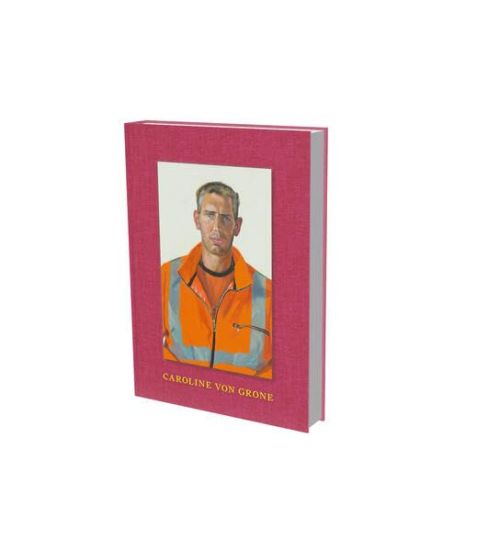
Caroline Von Grone
Caroline Von Grone; Ina Jessen; Wofgang Ullrich; Bettina Schlebrugge; Omar Kholeif
SNOECK VERLAGSGESELLSCHAFT MBH
2023
pokkari
As I walk through the museum, I can tell which painting is based on a model and which is not - Caroline von Grone has a keen eye for situations and an unerring one for portraits. In 1991, she was a master-class student under Klaus Rinke at the D sseldorf Art Academy and, quite untypically for that time, had turned to painting portraits, either of models she had approached, for instance in subway stations, or later then of models who commissioned a portrait from her. It is absolutely her strength that she does not invent observations. This results in a visual acuity that is a definite pleasure for the viewer. Her paintings time and again offer an image within the image, such as abstractly conceived tiled walls, floor tiles, and the interiors of public places such as telephone booths and ticket machines. She also has frequently painted houses, for example, in a northern German housing estate, until these were eventually demolished. These ultimate conditions also interested her, as a counterpoint to the photography of, for instance, the Bechers. Part of Caroline von Grone's practice has always been the painting in public, because otherwise she would not be able to capture the still-life presence within the picture if I tried to paint it based on a photograph.

Manal AlDowayan, Hassan Sharif
Christine Macel; Maya El Khalil; Catherine David; Omar Kholeif
RIZZOLI
2023
pokkari
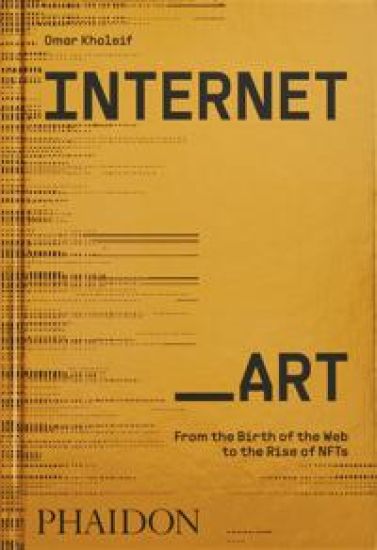
A leading figure in the world of networked culture explores the artists and events that defined the mass medium of our time Since 1989, the year the World Wide Web was born, the art world has grappled with the rise of networked culture. This unprecedented survey of the artists and innovators in this area from 1989 to today is interwoven with the personal narrative of one of the leading voices on the digital world. In this book, Omar Kholeif, whose prolific career parallels the growth of the internet, tells the story of this mass medium and how it has fostered new possibilities for artists, both analog and digital. The book showcases work spanning a range of media from legendary artists including Lawrence Abu Hamdan, Lynn Hershman Leeson, Nam June Paik, Heather Phillipson, and Wu Tsang. Tracing the key artists and innovators from the emergence of browser-based art to the dawn of NFTs, this is a tale for the present and the future.
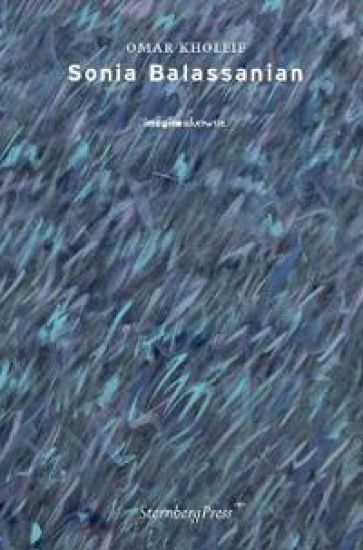
Travel from the monasteries of rural Armenia to the exhibition halls of MoMA in the first comprehensive monograph of Iranian American artist Sonia Balassanian. In this deeply personal portrait of Sonia Balassanian (b. 1942, Arak), an Iranian American artist of Armenian descent, author Dr. Omar Kholeif weaves together poetry, memoir, and historical anecdote to trace the contours of Balassanian's world. With a career spanning more than five decades, Balassanian is known for her multidisciplinary, politically charged practice that spans painting, poetry, photography, video, installation, performance, and drawing. At the heart of her corpus are colorful, large-scale, lyrically abstract paintings that she began in the 1960s. In the 1980s, after she had moved to New York, her work took a political turn following the Iranian Revolution. Balassanian drew newfound attention for Hostages: A Diary (1980), an installation of drawings that mapped the experience of following the Iran hostage crisis from the United States, and for Cauterized Literature (1987), a mixed-media series of burnt books mounted on canvas that comments on censorship in Iran. Balassanian lives and works between New York and Armenia. This is the first comprehensive monograph of her art and life. Published by Sternberg Press in collaboration with artPost21
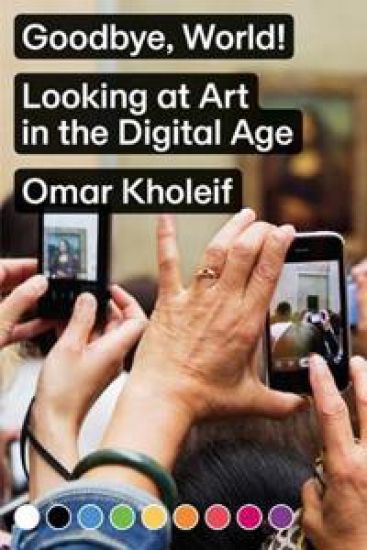
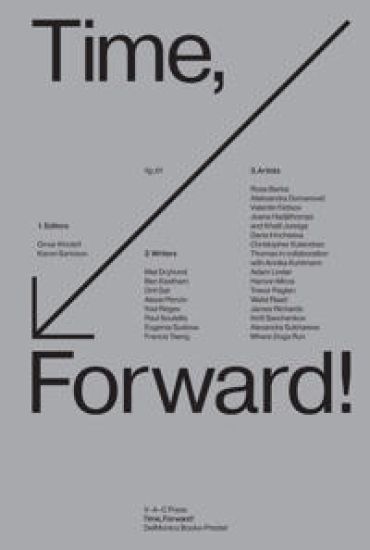
Time, Forward! questions the notion and function of time and how it relates to the way we create and interact with art in the 21st century. Featuring newly commissioned works by an international group of artists, this book illuminates a broad range of responses to an exponentially accelerating world. This volume features a speculation on the future of the senses by Haroon Mirza, an unorthodox history of modernity by Walid Raad, and stills from a science fiction film by Rosa Barba. Provocative essays from scholars, critics, poets, and filmmakers probe issues as diverse as the role of sleep in a 24/7 capitalist society and artistic privacy and appropriation in cyberspace. Some of these artists ask us to press the pause button, others take us back in time, and still others push us forward into the realm of science fiction-only to reveal these fictions to be a form of everyday present reality.
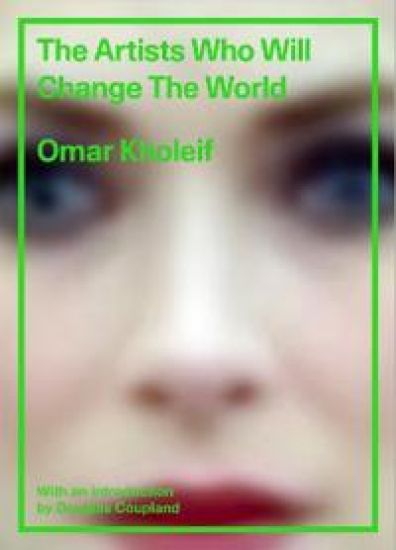
With the birth of contemporary museum culture and the advent of digital technologies, the 21st century has brought a whole new means by which to access art and its histories. How do we re-map the realm of contemporary art in light of a more inclusive awareness, taking into account the unprecedented global movements of artists today and representing the divergent histories of geographies that were once peripheral? The Artists Who Will Change the World is a new global map of art that points to the future. Unlike a traditional atlas, its cartography illustrates a world of international artists who may not yet be household names, but who will undoubtedly shape the art of tomorrow. Omar Kholeif provides an introductory field guide to what some of the most urgent contemporary artists are doing worldwide. These are artists whose work engages with the aesthetics of technology and the issues of tomorrow; artists who are developing concepts rarely tested before, or who are engaging with politics in new ways. The book is a journey of discovery that will influence generations of artists and art lovers to come.
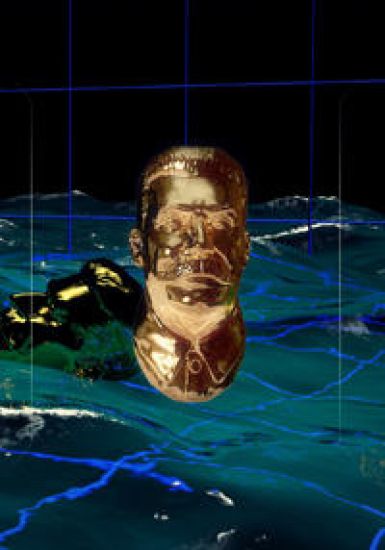
Structured in three parts, I Was Raised on the Internet features critical essays, provocations, and manifestos, as well as images of new commissions for the accompanying exhibition. The book functions independently of the exhibition as a contribution to the knowledge of art and technology studies. Esteemed authors and creative practitioners—including Monira Al Qadiri, Jeremy Bailey, Zach Blas, James Bridle, Michael Connor, Lauren Cornell, Aria Dean, Simon Denny, DIS, Orit Gat, Omar Kholeif, Cadence Kinsey, Olia Lialina, Joanne McNeil, Trevor Paglen, Heather Phillipson, Jared Quinton, Martine Syms, Jon Thomson and Alison Craighead, and Nina Wexelblatt—use the book as a jumping-off point to broaden the critical debate on art that engages with continually evolving digital technologies.
Far and Wide: Leonardo Electronic Almanac Vol 19, No. 5
Lanfranco Aceti; Omar Kholeif
GOLDSMITHS COLLEGE
2013
nidottu
This catalog is a LEA production with FACT (Foundation for Art and Creative Technology). It follows the first major retrospective on Nam June Paik in the UK with an exhibition and conference organized by Tate Liverpool and FACT. The exhibition Nam June Paik, December 17, 2010 to March 13, 2011, was curated by Sook-Kyung Lee and Susanne Rennert.LEA acknowledges and is grateful for the gracious support provided to this publication by the Estate of Nam June Paik. In particular special thanks go to Ken Hakuta, Executor, Nam June Paik Estate.Also, special thanks go to Mike Stubbs (Director/CEO of FACT) for his support. Writings by: Lanfranco Aceti, Omark Kholeif, Emile Devereaux, Tom Schofield, Gabriela Galati, Jamie Allen, Jeremy Bailey, Richard Brown, John G. Hanhardt, Mike Stubbs, Sarah Cook, Roy Ascott, Ruth Catlow and Anton Lukoszevieze.