

Kirjailija
Omri Boehm
Kirjat ja teokset yhdessä paikassa: 15 kirjaa, julkaisuja vuosilta 2007-2025, suosituimpien joukossa Der bestirnte Himmel über mir. Vertaile teosten hintoja ja tarkista saatavuus suomalaisista kirjakaupoista.
15 kirjaa
Kirjojen julkaisuhaarukka 2007-2025.




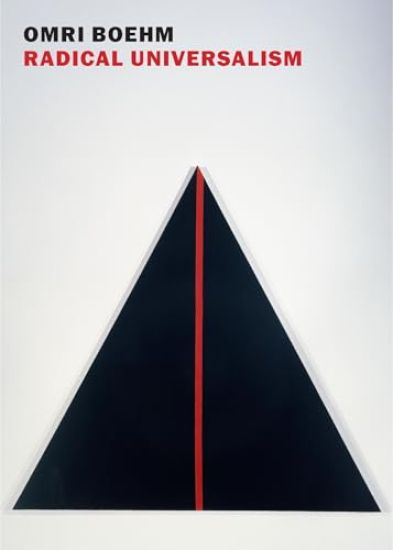
A compelling philosophical exploration of the concept of universalism and its role--or lack thereof--in contemporary politics. This accessible study challenges the prioritization of identity politics over universal equality, using Kant as a lens through which to understand our present moment. The entire political spectrum of our day, from left to right, reflects the politics of identity. The left speaks of race and gender; the right of blood and soil, homeland and people: the animosity between them is only the difference between the two sides of the same coin. As to universalism? Of that great cause all that seems to remain is an empty shell of legalism and proceduralism. Modern liberalism's prejudicial focus on the rights of individual citizens comes at the expense of a larger commitment to the richness and variety of the human, a focus that can seem as narrow and hidebound as the nationalisms with which it seeks to do battle. In Radical Universalism, Omri Boehm presents a startling and revelatory new reading of Kant as heir to the Biblical prophets and as progenitor of the revolutionary commitment to freedom and equality that is modernity's moral lodestone. His book offers a powerful plea to put this much misunderstood and long forsaken tradition of humanistic universalism at the heart of political life.
Radikal universalisme. Hinsides identitet beskriver det identitetspolitiske dødvande, som de liberale demokratier befinder sig i. Den politiske højrefløj kæmper i nationalismens og de traditionelle værdiers navn, mens venstrefløjen kæmper i kønnets og racens navn. Begge fløje vil erstatte den abstrakte universalismes ide om alle menneskers ligeværd med ideen om, at vores konkrete identiteter definerer vores menneskeværd. Den israelsk-tyske filosof Omri Boehm argumenterer for at lade universalismen rejse sig af asken og hjælpe os med at finde moralsk og åndelig klarhed i kampen for retfærdighed og lighed. Men vi må finde tilbage til den levende forestilling om menneskeheden, som den formuleres hos Immanuel Kant, i Den Amerikanske Uafhængighedserklæring og i historien om ofringen af Isak, frem for at følge den falske universalisme, der som en maske gør det muligt for de herskende at opretholde strukturel udgrænsning og udbytning. I en splittet verden er Omri Boehms stærke opfordring lige så presserende, som den er overbevisende. Det er en uforbeholden appel om at bringe universalismens lighedstanke til live – og med den oplysning, fornuft, humanisme og tankefrihed. @font-face {font-family:"Cambria Math"; panose-1:2 4 5 3 5 4 6 3 2 4; mso-font-charset:0; mso-generic-font-family:roman; mso-font-pitch:variable; mso-font-signature:-536870145 1107305727 0 0 415 0;}@font-face {font-family:Calibri; panose-1:2 15 5 2 2 2 4 3 2 4; mso-font-charset:0; mso-generic-font-family:swiss; mso-font-pitch:variable; mso-font-signature:-469750017 -1040178053 9 0 511 0;}@font-face {font-family:Garamond; panose-1:2 2 4 4 3 3 1 1 8 3; mso-font-charset:0; mso-generic-font-family:roman; mso-font-pitch:variable; mso-font-signature:647 2 0 0 159 0;}p.MsoNormal, li.MsoNormal, div.MsoNormal {mso-style-unhide:no; mso-style-qformat:yes; mso-style-parent:""; margin:0cm; mso-pagination:widow-orphan; font-size:12.0pt; font-family:"Calibri",sans-serif; mso-ascii-font-family:Calibri; mso-ascii-theme-font:minor-latin; mso-fareast-font-family:Calibri; mso-fareast-theme-font:minor-latin; mso-hansi-font-family:Calibri; mso-hansi-theme-font:minor-latin; mso-bidi-font-family:"Times New Roman"; mso-bidi-theme-font:minor-bidi; mso-font-kerning:1.0pt; mso-ligatures:standardcontextual; mso-fareast-language:EN-US;}.MsoChpDefault {mso-style-type:export-only; mso-default-props:yes; font-family:"Calibri",sans-serif; mso-ascii-font-family:Calibri; mso-ascii-theme-font:minor-latin; mso-fareast-font-family:Calibri; mso-fareast-theme-font:minor-latin; mso-hansi-font-family:Calibri; mso-hansi-theme-font:minor-latin; mso-bidi-font-family:"Times New Roman"; mso-bidi-theme-font:minor-bidi; mso-fareast-language:EN-US;}div.WordSection1 {page:WordSection1;}


Den viktigaste bok om lösningen av Israel-Palestina-konflikten […] som har publicerats på senare år. /Micha Brumlik, Die Zeit ”Någon gång måste man öppna ögonen och erkänna att tvåstatsdrömmen har övergått i en tvåstatsillusion. Att låtsas som något annat är ungefär som att förneka den globala uppvärmningen.” Så skriver den israeliske filosofen Omri Boehm i inledningen till denna engagerade plädering för Israel som en enda – binationell – stat, med samma medborgerliga rättigheter för judar och palestiner. Boehm vill skrota tvåstatslösningen och istället utveckla ett ”mittenalternativ” i israelisk politik med utgångspunkt i en liberal sionistisk tradition. Han anknyter till Theodor Herzl och andra tidiga sionister, som alla, inbördes meningsskiljaktigheter till trots, förespråkade en binationell stat. Att omvandla dagens Israel från en judisk stat till en federal och binationell sådan blir självklart ingen lätt uppgift. Men det går att förställa sig en demokratisk framtid för Israel, menar Boehm. Alternativet är en allt djupare politisk och mänsklig avgrund: apartheid, fördrivning, etnisk rensning. Omri Boehm är biträdande professor i filosofi vid New School for Social Research i New York. Han skriver återkommande i bland andra "New York Times", "Die Zeit" och "Haaretz"
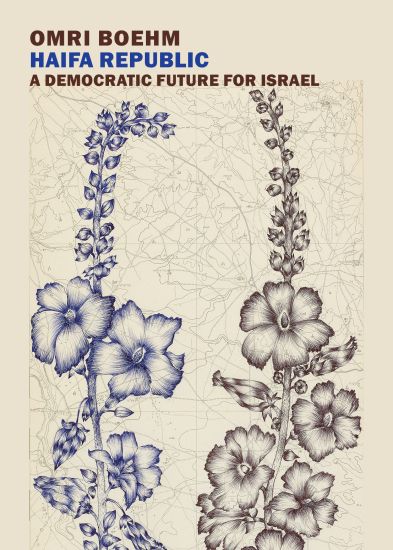
A provocative argument for a new way of seeing Israel, Zionism, and the two-state solution. A Future for Israel is a wakeup call to liberal Zionists. In the last two decades, Israeli politics has been changing rapidly, but Zionist thinking on the left is lagging dangerously behind. Given the demise of a viable two-state solution, the struggle for a worthwhile political future in Israel depends not on establishing borders, but on securing human and citizen rights. Denying this is by now akin to denying global warming, and will lead to a catastrophe. 70 years after Israel's establishment, Palestinians are again verging on becoming the majority within Israel's borders and Israeli leaders across the political spectrum can be heard speaking of ethnic cleansing. Ignoring reality will invite scenarios worse than apartheid. A Future for Israel will reclaim the vital center from Zionist chauvinism on the right and anti-Zionism on the left, by articulating an alternative to two-state politics from within a liberal Zionist perspective. Omri Boehm argues Israeli patriots must now challenge Zionist taboos as we have come to know them and dare to imagine the country's transformation, from a Jewish state into a federal, bi-national republic.
Traditional interpretations in both Judaism and Christianity argue that the Akedah presents not only an ethical question but also an ethical reply. But for the intervention of the angel, Abraham would have killed his son. Obedience to God take precedence over morality as humanly conceived. Yet, the angel of YHWH that appears to Abraham is a later addition to the text; thus, in the original narrative Abraham actually disobeys the divine command to slay his son, and sacrifices a ram instead.The first part of the book shows how the "original" version of the narrative did not contain the angelic figure. The second part of the book re-examines various religious interpretations of the text to show that exegetes such as Maimonides and his followers did point out Abraham's disobedience. According to these writers the esoteric layer of the story in fact declares that disobedience to God's command was Abraham's true affirmation of faith. In the third part of the book, Boehm re-opens the philosophical debate between Kant and Kierkegaard. Boehm concludes the book by contending that the monotheistic model of faith presented by Abraham was actually a model of disobedience.
Contemporary philosophers frequently assume that Kant never seriously engaged with Spinoza or Spinozism-certainly not before the break of Der Pantheismusstreit, or within the Critique of Pure Reason. Offering an alternative reading of key pre-critical texts and to some of the Critique's most central chapters, Omri Boehm challenges this common assumption. He argues that Kant not only is committed to Spinozism in early essays such as "The One Possible Basis" and "New Elucidation," but also takes up Spinozist metaphysics as Transcendental Realism's most consistent form in the Critique of Pure Reason. The success -- or failure -- of Kant's critical projects must be evaluated in this light. Boehm here examines The Antinomies alongside Spinoza's Substance Monism and his theory of freedom. Similarly, he analyzes the refutation of the Ontological Argument in parallel with Spinoza's Causa-sui. More generally, Boehm places the Critique of Pure Reason's separation of Thought from Being and Is from Ought in dialogue with the Ethics' collapse of Being, Is and Ought into Thought.
Traditional interpertations in both Judaism and Christianity argue that the Akedah presents not only an ethical question but also an ethical reply. But for the intervention of the angel, Abraham would have killed his son. Obedience to God take precedence over morality as humanly conceived. Yet, the angel of YHWH that appears to Abraham is a later addition to the text; thus, in the original narrative Abraham actually disobeys the divine command to slay his son, and sacrifices a ram instead. The first part of the book shows how the "original" version of the narrative did not contain the angelic figure. The second part of the book re-examines various religious interpretations of the text to show that exegetes such as Maimonides and his followers did point out Abraham's disobedience. According to these writers the esoteric layer of the story in fact declares that disobedience to God's command was Abraham's true affirmation of faith. In th ethird part of the book, Boehm re-opens the philosophical debate between Kant and Kierkegaard. Boehm concludes the book by contending that the monotheistic model of faith presented by Abraham was actually a model of disobedience.
I Radikal universalisme viser Omri Boehm hvordan hele det politiske spekteret, fra høyre til venstre, i dagens liberale demokratier er preget av identitetspolitikk. Høyresiden samler seg om nasjonalisme, venstresiden om kjønn og rase – begge på bekostning av universelt likeverd. Gjennom en nylesning av tre kontroversielle tekster som har formet våre ideer om humanisme; Kants «Hva er opplysning», Abrahams ofring av Isak og den amerikanske uavhengighetserklæringen, løfter Boehm frem en levende, radikal universalisme, og viser hvordan den kan revitalisere vårt syn på rettferdighet, fornuft og humanisme. Boken er en kraftfull påminnelse om vår felles menneskelighet, et oppgjør med falske universalister og en oppfordring til et mer inkluderende demokrati. Den viser en vei ut av en debatt som er preget av låste posisjoner. Radikal universialisme er oversatt av Eivind Lilleskjæret. Etterordet er skrevet av Feroz Mehmood Shah.